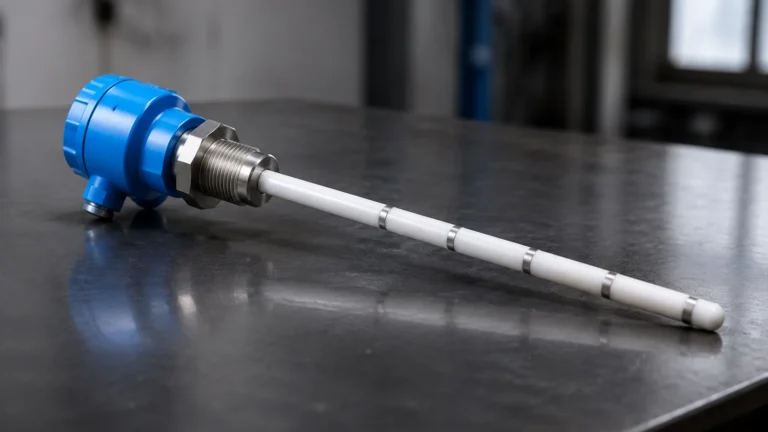
Pressostat Définition
Pressostat Définition
In the realm of industrial automation and process control, the term "pressostat"—often referred to in English-speaking markets as a pressure switch—represents a critical safety and control component. A basic pressostat définition identifies it as an electromechanical or electronic device designed to close or open an electrical contact when a specific fluid pressure threshold is reached. Unlike a pressure transmitter that provides a continuous signal (such as 4-20mA), a pressostat provides a discrete binary output (on/off), making it indispensable for alarm systems, pump control, and emergency shutdowns.
For engineers and plant operators, understanding the nuances of these devices is essential for maintaining system integrity. Whether used in water treatment facilities, chemical processing plants, or oil and gas refineries, the pressostat acts as a sentinel, ensuring that pressures remain within safe operational boundaries.
Measurement Principles and Internal Mechanics
The operation of a pressostat is governed by the balance of forces. To understand the functional pressostat définition, one must examine the three primary sensing technologies used to convert fluid pressure into mechanical movement or electronic signals.
1. Diaphragm Sensing Elements
Diaphragm switches are among the most common types used in low to medium-pressure applications. A flexible membrane (the diaphragm) is exposed to the process media on one side and a calibrated spring on the other. As pressure increases, the diaphragm flexes, eventually overcoming the spring's resistance to actuate a microswitch. These are highly sensitive and can detect minute changes in pressure, often used in vacuum or low-pressure gas systems.
2. Piston Sensing Elements
Piston-actuated pressostats are designed for high-pressure industrial applications, such as hydraulics. A piston, sealed by an O-ring, moves against a heavy-duty spring. While less sensitive than diaphragms, piston designs are remarkably rugged and can withstand significant pressure surges and mechanical shocks. However, they are generally not suitable for very low-pressure applications due to the inherent friction of the seals.
3. Bellows Sensing Elements
Bellows offer a middle ground between diaphragms and pistons. The bellows expand or contract like an accordion in response to pressure changes. This design provides a larger surface area than a diaphragm, allowing for a higher degree of accuracy and repeatability in mid-range pressure applications. They are frequently found in steam boiler controls and HVAC systems.
4. Electronic (Solid-State) Sensing
Modern electronic pressostats utilize strain gauges or ceramic thick-film sensors. These devices do not rely on mechanical movement to trigger a switch; instead, they process a continuous signal and trigger an internal relay or transistor output when the programmed set point is reached. These units often feature digital displays and adjustable hysteresis, providing greater flexibility than their mechanical counterparts.
Key Technical Specifications and Terminology
When evaluating a pressostat for a specific industrial application, several technical parameters must be defined. Understanding these terms is vital for correct selection and integration into a control loop.
* Set Point: The specific pressure value at which the switch changes its electrical state (e.g., from Open to Closed). This is typically adjustable via an internal screw or a digital interface.
* Reset Point: The pressure value at which the switch returns to its original state.
* Deadband (Hysteresis): This is the difference between the set point and the reset point. For example, if a pump is set to turn off at 5 bar and turn back on at 4.5 bar, the deadband is 0.5 bar. A deadband is necessary to prevent "chattering," where the switch rapidly oscillates between states when the pressure is near the set point.
* Repeatability: The ability of the device to consistently actuate at the same set point over thousands of cycles. High-quality industrial units typically offer repeatability within ±1% of the full-scale range.
* Wetted Parts: The materials that come into direct contact with the process fluid (e.g., 316L stainless steel, Hastelloy, or Nitrile). Material compatibility is crucial to prevent corrosion and device failure.
Selection Criteria for Industrial Applications
Choosing the right instrument requires a systematic approach. The following table provides a comparison of common sensing technologies to assist in the selection process.
| Feature | Diaphragm | Piston | Bellows | Electronic |
| :— | :— | :— | :— | :— |
| Pressure Range | Low to Medium | High | Medium | Very Wide |
| Sensitivity | High | Low | Moderate | Very High |
| Cycle Life | Moderate | High | Moderate | Very High |
| Vibration Resistance | Fair | Excellent | Good | Excellent |
| Cost | Low/Moderate | Moderate | Moderate | High |
| Common Use | Gas lines, HVAC | Hydraulics | Boilers | Automation, CNC |
When sourcing equipment, it is beneficial to consult a comprehensive Main Page for a variety of measurement technologies. Manufacturers like Welk provide a range of solutions that integrate pressure and level sensing, ensuring that the selected pressostat aligns with the broader process requirements.
Installation and Maintenance Best Practices
Proper installation is as critical as the pressostat définition itself. Even the most accurate switch will fail if installed incorrectly. Engineers should adhere to the following guidelines:
1. Orientation: While many switches can be mounted in any orientation, some diaphragm-based models are sensitive to gravity. Always check the manufacturer's documentation to see if vertical mounting is required to maintain accuracy.
2. Pulsation Dampening: In systems with reciprocating pumps or rapid valve closures, pressure spikes (water hammer) can damage the sensing element. Installing a snubber or a capillary tube can dampen these pulses and extend the life of the switch.
3. Electrical Wiring: Ensure that the electrical load (voltage and amperage) does not exceed the rating of the microswitch. Using a relay is recommended if the pressostat needs to control a high-power motor directly.
4. Environmental Protection: For outdoor or wash-down environments, the enclosure must have an appropriate IP rating (e.g., IP66 or IP67). In hazardous areas, explosion-proof housings (ATEX/IECEx) are mandatory.
Maintenance should involve periodic calibration checks. Over time, spring fatigue can cause the set point to drift. A quarterly or bi-annual verification using a calibrated pressure gauge and a hand pump is standard practice in most industrial facilities.

Limitations and Safety Considerations
While pressostats are reliable, they have inherent limitations. Mechanical switches are subject to wear and tear. The internal spring can lose its tension over millions of cycles, and the electrical contacts can pit or weld together if subjected to overcurrent.
Furthermore, a pressostat only provides information about a single point. It cannot tell you how fast the pressure is rising or if there is a slow leak in the system. For applications requiring trend analysis or sophisticated PID control, a pressure transmitter is a more appropriate choice. However, for a final layer of protection (High-High or Low-Low safety trips), a mechanical pressostat is often preferred because it operates independently of the control system's software and power supply.
Integration with Level Measurement Systems
In many B2B industrial contexts, the pressostat définition overlaps with level measurement. This is particularly true in hydrostatic level sensing. Since the pressure at the bottom of a tank is directly proportional to the height of the liquid ($P = \rho gh$), a pressure switch can be used as a point-level detector.
For example, in a water storage tank, a pressostat mounted at the base can be calibrated to trigger when the water reaches a certain height. This is a cost-effective alternative to ultrasonic or radar sensors for simple overflow protection. Welk offers specialized hydrostatic transmitters and switches that leverage this principle to provide reliable level data in challenging environments like wastewater sumps or chemical storage tanks.
Frequently Asked Questions
Q: What is the difference between a pressostat and a pressure transducer?
A: A pressostat is a switch that provides a binary (on/off) output at a specific set point. A pressure transducer (or transmitter) provides a continuous analog or digital signal representing the actual pressure value across a range.
Q: Can a pressostat be used for both vacuum and positive pressure?
A: Some specialized models, known as compound pressure switches, can handle both. However, most standard units are designed specifically for either vacuum or positive pressure.
Q: How do I adjust the deadband?
A: On many mechanical switches, the deadband is fixed by the manufacturer. However, "adjustable differential" models feature a second adjustment screw that allows the user to widen the gap between the set and reset points.
Q: Why is my pressure switch chattering?
A: Chattering usually occurs because the deadband is too narrow or there is excessive turbulence/pulsation in the fluid line. Increasing the deadband or installing a pulsation snubber typically resolves this issue.
Conclusion
An accurate pressostat définition encompasses more than just a simple switch; it represents a vital intersection of mechanical engineering and electrical control. By understanding the underlying principles—from diaphragm movement to electronic sensing—industrial professionals can select the most robust and cost-effective solutions for their specific needs. Whether ensuring the safety of a high-pressure steam system or managing the levels in a chemical vat, the pressostat remains a cornerstone of modern industrial instrumentation. For those seeking high-quality measurement hardware and expert application support, visiting a specialized Main Page is the recommended next step in optimizing process reliability.