Pressure Transducer.
Pressure Transducer.
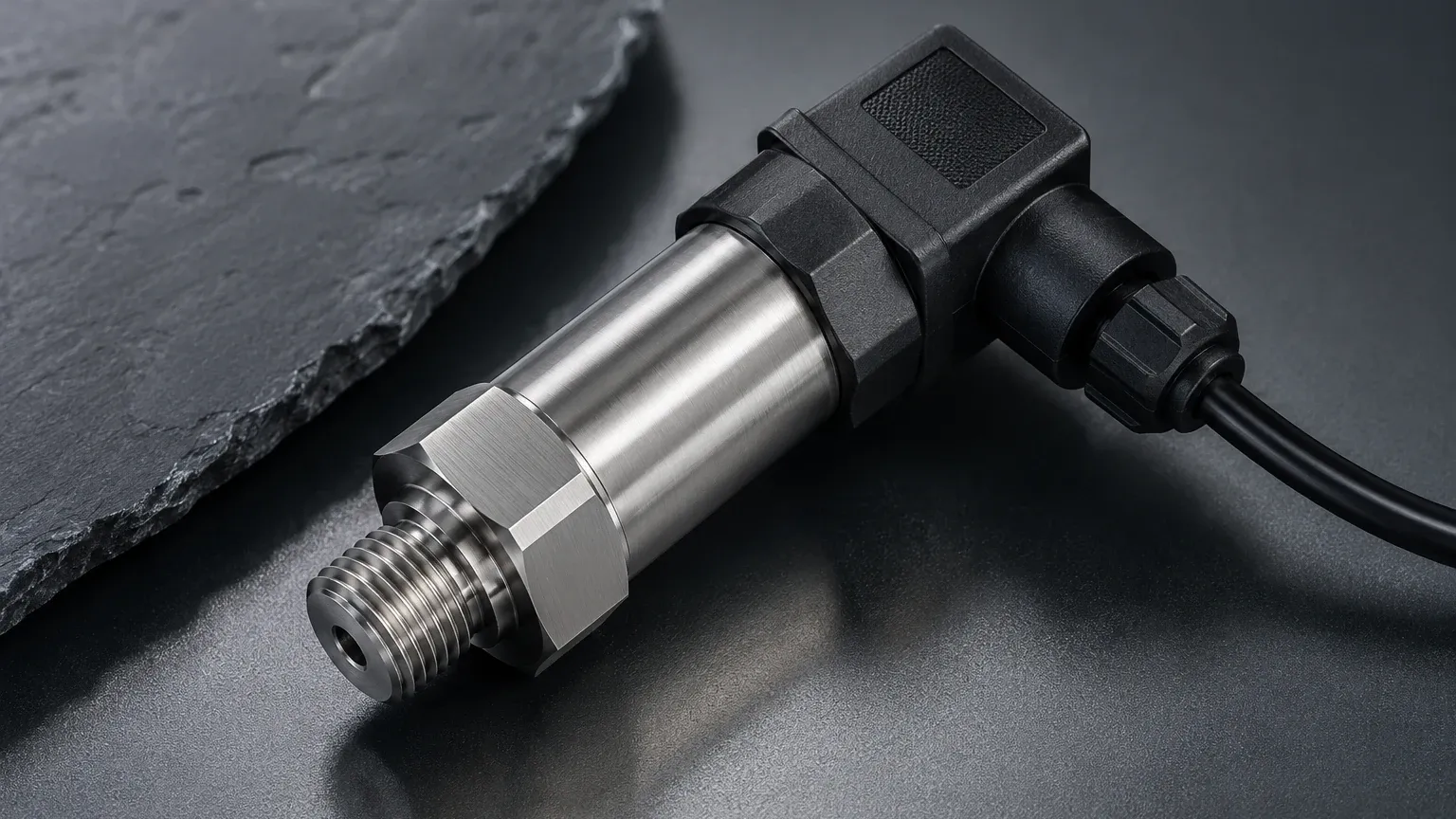
In the field of industrial automation and process control, the pressure transducer. serves as a fundamental component for monitoring and managing fluid dynamics. Specifically, within level measurement applications, these devices are utilized to determine the height of a liquid in a tank or vessel by measuring the hydrostatic pressure exerted by the liquid column. As a professional manufacturer, Welk provides a range of industrial level measurement instruments that leverage these principles to deliver accurate and reliable data across various sectors, including water treatment, chemical processing, and oil and gas industries.
Understanding the technical nuances of a pressure transducer. is essential for engineers and procurement specialists who must select the appropriate instrumentation for challenging environments. This article provides a technical overview of measurement principles, selection criteria, and installation best practices to ensure optimal performance in industrial applications.
Measurement Principles of Hydrostatic Level Sensing
The most common application of a pressure transducer. in level measurement is based on the principle of hydrostatic pressure. This principle states that the pressure at a specific point within a static liquid is directly proportional to the height of the liquid column above that point, the density of the liquid, and the local gravitational force.
The mathematical relationship is expressed by the formula:
P = ρ · g · h
Where:
* P is the hydrostatic pressure (measured in Pascals or bar).
* ρ (rho) is the density of the liquid (kg/m³).
* g is the acceleration due to gravity (approximately 9.81 m/s²).
* h is the height of the liquid column (meters).
In a practical industrial setting, if the density of the liquid remains constant, the pressure transducer. can accurately calculate the level (h) by measuring the pressure (P). For atmospheric tanks, a gauge pressure sensor is typically used. This sensor compensates for changes in atmospheric pressure by using a vent tube in the cable, ensuring that the measurement only reflects the pressure exerted by the liquid itself. In pressurized vessels, a differential pressure measurement approach is required to subtract the internal head pressure from the total pressure measured at the bottom of the tank.
Core Components and Sensing Technologies
Industrial pressure transducers are engineered to withstand harsh conditions while maintaining high precision. The internal construction typically involves several key components:
1. The Diaphragm: This is the primary sensing element that comes into contact with the process media. It deflects under the force of the liquid. Common materials include 316L stainless steel for general water applications, or ceramic (Al₂O₃) for corrosive or abrasive fluids.
2. The Sensor Element: Located behind the diaphragm, this component converts mechanical deflection into an electrical signal. Common technologies include:
* Piezoresistive Sensors: These utilize strain gauges bonded to a silicon or metal diaphragm. As the diaphragm flexes, the electrical resistance changes.
* Capacitive Sensors: These measure changes in electrical capacitance between the diaphragm and a fixed plate. They are known for high sensitivity and robustness in low-pressure ranges.
3. Signal Conditioning Electronics: These circuits amplify the raw sensor signal and convert it into a standardized industrial output, such as 4-20 mA, 0-10 V, or digital protocols like RS485 (Modbus).
Types of Pressure Transducers for Level Measurement
When evaluating a pressure transducer. for a specific project, it is important to distinguish between the various physical configurations available. For more detailed product specifications, you may refer to the Main Page of our technical catalog.
Submersible Level Transmitters
These are designed to be lowered directly into the liquid. They are fully sealed (typically IP68 rated) and include a reinforced cable that contains both the electrical conductors and a small atmospheric vent tube. These are ideal for boreholes, reservoirs, and open-sump water treatment applications.
Externally Mounted Transmitters
In closed tanks or process vessels, the pressure transducer. is often mounted to a threaded or flanged port at the bottom of the tank. This allows for easier maintenance as the sensor can be isolated and removed without entering the vessel. These are frequently used in chemical storage and food processing where hygienic connections are required.
Differential Pressure (DP) Transmitters
For pressurized tanks, a DP transmitter measures the pressure at both the bottom and the top of the vessel. By calculating the difference between these two points, the system eliminates the influence of the gas pressure above the liquid, providing an accurate level reading regardless of tank pressurization.
Technical Selection Criteria
Selecting the right pressure transducer. requires a thorough analysis of the process conditions. The following table provides a comparison of key factors to consider during the specification phase.
| Feature | Submersible Transducer | External Threaded/Flanged | Differential Pressure |
| :— | :— | :— | :— |
| Primary Application | Deep wells, open tanks, sumps | Process tanks, buffer tanks | Pressurized vessels, boilers |
| Installation | Suspended by cable | Mounted to process port | Two-port connection |
| Maintenance | Requires lifting from fluid | Accessible via isolation valve | Accessible via manifold |
| Pressure Range | Typically up to 20 bar (200m H₂O) | Wide range (up to 1000 bar) | High static pressure capability |
| Chemical Resistance | Limited by cable jacket material | High (various alloy options) | High (various alloy options) |
| Atmospheric Venting | Via internal cable tube | Via sensor housing vent | Not required (differential) |
Key Evaluation Factors:
* Measurement Range: The sensor should be rated for the maximum expected head pressure. It is standard practice to select a sensor with a range approximately 10-20% higher than the maximum liquid level to avoid overpressure damage.
* Accuracy and Linearity: Standard industrial units offer accuracy between 0.1% and 0.5% of the full scale. High-precision applications may require 0.05% accuracy.
* Material Compatibility: Ensure the diaphragm and housing materials are compatible with the process fluid. For example, Hastelloy or Tantalum may be necessary for highly acidic environments.
* Temperature Range: Standard sensors operate from -20°C to +80°C. High-temperature models are available for steam or hot oil applications, often utilizing cooling fins or capillary tubes.
Installation and Integration Best Practices
To ensure the longevity and accuracy of a pressure transducer., proper installation is critical. Engineering teams should follow these guidelines:
1. Venting and Moisture Protection: For submersible units, the vent tube in the cable must remain unobstructed. Use a desiccant box or a specialized vent filter at the termination point to prevent moisture from entering the tube, which can lead to internal corrosion or measurement drift.
2. Turbulence and Agitation: In tanks with mixers or high-flow inlets, the pressure transducer. should be installed inside a stilling well (a perforated pipe). This protects the sensor from mechanical stress and stabilizes the pressure readings.
3. Positioning: The sensor should be placed away from the direct path of incoming fluid to avoid dynamic pressure errors. It should also be positioned slightly above the bottom of the tank (e.g., 100mm to 200mm) to prevent the diaphragm from being covered by silt or sediment.
4. Electrical Shielding: Use shielded cables to protect the signal from electromagnetic interference (EMI), especially in environments with large motors or variable frequency drives (VFDs).
Limitations and Application Constraints
While the pressure transducer. is a versatile tool, it has specific limitations that must be managed:
* Density Sensitivity: Since the measurement is based on weight (pressure), any change in the liquid's density (caused by temperature fluctuations or concentration changes) will result in a level error. If the density varies significantly, a temperature-compensated system or a different technology, such as radar, may be required.
* Clogging and Fouling: In wastewater or slurry applications, solids can build up on the diaphragm. Regular cleaning or the use of flush-diaphragm designs can mitigate this risk.
* Mechanical Damage: The sensing diaphragm is often very thin (measured in microns). It should never be touched or cleaned with sharp objects, as any deformation will ruin the calibration.
Frequently Asked Questions (FAQ)
Q: Can a pressure transducer. be used in a vacuum?
A: Yes, but you must specify an absolute pressure sensor or a differential pressure sensor designed for vacuum service. Standard gauge sensors may not function correctly or could be damaged if the internal reference is not designed for negative pressure.
Q: How often should a pressure transducer. be calibrated?
A: In most industrial applications, an annual calibration check is recommended. However, in critical processes or harsh environments, semi-annual checks may be necessary to ensure long-term stability.
Q: What is the difference between a pressure sensor and a pressure transducer?
A: While the terms are often used interchangeably, a "sensor" usually refers to the raw sensing element, while a "transducer" includes the signal conditioning electronics that provide a standardized industrial output like 4-20mA.
Q: How do I handle lightning or surge protection for outdoor installations?
A: For submersible sensors in deep wells or outdoor reservoirs, it is highly recommended to install surge protection devices (SPDs) at both the sensor head (if supported) and the control panel to prevent damage from induced voltage spikes.
For engineers seeking to optimize their level measurement systems, selecting the correct pressure transducer. is a balance of technical performance, material science, and cost-effectiveness. Welk offers a comprehensive range of solutions tailored to these industrial requirements. For further technical documentation and product selection tools, please visit our Main Page.