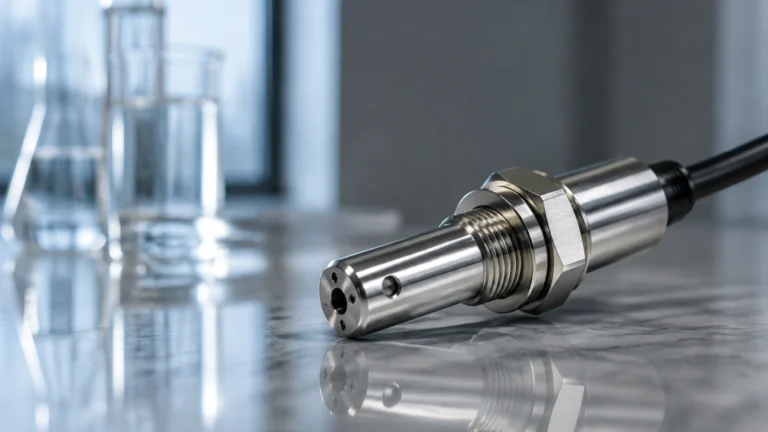
Pressure Transducer High Temperature
Pressure Transducer High Temperature
In industrial process control, measuring pressure in high-temperature environments is one of the most significant challenges for instrumentation engineers. Standard pressure sensors are typically designed to operate within a moderate thermal range, often capped at 85°C (185°F) or 100°C (212°F). However, many applications in the oil and gas, chemical processing, power generation, and food industries require a pressure transducer high temperature solution capable of withstanding media temperatures exceeding 200°C (392°F) or even 400°C (752°F).
Selecting the right pressure transducer high temperature requires a deep understanding of how heat affects sensor electronics, diaphragms, and fill fluids. This guide explores the measurement principles, thermal management techniques, and practical selection criteria for high-temperature pressure measurement.
Measurement Principles and Thermal Challenges
To understand why a specialized pressure transducer high temperature is necessary, one must first understand how standard pressure transducers function. Most industrial pressure sensors utilize one of three primary sensing technologies: piezoresistive, strain gauge, or capacitive.
Piezoresistive Sensors
Piezoresistive sensors use a silicon-based diaphragm with integrated resistors. When pressure is applied, the diaphragm deforms, changing the electrical resistance. While highly accurate, silicon is extremely sensitive to temperature. As temperatures rise, the semiconductor properties of the silicon change, leading to significant "thermal zero shift" and "thermal span shift." Without compensation, the sensor output becomes unreliable at elevated temperatures.
Strain Gauge Technology
Thin-film or thick-film strain gauges are bonded to a metal diaphragm (often stainless steel or Inconel). These are generally more robust than silicon sensors in high-heat environments. However, the adhesives used to bond the gauges and the expansion coefficients of the different materials can cause mechanical stress and signal drift when subjected to thermal cycling.
Capacitive Sensors
Capacitive pressure transducers measure the change in capacitance between a flexible diaphragm and a fixed electrode. These sensors are often preferred for high-temperature applications because they do not rely on temperature-sensitive resistors or bonding agents within the high-heat zone. However, they still require specialized electronics to handle the signal processing away from the heat source.
Thermal Management Techniques
When the process media temperature exceeds the safe operating limit of the sensor's internal electronics, engineers must employ thermal isolation or cooling techniques. A pressure transducer high temperature solution often incorporates one of the following mechanical designs:
1. Cooling Fins and Heat Sinks
By adding cooling fins to the body of the transducer between the process connection and the sensor housing, the device uses natural convection to dissipate heat. This is effective for gases and vapors where the ambient air can significantly reduce the temperature before it reaches the sensitive electronics.
2. Siphons and Pigtails
In steam applications, a pigtail or U-type siphon is a standard requirement. The siphon traps condensed liquid, creating a water seal that prevents live steam from coming into direct contact with the transducer diaphragm. This simple mechanical solution can reduce a 200°C steam temperature to below 50°C at the sensor head.
3. Capillary Tubes and Remote Seals
A remote seal (also known as a chemical seal) uses a flexible diaphragm at the process point, connected to the pressure transducer via a liquid-filled capillary tube. The capillary provides a physical distance between the heat source and the sensor. The choice of fill fluid (e.g., high-temperature silicone oil or glycerin) is critical, as the fluid must remain stable and incompressible at the process temperature.
Selection Criteria for High-Temperature Pressure Transducers
Choosing a pressure transducer high temperature involves more than just checking the maximum temperature rating. Engineers must evaluate several interdependent factors to ensure long-term reliability.
| Feature | Consideration | Impact on Performance |
| :— | :— | :— |
| Media Temperature | Continuous vs. Peak temperature. | Determines if active cooling or remote seals are needed. |
| Ambient Temperature | The temperature surrounding the sensor housing. | Affects the lifespan of internal amplifiers and wiring. |
| Material Compatibility | Diaphragm material (316L SS, Hastelloy, Tantalum). | Prevents corrosion at high temperatures where chemical reactions accelerate. |
| Thermal Compensation | The range over which the sensor is calibrated for accuracy. | Minimizes error caused by temperature-induced signal drift. |
| Response Time | The delay caused by capillary tubes or cooling structures. | Critical for high-speed control loops or safety shutdowns. |
| Pressure Range | High temperature often reduces the overpressure rating. | Ensures the sensor does not fail during process upsets. |
Practical Selection Table
| Application Type | Temperature Range | Recommended Technology | Cooling Method |
| :— | :— | :— | :— |
| General Steam | Up to 200°C | Piezoresistive / Thin-film | U-type Siphon |
| Hot Oil / Bitumen | 200°C to 300°C | Strain Gauge with Remote Seal | Capillary (Silicone Fill) |
| Plastic Extrusion | 300°C to 450°C | Melt Pressure Transducer | Rigid Stem + Capillary |
| Exhaust Gas | Up to 600°C | Specialized Piezoelectric | Extended Cooling Fins |
| Cryogenic (Low Temp) | -196°C to 20°C | Capacitive / Thin-film | Thermal Stand-off |
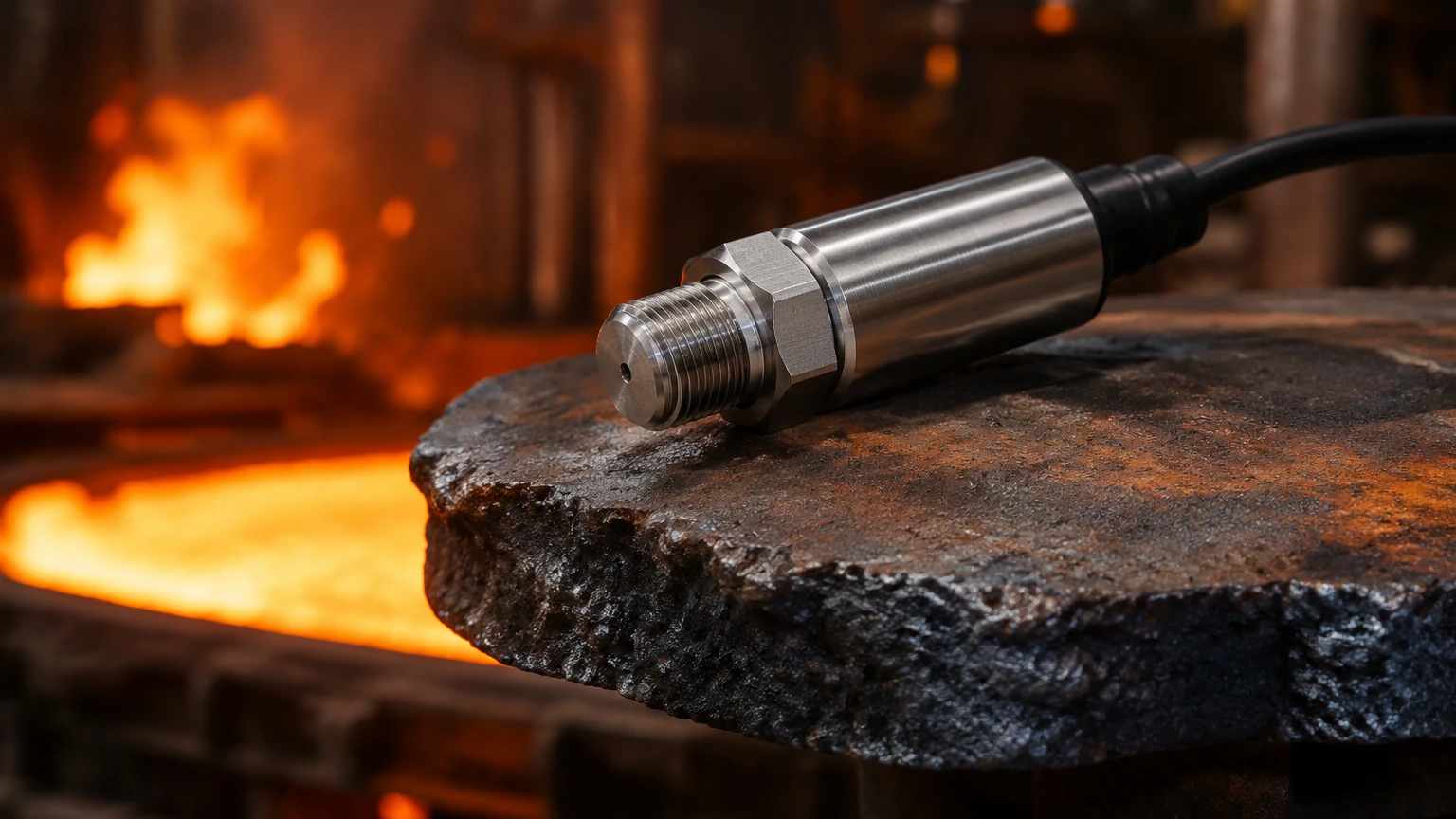
Installation Considerations
Proper installation is as important as selecting the correct hardware. For a pressure transducer high temperature to function correctly, follow these engineering best practices:
1. Orientation: When using cooling fins or siphons, the orientation matters. For gas applications, mount the sensor above the process line to allow condensate to drain. For liquid applications, mount it below or to the side to prevent gas pockets.
2. Impulse Piping: If using impulse lines to isolate the sensor, ensure the lines are long enough to provide sufficient temperature drop. A general rule is 1 meter of 10mm tubing can reduce temperature by approximately 100°C, depending on ambient conditions.
3. Insulation Avoidance: Never insulate the cooling fins or the neck of a high-temperature transducer. These components must be exposed to ambient air to function as heat dissipators.
4. Seal Integrity: At high temperatures, gaskets and O-rings are often the first point of failure. Use metal-to-metal seals or high-temperature graphite gaskets where possible.
Limitations and Common Risks
Even the best pressure transducer high temperature has limitations. Understanding these risks helps in developing a robust maintenance schedule.
* Thermal Drift: Even with compensation, all sensors experience some drift when temperatures change rapidly. This is known as "thermal shock." If your process involves rapid temperature cycling, look for sensors specifically rated for high thermal fatigue.
* Fill Fluid Expansion: In remote seal systems, the fill fluid expands as it heats up. This expansion can apply a "back pressure" to the diaphragm, resulting in a false pressure reading. This is particularly problematic in low-pressure measurements (below 1 bar).
* Degradation of Electronics: While the sensing element might handle 200°C, the internal electronics (amplifiers, A/D converters) usually cannot exceed 85°C. If the heat-dissipating components are sized incorrectly, the electronics will fail prematurely.
* Maintenance Requirements: High-temperature systems often suffer from "coking" or media buildup on the diaphragm. Regular inspection and cleaning are necessary to prevent measurement lag or total blockage.
Frequently Asked Questions (FAQs)
Q: Can I use a standard pressure transducer with a long impulse line for high temperatures?
A: Yes, this is a common and cost-effective method. However, you must ensure the media in the impulse line does not freeze or become too viscous at the lower temperature near the sensor, which would block the pressure signal.
Q: What is the difference between a pressure transmitter and a pressure transducer?
A: In common industrial parlance, a transducer provides a voltage output (e.g., 0-10V), while a transmitter provides a current output (e.g., 4-20mA). Transmitters are generally preferred for high-temperature industrial environments because the 4-20mA signal is less susceptible to electromagnetic interference from nearby heavy machinery.
Q: How do I calculate the required length of a cooling siphon?
A: This depends on the media type, the starting temperature, and the ambient temperature. Most manufacturers provide charts showing the temperature drop per centimeter of tubing for various conditions.
Q: Why do some high-temperature sensors use mercury?
A: Historically, mercury was used as a fill fluid in melt pressure transducers for plastic extrusion because of its stability at very high temperatures (up to 450°C). Due to environmental regulations, most modern systems now use food-safe oil or sodium-potassium (NaK) alloys.
Conclusion
Navigating the complexities of high-temperature pressure measurement requires a balance between sensor technology and mechanical isolation. By understanding the thermal limits of sensing elements and employing effective cooling strategies like siphons or remote seals, engineers can achieve accurate and reliable data even in the most demanding process conditions. For those seeking specific hardware configurations or customized industrial solutions, visiting the Main Page provides access to a comprehensive range of level and pressure measurement instruments designed for professional automation and process control. Always confirm the chemical compatibility and thermal expansion coefficients of your selected device before final installation to ensure the safety and longevity of your instrumentation.