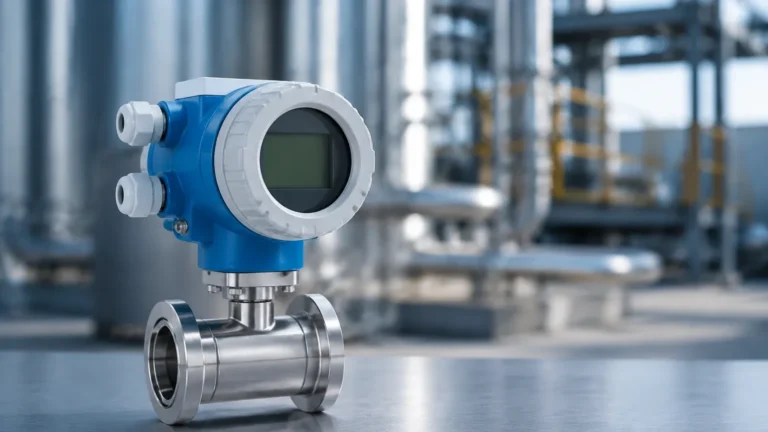
Pressure Transducer Transmitter
Pressure Transducer Transmitter
In industrial process control, the measurement of liquid level is frequently achieved through the detection of hydrostatic pressure. A pressure transducer transmitter is a critical component in these systems, converting the physical force exerted by a fluid column into a standardized electrical signal suitable for monitoring and automation. While the terms "transducer" and "transmitter" are often used interchangeably in casual conversation, they represent specific stages of signal processing that are vital for accurate data acquisition in water treatment, chemical processing, and oil and gas applications.
Understanding the distinction between the sensing element (transducer) and the signal conditioner (transmitter) is the first step in selecting the correct instrument for a specific project. For those seeking comprehensive technical specifications and product ranges, visiting the Main Page of a specialized manufacturer provides a broad overview of available technologies.
Measurement Principles of Hydrostatic Level Sensing
The fundamental principle behind using a pressure transducer transmitter for level measurement is the hydrostatic law. This law states that the pressure at a specific point within a static liquid is directly proportional to the height of the liquid column above that point, provided the density of the liquid remains constant.
The Hydrostatic Equation
The relationship is defined by the formula:
P = ρ × g × h
Where:
* P is the hydrostatic pressure (typically measured in Pascals or bar).
* ρ (rho) is the density of the liquid (kg/m³).
* g is the acceleration due to gravity (approximately 9.81 m/s²).
* h is the height of the liquid column (meters).
In practical engineering, since gravity is a constant and the density of the process fluid is usually known, the pressure measured by the sensor can be directly scaled to represent the level. For example, a water column of 10 meters (32.8 ft) exerts a pressure of approximately 1 bar (14.5 psi) at the base.
Transducer vs. Transmitter
A pressure transducer is the primary sensing element. It typically utilizes a diaphragm that deflects under pressure. This deflection is measured by strain gauges, piezo-resistive elements, or capacitive sensors, which produce a low-level voltage or millivolt signal.
A pressure transmitter includes the transducer but adds electronic circuitry to amplify, linearize, and condition the signal. The most common output for industrial applications is a 4-20mA current loop, which is highly resistant to electrical noise and can be transmitted over long distances (up to several hundred meters) without signal degradation.
Types of Pressure Transducer Transmitters
Depending on the installation environment and the nature of the medium, different physical configurations are required. The two primary categories used in level measurement are submersible and external (threaded) transmitters.
1. Submersible Level Transmitters
These devices are designed to be lowered directly into the liquid. The sensor is housed in a waterproof stainless steel or plastic casing, and the electrical connection is made via a specialized cable. This cable includes a small vent tube that allows the internal side of the sensor diaphragm to be referenced to atmospheric pressure, ensuring accurate gauge pressure readings regardless of changes in barometric pressure.
2. External Pressure Transmitters
For tanks with bottom or side-wall penetrations, an external pressure transducer transmitter is mounted via a threaded or flanged connection. These are common in pressurized vessels where the sensor must measure the differential pressure between the bottom of the tank and the gas space at the top to accurately determine the liquid level.
Technical Selection Criteria
Selecting the appropriate pressure transducer transmitter requires a detailed analysis of the process conditions. Failure to account for chemical compatibility or pressure ranges can lead to premature sensor failure or inaccurate readings.
Material Compatibility
The wetted parts—the diaphragm and the housing—must be resistant to the process fluid.
* 316L Stainless Steel: Standard for water and non-corrosive oils.
* Ceramic: Highly resistant to abrasion and many aggressive chemicals.
* Tantalum or Hastelloy: Used for highly corrosive acids.
* PTFE/FEP: Often used for cable jackets in submersible applications involving harsh chemicals.
Pressure Range and Overpressure
The transmitter should be selected so that the maximum expected level corresponds to approximately 75-80% of the sensor's full-scale range. This provides a buffer for surges or overfilling. Additionally, the "overpressure rating" must be checked to ensure the sensor is not damaged by temporary pressure spikes or cleaning cycles (such as CIP processes).
Accuracy and Stability
Industrial-grade transmitters typically offer accuracy classes of 0.5%, 0.25%, or 0.1% of the full scale. Long-term stability is also a factor, as sensors can "drift" over time, requiring periodic recalibration to maintain precision.
Practical Selection Table
| Application | Recommended Sensor Type | Housing Material | Key Consideration |
| :— | :— | :— | :— |
| Deep Well Monitoring | Submersible | 316L Stainless Steel | Cable tensile strength and waterproofing |
| Corrosive Chemical Tank | External (Flanged) | Hastelloy or PTFE Coated | Chemical resistance of the diaphragm |
| Wastewater Sump | Submersible | Stainless Steel / PVC | Clogging resistance (Flush diaphragm) |
| Pressurized Fuel Tank | Differential Pressure | Stainless Steel | Static pressure rating of the housing |
| Food & Beverage | Sanitary Threaded | 316L (Electropolished) | Hygienic design and CIP compatibility |

Installation Considerations and Best Practices
Proper installation is as critical as selecting the right hardware. Many "failures" in level measurement are actually the result of improper mounting or environmental interference.
Submersible Mounting
When installing a submersible pressure transducer transmitter in a deep well or a large tank with turbulence, it is advisable to use a stilling well (a perforated pipe). This prevents the sensor from moving laterally, which could damage the cable or cause erratic readings due to kinetic pressure effects. The cable should be secured with a proper cable clamp to avoid stretching the internal wires.
Atmospheric Venting
For gauge pressure sensors, the vent tube in the cable must remain unobstructed. It is recommended to terminate the cable in a junction box equipped with a desiccant filter. This prevents moisture from entering the vent tube, which could lead to internal corrosion or condensation that blocks the reference pressure path.
Temperature Compensation
Liquid density changes with temperature. If a tank undergoes significant temperature fluctuations, the pressure measured at the bottom will change even if the physical level of the liquid remains the same. High-end pressure transmitters often include integrated temperature sensors to allow the control system to compensate for these density variations.
Limitations and Common Challenges
While hydrostatic pressure measurement is a reliable and cost-effective method, it has inherent limitations that engineers must address during the design phase.
1. Density Sensitivity: As noted, any change in the specific gravity of the fluid directly impacts the accuracy. This is a major challenge in processes where different fluids are mixed or where concentration levels vary.
2. Turbulence and Aeration: In tanks with high-speed agitators or aeration systems, the pressure reading can become unstable. The air bubbles in the liquid reduce the effective density, leading to an underestimation of the actual level.
3. Sediment Buildup: In wastewater or slurry applications, solids can settle on the sensor diaphragm. This buildup adds weight or prevents the diaphragm from moving freely, resulting in a "stuck" or offset reading. A flush-diaphragm design is often used to mitigate this risk.
Frequently Asked Questions (FAQ)
Q: Can a pressure transducer transmitter be used for dry bulk solids?
A: Generally, no. Hydrostatic pressure principles apply to fluids. Solids do not exert pressure uniformly in all directions like liquids do, and they can form "bridges" or "rat holes" that make pressure-based level measurement impossible.
Q: How often should a level transmitter be calibrated?
A: For most industrial applications, an annual calibration check is standard. However, in critical or high-accuracy applications, semi-annual checks may be required. Many modern transmitters support digital protocols like HART, which allow for remote diagnostics and calibration.
Q: What is the difference between 2-wire and 4-wire transmitters?
A: A 2-wire transmitter uses the same two wires for both power supply and the 4-20mA output signal, which simplifies wiring. A 4-wire transmitter has separate pairs for power and signal, which is often necessary for devices with high power consumption, such as those with local displays or heated housings.
Q: Can I cut the cable of a submersible transmitter?
A: While technically possible, it is discouraged unless the manufacturer provides specific instructions. Cutting the cable requires careful resealing to maintain the waterproof integrity and ensuring the vent tube remains open and protected from moisture.
Conclusion
The pressure transducer transmitter remains a cornerstone of industrial level measurement due to its simplicity, reliability, and relatively low cost. By understanding the physics of hydrostatic pressure and carefully matching sensor materials and configurations to the process environment, engineers can implement robust monitoring solutions. For further technical guidance on integrating these sensors into automated systems or to explore specific models for chemical and water applications, professional consultation and a review of the Main Page resources are recommended to ensure all project-specific variables are addressed.