Procal Calibration Software
Procal Calibration Software
In the modern industrial landscape, the accuracy of level measurement is not merely a matter of operational efficiency; it is a fundamental requirement for safety, environmental compliance, and fiscal accountability. For engineers and facility managers utilizing high-precision instruments such as radar level meters, ultrasonic sensors, and hydrostatic transmitters, the management of calibration data is a critical task. This is where procal calibration software serves as a vital bridge between physical hardware and digital quality management systems.
Professional manufacturers like Welk provide the robust hardware necessary for industrial automation, but the long-term reliability of these instruments depends on a rigorous calibration schedule. This article explores the intersection of level measurement technologies and calibration management, providing a technical guide for selecting and implementing software solutions to maintain instrument integrity.
Principles of Level Measurement and Calibration Requirements
Before implementing a software-based calibration management system, it is essential to understand the underlying physics of the instruments being managed. Different technologies require distinct calibration approaches.
1. Radar Level Measurement
Radar level meters, particularly those operating at high frequencies like 80GHz or 26GHz, utilize the Time-of-Flight (ToF) principle. The device emits a microwave signal that reflects off the medium's surface. The time taken for the signal to return is proportional to the distance.
* Calibration Focus: The primary calibration variables are the "zero point" (empty tank) and the "span" (full tank). Calibration must also account for the dielectric constant of the material, as this affects signal reflection strength.
* Software Role: Digital management systems record the signal-to-noise ratio and false echo suppression maps to ensure the radar ignores internal tank obstructions.
2. Ultrasonic Level Sensors
Ultrasonic sensors use sound waves (typically 40kHz to 200kHz) to measure distance. Unlike radar, the speed of sound is highly dependent on air temperature and density.
* Calibration Focus: Temperature compensation is the most critical factor. Calibration often involves verifying the sensor's accuracy against a known physical distance at a specific temperature.
* Software Role: Systems like procal calibration software track these environmental variables over time, allowing maintenance teams to identify if a sensor is drifting due to transducer aging or environmental changes.
3. Hydrostatic Level Transmitters
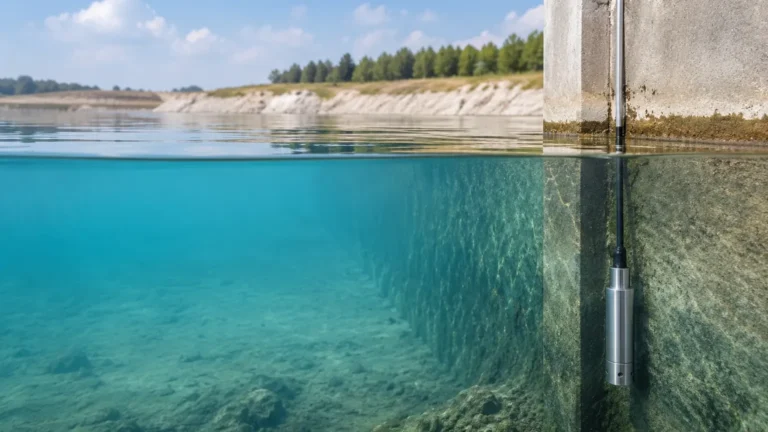
These sensors measure the pressure exerted by a liquid column. The pressure is directly proportional to the height of the liquid and its density ($P = \rho gh$).
* Calibration Focus: Calibration requires a precise pressure source (deadweight tester or digital calibrator) to simulate various depths. Because density changes with temperature, the software must often record the specific gravity of the fluid at the time of calibration.
* Software Role: Automating the calculation of pressure-to-level conversion and maintaining a history of sensor offset adjustments.
4. Magnetic Level Gauges
These are mechanical-magnetic systems where a float moves with the liquid level. While they are inherently robust, the transmitters attached to them (such as reed chains or magnetostrictive probes) require periodic electronic verification.
To review the full technical specifications of these instrument types and their application support, professionals often consult the Main Page of specialized instrument manufacturers.
The Role of Procal Calibration Software in B2B Operations
Procal calibration software is an industry-standard solution designed to automate the management of calibration records. In a B2B environment—especially in the chemical, oil and gas, and water treatment sectors—manual record-keeping is no longer sufficient to meet regulatory demands.
Centralized Asset Management
The software acts as a centralized database for every level meter in a facility. It stores the manufacturer’s specifications, installation dates, and the specific "Tag ID" for each device. This ensures that a radar level meter in Tank A is never confused with a hydrostatic transmitter in Tank B during a maintenance cycle.
Compliance and Audit Readiness
Industries governed by ISO 9001, FDA 21 CFR Part 11, or environmental protection standards require a clear audit trail. Procal calibration software generates "As-Found" and "As-Left" certificates automatically. This documentation proves that the instrument was tested, identifies how much it had drifted (As-Found), and confirms it was returned to within tolerance (As-Left).
Scheduling and Workflow Automation
One of the most significant risks in industrial automation is the "forgotten sensor." Level meters in remote or hazardous locations may be overlooked. The software provides automated scheduling based on time intervals or usage, ensuring that critical level switches and transmitters are calibrated before they fail.
Selection Table: Level Instruments and Calibration Needs
Choosing the right calibration strategy depends on the instrument technology and the criticality of the process. The following table provides a general guideline for common level measurement devices.
| Instrument Type | Typical Accuracy | Calibration Method | Recommended Frequency | Software Integration Level |
| :— | :— | :— | :— | :— |
| 80GHz Radar | ±1 mm | Distance Reference / Dry Cal | 12–24 Months | High (HART/Modbus) |
| Ultrasonic Sensor | ±0.25% of Range | Fixed Target Reference | 6–12 Months | Medium |
| Hydrostatic Trans. | ±0.1% to ±0.5% | Pressure Simulation | 6–12 Months | High (Analog/Digital) |
| Magnetic Gauge | ±5 mm to ±10 mm | Visual / Float Check | 24 Months | Low (Manual Entry) |
| Level Switches | N/A (Point Level) | Wet Function Test | 6 Months | Medium (Pass/Fail) |
Installation and Implementation Considerations
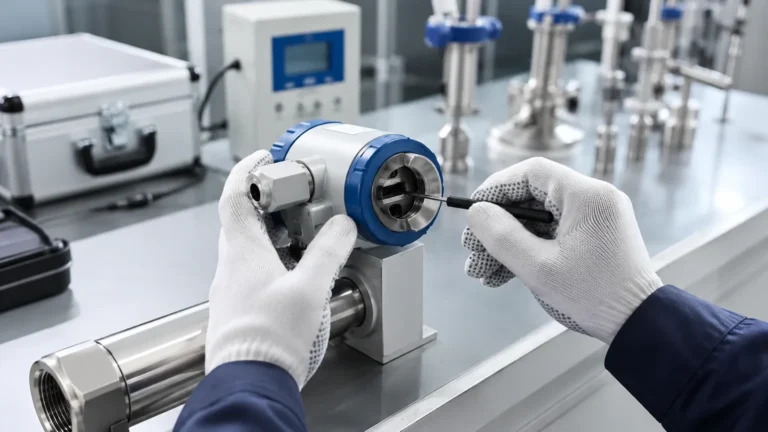
Integrating procal calibration software into a facility’s workflow requires careful planning. It is not merely a software installation; it is a hardware-software synchronization process.
1. Hardware Interface: Most modern level meters from manufacturers like Welk support HART, Modbus, or Profibus protocols. The calibration software must be able to interface with these protocols via a field communicator or a remote gateway to pull data directly from the device.
2. Master Standards: The software is only as accurate as the "Master Standard" used for the calibration. For level measurement, this might be a laser distance meter or a high-precision pressure calibrator. These master tools must themselves be calibrated and tracked within the software to maintain the chain of traceability.
3. User Permissions: In a B2B setting, maintaining data integrity is paramount. Implementation should include role-based access control (RBAC), where only certified technicians can sign off on calibration certificates.
4. Metric Standardization: For global operations, ensure the software is configured to the facility's standard units. While Welk instruments typically provide measurements in millimeters (mm) or meters (m), the software should be capable of handling imperial conversions (inches/feet) if required for specific regional reports.

Common Risks and Limitations
While software significantly enhances calibration management, engineers must be aware of potential pitfalls:
* Data Silos: If the calibration software is not integrated with the plant's wider Enterprise Asset Management (EAM) or CMMS (Computerized Maintenance Management System), data silos can occur, leading to missed maintenance windows.
* Human Error in Manual Entry: For older mechanical gauges that do not have digital outputs, data must be entered manually into the software. This remains a significant point of failure for data accuracy.
* Environmental Variables: Software can record that a calibration took place, but it cannot always account for extreme field conditions (e.g., heavy foam in a tank or high-pressure steam) that might cause a sensor to behave differently in operation than it did during a "dry" calibration.
* Reference Uncertainty: If the reference tool used for calibration has an uncertainty level too close to the instrument being tested, the calibration is invalid. The "Test Uncertainty Ratio" (TUR) should ideally be 4:1.
Frequently Asked Questions (FAQs)
Q: Can procal calibration software perform the actual calibration of a radar level meter?
A: No. The software manages the data, calculates the errors, and stores the records. The physical calibration—adjusting the sensor's parameters or verifying its reading against a known physical standard—must still be performed by a technician using appropriate tools.
Q: How does the software handle HART-enabled level transmitters?
A: For HART-enabled devices, the software can often communicate directly with the instrument to read configuration data, serial numbers, and current output, reducing the need for manual data entry and minimizing errors.
Q: Is this software suitable for SIL-rated level switches?
A: Yes. Calibration software is excellent for tracking the proof-testing intervals required for Safety Instrumented Levels (SIL). It provides the necessary documentation to prove that the safety function is being maintained according to the required Probability of Failure on Demand (PFD).
Q: What is the difference between a "factory calibration" and a "field calibration"?
A: Factory calibration is performed by the manufacturer (like Welk) under controlled conditions before shipping. Field calibration is performed at the installation site to account for specific vessel geometry, mounting positions, and process conditions.
Conclusion
Effective level measurement is the backbone of industrial process control. By combining high-quality hardware—such as the radar and ultrasonic solutions found on the Main Page—with sophisticated procal calibration software, organizations can ensure long-term accuracy and compliance. The transition from manual logs to automated digital systems reduces risk, saves engineering time, and provides the data-driven insights necessary for modern industrial maintenance. Whether managing a single water treatment plant or a global network of chemical processing facilities, the integration of robust instruments and intelligent calibration software is a benchmark of operational excellence.