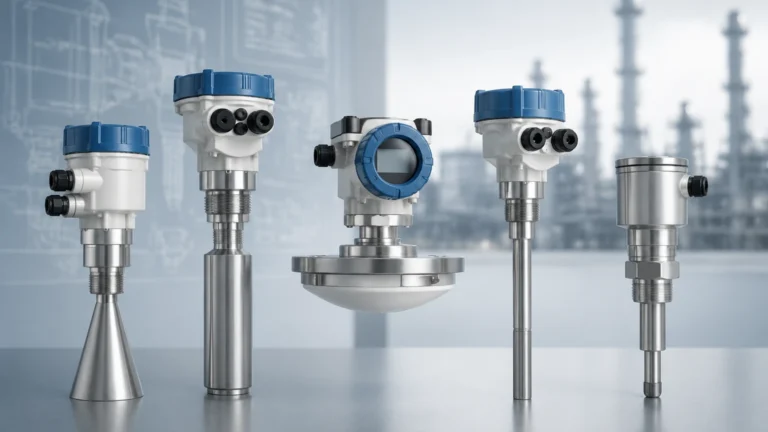
Pulp and Paper Emissions Monitoring System
Pulp and Paper Emissions Monitoring System
The pulp and paper industry is subject to some of the most stringent environmental regulations globally due to the complex chemical processes involved in fiber extraction and bleaching. A robust pulp and paper emissions monitoring system is not merely a regulatory requirement; it is a critical component of process efficiency and resource recovery. While gas analyzers and particulate monitors are the visible face of emissions tracking, the underlying reliability of these systems depends heavily on precise level measurement within scrubbers, chemical recovery tanks, and effluent treatment facilities.
Effective emissions management requires a holistic approach to monitoring liquid and solid levels. Whether managing the reagents in a flue gas desulfurization (FGD) unit or tracking the accumulation of lime mud, the choice of level instrumentation dictates the accuracy of the entire monitoring framework. This guide explores the technical principles, selection criteria, and installation strategies for level measurement technologies essential to a modern pulp and paper emissions monitoring system.
Integration of Level Control in Emissions Management
In a pulp mill, emissions control is inextricably linked to the chemical recovery cycle. The recovery boiler, for instance, is a primary source of emissions but also a vital part of energy production. To minimize the release of sulfur compounds and particulates, mills employ wet scrubbers and electrostatic precipitators (ESPs).
Level meters play a foundational role in these sub-systems:
1. Scrubber Operation: Maintaining the correct level of scrubbing liquid (often an alkaline solution) ensures maximum contact time between the flue gas and the reagent, optimizing the removal of acidic gases.
2. Chemical Storage: Accurate tracking of chemicals like magnesium hydroxide or lime slurry prevents process interruptions that could lead to accidental emission spikes.
3. Condensate Management: Emissions monitoring often involves cooling flue gas samples. Level sensors in knockout pots ensure that condensate is drained before it can damage sensitive analytical equipment.
For engineers looking to integrate these components into a unified system, reviewing the technical specifications on the Main Page provides a starting point for matching sensor capabilities with specific process demands.
Measurement Principles for Industrial Level Sensors
Before selecting a device for a pulp and paper emissions monitoring system, it is essential to understand the physics governing different measurement technologies. In the harsh environments of a paper mill—characterized by steam, foam, and corrosive chemicals—certain principles perform better than others.
Radar Level Measurement (Non-Contact)
Radar level meters operate on the Time of Flight (ToF) principle. The sensor emits a high-frequency microwave signal (typically 26 GHz or 80 GHz) that travels to the product surface and reflects back to the antenna. The distance is calculated based on the time interval between transmission and reception.
* Frequency Matters: 80 GHz radar offers a narrower beam angle, which is ideal for avoiding internal tank obstructions like agitators or spray headers common in scrubber units.
Ultrasonic Level Measurement
Similar to radar, ultrasonic sensors use ToF but rely on sound waves rather than electromagnetic waves. A transducer emits an ultrasonic pulse that reflects off the liquid surface.
* Limitation: Because sound requires a medium (air), changes in air temperature, pressure, or the presence of heavy steam can alter the speed of sound, leading to inaccuracies unless properly compensated.
Hydrostatic Pressure Measurement
This contact-based method measures the pressure exerted by a liquid column. The pressure at the bottom of a tank is directly proportional to the height of the liquid and its specific gravity.
* Application: This is highly effective for vented tanks containing clean liquids, though it requires careful calibration if the liquid density changes due to chemical concentration shifts.
Magnetic Level Gauges
Used for visual indication and remote signaling, these involve a float containing a magnet that moves with the liquid level inside a bypass chamber. The magnet flips external flags and can be paired with a reed chain transmitter for continuous electronic monitoring.
Application-Specific Selection for Pulp and Paper Mills
Selecting the right instrument requires analyzing the specific conditions of the emissions control point.
Wet Scrubbers and Absorbers
Scrubbers are high-turbulence environments with significant vapor and chemical spray. Non-contact radar is generally preferred here because it is unaffected by the gas composition or vacuum conditions. An 80 GHz radar can "see" through heavy steam and focus on the liquid surface even in the presence of internal structural supports.
Lime Mud and Slurry Tanks
Lime mud is abrasive and prone to scaling. Contact-based sensors like tuning forks or hydrostatic transmitters may suffer from material buildup, leading to "false full" readings. Ultrasonic sensors can work if the distance is short, but high-frequency radar with a flush-mounted antenna is often the most reliable choice to prevent clogging.
Effluent and Wastewater Monitoring
Monitoring the levels in open channels or large equalization basins is a key part of the broader pulp and paper emissions monitoring system regarding water discharge. Ultrasonic sensors are cost-effective for these large-scale, ambient-temperature applications, provided they are equipped with sunshields to prevent temperature-induced errors.
Selection Table: Level Instrumentation for Emissions Control
| Application Point | Recommended Technology | Primary Advantage | Main Limitation |
| :— | :— | :— | :— |
| Scrubber Sump | 80 GHz Radar | Unaffected by steam/vapor | Higher initial cost |
| Chemical Storage (Acid/Alum) | Ultrasonic (PTFE coated) | Corrosion resistance | Sensitive to foam |
| Condensate Pots | Hydrostatic Transmitter | High precision in small tanks | Requires contact with fluid |
| Lime Slurry Tank | Radar (Flush Mount) | Resists scaling/buildup | Requires specific nozzle sizing |
| Wastewater Basins | Ultrasonic | Cost-effective for wide areas | Affected by heavy wind/foam |
| Recovery Boiler Feed | Magnetic Level Gauge | Redundant visual/electronic | Moving parts can wear |

Installation and Maintenance Best Practices
Even the most advanced sensor will fail if installed incorrectly. In the context of a pulp and paper emissions monitoring system, the following engineering guidelines should be followed:
1. Nozzle Geometry: For radar and ultrasonic sensors, the nozzle height should be kept to a minimum. If the nozzle is too tall or narrow, the signal may reflect off the nozzle walls (ringing), creating a "dead zone" at the top of the tank. A 50 mm to 100 mm (2" to 4") diameter nozzle is standard for most applications.
2. Avoiding Obstructions: Sensors should be positioned away from the tank wall (typically at 1/6th to 1/4th of the tank diameter) and away from the inflow stream to prevent turbulence from causing erratic readings.
3. Foam Management: Heavy foam absorbs ultrasonic signals and can scatter radar waves. If foam is unavoidable, a stilling well (a pipe extending into the liquid) can be used to provide a clear, flat surface for the measurement signal.
4. Environmental Protection: In paper mills, sensors are often exposed to high humidity and wash-down procedures. Ensure all housing is rated to at least IP67 or IP68. For outdoor installations, heat shields are recommended to prevent the electronics from overheating in direct sunlight.
Limitations and Technical Constraints
While modern instrumentation is highly capable, there are inherent physical limitations to consider:
* Dielectric Constant (Dk): Radar relies on the reflectivity of the medium. Low Dk liquids (like certain oils or solvents used in specialty paper coatings) reflect less energy. Most aqueous solutions in pulp mills have a high Dk, making them excellent candidates for radar.
* Acoustic Interference: In environments with high-pressure steam leaks or loud pneumatic machinery, ultrasonic sensors may pick up ambient noise that matches their operating frequency, leading to signal loss.
* Temperature Extremes: Standard sensors are often rated up to 80°C (176°F). For recovery boiler applications or high-temperature pulping stages, specialized high-temperature antennas or cooling fins are required to protect the sensor electronics.
Frequently Asked Questions (FAQ)
Q: How does foam affect a pulp and paper emissions monitoring system's level sensors?
A: Foam is a significant challenge. Ultrasonic waves are often completely absorbed by thick foam. Radar is more resilient but can still experience signal attenuation. For heavy foam, using a guided wave radar (GWR) or a stilling well with a non-contact radar is the best engineering solution.
Q: Can one sensor type be used for all mill applications?
A: While 80 GHz radar is highly versatile, it is not always the most cost-effective solution for simple water tanks or open-air basins where ultrasonic sensors perform adequately for a lower price point.
Q: How often should level meters in emissions systems be calibrated?
A: For regulatory compliance in emissions monitoring, sensors should be verified annually. However, in high-scaling applications like lime mud, a quarterly inspection for material buildup is recommended to ensure continuous accuracy.
Q: What is the benefit of 80 GHz over 26 GHz radar in these systems?
A: The 80 GHz frequency allows for a much smaller antenna and a tighter beam (as narrow as 3 degrees). This makes it easier to install in tanks with complex internal geometries without receiving false echoes from ladders, pipes, or agitators.
Conclusion
A reliable pulp and paper emissions monitoring system depends on the precision of its individual components. By understanding the measurement principles of radar, ultrasonic, and hydrostatic technologies, engineers can select the most appropriate tools for the demanding conditions of a paper mill. Proper installation and an awareness of environmental limitations ensure that these systems provide the accurate data necessary for both environmental compliance and process optimization. For further technical details and to explore specific instrument models, professionals are encouraged to Review product options and application support on the main site.
Download Pulp and Paper Emissions Monitoring System as a PDF