Flow Transducer Types
Flow Transducer Types
In industrial process control, measuring the movement of liquids, gases, and steam is as critical as monitoring the levels within storage tanks. A flow transducer is a device that converts the physical movement of a fluid into a standardized electrical signal, such as 4-20mA, pulse, or digital protocols like HART and Modbus. Understanding the various flow transducer types is essential for engineers and plant managers to ensure system accuracy, longevity, and cost-effectiveness.
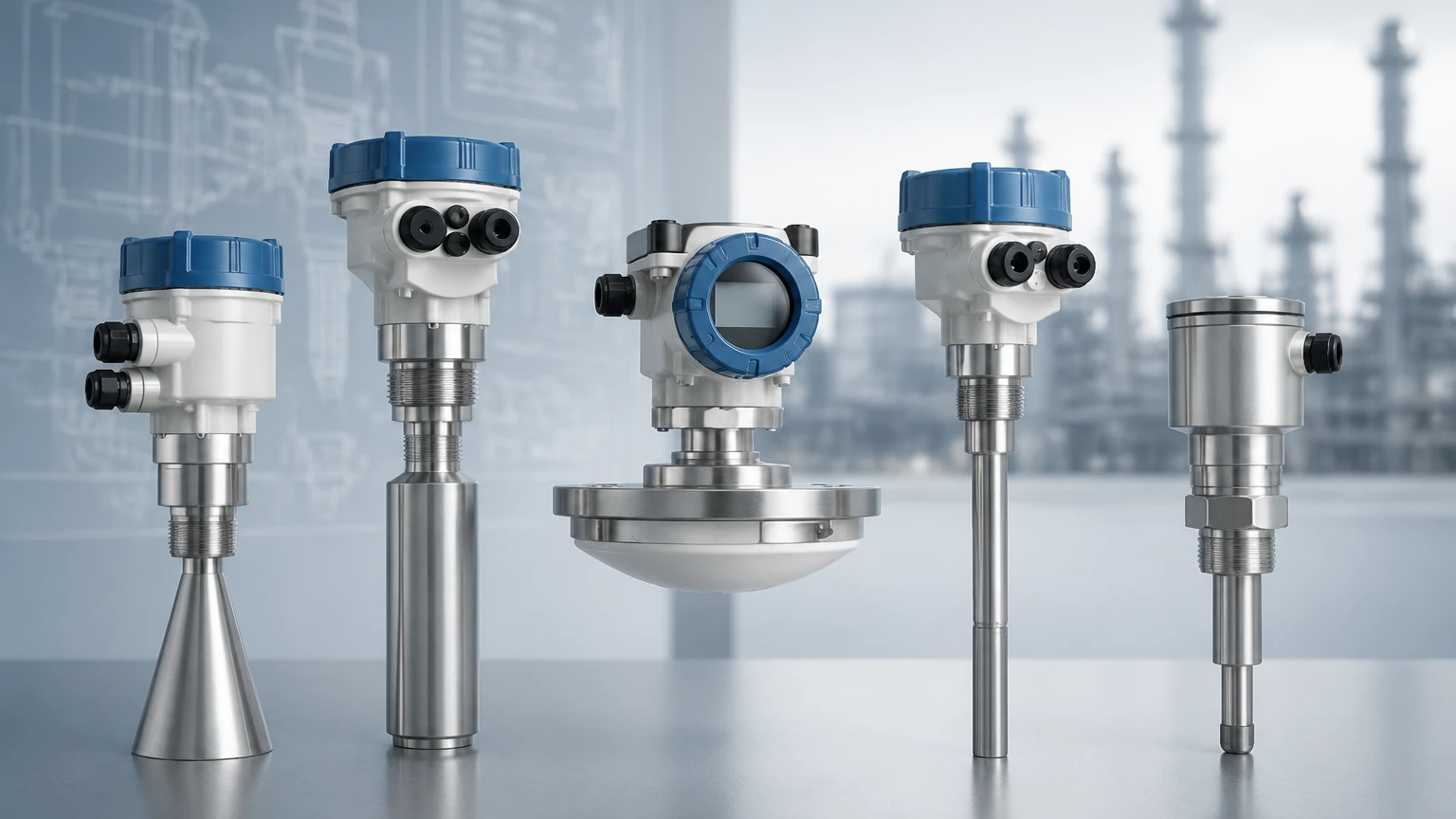
While level measurement instruments—such as those found on the Welk Main Page—provide data on inventory and volume, flow transducers provide real-time data on the rate of consumption or transfer. This guide explores the mechanical and electronic principles behind flow measurement, categorizes the primary transducer types, and provides selection criteria for industrial applications.
Understanding Flow Transduction Principles
Before selecting a specific instrument, it is necessary to understand how physical flow is translated into data. Flow measurement is generally categorized into mass flow and volumetric flow. Most industrial transducers measure volumetric flow, which is the volume of fluid passing through a specific cross-section per unit of time (e.g., m³/h or L/min).
The principles of transduction vary significantly:
1. Differential Pressure (DP): Based on Bernoulli’s principle, where a constriction in the pipe creates a pressure drop proportional to the square of the flow rate.
2. Electromagnetic Induction: Based on Faraday’s Law, where a conductive fluid moving through a magnetic field generates a voltage proportional to its velocity.
3. Acoustic/Ultrasonic: Utilizing sound waves to determine velocity via frequency shifts (Doppler) or time-of-flight differences (Transit-time).
4. Oscillatory (Vortex): Measuring the frequency of vortices shed by a bluff body placed in the flow stream.
5. Mechanical/Kinetic: Using the fluid's momentum to rotate a turbine or displace a piston.
6. Thermal: Measuring the rate of heat dissipation from a heated sensor into the flowing medium.
Primary Flow Transducer Types
Each industrial environment presents unique challenges, from corrosive chemicals to high-pressure steam. Choosing the right flow transducer type requires matching the fluid properties with the sensor's operating principle.
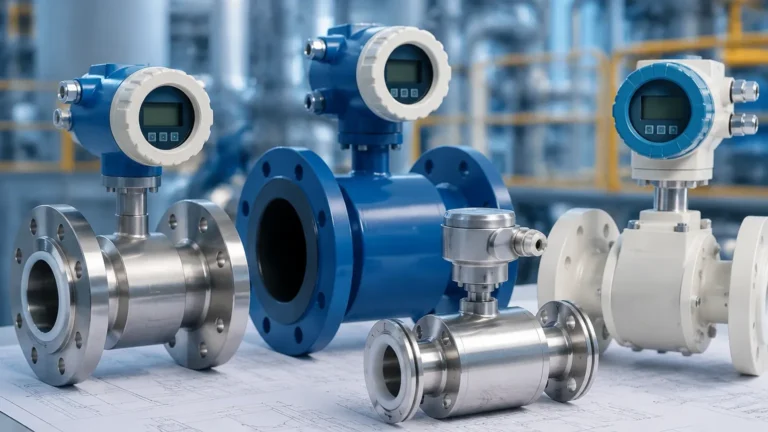
1. Electromagnetic Flow Transducers (Magmeters)
Electromagnetic transducers are the industry standard for conductive liquids. They consist of a lined pipe section equipped with electromagnetic coils and electrodes. As a conductive liquid (such as water, acids, or slurries) flows through the magnetic field, a voltage is generated.
* Advantages: No moving parts, zero pressure drop, and high accuracy (typically ±0.5%).
* Limitations: Cannot measure non-conductive fluids like oils, deionized water, or gases.
2. Ultrasonic Flow Transducers
Ultrasonic devices are popular for their non-intrusive nature. They are available in two main formats: transit-time and Doppler. Transit-time transducers send sound pulses upstream and downstream; the difference in travel time indicates the flow speed. Doppler transducers reflect sound off particles or bubbles in the fluid.
* Advantages: Can be "clamp-on" (no pipe cutting required), no pressure drop, and suitable for large diameter pipes (up to 3000 mm or more).
* Limitations: Transit-time requires clean liquids; Doppler requires a minimum concentration of suspended solids or aeration.
3. Vortex Flow Transducers
Vortex meters utilize a "bluff body" placed in the flow. As fluid passes this body, it creates alternating vortices (the Karman Vortex Street). The frequency of these vortices is directly proportional to the fluid velocity.
* Advantages: Excellent for steam measurement, high temperature/pressure resistance, and long-term stability.
* Limitations: Requires a minimum Reynolds number to function; sensitive to pipe vibration.
4. Turbine Flow Transducers
These mechanical transducers feature a rotor that spins as fluid passes through. The speed of the rotor is detected by a magnetic pickup or optical sensor.
* Advantages: High precision for clean, low-viscosity liquids and gases.
* Limitations: Moving parts are subject to wear; sensitive to debris which can jam the rotor.
5. Differential Pressure (DP) Transducers
DP flow measurement is a traditional yet reliable method. It involves a primary element (like an orifice plate, Venturi tube, or Pitot tube) and a secondary element (the DP transmitter). The transmitter measures the pressure difference across the primary element.
* Advantages: Well-understood technology, suitable for extreme temperatures and pressures, and relatively low cost for large pipe sizes.
* Limitations: Causes a permanent pressure loss in the system; accuracy can degrade if the primary element wears or clogs.
Comparative Selection Table
The following table provides a general comparison of common flow transducer types used in industrial automation.
| Transducer Type | Suitable Fluids | Typical Accuracy | Pressure Drop | Maintenance Level |
| :— | :— | :— | :— | :— |
| Electromagnetic | Conductive Liquids | ±0.5% | Negligible | Low |
| Ultrasonic | Clean/Dirty Liquids | ±1.0% to ±2.0% | None | Low |
| Vortex | Gas, Steam, Liquid | ±1.0% | Medium | Medium |
| Turbine | Clean Liquids/Gases | ±0.25% | High | High |
| Differential Pressure | Gas, Steam, Liquid | ±1.0% to ±3.0% | High | Medium |
| Thermal Mass | Clean Gases | ±1.0% | Negligible | Medium |
Application-Specific Recommendations
Water and Wastewater Treatment
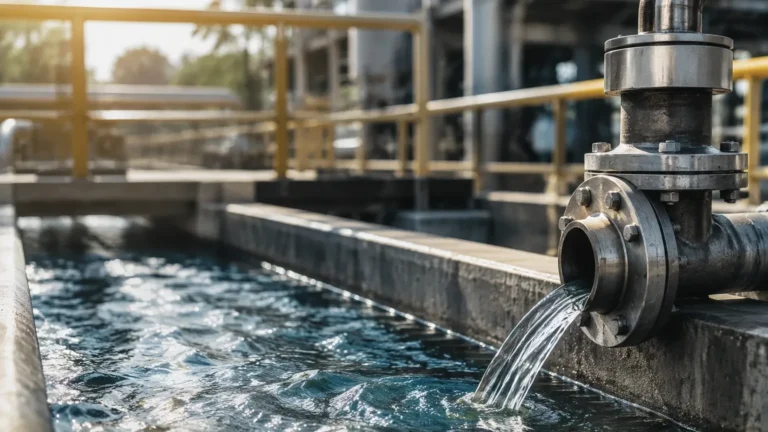
For municipal water and wastewater, Electromagnetic flow transducers are preferred due to their ability to handle solids and their lack of moving parts. When retrofitting existing large-scale pipelines where cutting the pipe is cost-prohibitive, Clamp-on Ultrasonic transducers are the most practical choice.
Chemical Processing
In environments involving corrosive acids or bases, transducers must feature chemically resistant liners (such as PTFE or PFA). Electromagnetic meters are again a top choice here, provided the fluid is conductive. For non-conductive chemicals, Vortex meters with high-grade stainless steel or Hastelloy components are recommended.
Oil and Gas
Measurement of hydrocarbons requires high precision. Turbine meters are often used for light oils, while Coriolis mass flow meters (a high-end transducer type) are used when mass accuracy is paramount for custody transfer. For gas flow in pipelines, Differential Pressure systems remain a staple due to their robustness.
Installation and Maintenance Considerations
The performance of any flow transducer is heavily dependent on the installation environment. Even the most expensive meter will fail to provide accurate data if installed incorrectly.
Straight Pipe Runs
Most flow transducer types require a specific length of straight pipe both upstream and downstream of the sensor. This ensures a fully developed, laminar flow profile. A common rule of thumb is "10D upstream and 5D downstream," where D is the pipe diameter. However, some technologies, like certain electromagnetic meters or those with built-in flow conditioners, may require less.
Orientation and Entrapped Air
For liquid applications, the pipe must always be full. In horizontal installations, transducers should be positioned so that air bubbles do not collect at the sensor electrodes (usually at the 3 o'clock and 9 o'clock positions for magmeters). In vertical installations, flow should ideally move upward to ensure the pipe remains full and to prevent sediment buildup.
Grounding and Interference
Electromagnetic transducers are sensitive to electrical noise. Proper grounding to the fluid and the piping system is mandatory to prevent stray currents from interfering with the small millivolt signals generated by the sensor. Similarly, ultrasonic meters must be shielded from high-frequency acoustic noise produced by nearby control valves.
Limitations and Common Risks
* Viscosity Changes: Mechanical meters like turbines are highly sensitive to changes in fluid viscosity, which can alter the calibration factor. If the fluid temperature fluctuates significantly, the resulting viscosity change may lead to measurement errors.
* Scaling and Coating: In chemical or wastewater applications, the internal walls of the transducer or the electrodes can become coated with scale or biological film. This is a common risk for electromagnetic and ultrasonic meters, requiring periodic cleaning or the use of "self-cleaning" electrode designs.
* Cavitation: If the pressure at the transducer drops below the fluid's vapor pressure, bubbles will form (cavitation). This not only damages the instrument (especially vortex and turbine types) but also renders the flow signal erratic and unusable.
Frequently Asked Questions (FAQs)
Q: Can I use an electromagnetic flow meter for deionized water?
A: No. Deionized water has very low conductivity. Electromagnetic meters require a minimum conductivity (usually >5 μS/cm) to function. An ultrasonic or turbine meter would be a better choice.
Q: What is the difference between a flow sensor and a flow transducer?
A: While the terms are often used interchangeably, the "sensor" is the part that physically interacts with the fluid, while the "transducer" (or transmitter) converts that physical interaction into an electrical signal.
Q: How often should a flow transducer be calibrated?
A: This depends on the application and regulatory requirements. In critical chemical processes, annual calibration is standard. In stable water applications, calibration intervals may extend to 3–5 years, provided the device has no moving parts.
Q: Do ultrasonic flow meters work on plastic pipes?
A: Yes, clamp-on ultrasonic transducers work on most plastic pipes (PVC, HDPE, etc.), provided there is a good acoustic bond between the transducer and the pipe wall and the pipe is not lined with a material that has an air gap.
For engineers integrating these systems into larger automation frameworks, it is important to consider how flow data correlates with tank levels. For comprehensive information on level monitoring technologies that complement flow measurement, visit the Main Page to review product options and application support.