Radioactive Scanner
Radioactive Scanner
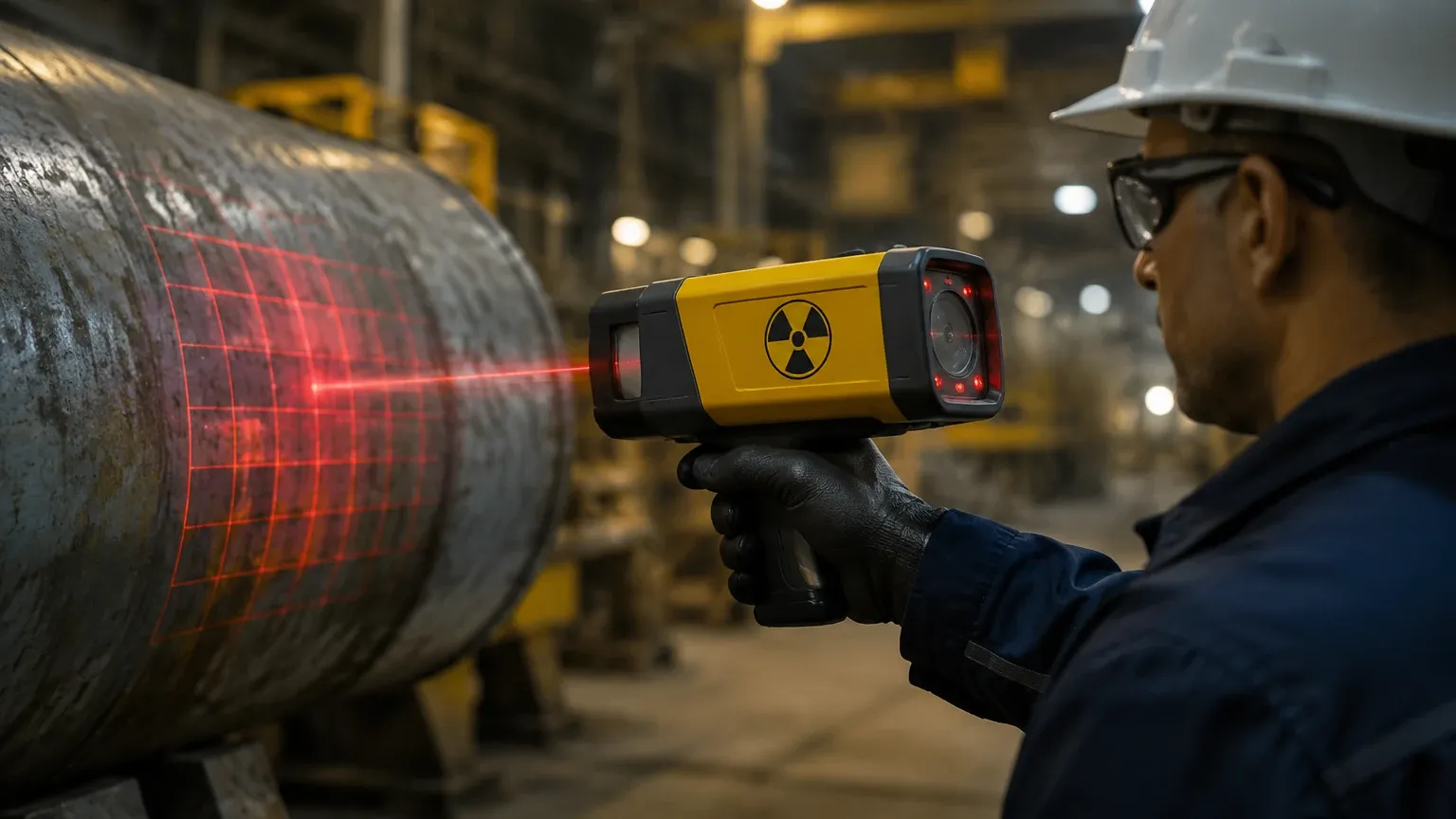
In the landscape of industrial process control, the radioactive scanner—more technically known as a radiometric or nucleonic level gauge—represents the pinnacle of non-contact measurement technology. Unlike ultrasonic or radar sensors that rely on the reflection of waves from a surface, a radioactive scanner utilizes the principle of gamma-ray attenuation. This allows it to measure the level, density, or interface of materials from outside the vessel, without ever coming into contact with the process media.
For engineers managing extreme environments—such as high-pressure reactors, toxic chemical storage, or molten metal processing—radiometric technology is often the only viable solution when traditional instrumentation fails due to heat, corrosion, or mechanical stress. This article provides a comprehensive technical overview of radioactive scanners, their operational principles, and practical considerations for industrial implementation.
Measurement Principles of Radiometric Systems
The operation of a radioactive scanner is governed by the laws of physics regarding radiation interaction with matter. The system typically consists of two primary components: a radioactive source housed in a shielded container and a sensitive detector mounted on the opposite side of the vessel.
Gamma Ray Attenuation
As gamma rays emitted by the source pass through the vessel walls and the internal medium, they are absorbed or scattered. The intensity of the radiation reaching the detector is inversely proportional to the mass of the material in the path of the beam. This relationship is mathematically described by the Beer-Lambert law:
**I = I₀ * e^(-μρx)**
Where:
* I is the intensity measured at the detector.
* I₀ is the initial intensity of the source.
* μ is the mass absorption coefficient of the material.
* ρ is the density of the material.
* x is the thickness of the material (the path length).
In a level measurement application, as the material level rises, it blocks more of the radiation beam, causing the detector to register a lower count rate. The electronics then convert this count rate into a standardized 4-20mA signal or digital output representing the level percentage. Because the source and detector are mounted externally, the measurement is completely independent of process temperature, pressure, viscosity, or chemical aggressiveness.
System Components and Hardware
To ensure accuracy and safety, a radioactive scanner system incorporates specialized hardware designed for longevity in industrial environments.
1. The Radioactive Source
The most common isotopes used in industrial scanners are Caesium-137 (Cs-137) and Cobalt-60 (Co-60).
* Cs-137: Preferred for most level and density applications due to its long half-life (approx. 30 years) and moderate energy levels (0.66 MeV).
* Co-60: Used for very thick-walled vessels or high-density materials due to its higher energy (1.17 and 1.33 MeV), though it has a shorter half-life (approx. 5.3 years).
2. Source Housing (The Shield)
The source is encapsulated in a double-walled stainless steel capsule, which is then placed inside a lead-lined or steel-encased shielding container. This housing features a narrow aperture or "shutter" that can be mechanically locked to block radiation during maintenance or vessel entry.
3. The Detector
Modern radioactive scanners utilize high-sensitivity detectors, most commonly scintillation counters. These contain a crystal (such as Sodium Iodide) or a plastic fiber that emits a tiny flash of light when struck by a gamma photon. A photomultiplier tube or photodiode converts these light flashes into electrical pulses. Other types include ion chambers, which are more robust but generally less sensitive than scintillators.
Selection Criteria: When to Use a Radioactive Scanner
While technologies like guided wave radar or ultrasonic sensors are cost-effective for standard tanks, certain conditions necessitate the use of a radioactive scanner. The following table provides a selection guide based on process conditions.
| Process Condition | Ultrasonic/Radar | Radioactive Scanner | Recommendation |
| :— | :— | :— | :— |
| Temperature | Up to 450°C (Special) | Unlimited (External) | Radioactive for >450°C |
| Pressure | Up to 400 bar | Unlimited (External) | Radioactive for extreme HP |
| Corrosive Media | Requires exotic alloys | No contact required | Radioactive for high acidity/alkalinity |
| Internal Obstructions | Interferes with signal | Generally ignored | Radioactive for agitated vessels |
| Slurries/Abrasives | High wear on probes | No wear | Radioactive for mining/dredging |
| Vacuum | Possible signal loss | No effect | Radioactive for high vacuum |
For a broader overview of alternative technologies and how they compare to radiometric systems, you can Review product options and application support on our main page.
Key Industrial Applications
Oil and Gas Refineries
In delayed coking units, radioactive scanners are used to monitor the level of petroleum coke inside massive drums. The high temperatures (over 480°C) and the thick, foaming nature of the media make internal sensors impossible to maintain. Radiometric systems provide continuous level monitoring through the thick steel walls of the coke drum.
Chemical and Petrochemical
High-pressure polyethylene reactors operate at pressures exceeding 2000 bar (approx. 29,000 psi). At these pressures, any vessel penetration is a potential leak point and a safety hazard. A radioactive scanner allows for precise level control without drilling into the reactor shell.
Mining and Mineral Processing
Measuring the density of ore slurries in a pipeline is critical for optimizing throughput. A radioactive scanner clamped onto the outside of the pipe provides real-time density data, allowing operators to adjust water content and pump speeds without the sensor being eroded by the abrasive slurry.
Water and Wastewater Treatment
In large-scale anaerobic digesters, measuring the interface between sludge, water, and foam is essential. Radiometric scanners can be configured to provide a density profile, identifying the different layers within the tank to improve gas production efficiency.
Installation and Engineering Considerations
Successful implementation of a radioactive scanner requires careful engineering to ensure both measurement accuracy and personnel safety.
1. Beam Geometry: The source and detector must be perfectly aligned. For continuous level measurement, a "fan beam" source is often used to cover the entire measurement range (e.g., 1 meter to 5 meters). Alternatively, multiple point sources can be used for very tall vessels.
2. Vessel Wall Thickness: Engineers must calculate the total "water equivalent" thickness of the vessel walls and insulation. If the walls are too thick (e.g., >200mm of steel), a higher activity source or a more sensitive detector may be required.
3. Background Radiation: In some environments, naturally occurring radioactive materials (NORM) or neighboring scanners can interfere with the detector. Modern systems include background radiation compensation software to filter out these signals.
4. Cooling: While the process inside the tank can be thousands of degrees, the detector electronics typically need to stay below 60°C. In high-temperature applications, water-cooling jackets or air-cooling systems are installed around the detector.
Limitations and Regulatory Requirements
Despite its technical advantages, the use of a radioactive scanner involves specific challenges:
* Licensing: Every radioactive source must be licensed by national or regional nuclear regulatory authorities (e.g., the NRC in the US or the IAEA internationally). This involves strict documentation, designated Radiation Safety Officers (RSOs), and periodic leak testing.
* Source Decay: Because the isotope decays over time, the system must be periodically re-calibrated. Most modern transmitters have built-in decay compensation software that automatically adjusts the calculation based on the half-life of the isotope.
* Cost: The initial capital expenditure for a radiometric system is higher than for radar or ultrasonic sensors, primarily due to the cost of the source, specialized shielding, and the regulatory compliance overhead.
* Disposal: At the end of its useful life, the radioactive source cannot be simply discarded. It must be returned to the manufacturer or a licensed disposal facility, which incurs additional costs.
Frequently Asked Questions (FAQs)
Q: Is a radioactive scanner dangerous to workers standing near the tank?
A: No, provided the system is installed and shielded correctly. The radiation field outside the shielded area is typically kept below 0.005 mSv/hr (0.5 mrem/hr) at a distance of 30 cm, which is comparable to the radiation received during a commercial flight.
Q: How often does the source need to be replaced?
A: For Cs-137 sources, the functional lifespan is often 20 to 30 years. While the source loses half its strength every 30 years, the detector sensitivity can often be adjusted to compensate for several decades before a replacement is necessary.
Q: Can a radioactive scanner measure the level of solids?
A: Yes. Radiometric technology is excellent for measuring the level of bulk solids, powders, and granules in silos, as it is unaffected by the dust and noise that often interfere with ultrasonic or radar sensors.
Q: Does the radiation make the process material radioactive?
A: No. Gamma radiation is a form of electromagnetic energy. It passes through the material but does not induce radioactivity in the product. This makes it safe for use in food, beverage, and pharmaceutical industries.
Conclusion
The radioactive scanner remains an indispensable tool for the most challenging industrial level and density measurements. By leveraging the physics of gamma attenuation, these systems provide a window into the most hostile process environments without compromising vessel integrity. When selecting a measurement solution for high-temperature, high-pressure, or highly corrosive applications, engineers should weigh the regulatory requirements against the unmatched reliability and safety of radiometric technology. For more information on integrating these sensors into your automation architecture, visit the Main Page for technical specifications and support.