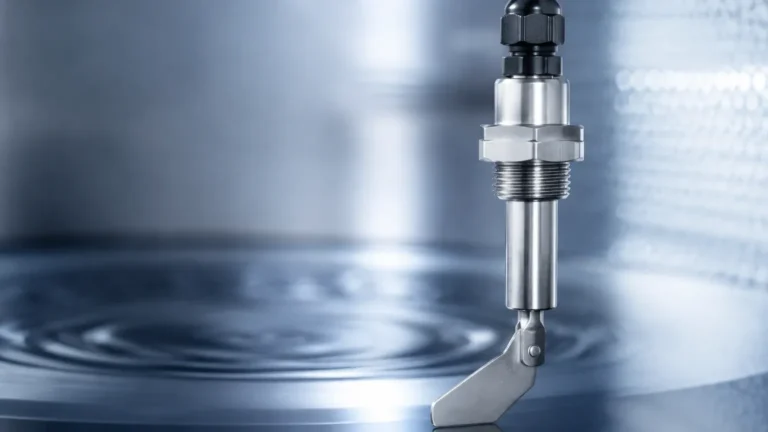
Absolute Pressure Gauges
Absolute Pressure Gauges
In the realm of industrial instrumentation, precision is not merely a requirement but a fundamental pillar of process safety and efficiency. Among the various instruments used to monitor system states, absolute pressure gauges stand out as critical tools for applications where atmospheric fluctuations must be excluded from the measurement. Unlike standard gauge pressure instruments, which use the surrounding air pressure as a reference point, absolute pressure gauges measure pressure relative to a perfect vacuum.
For engineers and plant operators, understanding the nuances of these instruments is essential for maintaining the integrity of vacuum systems, distillation columns, and high-precision laboratory environments. This guide provides a comprehensive technical overview of absolute pressure measurement, the technology behind the sensors, and practical considerations for industrial selection and installation.
Understanding Absolute Pressure Measurement Principles
To select the correct instrument, one must first distinguish between the different types of pressure references used in process automation. Pressure is defined as the force exerted by a fluid per unit area, but the "zero" point of that measurement determines the type of gauge required.
The Zero Reference
Absolute pressure ($P_{abs}$) is measured against a total vacuum—a space entirely devoid of matter, exerting zero pressure. In contrast, gauge pressure ($P_g$) is measured relative to the local atmospheric pressure ($P_{atm}$). The mathematical relationship is expressed as:
$$P_{abs} = P_g + P_{atm}$$
Because atmospheric pressure varies based on altitude and weather conditions (typically fluctuating around 101.325 kPa or 1.013 bar at sea level), a standard pressure gauge will show different readings for the same process state if the weather changes or if the gauge is moved to a different elevation.
Why Use Absolute Pressure Gauges?
Absolute pressure gauges are indispensable in processes where the atmospheric variable would introduce unacceptable error. For instance, in a vacuum packaging machine, the goal is to achieve a specific low-pressure state. If a standard gauge is used, a drop in barometric pressure due to a passing storm could lead the system to believe it has reached its target vacuum when it has not. By using an absolute reference, the measurement remains constant regardless of external environmental changes.
Technologies and Operating Mechanisms
Industrial absolute pressure gauges utilize specific mechanical or electronic designs to maintain a reference vacuum within the instrument itself.
Mechanical Absolute Gauges
Mechanical gauges typically employ one of two primary sensing elements: bellows or capsules.
1. Capsule Elements: These consist of two corrugated diaphragms joined at the edges to form a sealed chamber. In an absolute pressure gauge, this chamber is evacuated to a high degree of vacuum and hermetically sealed. As the process pressure acts on the exterior of the capsule, it compresses. This movement is transmitted via a linkage to the pointer on the dial.
2. Bellows Elements: Similar to capsules, bellows are used for higher pressure ranges or where more robust mechanical movement is required. One side of the bellows is evacuated to act as the reference, while the process pressure acts against it.
Electronic Absolute Pressure Transmitters
In modern industrial automation, electronic sensors are more common due to their ability to integrate with control systems via 4-20mA, HART, or Modbus protocols.
* Piezoresistive Sensors: These utilize a silicon chip with integrated resistors. One side of the chip is exposed to the process, while the other side is bonded to a sealed vacuum chamber. The deformation of the silicon changes its electrical resistance, which is then converted into a pressure reading.
* Capacitive Sensors: These measure the change in capacitance between a sensing diaphragm and a fixed reference electrode. A vacuum is maintained behind the sensing diaphragm to provide the absolute reference. Capacitive sensors are known for their high accuracy and stability in low-pressure ranges.
Key Selection Criteria for Industrial Applications
Selecting the right absolute pressure gauge requires a detailed analysis of the process environment. Engineers should evaluate the following criteria before procurement:
1. Pressure Range and Overpressure Limit
Absolute pressure gauges are most frequently used in low-pressure or vacuum ranges (e.g., 0 to 50 mbar abs or 0 to 2 bar abs). It is vital to ensure the instrument can handle the maximum possible pressure the system might experience during cleaning or startup, even if that pressure exceeds the normal operating range. Overpressure can deform the sensing element, leading to permanent calibration drift.
2. Wetted Materials and Chemical Compatibility
The sensing element (diaphragm, bellows, or capsule) must be compatible with the process media. While 316L stainless steel is the industry standard, highly corrosive applications in the chemical industry may require exotic materials such as Hastelloy C-276, Monel, or Tantalum. For a broader look at compatible instrumentation for various media, engineers can visit the Welk Main Page to review product options and application support.
3. Accuracy Classes
Accuracy is typically defined as a percentage of the full-scale span. Industrial absolute gauges usually fall into accuracy classes ranging from 0.1% to 1.0%. High-precision laboratory applications may require even tighter tolerances. It is important to distinguish between "accuracy" (closeness to the true value) and "repeatability" (consistency of readings).
4. Environmental Conditions
Consider the ambient temperature and the potential for vibration. Mechanical gauges may require liquid filling (such as glycerin or silicone oil) to dampen the effects of vibration on the pointer. Electronic transmitters require appropriate Ingress Protection (IP) ratings, such as IP66 or IP67, to withstand washdowns or outdoor installation.
Technical Specifications and Selection Table
The following table provides a general comparison of common absolute pressure gauge configurations used in industrial settings.
| Feature | Capsule Gauge (Mechanical) | Piezoresistive Transmitter (Electronic) | Capacitive Transmitter (Electronic) |
| :— | :— | :— | :— |
| Typical Range | 0…10 mbar to 0…600 mbar | 0…100 mbar to 0…100 bar | 0…1 mbar to 0…40 bar |
| Accuracy | 1.0% to 1.6% of FS | 0.2% to 0.5% of FS | 0.05% to 0.1% of FS |
| Output | Visual Dial | 4-20mA / Digital | 4-20mA / Digital |
| Best Use Case | Local monitoring, no power available | General process control | High-precision vacuum control |
| Vibration Resistance | Low (unless liquid filled) | High | Moderate to High |
| Cost | Low to Moderate | Moderate | High |
*Note: All pressure values are absolute. FS = Full Scale.*
Installation Considerations and Best Practices
Correct installation is as important as instrument selection for ensuring long-term reliability.
Mounting Orientation
Absolute pressure gauges, especially those with large sensing diaphragms for low-pressure ranges, can be sensitive to orientation. The weight of the internal components or the fill fluid can exert a small amount of pressure on the sensor. Always install the gauge in the orientation specified by the manufacturer (usually vertical) or perform a zero-point adjustment after installation if the instrument allows.
Temperature Isolation
If the process media is extremely hot, it can damage the internal vacuum seal or cause the reference gas (if any remains) to expand, leading to errors. Use siphons, cooling towers, or capillary tubes with remote seals to keep the instrument within its rated operating temperature (typically -20°C to +80°C for the housing).
Vacuum Integrity
The connection between the process and the gauge must be perfectly airtight. Even a microscopic leak in the fittings will allow atmospheric air to enter the measurement line, causing the absolute pressure gauge to read higher than the actual process pressure. Use high-quality compression fittings or NPT/G threads with appropriate sealants.
Limitations and Common Operational Risks
While absolute pressure gauges are highly accurate, they are subject to specific risks that differ from standard gauge pressure instruments.
* Zero-Point Drift: Over time, the vacuum reference inside the sensor may degrade due to outgassing or microscopic leaks. This results in a "zero shift." Regular calibration against a primary standard is necessary to ensure the instrument remains accurate.
* Ambient Temperature Sensitivity: Although the vacuum reference eliminates atmospheric pressure errors, temperature changes can still affect the mechanical linkages or electronic components. High-quality instruments include internal temperature compensation to mitigate this effect.
* Condensation in the Line: In vacuum applications, if the process contains moisture, vapors may condense in the sensing line. This liquid column exerts hydrostatic pressure on the sensor, leading to false readings. Sensing lines should be sloped back toward the process or equipped with condensate traps.
Frequently Asked Questions (FAQs)
Q: Can I use an absolute pressure gauge to measure altitude?
A: Yes. Since absolute pressure gauges measure the actual atmospheric pressure when open to the air, they function as barometers. As altitude increases, atmospheric pressure decreases. By measuring this decrease, the altitude can be calculated.
Q: How often should an absolute pressure gauge be calibrated?
A: For most industrial processes, an annual calibration is standard. However, in critical vacuum distillation or pharmaceutical drying processes, semi-annual or quarterly checks may be required to ensure the vacuum reference has not drifted.
Q: What is the difference between a vacuum gauge and an absolute pressure gauge?
A: A standard vacuum gauge (or "suction gauge") usually measures pressure relative to the atmosphere, showing 0 at atmospheric pressure and moving toward -1 bar as vacuum increases. An absolute pressure gauge shows ~1 bar at atmospheric pressure and moves toward 0 as vacuum increases. The absolute gauge is more accurate for deep vacuum processes because it is not affected by weather-induced changes in atmospheric pressure.
Q: Are absolute pressure gauges suitable for liquid level measurement?
A: Yes, specifically in pressurized tanks. In a closed vessel, the total pressure at the bottom is the sum of the liquid's hydrostatic pressure and the gas pressure above it. Using absolute pressure transmitters at the top and bottom allows the control system to calculate the precise liquid level by subtracting the top absolute pressure from the bottom absolute pressure.
Conclusion
Absolute pressure gauges are essential components in the toolkit of the modern process engineer. By providing a stable, vacuum-referenced measurement, they eliminate the unpredictability of atmospheric changes, ensuring that vacuum systems and high-precision processes operate within their designed parameters.
When selecting an instrument, it is vital to balance the needs for accuracy, material compatibility, and long-term stability. For professional-grade measurement solutions across water treatment, chemical, and industrial automation sectors, exploring specialized manufacturer resources is recommended. To find the most suitable technology for your specific application, you can Review product options and application support on our main site to ensure your facility maintains the highest standards of measurement accuracy.