Remote Fuel Tank
Remote Fuel Tank
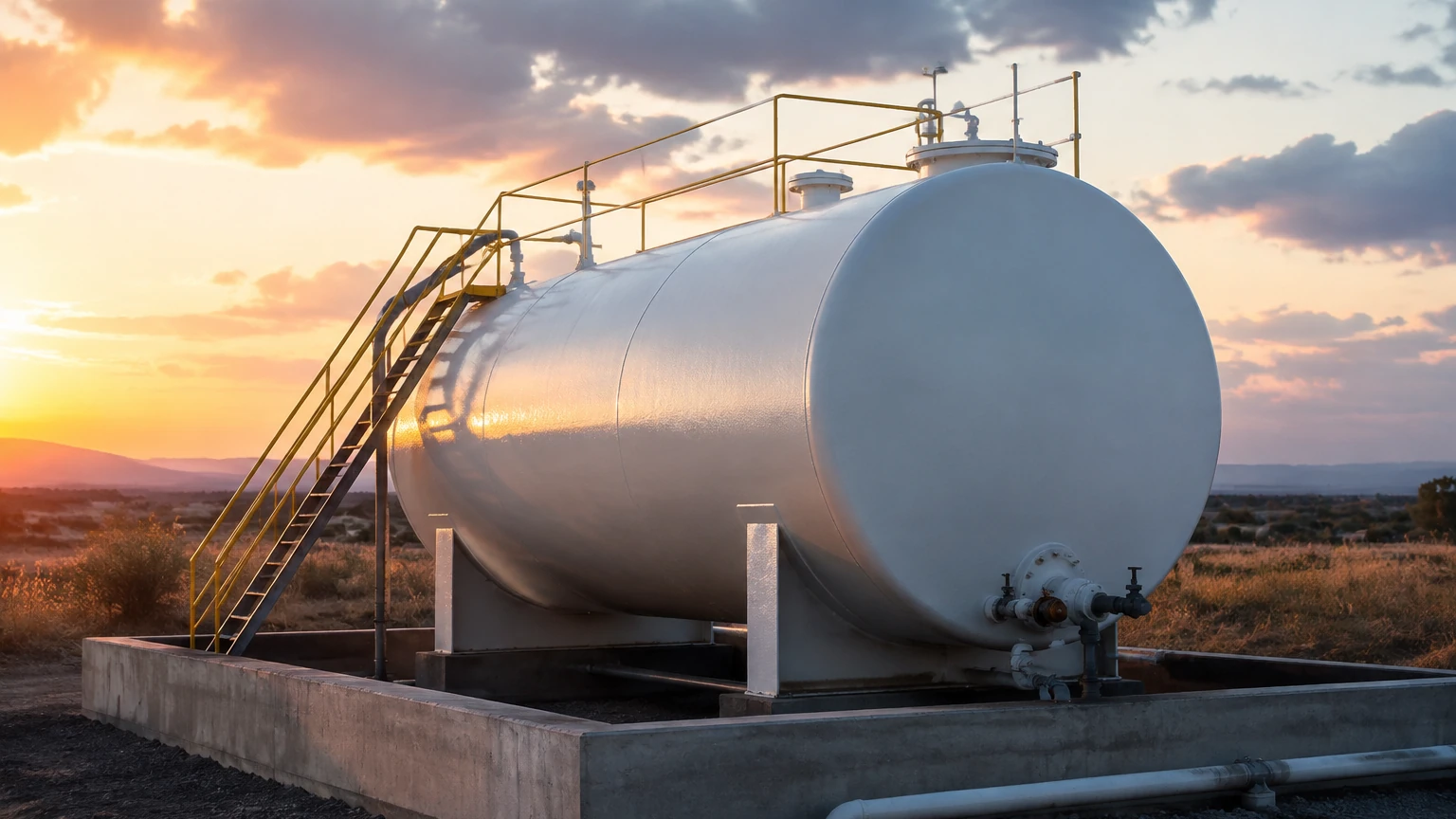
Monitoring a remote fuel tank presents unique logistical and technical challenges compared to local storage systems. Whether used for backup generators at telecommunications towers, heating oil for isolated facilities, or diesel storage for agricultural machinery, these tanks require reliable level measurement to prevent operational downtime and environmental hazards. In remote environments, manual dipping is often impractical or cost-prohibitive, making automated level sensing technology essential.
To select the appropriate instrumentation for a remote fuel tank, engineers must understand the underlying physical principles of measurement, the environmental constraints of the site, and the communication requirements for transmitting data back to a central management system. This guide examines the primary measurement technologies, selection criteria, and installation best practices for remote fuel monitoring.
Measurement Principles for Fuel Level Sensing
Before selecting a specific instrument, it is necessary to understand how different sensors interact with the fuel and the tank environment. The most common technologies used in remote fuel tank applications include ultrasonic, radar, hydrostatic, and magnetic level measurement.
Ultrasonic Level Measurement
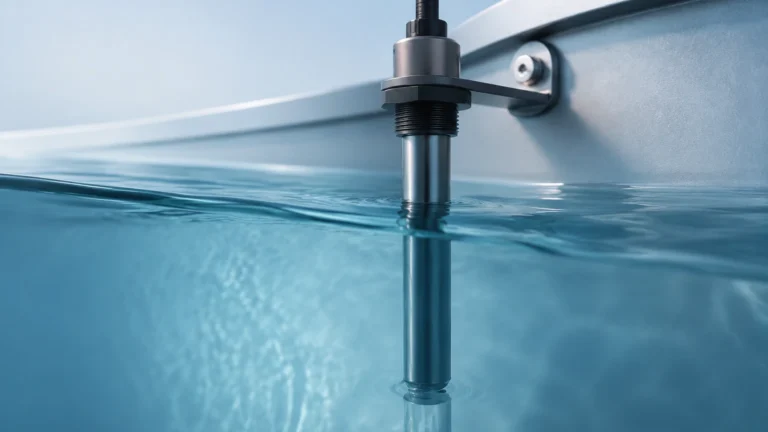
Ultrasonic sensors operate on the "Time of Flight" (ToF) principle. The sensor, mounted at the top of the tank, emits a high-frequency sound pulse toward the fuel surface. The pulse reflects off the liquid and returns to the sensor. By measuring the time interval between emission and reception, the device calculates the distance to the fuel surface based on the speed of sound.
* Advantages: Non-contact measurement, relatively low cost, and easy installation.
* Limitations: The speed of sound is affected by air temperature and vapor density. In fuel tanks, the presence of heavy vapors or significant temperature fluctuations can cause measurement errors unless the sensor includes temperature compensation.
Radar Level Measurement
Radar sensors also use the ToF principle but utilize electromagnetic waves (microwaves) rather than sound. High-frequency radar (such as 26GHz or 80GHz) is increasingly preferred for fuel applications. These waves travel at the speed of light and are largely unaffected by the atmosphere inside the tank.
* Advantages: Extremely high accuracy (often within ±2 mm), unaffected by vapors, foam, or temperature changes. Non-contact design reduces maintenance.
* Limitations: Higher initial capital expenditure compared to ultrasonic or hydrostatic sensors.
Hydrostatic Level Measurement
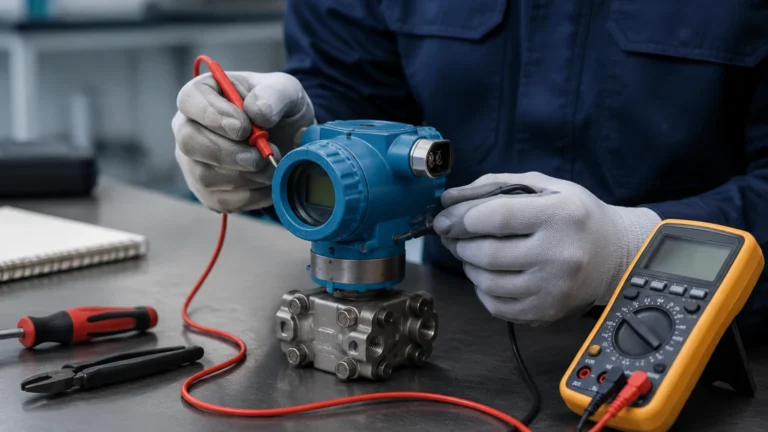
Hydrostatic transmitters measure the pressure exerted by the liquid column above the sensor. The pressure ($P$) is directly proportional to the height of the liquid ($h$), the density of the fuel ($
ho$), and gravity ($g$), following the formula $P =
ho gh$. For fuel tanks, submersible pressure transducers are typically lowered to the bottom of the tank.
* Advantages: Simple to install in existing tanks, highly reliable for vented tanks, and cost-effective for deep tanks.
* Limitations: Requires accurate knowledge of the fuel's specific gravity. If the fuel type changes (e.g., switching from diesel to a different biofuel blend), the sensor may require recalibration.
Magnetic Level Gauges
Magnetic level gauges utilize a float containing a magnet that moves with the fuel level inside a bypass chamber or directly in the tank. This magnet actuates a series of switches or a continuous transmitter outside the liquid.
* Advantages: Provides a clear visual indication alongside electronic output; requires no power for the visual component.
* Limitations: Mechanical parts are subject to wear or sticking if the fuel contains impurities or paraffin buildup.
Key Evaluation Criteria for Remote Sites
When managing a remote fuel tank, the selection process must go beyond basic accuracy. The following factors are critical for long-term reliability in isolated locations.
Power Supply and Consumption
Remote sites often lack access to a stable power grid. Level meters must be compatible with battery power or solar-charged systems. Low-power sensors that support "sleep modes" or have fast startup times for intermittent measurement are ideal. For example, a radar transmitter that can power up, take a reading, and transmit data via RS485 or 4-20mA in under 30 seconds is highly efficient for solar-powered telemetry units.
Connectivity and Data Transmission
The value of a remote fuel tank sensor lies in its ability to transmit data. Standard industrial outputs include:
* 4-20mA Loop: Reliable for short distances to a local RTU (Remote Terminal Unit).
* Modbus RTU (RS485): Allows for digital communication and multiple sensors on a single bus.
* IoT Integration: Many modern systems integrate LoRaWAN, NB-IoT, or cellular (4G/5G) modules directly into the sensor head or an adjacent gateway to send data to the cloud.
Media Compatibility and Hazardous Areas
Fuel is flammable, and the space above the liquid in a tank is often classified as a hazardous area (Zone 0, 1, or 2). Instruments must carry appropriate certifications, such as ATEX or IECEx, to ensure they do not become an ignition source. Furthermore, the materials of construction (e.g., 316L stainless steel, PTFE, or PVDF) must be resistant to the chemical properties of the fuel to prevent corrosion.
Practical Selection Table
| Technology | Best For | Max Range (Typical) | Accuracy | Maintenance Level |
| :— | :— | :— | :— | :— |
| Ultrasonic | Small, indoor tanks | 5 – 15 meters | ±0.25% | Low |
| 80GHz Radar | Precision, heavy vapor | 30+ meters | ±2 mm | Very Low |
| Hydrostatic | Deep or underground tanks | 100+ meters | ±0.5% | Medium (Cleaning) |
| Magnetic Gauge | Visual + Electronic | 6 meters | ±5 mm | Medium (Mechanical) |
For a comprehensive overview of available technologies and specific model specifications, engineers can consult the Main Page of industrial instrument providers to compare performance data.
Installation Considerations for Remote Fuel Tanks
Proper installation is as important as sensor selection. In remote environments, a service call to fix a poorly installed sensor can be more expensive than the sensor itself.
1. Mounting Position: For non-contact sensors (radar and ultrasonic), avoid mounting the device too close to the tank wall or directly above internal structures like ladders or heating coils. This prevents "false echoes" that can interfere with the true fuel level signal.
2. Venting: Ensure the tank is properly vented. In hydrostatic systems, the sensor needs to reference atmospheric pressure (usually via a capillary tube in the cable) to provide an accurate reading. If the vent or capillary tube is blocked, the reading will drift.
3. Stilling Wells: In tanks where turbulence is expected (e.g., during high-flow refilling), installing the sensor inside a stilling well (a vertical pipe) can stabilize the liquid surface and improve measurement reliability.
4. Lightning Protection: Remote tanks are often in exposed areas. Using surge protection on signal lines and ensuring proper grounding of the tank and instrument is vital to prevent damage from electrical storms.
Common Risks and Limitations
While automated monitoring significantly improves fuel management, users should be aware of potential pitfalls:
* Temperature-Induced Density Changes: Fuel expands and contracts with temperature. A hydrostatic sensor measures mass/pressure, so the indicated volume may vary even if no fuel has been added or removed. Advanced controllers can compensate for this if a temperature probe is also installed.
* Condensation and Ice: In cold climates, condensation on the face of an ultrasonic sensor can cause signal loss. Radar is generally more resistant to this, but extreme ice buildup on the antenna can still degrade performance.
* Theft and Leak Detection: While level meters provide data, detecting a slow leak or small-scale fuel theft requires high-frequency data logging and sophisticated software algorithms that can distinguish between consumption and unauthorized loss.
Frequently Asked Questions (FAQ)
Q: Can I use an ultrasonic sensor for gasoline tanks?
A: It is generally not recommended. Gasoline produces heavy vapors that change the speed of sound significantly, leading to errors. Furthermore, gasoline requires strict explosion-proof ratings. Radar is a much more reliable choice for gasoline.
Q: How often do remote fuel level sensors need calibration?
A: Radar and ultrasonic sensors are typically "set and forget" once calibrated to the tank geometry. Hydrostatic sensors should be checked annually for zero-drift, especially if the fuel contains sediment that might clog the diaphragm.
Q: What is the "Dead Zone" in level measurement?
A: The dead zone (or blocking distance) is the area immediately below a non-contact sensor where it cannot measure. If the fuel level enters this zone, the sensor will provide an error or a fixed maximum reading. Always choose a sensor with a dead zone smaller than the distance between the mounting point and the maximum possible fill level.
Q: How do I measure fuel volume in a horizontal cylindrical tank?
A: Since the relationship between height and volume is non-linear in horizontal tanks, the monitoring system must use a strapping table or a mathematical formula (linearization) to convert the level reading (mm) into volume (liters).
By carefully matching the measurement principle to the specific requirements of the remote fuel tank, operators can ensure continuous supply, optimize delivery schedules, and maintain safety standards across their infrastructure. For more detailed technical assistance and product selection, visiting the Main Page of a specialized manufacturer like Welk can provide the necessary engineering support.