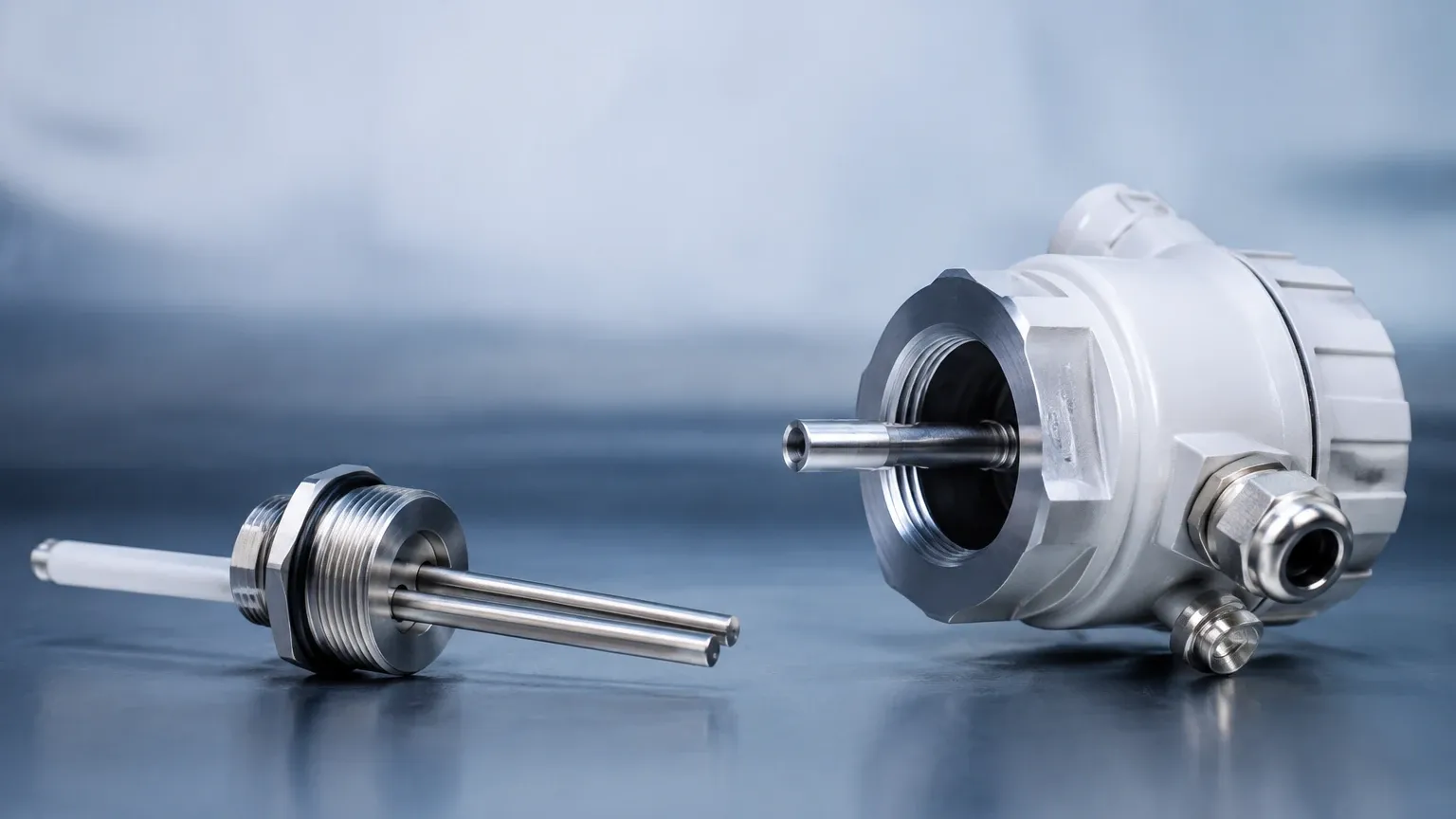
Removable Conductivity Level Switches
Removable Conductivity Level Switches
In the landscape of industrial automation, point level detection remains a fundamental requirement for process safety, inventory management, and pump control. Among the various technologies available, conductivity level switches offer a robust and cost-effective solution for detecting the presence of conductive liquids. Specifically, removable conductivity level switches have gained prominence in applications where maintenance access, hygiene, and modularity are critical. These instruments provide a reliable method for monitoring levels in tanks, sumps, and reservoirs across the water treatment, chemical, and food processing industries.
Measurement Principles of Conductivity Level Switches
Conductivity level switches operate on a simple electrical principle: the liquid itself acts as part of an electrical circuit. The system typically consists of one or more conductive electrodes (probes) and a reference electrode (which can be the metallic wall of the tank or a separate ground probe).
When the conductive liquid rises and makes contact with the electrode, it completes a low-voltage electrical circuit between the probe and the reference. This change in resistance is detected by a control unit or an integrated electronic module, which then triggers a relay output or a transistor switch.
Key aspects of the measurement principle include:
* AC Voltage Application: To prevent electrolysis and electrode degradation (polarization), these switches typically use a low-voltage alternating current (AC) rather than direct current (DC).
* Sensitivity Adjustment: Since different liquids have varying degrees of conductivity—measured in microsiemens per centimeter (µS/cm)—most modern controllers allow for sensitivity adjustment. This ensures the switch can distinguish between the actual liquid level and foam or residual moisture on the probe.
* Multi-Point Detection: A single process connection can house multiple probes of different lengths, allowing for the detection of several levels (e.g., high-high, high, low, and low-low) using a single entry point into the vessel.
The Significance of the Removable Design
The term "removable conductivity level switches" refers to designs where the electrode assembly or the individual probes can be detached from the process connection or the housing without necessitating the complete removal of the mounting flange or thread from the tank. This design offers several engineering advantages:
1. Ease of Maintenance: In applications involving scaling liquids or wastewater, electrodes can become coated with debris or mineral deposits. A removable design allows technicians to extract the probes for cleaning or replacement without draining the tank or using heavy tools.
2. Customizable Probe Lengths: Probes can often be cut to size or replaced with different lengths if process requirements change, providing flexibility in system configuration.
3. Safety in Hazardous Environments: Being able to service the instrument from the exterior of the tank reduces the need for confined space entry, enhancing operator safety.
4. Modular Electronics: Many removable models feature plug-in electronic modules, allowing for the replacement of the control logic without disturbing the mechanical installation or the physical probes.
Selection Criteria and Technical Specifications
When selecting removable conductivity level switches for industrial applications, engineers must consider the chemical compatibility of the wetted parts, the electrical properties of the medium, and the physical constraints of the installation site. For a comprehensive overview of available technologies and specific model capabilities, engineers often consult the Main Page of specialized instrument manufacturers to compare performance data.
Selection Table: Conductivity Level Switch Configurations
| Feature | Standard Industrial | Chemical/Corrosive | Hygienic/Sanitary |
| :— | :— | :— | :— |
| Probe Material | Stainless Steel 304/316 | Hastelloy C / Titanium | Stainless Steel 316L (Polished) |
| Insulation Material | PVC / Polypropylene | PTFE / PFA | PEEK / Food-grade PTFE |
| Process Connection | G1" or 1.5" Thread | Flanged (ANSI/DIN) | Tri-Clamp / SMS |
| Max. Temperature | 80°C (176°F) | 150°C (302°F) | 130°C (266°F) (SIP/CIP) |
| Max. Pressure | 10 bar (145 psi) | 40 bar (580 psi) | 16 bar (232 psi) |
| Number of Probes | 1 to 5 | 1 to 3 | 1 to 4 |
Installation Considerations
Proper installation is paramount to ensuring the longevity and accuracy of conductivity level switches. Because these devices rely on electrical contact, environmental factors can influence their performance.
* Mounting Orientation: While these switches can be mounted horizontally, vertical mounting from the top of the tank is preferred. This prevents the accumulation of solids on the insulation, which could cause a "bridging" effect and lead to false triggers.
* Electrode Spacing: If multiple probes are used, they must be spaced sufficiently to prevent accidental contact due to agitation or turbulence. In deep tanks, spacers (non-conductive guides) should be installed every 1,000 mm to 1,500 mm to maintain probe alignment.
* Grounding: For non-metallic (plastic or fiberglass) tanks, a dedicated reference probe must be installed. This probe should be the longest in the assembly to ensure it remains in contact with the liquid at all times, providing a consistent return path for the electrical signal.
* Dead Zones: Engineers must account for the "dead zone" near the process connection where the probe is insulated. No detection can occur within this insulated section, which typically extends 50 mm to 100 mm below the mounting point to prevent false switching caused by condensation or splashing.
Applications and Industry Use Cases
Removable conductivity level switches are versatile tools used across various sectors where conductive liquids are processed:
* Water and Wastewater Treatment: Monitoring levels in pump lift stations, chemical dosing tanks (e.g., alum or chlorine), and storage basins. The removable probe design is particularly useful here for clearing rags or biological growth.
* Food and Beverage: Detecting levels in milk silos, juice processing tanks, and cleaning-in-place (CIP) systems. The ability to use hygienic connections and PEEK insulation makes them suitable for food-contact surfaces.
* Boiler Control: Used for low-water cut-off and high-water alarms in steam boilers. In these high-temperature environments, the durability of the electrodes is essential.
* Chemical Processing: Managing levels in acid or alkali storage tanks. By selecting probes with PTFE coating and Hastelloy tips, the switches can withstand highly aggressive media.
Limitations and Constraints
While highly effective, conductivity level switches are not universal solutions. Understanding their limitations is necessary for correct technology selection:
1. Non-Conductive Liquids: These switches will not function with oils, hydrocarbons, pure distilled water, or non-polar solvents. A minimum conductivity (usually >5 µS/cm) is required.
2. Coating and Build-up: Although the removable design facilitates cleaning, heavy coating by viscous or sticky substances can create a conductive path between the probe and the tank wall, leading to a permanent "on" signal.
3. Turbulence and Foam: Extreme turbulence can cause rapid cycling of the relay. In such cases, a time-delay relay or a stilling well should be used. Foam may or may not be detected depending on its density and moisture content; if foam detection is undesirable, sensitivity must be tuned accordingly.
Maintenance and Troubleshooting
Maintenance of removable conductivity level switches is generally straightforward. Regular inspection intervals should be established based on the nature of the liquid.
* Visual Inspection: Periodically remove the probe assembly to check for erosion of the electrode tips or damage to the insulation.
* Cleaning: Use a soft cloth or a suitable chemical solvent to remove scale or deposits. Avoid abrasive materials that could scratch the stainless steel or damage the PTFE coating.
* Circuit Testing: A simple continuity test using a multimeter can verify the integrity of the probe and wiring. To test the controller, a resistor can be placed across the probe and ground terminals to simulate the presence of liquid.
Frequently Asked Questions (FAQs)
Q: Can conductivity level switches be used in plastic tanks?
A: Yes, but a reference (ground) probe must be included in the assembly because the tank wall is non-conductive and cannot serve as the return path for the electrical circuit.
Q: What is the maximum length for a removable probe?
A: For rigid rod probes, the practical limit is usually 3,000 mm to 4,000 mm to prevent bending. For deeper tanks, wire-rope (cable) electrodes are used, which can extend up to 20 meters or more.
Q: How do I handle liquids with varying conductivity?
A: Select a controller with a wide sensitivity adjustment range (e.g., 0.1 kΩ to 100 kΩ). This allows the system to be calibrated for the specific liquid in the tank.
Q: Are these switches suitable for high-pressure applications?
A: Yes, depending on the process connection and seal material. Some industrial models are rated for pressures up to 40 bar (approx. 580 psi).
Conclusion
Removable conductivity level switches represent a practical and reliable choice for point level monitoring in conductive media. Their modular design simplifies the complexities of industrial maintenance, while their lack of moving parts ensures a long service life even in demanding environments. By carefully considering material compatibility, installation geometry, and liquid conductivity, engineers can implement a level control solution that balances performance with ease of ownership. For detailed technical support and to explore a full range of level measurement instruments, including radar and ultrasonic options, visiting the Main Page of a dedicated manufacturer is the recommended next step for project procurement.