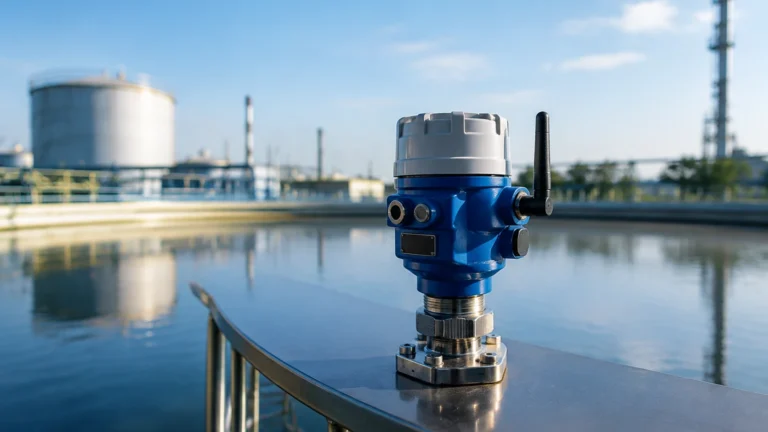
Radioactive Radiation Detector
Radioactive Radiation Detector
In the landscape of industrial process control, certain environments present challenges that conventional contact or non-contact level measurement technologies cannot overcome. When dealing with extreme temperatures, high pressures, highly corrosive chemicals, or abrasive slurries, a radioactive radiation detector—used as part of a nucleonic level measurement system—becomes the primary solution. This technology allows for completely non-intrusive measurement, meaning the sensing equipment never touches the process medium and remains entirely outside the vessel.
Understanding the mechanics, selection criteria, and safety protocols associated with a radioactive radiation detector is essential for plant engineers and instrumentation specialists. While Welk offers a broad range of solutions including radar and ultrasonic sensors, nucleonic systems serve as the "last resort" technology for the most demanding industrial applications.
Principles of Nucleonic Level Measurement
Before selecting a radioactive radiation detector, it is critical to understand the physics of gamma-ray attenuation. A nucleonic level system consists of two main components: a radioactive source (typically Cesium-137 or Cobalt-60) and a detector.
Gamma Ray Attenuation
The measurement principle is based on the absorption of gamma radiation as it passes through matter. The source is housed in a lead-shielded container with a narrow aperture, which directs a beam of gamma rays through the vessel. As the level of the material inside the vessel rises, it blocks or attenuates a portion of the radiation reaching the detector on the opposite side.
The relationship is governed by the Beer-Lambert Law, which states that the intensity of radiation decreases exponentially as it passes through a medium. The radioactive radiation detector measures the remaining intensity and converts this into an electrical signal corresponding to the level or density of the material.
Point Level vs. Continuous Level
1. Point Level Detection: Uses a small detector to identify when the material reaches a specific height. When the material obstructs the beam, the radiation count drops significantly, triggering a switch.
2. Continuous Level Measurement: Employs a long-strip radioactive radiation detector (often up to 3 meters or 10 feet in length) or a series of detectors to provide a linear output of the material level across a defined range.
Types of Radioactive Radiation Detectors
Industrial detectors are designed to be highly sensitive to gamma radiation while remaining robust enough for factory environments. There are two primary types used in process automation:
1. Scintillation Detectors
Scintillation detectors are the most common choice for modern industrial level measurement. They consist of a scintillator material—either a sodium iodide (NaI) crystal or a specialized plastic—and a photomultiplier tube (PMT).
* How it works: When a gamma photon hits the scintillator, it produces a tiny flash of light. The PMT detects this light and converts it into an electrical pulse. The frequency of these pulses (counts per second) is proportional to the radiation intensity.
* Advantages: Extremely high sensitivity, allowing for the use of smaller, safer radioactive sources. They are also very stable over a wide range of temperatures when properly compensated.
2. Geiger-Mueller (GM) Tubes
GM tubes are gas-filled cylinders that ionize when exposed to radiation, creating a brief electrical discharge.
* How it works: A high voltage is applied across the gas. A gamma ray entering the tube ionizes the gas atoms, causing a cascade of electrons that results in a measurable pulse.
* Advantages: Lower cost and simpler electronics. However, they are generally less sensitive than scintillation detectors and are more prone to "dead time" (a period after a pulse where the detector cannot register another event).
Technical Selection Criteria
Choosing the right radioactive radiation detector requires a detailed analysis of the vessel geometry and the process material. The following table provides a comparison of key factors:
| Feature | Scintillation (Plastic) | Scintillation (Crystal) | Geiger-Mueller Tube |
| :— | :— | :— | :— |
| Sensitivity | High | Very High | Moderate |
| Standard Lengths | Up to 3000 mm | Usually < 500 mm | Point/Small Range |
| Temperature Stability | Good (with cooling) | Excellent | Moderate |
| Relative Cost | Moderate | High | Low |
| Application | Continuous Level | High Precision/Density | Point Level/Switching |
Sensitivity and Source Sizing
The sensitivity of the radioactive radiation detector directly impacts the size of the radioactive source required. A more sensitive detector can operate with a lower-activity source, which reduces the cost of the source, simplifies shielding requirements, and lowers the regulatory burden regarding radiation safety.
Industrial Applications and Limitations
Nucleonic measurement is preferred when the physical properties of the medium make other sensors unreliable. For a broader look at how these compare to standard industrial sensors, you can review product options and application support on our Main Page.
Ideal Use Cases
* High-Pressure Reactors: Measuring levels in vessels with walls thicker than 50 mm (2 inches) where radar signals cannot penetrate.
* Extreme Temperatures: Applications involving molten glass or metals where internal sensors would melt.
* Corrosive Slurries: Mining and chemical processing where the material would quickly erode or coat an internal probe.
* Interface Measurement: Detecting the boundary between two liquids of different densities (e.g., oil and water) inside a separator.
Limitations and Challenges
* Regulatory Compliance: The use of radioactive sources requires licensing from local or national atomic energy commissions. This involves strict documentation, periodic leak testing, and specialized disposal procedures.
* Source Decay: Radioactive isotopes decay over time (Cesium-137 has a half-life of approximately 30 years). The system electronics must be calibrated to compensate for this natural loss of intensity.
* Background Radiation: Naturally occurring radiation or nearby X-ray inspections can occasionally interfere with the detector readings, requiring specialized filtering or shielding.
Installation and Engineering Considerations
Successful deployment of a radioactive radiation detector depends on precise mechanical alignment and environmental protection.
Mounting and Alignment
The detector and the source container must be perfectly aligned. For continuous level measurement, the detector is typically mounted vertically on the outside of the tank. If the tank is very large, the source may be placed in a dry well inside the tank to reduce the distance the radiation must travel, though this negates the non-intrusive advantage.
Temperature Management
While the detector is mounted outside the vessel, the radiant heat from high-temperature processes can still damage the sensitive electronics. Scintillation crystals are particularly sensitive to thermal shock. In these environments, detectors are often housed in water-cooled or air-cooled jackets to maintain an internal temperature below 50°C (122°F).
Shielding and Safety
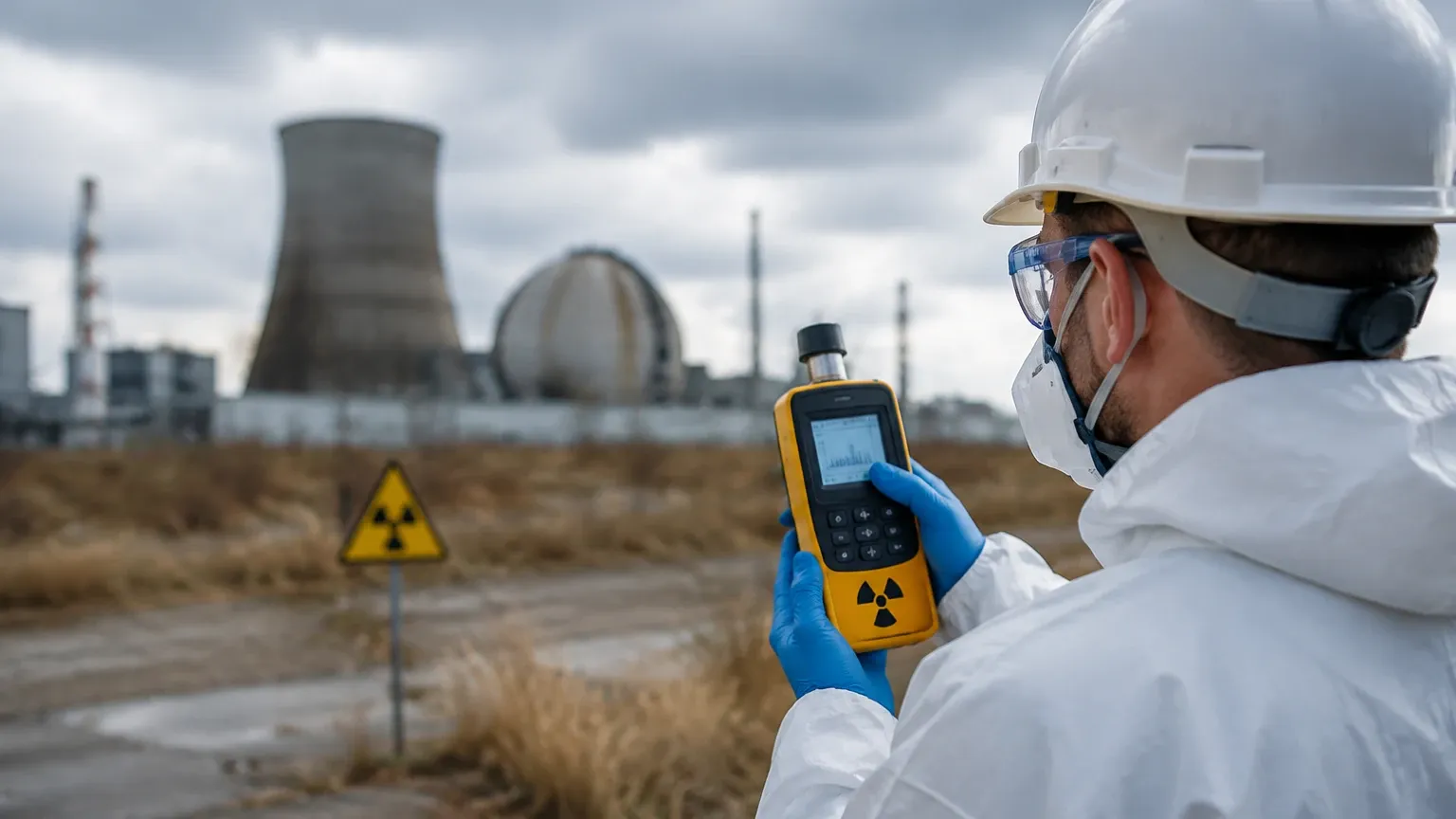
Safety is paramount when working with radioactive radiation detectors. The source container is designed to ensure that radiation levels at the surface of the housing are within safe limits. However, the "beam path" between the source and the detector must be clearly marked. During maintenance inside the vessel, the source must be mechanically shuttered and locked to prevent exposure to personnel.
Comparison with Alternative Technologies
Before committing to a nucleonic system, engineers should evaluate if more cost-effective technologies can meet the requirements. At Welk, we provide a variety of alternatives that may be suitable depending on the application.
* Radar Level Meters: Ideal for most liquids and solids. They offer high accuracy and are non-contact, but they cannot see through thick metal walls or handle extremely dense foams as effectively as nucleonic systems.
* Ultrasonic Sensors: Excellent for water treatment and simple chemical storage. However, they are limited by vacuum conditions and high-temperature vapors.
* Hydrostatic Transmitters: Very reliable for vented tanks but require a process connection (penetration) at the bottom of the tank.
Frequently Asked Questions (FAQ)
Q: Is the material inside the tank made radioactive by the detector?
No. The gamma radiation used in level measurement does not have enough energy to induce radioactivity in the process material. The material remains completely safe for downstream processing or consumption.
Q: How often does a radioactive radiation detector need calibration?
Most modern detectors feature automatic decay compensation. However, a manual verification of the "empty" and "full" counts is recommended annually or whenever the process medium density changes significantly.
Q: What happens if the detector fails?
Industrial detectors are designed with fail-safe relays. If the pulse count drops to zero unexpectedly (indicating a detector failure rather than a high level), the system will trigger a fault alarm to alert operators.
Q: Can a radioactive radiation detector measure through insulation?
Yes. Gamma radiation easily penetrates standard tank insulation (like mineral wool or foam). The thickness of the insulation must be accounted for during the initial source sizing calculations to ensure enough radiation reaches the detector.
Conclusion
The radioactive radiation detector is a specialized but indispensable tool for heavy industry. By providing a non-intrusive window into the most hostile process environments, it ensures safety and efficiency where other sensors fail. When selecting a system, engineers must balance the high sensitivity of scintillation technology with the robust safety requirements of radioactive source management. For those seeking to integrate these systems or explore alternative level measurement technologies, visiting the Main Page provides access to technical specifications and engineering support to ensure the right technology is matched to the specific industrial challenge.