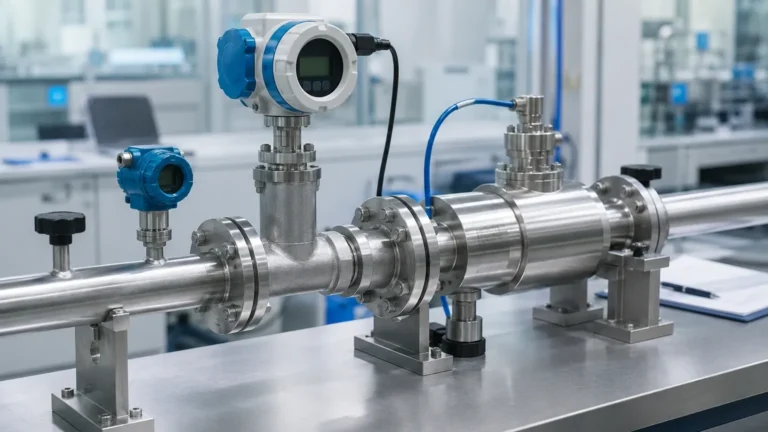
Residual Chlorine Analyzer
Residual Chlorine Analyzer
In the landscape of industrial water treatment and municipal utility management, the residual chlorine analyzer stands as a critical instrument for ensuring disinfection efficacy and process safety. Chlorine is the most widely used disinfectant globally due to its ability to neutralize pathogens and maintain a residual presence that prevents microbial regrowth within distribution networks. However, maintaining the precise balance of chlorine concentration is a complex engineering challenge. Too little chlorine fails to protect the water supply, while too much can lead to the formation of harmful disinfection byproducts (DBPs), corrosion of infrastructure, and non-compliance with environmental regulations.
For engineers and facility managers, selecting the right analytical technology requires a deep understanding of measurement principles, chemical interferences, and the specific demands of the application environment. This guide provides a technical overview of residual chlorine analysis, focusing on the mechanical and chemical foundations necessary for reliable operation.
Measurement Principles of Residual Chlorine
Before selecting a residual chlorine analyzer, it is essential to distinguish between the forms of chlorine being measured. "Free chlorine" refers to the sum of hypochlorous acid (HOCl) and hypochlorite ions (OCl-). "Total chlorine" includes both free chlorine and combined chlorine (chloramines formed when chlorine reacts with nitrogenous compounds).
Modern analyzers primarily utilize two distinct measurement methodologies: DPD colorimetric analysis and amperometric sensing.
DPD Colorimetric Method
The DPD (N,N-diethyl-p-phenylenediamine) method is the traditional laboratory standard adapted for automated online use. In this process, a specific volume of the water sample is mixed with DPD reagents and a buffer solution. If chlorine is present, the DPD reacts to produce a magenta (pink) color. The intensity of this color is proportional to the chlorine concentration.
The analyzer uses a photometer to measure light absorbance at a specific wavelength (typically around 510 nm to 530 nm). By comparing the absorbance of the reacted sample against a blank reference or a pre-calibrated curve, the device calculates the concentration in milligrams per liter (mg/L) or parts per million (ppm).
Amperometric Method
Amperometric analyzers are electrochemical sensors that provide continuous, real-time measurements without the need for periodic reagent consumption. This technology relies on a sensor cell consisting of two or three electrodes (a cathode and an anode) immersed in an electrolyte solution, often separated from the process water by a gas-permeable membrane.
As chlorine molecules diffuse through the membrane, they undergo a reduction reaction at the cathode, generating an electrical current. This current is directly proportional to the partial pressure of chlorine in the sample. Amperometric sensors are highly sensitive and respond rapidly to concentration changes, making them ideal for high-speed dosing control loops.
Key Evaluation Criteria for Industrial Selection
Choosing between colorimetric and amperometric technologies depends on several operational variables. Engineering teams should evaluate the following criteria during the procurement phase:
1. Accuracy and Repeatability
DPD colorimetric analyzers are generally considered the "gold standard" for accuracy because they are less affected by changes in sample pH or temperature. However, amperometric sensors offer superior repeatability in stable environments and provide a continuous data stream that is more suitable for PID (Proportional-Integral-Derivative) control of chemical dosing pumps.
2. Maintenance and Operating Costs
Colorimetric analyzers require a steady supply of reagents, which necessitates monthly or quarterly refills and creates a waste stream that must be managed. Amperometric sensors do not use reagents but require periodic membrane replacement and electrolyte replenishment. In many high-volume applications, the lower long-term operational cost of amperometric systems outweighs the initial calibration complexity.
3. Sample Characteristics
The presence of suspended solids, manganese, or high levels of iron can interfere with optical measurements in colorimetric systems. Conversely, amperometric sensors are sensitive to changes in flow rate and pH. If the process pH fluctuates significantly (above 7.5 for free chlorine), an amperometric analyzer must be equipped with an integrated pH compensation probe or a chemical acidification system to ensure data integrity.
Technical Specifications and Selection Table
To assist in the selection process, the following table compares the typical performance characteristics of the primary analyzer types used in industrial automation.
| Feature | DPD Colorimetric | Amperometric (Membrane) | Amperometric (Bare Electrode) |
| :— | :— | :— | :— |
| Measurement Type | Batch/Discrete (e.g., every 2-10 min) | Continuous | Continuous |
| Detection Limit | 0.01 mg/L | 0.05 mg/L | 0.1 mg/L |
| pH Sensitivity | Low (Buffered) | High (Requires compensation) | High (Requires compensation) |
| Reagent Use | Required | None | None |
| Maintenance Gap | 30–60 Days | 3–6 Months | 1–2 Months (Cleaning) |
| Typical Range | 0–5 mg/L | 0–20 mg/L | 0–10 mg/L |
Installation Considerations and Best Practices
The reliability of a residual chlorine analyzer is often determined more by the installation environment than the instrument itself. Proper hydraulic design is paramount.
Flow and Pressure Regulation
Amperometric sensors are flow-sensitive. To maintain a stable diffusion rate across the membrane, the sample flow must be kept constant, typically between 30 and 60 liters per hour (L/h). Most professional installations utilize a constant-head flow cell or a pressure-regulating valve to eliminate fluctuations caused by main line pressure changes. The sample should ideally be delivered at a pressure below 0.5 bar (approx. 7 psi) to the sensor cell to prevent membrane damage.
Sample Point Location
The sample should be taken from a point in the process where the chlorine has had sufficient contact time to mix thoroughly. If the analyzer is used for dosing control, the lag time between the injection point and the analyzer should be minimized to prevent oscillations in the control loop. However, it must be far enough downstream to ensure a representative sample.
Drainage and Waste
For DPD-based analyzers, the waste stream contains chemical reagents and should be routed to an appropriate industrial drain. Even for amperometric systems, a continuous bypass flow is required to keep the sensor hydrated and responsive. This "waste" water is chemically unchanged and can often be returned to the head of the process or used for non-critical wash-down applications.

Integration with Level Measurement Systems
In a comprehensive water treatment plant, chlorine analysis is rarely a standalone function. It is part of a broader automation strategy that includes chemical storage and inventory management. While the analyzer monitors the concentration in the process line, level measurement instruments ensure that the supply of chlorine (whether liquid sodium hypochlorite or gaseous chlorine) is maintained.
For instance, radar level meters or ultrasonic sensors are frequently used to monitor the levels in chemical day tanks. By integrating the data from a Main Page level transmitter with the output of a residual chlorine analyzer, operators can calculate the "yield" of their chemical dosing—identifying if a drop in chlorine residual is due to increased demand in the water or a failure in the dosing pump delivery. This holistic view of the process is essential for modern industrial automation and risk management.
Limitations and Common Risks
Despite their sophistication, residual chlorine analyzers face several physical and chemical limitations:
* pH Fluctuations: In free chlorine measurement, the ratio of HOCl to OCl- changes with pH. Since sensors typically only measure HOCl, a rise in pH will lead to a false low reading unless compensated.
* Temperature Sensitivity: Both the chemical reaction rate in DPD methods and the diffusion rate in amperometric membranes are temperature-dependent. High-quality analyzers include an RTD (Resistance Temperature Detector) to normalize readings to 25°C.
* Biofouling: In wastewater or cooling tower applications, biological growth can coat the sensor membrane or the optical cell, leading to drift. Regular cleaning cycles or the use of biocides in the sample line (carefully managed) may be necessary.
* Air Bubbles: For both optical and electrochemical sensors, air bubbles in the sample stream can cause erratic readings. The use of a bubble trap or a de-aerator in the sample line is a standard engineering requirement for high-accuracy applications.
Frequently Asked Questions (FAQ)
Q: How often should a residual chlorine analyzer be calibrated?
A: For municipal drinking water, daily or weekly verification against a handheld DPD photometer is common. For industrial cooling water, a bi-weekly or monthly calibration is usually sufficient, depending on the stability of the water matrix.
Q: Can a residual chlorine analyzer measure chlorine dioxide?
A: Most standard chlorine sensors will show cross-sensitivity to chlorine dioxide. However, specific sensors designed with different membrane materials or electrode potentials are required to accurately quantify chlorine dioxide without interference from other oxidants.
Q: What is the impact of salinity on amperometric sensors?
A: High salinity (as found in seawater desalination or ballast water treatment) changes the conductivity of the sample and can affect the electrolyte balance in some sensor designs. In these cases, sensors specifically rated for high-conductivity environments must be used.
Q: Is it possible to measure residual chlorine in pressurized lines?
A: While some amperometric cells can handle moderate pressure, it is standard practice to use a sample conditioning assembly that reduces the pressure to atmospheric levels before the water reaches the sensor. This protects the delicate membranes and ensures a stable flow rate.
Conclusion
The implementation of a residual chlorine analyzer is a vital step in optimizing water treatment processes. By understanding the chemical principles of DPD and amperometric technologies, and by adhering to strict installation guidelines regarding flow, pH, and temperature, engineers can ensure long-term accuracy and safety. When combined with reliable level monitoring for chemical storage, these analytical tools provide the data necessary for efficient, compliant, and cost-effective industrial operations.