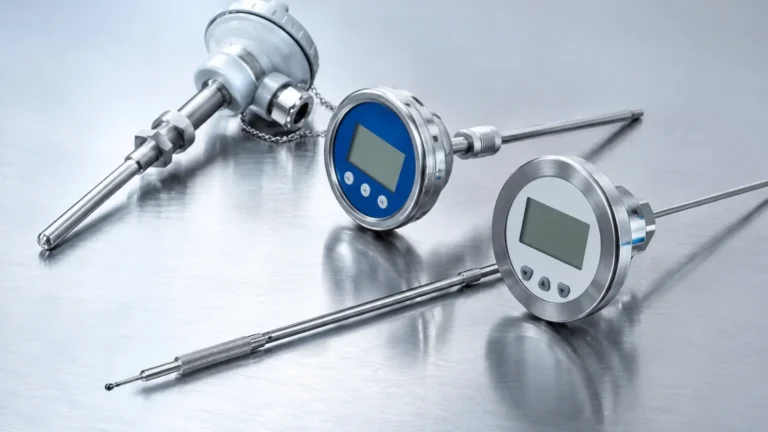
Resistor Temperature Sensor
Resistor Temperature Sensor
In the field of industrial process control, the resistor temperature sensor stands as one of the most fundamental yet critical components for ensuring accuracy and safety. Whether integrated into a complex level measurement system or used as a standalone probe, these sensors provide the primary data required to compensate for physical changes in fluids and gases. For engineers and technicians managing water treatment, chemical processing, or oil and gas facilities, understanding the nuances of resistance-based temperature measurement is essential for maintaining system integrity.
At its core, a resistor temperature sensor operates on the principle that the electrical resistance of a material changes in a predictable way as its temperature fluctuates. This article explores the underlying technology, the critical role these sensors play in level measurement, and the practical considerations for selecting and installing them in industrial environments.
Measurement Principles of Resistor Temperature Sensors
To effectively utilize these instruments, one must first distinguish between the two primary categories: Resistance Temperature Detectors (RTDs) and Thermistors.
Resistance Temperature Detectors (RTDs)
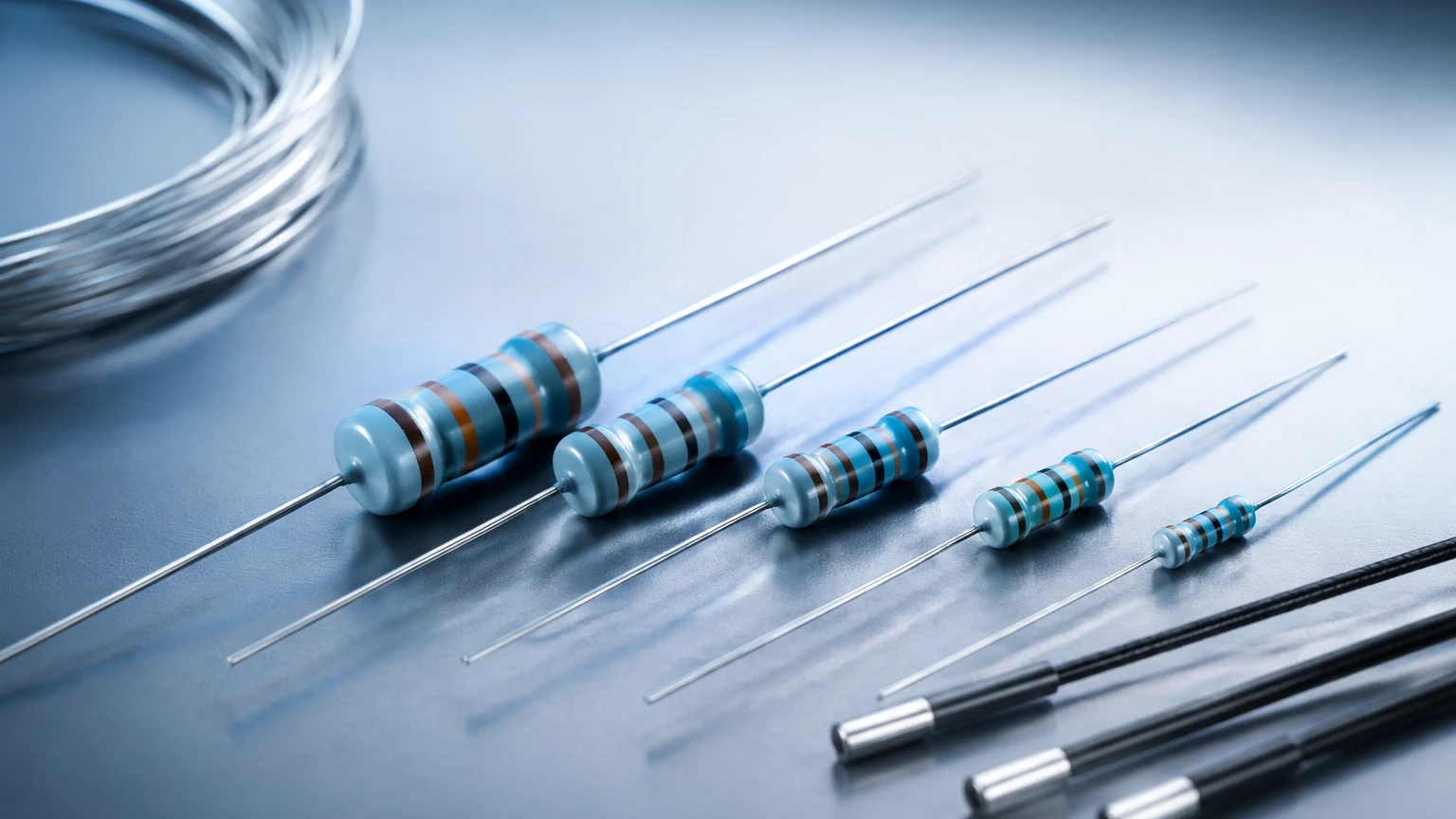
RTDs are typically constructed from pure metals, with platinum being the industry standard due to its stability and wide temperature range. The principle is based on a Positive Temperature Coefficient (PTC). As the temperature of the metal increases, the thermal agitation of the atoms increases, which in turn increases the resistance to electron flow.
The relationship between resistance and temperature for a platinum RTD is governed by the Callendar-Van Dusen equation. For most industrial applications, this relationship is remarkably linear over a broad range, typically from -200°C to +850°C. The most common type is the Pt100, which has a nominal resistance of 100 ohms at 0°C.
Thermistors
Thermistors are made from ceramic or polymer materials (metal oxides). Unlike RTDs, most thermistors used in industrial automation have a Negative Temperature Coefficient (NTC), meaning their resistance decreases as temperature increases. While they offer much higher sensitivity than RTDs (large resistance changes for small temperature shifts), they are highly non-linear and have a much narrower operating range, usually limited to -50°C to +150°C.
The Role of Temperature Sensing in Level Measurement
While level measurement is the primary focus of industrial instrumentation, temperature is a critical secondary variable. Industrial level meters, such as those found on our Main Page, often incorporate a resistor temperature sensor to ensure the accuracy of the primary reading.
Ultrasonic Level Sensors
Ultrasonic sensors calculate distance based on the time it takes for a sound wave to travel to the liquid surface and back. However, the speed of sound in air is highly dependent on temperature. A change of just 1°C can result in an error of approximately 0.17% in distance measurement. Integrated RTDs allow the transmitter to perform real-time temperature compensation, ensuring the level reading remains accurate despite ambient fluctuations.
Hydrostatic Level Transmitters
Hydrostatic sensors measure the pressure exerted by a liquid column. Since pressure is a product of height and density ($P =
ho gh$), and density $(
ho)$ changes with temperature, a resistor temperature sensor is required to correct the density value. This is particularly vital in chemical tanks where thermal expansion can significantly alter the volume-to-mass ratio.
Radar Level Meters
While radar waves (electromagnetic) are not significantly affected by air temperature, the electronics within the radar head and the integrity of the process seals are sensitive to extreme heat. Monitoring the temperature at the process connection helps prevent equipment failure and ensures the longevity of the radar level meter in high-temperature applications.
Technical Comparison and Selection Table
Selecting the correct resistor temperature sensor depends on the specific requirements of the process environment, including accuracy needs, temperature range, and budget.
| Feature | Pt100 (RTD) | Pt1000 (RTD) | NTC Thermistor |
| :— | :— | :— | :— |
| Temperature Range | -200°C to +850°C | -200°C to +600°C | -50°C to +150°C |
| Accuracy | High (Class A/AA) | High | Medium to Low |
| Linearity | Excellent | Excellent | Poor (Exponential) |
| Sensitivity | Low (0.385 $\Omega$/°C) | Moderate (3.85 $\Omega$/°C) | Very High |
| Long-term Stability | Excellent | Excellent | Poor |
| Cost | Higher | Higher | Low |
| Common Use | Process Industry | Battery-powered devices | HVAC, Electronics protection |
Installation and Wiring Considerations
The accuracy of a resistor temperature sensor is not solely dependent on the sensor itself, but also on how it is connected to the control system. Lead wire resistance is a common source of error in RTD measurements.
Wiring Configurations
1. 2-Wire Configuration: This is the simplest but least accurate method. The resistance of the lead wires is added directly to the sensor resistance, creating a positive offset error. It is only suitable for short distances or where high precision is not required.
2. 3-Wire Configuration: This is the industrial standard. By using a third wire to measure the resistance of the leads, the bridge circuit can mathematically cancel out the lead wire resistance. It provides a balance between cost and accuracy.
3. 4-Wire Configuration: Used in laboratory settings or high-precision industrial applications. It completely eliminates the effect of lead wire resistance, providing the highest possible accuracy regardless of cable length.
Thermowell Usage
In most industrial level measurement applications, the resistor temperature sensor is not placed directly in the medium. Instead, it is housed within a thermowell. A thermowell protects the sensor from high pressures, corrosive chemicals, and mechanical stress (such as flow-induced vibration). When using a thermowell, engineers must account for the increased response time (thermal lag) caused by the additional mass between the process fluid and the sensor element.
Limitations and Common Risks
Despite their reliability, resistor temperature sensors are subject to several limitations that must be addressed during the engineering phase:
* Self-Heating: To measure resistance, a small current must be passed through the sensor. This current generates heat ($I^2R$). If the current is too high, the sensor will report a temperature higher than the actual process temperature. Industrial transmitters usually limit this current to less than 1 mA to minimize this effect.
* Mechanical Stress: RTD elements, especially thin-film types, can be fragile. Excessive vibration or mechanical shock can cause the platinum element to fracture or drift from its calibrated resistance.
* Drift: Over time, exposure to extreme temperatures or chemical contamination can cause the resistance characteristics of the sensor to change. Regular calibration against a known standard is required to maintain B2B quality standards.
Frequently Asked Questions (FAQ)
Q: When should I choose Pt1000 over Pt100?
A: Pt1000 sensors are preferred in applications where power consumption is a concern, such as battery-operated level meters or remote IoT sensors. Because the base resistance is higher, the lead wire resistance has a smaller proportional impact, sometimes allowing for 2-wire setups over longer distances than Pt100.
Q: How does moisture affect a resistor temperature sensor?
A: Moisture ingress is a leading cause of sensor failure. It can create a parallel resistance path (shunting), which lowers the measured resistance and causes the transmitter to report a lower-than-actual temperature. High-quality sensors use hermetic seals and MgO (Magnesium Oxide) insulation to prevent this.
Q: Can I use a resistor temperature sensor in hazardous areas?
A: Yes, but the sensor must be part of an intrinsically safe (IS) circuit or housed in an explosion-proof enclosure. Because RTDs operate at very low voltages and currents, they are well-suited for IS applications in oil and gas storage tanks.
Conclusion
The resistor temperature sensor is an indispensable tool in the industrial landscape, providing the foundational data necessary for accurate level measurement and process control. By selecting the appropriate sensor type—whether a robust Pt100 for chemical processing or a sensitive thermistor for specialized electronics—and adhering to proper wiring and installation practices, facilities can ensure reliable performance. For those seeking integrated measurement solutions that combine temperature and level sensing technology, reviewing the technical specifications on our Main Page will provide further insight into the available hardware configurations for modern industrial automation.