Rosemount 3900vp
Rosemount 3900vp
In the realm of industrial process control, the precision of liquid analysis is as critical as the monitoring of physical vessel states. The Rosemount 3900vp is a general-purpose pH/ORP sensor designed to withstand the rigors of diverse industrial environments, from water treatment facilities to chemical processing plants. This article serves as a practical engineering reference for understanding the measurement principles, selection criteria, and installation requirements of the 3900vp, while also examining how these analytical tools integrate with broader process automation systems, including level measurement technologies.
Understanding pH and ORP Measurement Principles
Before selecting or installing a sensor like the Rosemount 3900vp, it is essential to understand the electrochemical principles that govern its operation. The 3900vp is capable of measuring either pH or Oxidation-Reduction Potential (ORP), depending on the specific electrode configuration chosen.
pH Measurement Principle
pH is a measure of the hydrogen ion activity in a solution. The measurement is performed using a glass-surface electrode that is sensitive to hydrogen ions. When the glass membrane comes into contact with an aqueous solution, a voltage is developed across the membrane that is proportional to the pH of the solution. This potential is measured against a stable reference electrode. The relationship is defined by the Nernst equation, which dictates that for every unit change in pH, the electrical potential changes by approximately 59.16 mV at 25°C (77°F).
ORP Measurement Principle
ORP, or Redox, measures the tendency of a chemical species to acquire electrons and thereby be reduced. Unlike pH sensors that use a specialized glass membrane, ORP sensors typically utilize a noble metal electrode (such as platinum or gold). The sensor measures the ratio of oxidized to reduced species in the process liquid. This is particularly vital in applications involving disinfection (like chlorination) or wastewater treatment where the removal of contaminants depends on specific oxidation states.
Technical Specifications and Design of the Rosemount 3900vp
The Rosemount 3900vp is distinguished by its robust construction and the inclusion of the Variopol (VP8) connector. This design choice is significant for B2B operations as it allows for the disconnection of the sensor from the cable without twisting the cable itself, simplifying maintenance and replacement cycles.
Key Design Features
* AccuGlass™ Technology: The pH-sensitive glass is formulated to resist thermal degradation and chemical attack, extending the life of the sensor in high-temperature or aggressive applications.
* Double Junction Reference: To prevent poisoning of the reference electrode, the 3900vp utilizes a double junction design. This provides an extra layer of protection against ions like sulfide, cyanide, and ammonia that can migrate into the reference chamber and cause measurement drift.
* Teflon™ Reference Junction: The large surface area of the annular Teflon junction resists fouling and plugging, ensuring a stable electrical connection between the reference electrode and the process liquid.
* Built-in Temperature Compensation: Accurate pH measurement requires temperature correction. The 3900vp includes an internal Pt-100 or Pt-1000 RTD to provide real-time temperature data to the transmitter.
Selecting the Right Sensor Configuration
Choosing the correct version of the Rosemount 3900vp involves evaluating the process conditions and the physical requirements of the installation point. The sensor is available in two primary body styles: a 1-inch MNPT threaded version and a 3/4-inch MNPT threaded version.
Selection Table: Rosemount 3900vp Options
| Feature | 3900vp-01 (1" Body) | 3900vp-02 (3/4" Body) |
| :— | :— | :— |
| Primary Thread | 1" MNPT (Front & Rear) | 3/4" MNPT (Front & Rear) |
| Housing Material | Tefzel™ (ETFE) | Tefzel™ (ETFE) |
| Temperature Range | -10°C to 100°C (14°F to 212°F) | -10°C to 100°C (14°F to 212°F) |
| Pressure Range | 0 to 100 psig (790 kPa abs) | 0 to 100 psig (790 kPa abs) |
| Connector Type | Variopol (VP8) | Variopol (VP8) |
| Recommended Use | General purpose, high fouling | General purpose, tight spaces |
When selecting a sensor, engineers must also confirm the chemical compatibility of the Tefzel™ body and the EPDM O-rings with the process fluid. For highly acidic or basic solutions at the upper limits of the temperature range, sensor life expectancy may be reduced, requiring more frequent calibration.
Installation Guidelines for Process Integration
The physical placement of the Rosemount 3900vp significantly impacts its accuracy and longevity. Proper orientation and flow dynamics are essential to prevent air bubbles from trapping on the electrode or solids from coating the sensor face.
Mounting Orientations
1. In-Line Mounting: The sensor is installed directly into a process pipe using a T-piece. It is critical that the sensor is mounted at least 10° above the horizontal plane to ensure the internal electrolyte remains in contact with the glass bulb.
2. Immersion Mounting: For open tanks or sumps, the sensor is attached to a standpipe or immersion rod. In these cases, the rear threads of the sensor are used to connect to the mounting hardware, and the cable is routed through the pipe to protect it from the environment.
3. Flow-Through Cells: For low-flow applications or where the process cannot be easily tapped, a dedicated flow cell is used. This allows for controlled sample delivery to the sensor face.
Installation Considerations
* Flow Velocity: While some flow is necessary to keep the sensor face clean, excessive velocity can cause "streaming potentials" or physical erosion of the glass. A velocity between 0.5 to 2 meters per second is generally ideal.
* Grounding: Ensure the process liquid is properly grounded to the transmitter to avoid electrical noise that can interfere with the high-impedance pH signal.
* Accessibility: Sensors require periodic calibration. Install them in locations where technicians can safely access them without shutting down the entire process line.
Complementary Technologies: Integrating Level and Analytical Measurement
In most industrial applications, liquid analysis does not happen in isolation. For instance, in a chemical dosing tank, measuring the pH with a Rosemount 3900vp is only half of the equation; the operator must also know the volume of the liquid in the tank to calculate dosing rates accurately.
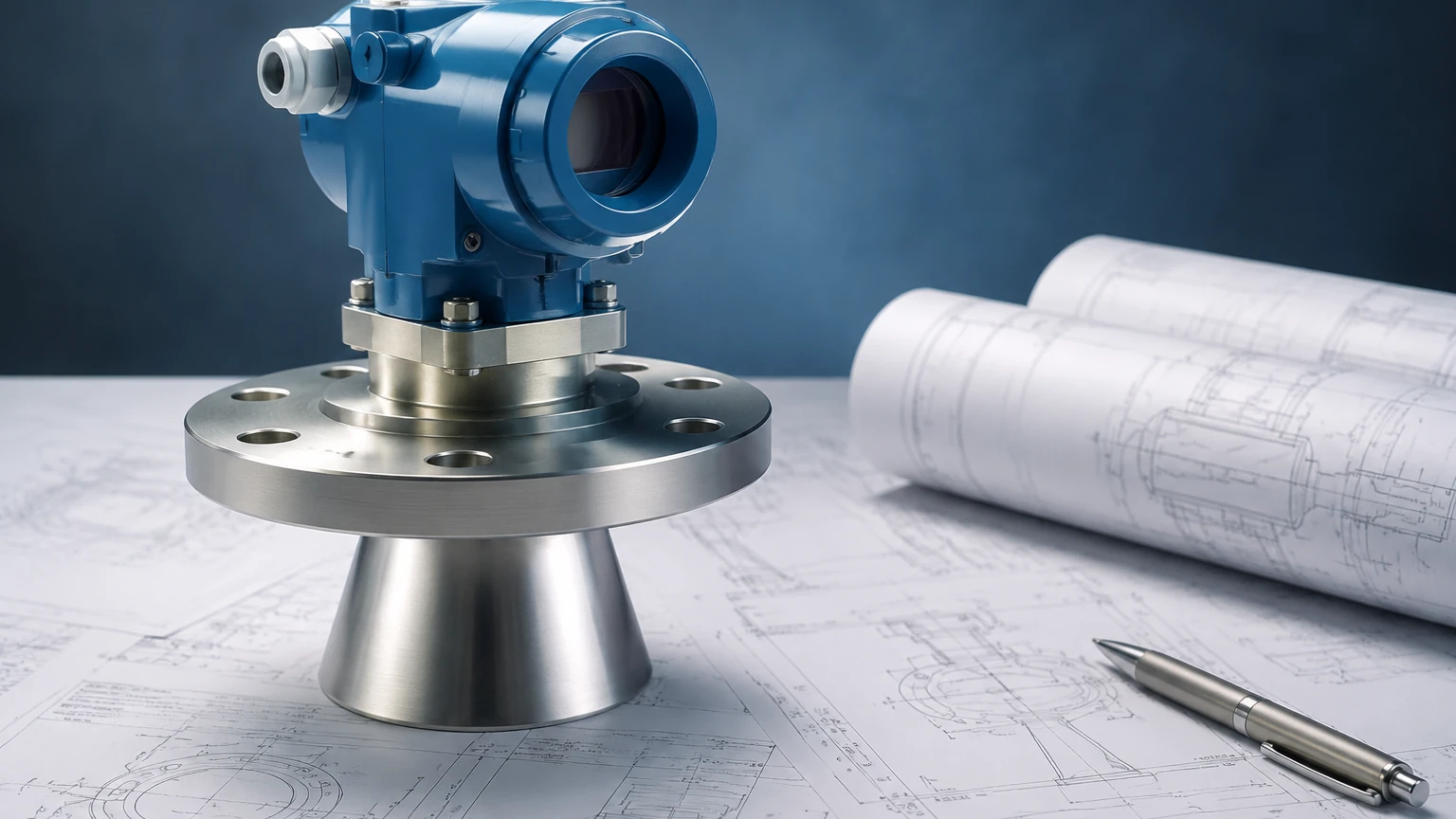
This is where level measurement technology becomes indispensable. While the 3900vp handles the analytical data, instruments like radar level meters, ultrasonic sensors, or hydrostatic transmitters provide the physical context of the vessel. For organizations seeking comprehensive instrumentation, exploring the Main Page of specialized manufacturers like Welk provides access to a wide range of level measurement solutions that complement analytical sensors.
For example, in a wastewater neutralization basin:
* Analytical: The 3900vp monitors pH to control the injection of caustic or acid.
* Level: A non-contact radar or ultrasonic level meter monitors the basin level to prevent overflow and to calculate the total volume of effluent being treated.
Integrating these data points into a single PLC or DCS allows for advanced process automation and improved safety margins.
Maintenance and Troubleshooting Protocols
Unlike level meters, which can often operate for years with minimal intervention, electrochemical sensors like the Rosemount 3900vp are consumables that require regular maintenance.
Calibration Procedures
Calibration should be performed using standard buffer solutions (typically pH 4.0, 7.0, and 10.0).
1. Two-Point Calibration: This is the standard method. Use a buffer near the neutral point (pH 7) to set the "zero" or offset, and a second buffer (pH 4 or 10) to set the "slope."
2. Standardization: This involves taking a grab sample of the process liquid, measuring it with a calibrated laboratory meter, and adjusting the online transmitter to match. This accounts for process-specific liquid junctions.
Common Risks and Limitations
* Dehydration: If the sensor is allowed to dry out, the hydrated gel layer on the glass bulb will be damaged. Always store the sensor in a storage solution (typically 4M KCl) when not in use.
* Coating and Fouling: In oils or slurries, the sensor face may become coated. Regular cleaning with a mild detergent or dilute acid (depending on the contaminant) is necessary.
* Temperature Shock: Rapid changes in process temperature can cause the glass to crack or the internal reference to drift. Ensure the sensor is rated for the maximum temperature of the process.
Frequently Asked Questions (FAQs)
Q: How often should I calibrate the Rosemount 3900vp?
A: The frequency depends entirely on the application. In clean water, monthly calibration may suffice. In aggressive chemical processes, weekly or even daily checks may be required. Monitor the "slope" value during calibration; a slope below 85% usually indicates the sensor needs replacement.
Q: Can the 3900vp be used in hazardous areas?
A: Yes, when used with an appropriate intrinsically safe (IS) transmitter and safety barriers, the 3900vp is suitable for use in classified hazardous locations. Always check the specific certifications (ATEX, IECEx, FM) on the sensor label.
Q: What is the maximum cable length for the VP8 connector?
A: While the Variopol system is robust, pH signals are high-impedance and susceptible to noise. It is generally recommended to keep cable runs under 15 meters (50 feet) unless using a preamplifier or a digital transmitter system.
Q: How does the 3900vp compare to Welk’s level measurement products?
A: The 3900vp is an analytical sensor for liquid chemistry, whereas Welk focuses on the physical measurement of liquid height and volume. Both are essential for process control. You can find more information on level-specific hardware at the Welk Main Page.
Conclusion
The Rosemount 3900vp remains a staple in industrial liquid analysis due to its versatile mounting options, durable AccuGlass™ technology, and the maintenance-friendly Variopol connector. By understanding the underlying electrochemical principles and adhering to strict installation and maintenance protocols, engineering teams can ensure reliable data for their process control loops. When paired with high-quality level measurement instruments, the 3900vp enables a holistic approach to industrial liquid management, ensuring both the quality and the safety of the process environment.