Sanitary Flow Transmitter
Sanitary Flow Transmitter
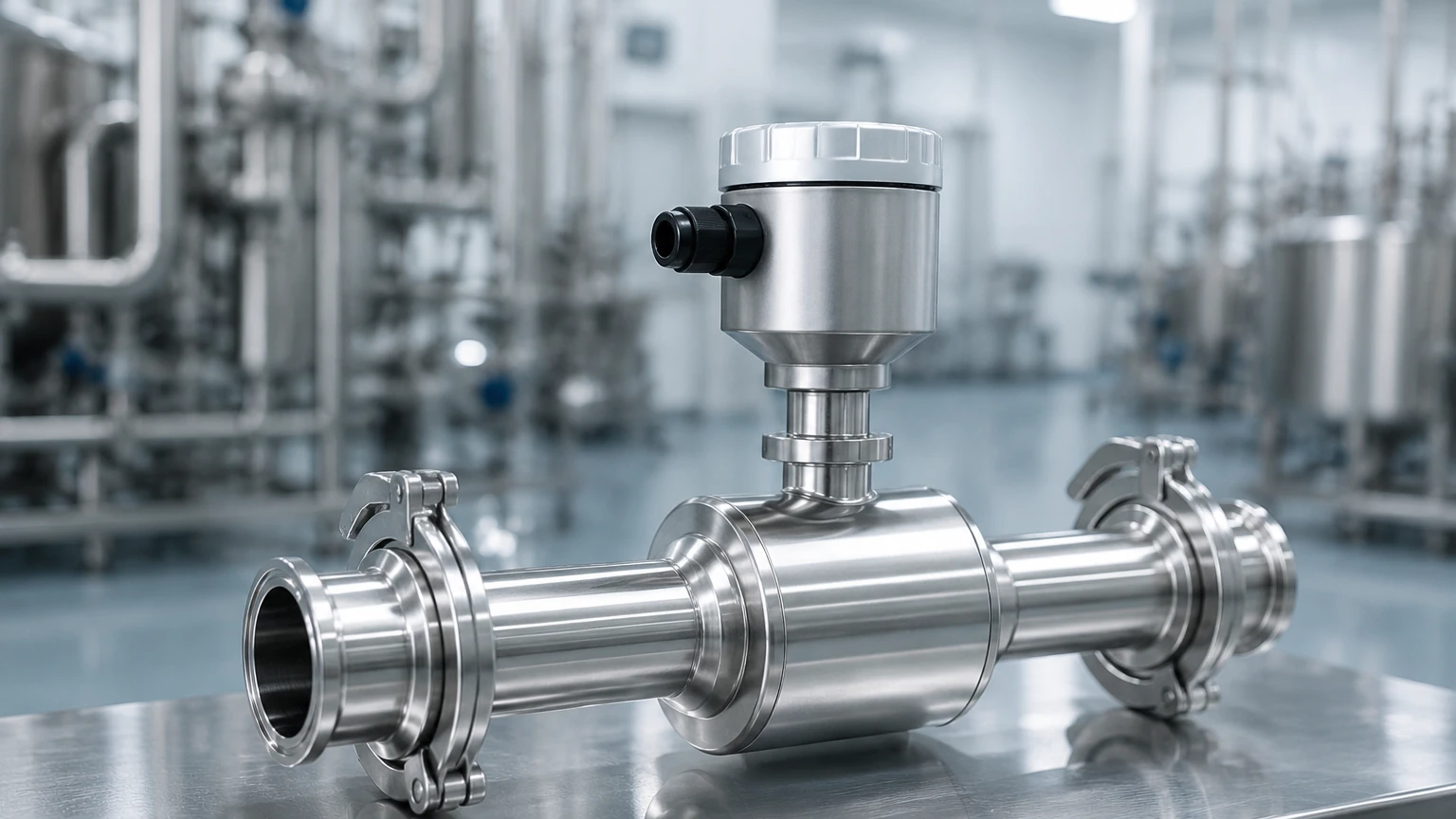
In industries where hygiene is paramount—such as food and beverage processing, pharmaceuticals, and biotechnology—the equipment used to monitor fluid movement must meet stringent sanitary standards. A sanitary flow transmitter is a specialized device designed to measure the flow rate of liquids while maintaining a sterile environment. Unlike standard industrial flow meters, these transmitters are engineered to prevent bacterial growth, withstand aggressive cleaning cycles, and ensure that the process media remains uncontaminated.
Selecting the right sanitary flow transmitter requires an understanding of both the measurement physics and the hygienic requirements of the specific application. This guide examines the primary measurement principles, selection criteria, and installation best practices for engineers and plant managers.
Measurement Principles for Sanitary Applications
Before selecting a specific model, it is essential to understand the underlying technology. In sanitary environments, the most common measurement principles are electromagnetic, Coriolis, and ultrasonic. Each offers distinct advantages depending on the fluid properties.
Electromagnetic Flow Measurement (Magmeters)
Electromagnetic flow transmitters operate based on Faraday’s Law of Induction. When a conductive liquid flows through a magnetic field generated by the meter, it induces a voltage proportional to the velocity of the liquid.
In a sanitary context, magmeters are highly valued because they have an unobstructed flow path. There are no moving parts or protrusions where product can become trapped or where bacteria can harbor. They are ideal for conductive fluids like milk, juice, beer, and saline solutions. However, they cannot measure non-conductive fluids like deionized water or oils.
Coriolis Mass Flow Measurement
Coriolis transmitters measure mass flow rather than volume. They work by inducing vibration in a flow tube; as fluid passes through, the resulting Coriolis force causes the tube to twist. The degree of twist is directly proportional to the mass flow rate.
These are often considered the "gold standard" for accuracy. Because they measure mass, they are unaffected by changes in temperature, pressure, density, or viscosity. In sanitary applications, they are used for high-value ingredients or where precise dosing is required. Most sanitary Coriolis meters use a single or dual-tube design that is fully drainable.
Ultrasonic Flow Measurement
Ultrasonic transmitters typically use the "transit-time" principle. Two transducers send ultrasonic signals back and forth through the fluid. The difference in time it takes for the signal to travel with the flow versus against the flow is used to calculate the velocity.
For sanitary use, ultrasonic meters can be "clamp-on," meaning they never touch the process fluid, or "inline." Inline versions for sanitary use are designed with smooth internal bores. They are excellent for non-conductive fluids where a magmeter would fail.
Key Design Requirements for Sanitary Compliance
A sanitary flow transmitter is defined more by its construction than its measurement principle. To be classified as sanitary, the instrument must adhere to specific design benchmarks.
1. Materials of Construction: The wetted parts (the parts touching the fluid) must be made from non-toxic, corrosion-resistant materials. Stainless steel 316L is the industry standard. For liners in magmeters, PFA (Perfluoroalkoxy) is commonly used due to its high chemical resistance and smooth surface.
2. Surface Finish: The internal surface roughness (Ra) must be extremely low to prevent microbial attachment. Most sanitary standards require an Ra of ≤ 0.8 µm (32 µin), often achieved through electropolishing.
3. Hygienic Connections: Instead of standard NPT threads or raised-face flanges, sanitary transmitters use tri-clamp (DIN 32676 or ISO 2852) or SMS couplings. These connections ensure there are no crevices where the product can stagnate.
4. CIP and SIP Compatibility: The device must withstand Clean-in-Place (CIP) chemicals and Steam-in-Place (SIP) temperatures, which often reach 140°C (284°F). The transmitter electronics must be thermally isolated or robust enough to handle these cycles without losing calibration.
Practical Selection Table
Choosing the right technology depends on the fluid characteristics and the process goals. The following table provides a comparison of the most common sanitary flow measurement technologies.
| Feature | Electromagnetic (Magmeter) | Coriolis Mass Meter | Ultrasonic (Inline) | Turbine (Sanitary) |
| :— | :— | :— | :— | :— |
| Primary Measurement | Volumetric Flow | Mass Flow & Density | Volumetric Flow | Volumetric Flow |
| Fluid Conductivity | Required (>5 μS/cm) | Not Required | Not Required | Not Required |
| Accuracy | ±0.5% of rate | ±0.1% to ±0.2% | ±1.0% | ±1.0% |
| Pressure Drop | Zero | Low to Moderate | Zero | Moderate |
| Moving Parts | None | None | None | Yes (Rotor) |
| Best For | Milk, Beer, Water | Oils, Syrups, Dosing | Purified Water | Low-viscosity fluids |
| CIP/SIP Ready | Excellent | Excellent | Good | Limited |
Installation Considerations and Best Practices
Even the most accurate sanitary flow transmitter will perform poorly if installed incorrectly. Proper installation ensures both measurement accuracy and system hygiene.
Piping and Orientation
To ensure a full pipe (which is required for magmeters and ultrasonic meters), the transmitter should ideally be installed in a vertical pipe section with the flow moving upward. If horizontal installation is necessary, the meter should be placed at a low point in the piping to prevent air pockets, but not at the very bottom where sediment might collect.
Most flow technologies require a minimum length of straight pipe before and after the transmitter to stabilize the flow profile. A common rule of thumb is 5 diameters (5D) of straight pipe upstream and 3 diameters (3D) downstream. However, always consult the manufacturer's specific requirements.
Grounding
For electromagnetic transmitters, proper grounding is critical. The fluid, the sensor, and the transmitter electronics must be at the same electrical potential to prevent noise from interfering with the low-voltage signal generated by the flow. In plastic or lined piping systems, grounding rings are often required.
Self-Drainability
In sanitary systems, the ability to completely drain the line is vital for preventing bacterial growth between batches. The transmitter must be installed in an orientation that allows the fluid to drain completely by gravity. For Coriolis meters with curved tubes, this usually means installing them vertically or at a specific angle recommended by the manufacturer.
Common Risks and Limitations
While sanitary flow transmitters are highly advanced, they are not immune to process challenges. Awareness of these risks can prevent costly downtime.
* Entrained Air: Air bubbles in the liquid can cause significant errors in magmeters and ultrasonic meters. In Coriolis meters, excessive air can cause the tubes to stop vibrating (stalling). Using an air eliminator upstream can mitigate this.
* Scaling and Coating: If the process fluid leaves a film or scale on the internal walls of the meter, it can insulate the electrodes of a magmeter or change the internal diameter, leading to drift in accuracy. Regular CIP cycles are necessary to maintain performance.
* Cavitation: If the pressure drops too low across a meter (especially turbine or Coriolis types), the liquid may flash into vapor. This causes physical damage to the instrument and renders the readings useless.
* Vibration: Coriolis meters are sensitive to external mechanical vibrations. They should be installed away from heavy pumps or vibrating machinery, or properly isolated using flexible mounts.
Frequently Asked Questions (FAQ)
Q: How often should a sanitary flow transmitter be calibrated?
A: In most food and pharma applications, annual calibration is standard. However, if the meter is used for fiscal transfer or critical safety dosing, semi-annual calibration may be required. Many modern transmitters offer "on-board verification" features that can check the health of the electronics and sensors between formal calibrations.
Q: Can I use a standard industrial flow meter if I clean it thoroughly?
A: No. Standard meters often have threaded connections, internal crevices, and surface finishes that are too rough. Even with thorough cleaning, these areas can harbor bacteria that survive CIP cycles, leading to batch contamination.
Q: What is the difference between a flow meter and a flow transmitter?
A: A flow meter is the general term for the entire device. The "transmitter" specifically refers to the electronic component that converts the sensor's raw signal into a usable output, such as a 4-20mA signal, Modbus, or Foundation Fieldbus, which can be read by a PLC or control system.
Integrating Flow and Level Measurement
In a complete process automation strategy, flow measurement is rarely used in isolation. For instance, in a mixing tank, a sanitary flow transmitter monitors the ingredients entering the vessel, while a radar or ultrasonic level sensor monitors the total volume within the tank.
As a professional manufacturer of industrial level measurement instruments, Welk provides a range of solutions that complement flow systems. While flow transmitters track the "rate" of change, level instruments like those found on our Main Page provide the "static" inventory data. Combining these two data points allows for mass balance calculations, which are essential for detecting leaks, verifying pump efficiency, and ensuring process consistency.
When designing a sanitary process, engineers should ensure that both flow and level instruments share compatible communication protocols and hygienic standards. This holistic approach to measurement ensures that the entire system remains compliant with FDA or EHEDG regulations while maximizing production yield and minimizing waste.