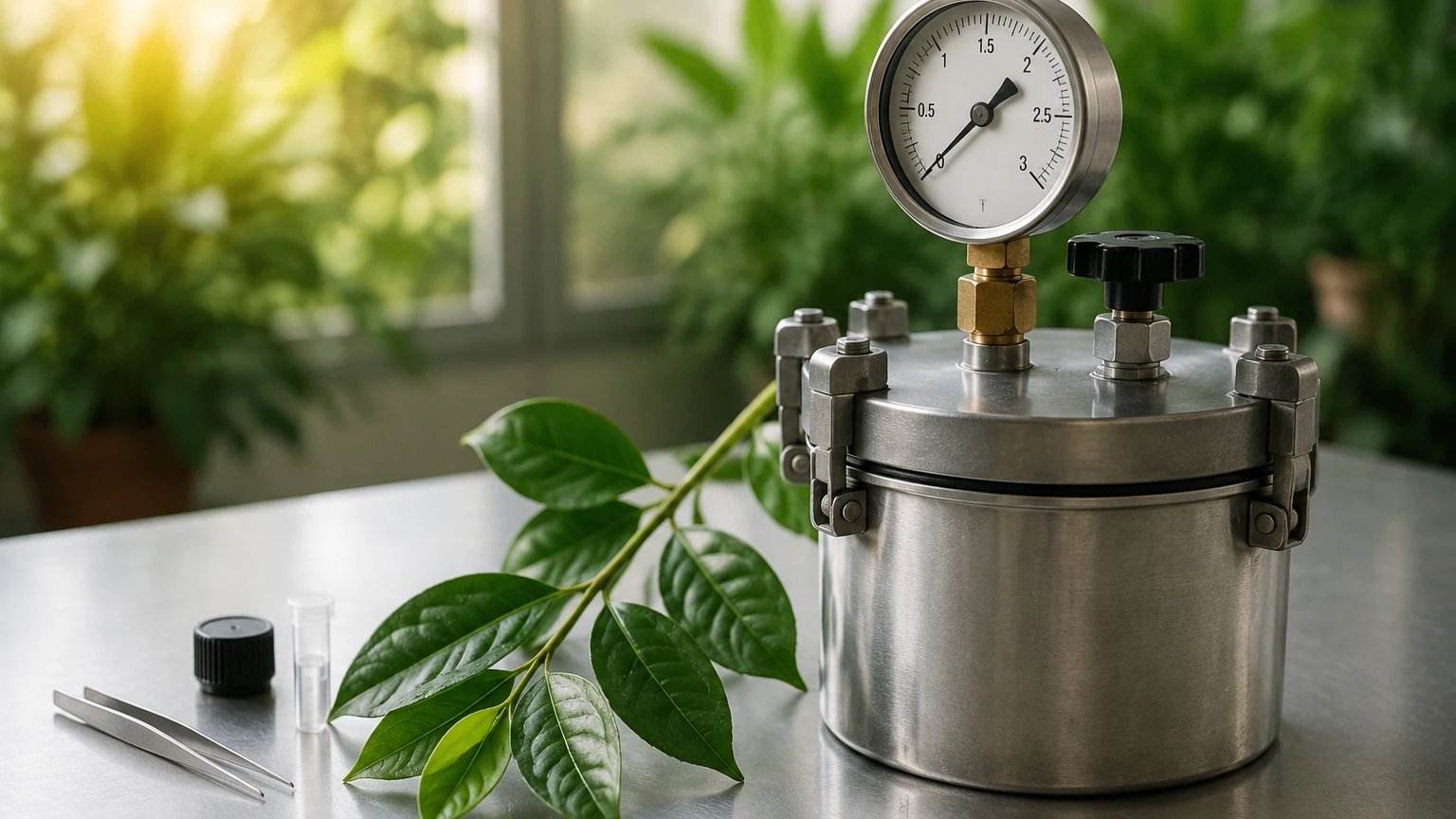
Scholander Pressure Chamber
Scholander Pressure Chamber
In the fields of agricultural engineering, plant physiology, and precision irrigation management, the Scholander pressure chamber—often referred to as the "pressure bomb"—serves as a critical instrument for quantifying plant water status. While industrial level measurement typically focuses on liquid volumes in tanks and vessels using technologies like radar or ultrasonic sensors, the Scholander pressure chamber applies similar pneumatic principles to measure the internal "level" of hydration within biological tissues. Understanding the mechanics, selection criteria, and operational constraints of this device is essential for B2B stakeholders in the environmental and agricultural sectors who require high-accuracy data to optimize water usage and crop yields.
Measurement Principles of the Scholander Pressure Chamber
The Scholander pressure chamber operates on the fundamental principle of the Cohesion-Tension theory. In a transpiring plant, water is pulled from the roots to the leaves through the xylem under negative pressure (tension). This tension is a direct reflection of the plant's water potential; the drier the soil or the higher the transpiration rate, the greater the tension (and the more negative the water potential).
To measure this tension, a leaf or a small branch is severed from the plant. Upon cutting, the water column within the xylem retracts into the tissue because the internal tension is no longer balanced by the plant's structure. The sample is then placed inside a sealed pressure chamber with the cut end protruding through a rubber gasket (the gland).
Compressed gas, typically nitrogen, is slowly introduced into the chamber. This external pressure compresses the leaf tissue, eventually forcing the water back to the cut surface. The exact amount of pressure required to cause the first drop of sap to appear at the xylem's cut surface is equal in magnitude, but opposite in sign, to the plant's water potential. For example, if 1.5 MPa of pressure is required to reach the endpoint, the plant's water potential is -1.5 MPa.
Comparison with Industrial Level Measurement
While the Scholander chamber is a specialized tool, its reliance on pressure-to-status conversion mirrors the logic found in hydrostatic level transmitters. In industrial applications, such as those found on the Main Page of liquid measurement providers, pressure is used to determine the height of a liquid column. In the Scholander chamber, pressure is used to determine the "tension height" or hydration status of the plant's internal hydraulic system. Both methodologies require precise pressure regulation and high-quality seals to ensure accurate readings.
Technical Specifications and Selection Criteria
Selecting the appropriate Scholander pressure chamber requires an evaluation of the specific plant species being studied and the environmental conditions of the site. Not all chambers are suited for every application.
1. Pressure Range
Standard chambers typically operate up to 40 bar (4.0 MPa), which is sufficient for most agricultural crops like grapes, almonds, and citrus. However, for research in arid environments or with forest species that exhibit extreme drought tolerance, chambers capable of reaching 70 to 100 bar (7.0 to 10.0 MPa) are necessary.
2. Chamber Geometry and Size
The chamber must be large enough to accommodate the sample without crushing the foliage. Small chambers are efficient for individual leaves (e.g., wheat or clover), while larger, elongated chambers are required for woody stems or larger fruit-bearing branches.
3. Gas Source and Portability
* Cylinder-Based Systems: These rely on a portable nitrogen tank. They offer the highest precision and are the industry standard for research but require the logistics of refilling gas cylinders.
* Pump-Up Systems: These utilize a manual hand pump to generate pressure. While they eliminate the need for gas tanks, they are typically limited to lower pressure ranges (approx. 20-30 bar) and are more labor-intensive.
* Digital vs. Analog Gauges: Digital gauges provide higher resolution and often include data-logging capabilities, whereas analog gauges are valued for their durability and lack of reliance on battery power in remote field locations.
Practical Selection Table
| Feature | Field Irrigation Monitoring | Physiological Research | Arid Zone Forestry |
| :— | :— | :— | :— |
| Pressure Range | 0 – 40 bar | 0 – 70 bar | 0 – 100+ bar |
| Accuracy | ±0.5 bar | ±0.1 bar | ±0.2 bar |
| Sample Type | Single leaves / Petioles | Various tissues | Woody stems |
| Portability | High (Handheld/Backpack) | Medium (Cart-mounted) | Medium |
| Gas Source | Manual Pump or Small Tank | Nitrogen Cylinder | Nitrogen Cylinder |
| Data Interface | Visual Analog | Digital / Bluetooth | Digital |
Installation and Operational Considerations
Unlike fixed industrial level sensors, the Scholander pressure chamber is a sampling-based instrument. Proper operation is critical to avoid "operator bias" and ensure data repeatability.
Sample Preparation
Samples should be cut with a sharp blade to prevent crushing the xylem vessels, which can lead to erroneous readings. For "Stem Water Potential" (SWP) measurements, the leaf must be bagged in a foil-laminated plastic bag for at least 30 to 60 minutes prior to cutting. This allows the leaf to equilibrate with the water potential of the main stem.
Pressurization Rate
The rate at which pressure is increased significantly impacts the result. A common standard is 0.02 to 0.05 MPa per second (approx. 0.2 to 0.5 bar/s). Increasing pressure too rapidly can cause the sap to overshoot the cut surface, leading to an underestimation of the tension. Conversely, too slow a rate can lead to sample desiccation within the chamber.
Sealing and Gaskets
The rubber gasket (gland) must provide a gas-tight seal around the sample without crushing the tissue. Gaskets come in various sizes (e.g., 1/8", 1/4", 1/2") to match the diameter of the petiole or stem. In industrial contexts, this is analogous to selecting the correct flange or NPT fitting for a level sensor to prevent leakage and maintain pressure integrity.
Limitations and Accuracy Constraints
While the Scholander pressure chamber is considered the "gold standard" for plant water potential, it has inherent limitations:
1. Destructive Sampling: Each measurement requires the removal of a leaf or branch. This limits the frequency of sampling on small plants and prevents continuous automated monitoring.
2. Labor Intensive: Readings must be taken manually in the field, often during the "solar noon" window when plant stress is at its peak.
3. Safety Risks: Operating with high-pressure compressed gas (up to 100 bar) requires strict adherence to safety protocols, including the use of safety glasses and regular inspection of the pressure vessel and regulator.
4. Environmental Sensitivity: The temperature of the chamber can affect the reading. If the chamber is left in direct sunlight, the gas inside may expand or the sample may overheat, altering the physiological state of the tissue.
Frequently Asked Questions (FAQs)
Q: Why use nitrogen gas instead of compressed air?
A: Nitrogen is an inert gas and is preferred for safety and consistency. Compressed air contains oxygen and moisture, which can lead to oxidation of the chamber internals or physiological changes in the sample at high pressures. Furthermore, high-pressure oxygen poses a significant fire risk if it comes into contact with lubricants or organic matter.
Q: How often should the pressure gauge be calibrated?
A: For B2B and research applications, annual calibration against a certified master gauge is recommended. If the unit is dropped or subjected to extreme temperature fluctuations, intermediate verification is advised.
Q: Can the Scholander chamber measure soil water potential?
A: While primarily designed for plant tissue, specialized soil chambers exist that use the same pressure-membrane principle. However, for most soil moisture applications, tensiometers or electromagnetic sensors are more practical.
Q: What is the difference between Leaf Water Potential and Stem Water Potential?
A: Leaf Water Potential (LWP) measures the status of an individual transpiring leaf. Stem Water Potential (SWP) measures the status of the plant's main hydraulic system by bagging a leaf to stop its transpiration, allowing it to reach equilibrium with the stem. SWP is generally considered a more stable and accurate indicator of whole-plant water stress.
Conclusion
The Scholander pressure chamber remains an indispensable tool for those requiring precise, direct measurements of plant hydraulic tension. By converting internal biological tension into a measurable pneumatic value, it provides a level of insight that indirect sensors—such as soil moisture probes—cannot match. For organizations involved in large-scale irrigation management or environmental monitoring, integrating these measurements with broader industrial liquid level data ensures a comprehensive understanding of the water cycle from the reservoir to the leaf.
For engineers and facility managers looking to supplement their specialized agricultural tools with robust industrial measurement systems, the Main Page of Welk offers a wide range of radar, ultrasonic, and hydrostatic solutions designed for the rigors of industrial automation and water treatment.