Prowirl D 200
Prowirl D 200
In the field of industrial process automation, the accurate measurement of fluid flow is as critical as the monitoring of tank levels. The Prowirl D 200 represents a specialized solution in vortex flow measurement, designed primarily for space-constrained applications involving steam, gases, and liquids. While level measurement instruments, such as those found on our Main Page, provide essential data regarding volume and inventory, vortex flowmeters like the Prowirl D 200 offer the real-time velocity and mass flow data necessary for dynamic process control and energy management.
This article provides a technical overview of the Prowirl D 200, its operating principles, and how it integrates into broader industrial systems alongside level measurement technologies.
Understanding Vortex Flow Measurement Principles
Before evaluating specific hardware like the Prowirl D 200, it is essential to understand the physics of vortex shedding. This technology is based on the Karman Vortex Street principle, a phenomenon discovered by Theodore von Kármán in the early 20th century.
The Karman Vortex Street
When a fluid flows past a non-streamlined object (known as a bluff body), it cannot follow the contours of the object on both sides simultaneously. This leads to the formation of alternating vortices (eddies) downstream. The frequency at which these vortices are shed is directly proportional to the flow velocity of the fluid within a specific range of Reynolds numbers.
In the Prowirl D 200, a bluff body is placed in the center of the pipe. As the fluid flows past it, the resulting pressure fluctuations are detected by a capacitive sensor. The electronics then convert this frequency into a flow rate. Because the frequency is determined by the geometry of the bluff body and the pipe diameter, the measurement is remarkably stable over time and resistant to changes in fluid temperature, pressure, or viscosity.
Key Technical Specifications of the Prowirl D 200
The Prowirl D 200 is distinguished by its "wafer" or "sandwich" design. Unlike flanged flowmeters, the wafer-style device is clamped between two existing pipe flanges, making it an ideal choice for retrofitting into existing piping systems where space is at a premium.
Sensor and Transmitter Features
* Wafer Design (D): Optimized for short face-to-face lengths, reducing the overall footprint and weight of the installation.
* Two-Wire Technology (200): The "200" designation refers to the transmitter platform, which utilizes a standard 2-wire loop-powered configuration. This simplifies wiring and reduces installation costs in industrial environments.
* Heartbeat Technology: This integrated diagnostic suite allows for continuous self-monitoring and verification of the instrument's health without interrupting the process. It provides documented proof of measurement reliability, which is crucial for compliance and safety audits.
* Material Construction: Typically constructed from high-grade stainless steel (e.g., 1.4404/316L), ensuring compatibility with corrosive chemicals and high-temperature steam.
Industrial Applications: Steam and Gas Measurement
The Prowirl D 200 is frequently employed in utilities and energy management sectors. Its ability to measure steam is perhaps its most common application, where it assists in calculating energy efficiency and heat transfer.
1. Steam Management: In boiler houses, the Prowirl D 200 measures the flow of saturated or superheated steam. When combined with temperature and pressure compensation, it can provide accurate mass flow readings.
2. Compressed Air Systems: Large-scale industrial facilities use vortex meters to monitor compressed air consumption, helping to identify leaks and optimize compressor performance.
3. Industrial Gases: From nitrogen blanketing to oxygen enrichment, the device handles various non-corrosive and corrosive gases with high precision.
Selecting the Right Instrument: Selection Table
When choosing between a vortex flowmeter like the Prowirl D 200 and other measurement technologies, engineers must consider the process conditions. The following table highlights key selection criteria for the Prowirl D 200.
| Parameter | Specification / Capability |
| :— | :— |
| Fluid Types | Liquids, Gases, Saturated Steam, Superheated Steam |
| Nominal Diameters | DN 15 to DN 150 (1/2" to 6") |
| Process Temperature | -200 °C to +400 °C (-328 °F to +752 °F) |
| Max. Process Pressure | PN 40 / Class 300 |
| Measured Variables | Volume flow, Mass flow, Corrected volume flow, Energy flow |
| Accuracy (Liquids) | ±0.75% of reading |
| Accuracy (Steam/Gas) | ±1.00% of reading |

Integrating Flow and Level Measurement Systems
In many process plants, flow measurement and level measurement are two sides of the same coin. For instance, in a chemical reactor or a steam drum, knowing the liquid level is vital for safety, but knowing the inflow and outflow rates is vital for mass balance.
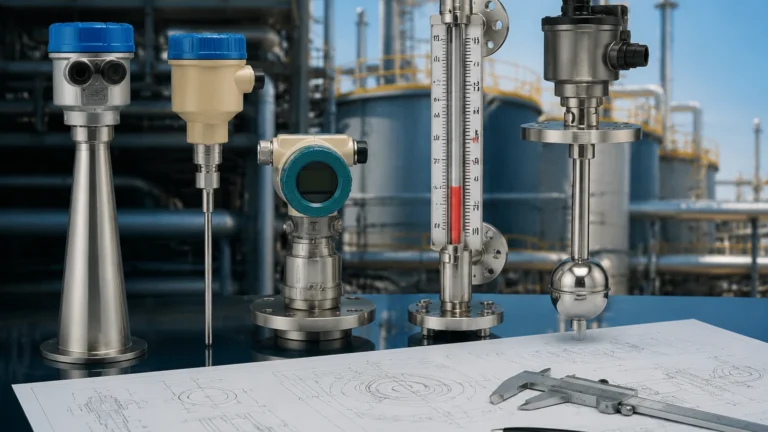
Welk provides a wide range of level measurement solutions that complement vortex flowmeters. For example, while a Prowirl D 200 monitors the steam output of a boiler, a Welk hydrostatic level transmitter or a guided wave radar sensor ensures the water level in the drum remains within safe operating limits. To explore the full range of level instrumentation, you can Review product options and application support on our Main Page.
Mass Balance and Leak Detection
By integrating flow data from the Prowirl D 200 with level data from a storage tank, operators can perform real-time mass balance calculations. If the level in a tank is dropping faster than the measured outflow, it may indicate a leak or a secondary unmetered process, triggering an immediate maintenance alert.
Installation Best Practices
To maintain the high accuracy of the Prowirl D 200, specific installation guidelines must be followed. Vortex meters are sensitive to flow profile distortions caused by pipe elbows, valves, or reducers.
Straight Pipe Runs
For optimal performance, the meter requires a minimum length of straight pipe upstream and downstream of the installation point.
* Upstream: Typically 15 to 20 times the nominal pipe diameter (DN).
* Downstream: Typically 5 times the nominal pipe diameter (DN).
If these lengths cannot be met, flow conditioners may be required to straighten the flow profile before it reaches the bluff body.
Orientation and Centering
The Prowirl D 200 is a wafer-style meter, meaning centering is critical. Misalignment between the meter and the adjacent piping can create turbulence, leading to significant measurement errors. Most wafer designs include centering rings or bolts to assist with this process. While the meter can be installed in horizontal or vertical pipes, in liquid applications, the pipe must always be full to ensure accuracy.
Limitations and Operational Constraints
While the Prowirl D 200 is a robust instrument, it is not suitable for every application. Engineers should be aware of the following limitations:
* Reynolds Number: Vortex shedding only occurs reliably above a certain Reynolds number (typically Re > 10,000 to 20,000). At very low flow velocities, the vortices are too weak to be detected, resulting in a "low-flow cut-off."
* Vibration: High levels of mechanical vibration in the piping system can interfere with the capacitive sensor, as the sensor may struggle to distinguish between vortex-induced pressure pulses and pipe vibration.
* Multiphase Flow: Vortex meters are designed for single-phase fluids. The presence of significant amounts of water droplets in steam (wet steam) or gas bubbles in liquid can lead to measurement inaccuracies and potential damage to the bluff body.
Frequently Asked Questions (FAQ)
Q: Can the Prowirl D 200 measure the flow of high-viscosity liquids?
A: Vortex meters are generally not recommended for high-viscosity fluids because high viscosity dampens the formation of vortices. If the Reynolds number drops below the required threshold due to viscosity, the meter will not function accurately.
Q: How does the Prowirl D 200 handle temperature changes?
A: The device includes an integrated temperature sensor in some versions, allowing it to perform real-time compensation for density changes in saturated steam, providing a mass flow output rather than just volume flow.
Q: Is the Prowirl D 200 suitable for hygienic applications in the food and beverage industry?
A: While the stainless steel construction is durable, the presence of a bluff body in the flow stream creates a "dead zone" that may not meet the strictest CIP (Clean-In-Place) requirements for some food processes. For these applications, electromagnetic or ultrasonic meters are often preferred.
Q: How often does the Prowirl D 200 require calibration?
A: Because the measurement is based on the physical geometry of the bluff body, the "K-factor" (the relationship between frequency and flow) does not change unless the bluff body is physically damaged or eroded. With Heartbeat Technology, users can perform in-situ verification, often extending the intervals between full laboratory calibrations.
For engineers seeking a complete solution for their process facility, combining the flow precision of the Prowirl D 200 with the reliable level monitoring of Welk instruments ensures maximum operational efficiency and safety. Visit our Main Page to find the right level measurement technology for your specific industrial application.