Sensor Chlorine
Sensor Chlorine
In industrial water treatment and chemical processing, the accurate measurement of chlorine is a critical requirement for ensuring disinfection efficacy, process safety, and regulatory compliance. A sensor chlorine system is designed to monitor the concentration of various chlorine species—typically free residual chlorine or total chlorine—in aqueous solutions. This guide provides an engineering-focused overview of chlorine sensing technologies, their operating principles, selection criteria, and how they integrate with broader process automation systems.
Measurement Principles of Chlorine Sensors
Chlorine measurement in industrial environments primarily relies on three distinct technologies: amperometric, potentiometric, and colorimetric. Understanding these principles is the first step in selecting the appropriate instrumentation for a specific application.
Amperometric Sensors
Amperometric measurement is the most common method for continuous online monitoring. This electrochemical technique measures the current generated by the reduction of chlorine molecules at a cathode. There are two main types of amperometric sensors:
1. Membrane-Covered Amperometric Sensors: These sensors utilize a gas-permeable membrane that separates the electrodes and electrolyte from the process water. Only hypochlorous acid (HOCl) or other specific chlorine species can diffuse through the membrane. Once inside, the chlorine is reduced at the cathode, creating a current proportional to the concentration. This design protects the electrodes from fouling and chemical interference.
2. Open (Bare Electrode) Amperometric Sensors: These sensors lack a membrane and place the electrodes directly in the process stream. While they offer faster response times, they are more susceptible to changes in flow velocity, pressure, and the presence of interfering ions. They often require mechanical cleaning mechanisms, such as rotating glass beads, to keep the electrode surfaces clear.
Potentiometric Sensors (ORP)
Oxidation-Reduction Potential (ORP) sensors measure the overall oxidative capacity of the water rather than a specific chlorine concentration. While ORP is often used as a proxy for chlorine effectiveness in swimming pools or simple cooling towers, it is not a direct measurement of chlorine ppm (parts per million) or mg/L. It is sensitive to pH changes and the presence of other oxidants or reductants.
Colorimetric (DPD) Analyzers
Colorimetric systems use the DPD (N,N-diethyl-p-phenylenediamine) method, which is the laboratory standard. The analyzer automatically takes a sample, adds a reagent that reacts with chlorine to produce a pink color, and measures the color intensity using a photometer. While highly accurate and less sensitive to pH, these are batch-process instruments rather than continuous sensors and require regular reagent replenishment.
Key Evaluation Criteria for Sensor Selection
When specifying a sensor chlorine system, engineers must evaluate several technical parameters to ensure long-term reliability and accuracy.
Free Chlorine vs. Total Chlorine
* Free Chlorine: Refers to the sum of hypochlorous acid (HOCl) and hypochlorite ions (OCl-). This is the most active form of chlorine for disinfection.
* Total Chlorine: The sum of free chlorine and combined chlorine (chloramines). Total chlorine measurement is essential in wastewater effluent and applications where chloramination is practiced.
pH Dependency and Compensation
The equilibrium between HOCl and OCl- is highly dependent on pH. Amperometric sensors primarily measure HOCl. As pH increases, HOCl converts to OCl-, which the sensor may not detect as efficiently. For applications where pH fluctuates above 7.5, a sensor chlorine system must include integrated pH compensation, either through an auxiliary pH probe or by using a specialized electrolyte that buffers the internal pH of the sensor.
Process Conditions
* Flow Rate: Amperometric sensors require a constant flow of water across the membrane or electrode to maintain a stable measurement. Most sensors require a flow rate between 30 and 60 liters per hour (L/h).
* Pressure: Membrane-covered sensors are sensitive to pressure fluctuations, which can deform the membrane and cause signal drift. Standard sensors typically operate up to 1 bar (14.5 psi), though high-pressure variants exist.
* Temperature: Electrochemical reactions are temperature-dependent. Automatic temperature compensation (ATC) is a mandatory feature for any industrial chlorine sensor.
Practical Selection Table
| Feature | Membrane Amperometric | Open Amperometric | Colorimetric (DPD) |
| :— | :— | :— | :— |
| Measurement Type | Continuous | Continuous | Batch (2-10 min) |
| Target Species | Free or Total | Free Chlorine | Free or Total |
| pH Sensitivity | High (Requires Comp.) | Very High | Low |
| Maintenance | Low (Membrane/Electrolyte) | High (Cleaning) | High (Reagents) |
| Response Time | 30–90 Seconds | < 10 Seconds | Minutes |
| Typical Application | Potable Water, Cooling | Industrial Process | Regulatory Reporting |
Installation and Engineering Considerations
Correct installation is as vital as sensor selection. Most sensor chlorine units are installed in a bypass line rather than directly in the main process pipe. This allows for easier maintenance and controlled flow conditions.
1. Flow Cells: Sensors should be housed in a dedicated flow cell (also known as a constant head sampler). This device ensures that the sensor is always submerged and that the water velocity remains within the manufacturer's specified range regardless of fluctuations in the main line.
2. Positioning: The bypass should be take-off from the side or center of the main pipe to avoid air bubbles (top) or sediment (bottom). The discharge from the flow cell should ideally be sent to a drain or a lower-pressure return point.
3. Interference: Avoid installing chlorine sensors immediately downstream of chemical injection points. A sufficient mixing distance is required to ensure the sample is representative of the bulk fluid.

Integration with Level Measurement and Dosing Systems
In a complete chemical treatment loop, the chlorine sensor acts as the "eyes" of the system, providing feedback to a PLC or PID controller. However, the effectiveness of the disinfection process also depends on the reliable supply of the chlorine reagent (such as sodium hypochlorite). This is where the integration of level measurement becomes critical.
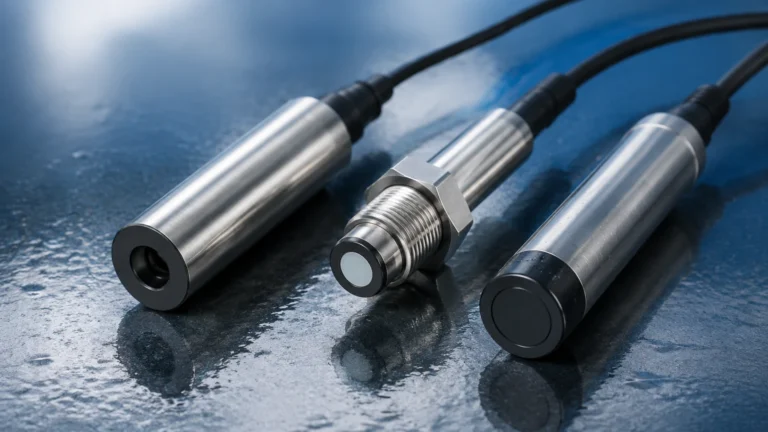
To maintain continuous operation, industrial facilities must monitor the levels in their chemical storage tanks. If a tank runs dry, the chlorine sensor will detect a drop in residual levels, but the system will be unable to respond, leading to potential biological growth or safety breaches. For the storage of corrosive chemicals like sodium hypochlorite, non-contact level measurement solutions are preferred. Technologies such as radar level meters or ultrasonic sensors provide high accuracy without coming into contact with the aggressive media.
Engineers looking to optimize their entire chemical dosing skid—from residual monitoring to tank inventory management—can Review product options and application support to find compatible level transmitters that ensure the dosing pumps always have a sufficient supply of reagent to meet the demands signaled by the sensor chlorine.
Limitations and Common Risks
While modern chlorine sensors are robust, they are not without limitations. Engineers should be aware of the following risks:
* Fouling: In wastewater or cooling water with high organic loads, membranes can become coated with biofilm or scale, reducing sensitivity. Regular cleaning or the use of anti-fouling coatings is necessary.
* Zero-Point Drift: All electrochemical sensors experience some degree of drift over time. Regular calibration against a handheld DPD photometer is required (typically weekly or bi-weekly).
* Chemical Interference: Strong oxidants like ozone, bromine, or chlorine dioxide can interfere with the readings of a standard chlorine sensor. If these chemicals are present, species-specific sensors must be used.
* Air Bubbles: Small air bubbles trapped against the sensor membrane can block the diffusion of chlorine, leading to artificially low readings and potential over-dosing by the controller.
Frequently Asked Questions (FAQ)
Q: How often should a chlorine sensor be calibrated?
A: For most industrial applications, a weekly calibration check using a DPD colorimetric kit is recommended. If the process is stable, this interval may be extended to two weeks, but it should rarely exceed one month.
Q: Can I use a chlorine sensor in saltwater?
A: Yes, but you must use a sensor specifically designed for high-salinity environments. Standard electrolytes may be affected by the high ionic strength of seawater, and the sensor must account for the presence of bromine, which is often produced when chlorine is added to seawater.
Q: What is the lifespan of a membrane-covered sensor?
A: The sensor body itself can last 5–10 years. However, the membrane cap and electrolyte typically need replacement every 6 to 12 months, depending on the water quality and temperature.
Q: Why is my chlorine reading different from my lab test?
A: The most common reasons are pH differences, temperature variations, or the presence of chloramines if you are measuring free chlorine. Additionally, ensure the lab test is performed immediately after sampling, as chlorine gas can dissipate quickly from an open container.
By carefully selecting the sensor chlorine technology and ensuring it is supported by robust level measurement and flow control, industrial operators can achieve precise disinfection and process stability.