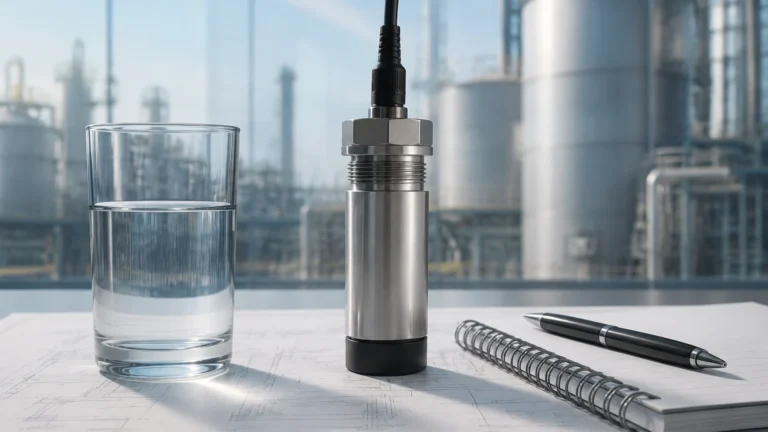
Sensors Used for Predictive Maintenance
Sensors Used for Predictive Maintenance
In the modern industrial landscape, the transition from reactive and preventive maintenance to predictive maintenance (PdM) represents a significant shift toward operational efficiency. Predictive maintenance relies on the continuous monitoring of equipment and processes to identify patterns and predict failures before they occur. Central to this strategy are the various types of sensors used for predictive maintenance, which provide the raw data necessary for advanced analytics and condition-based monitoring.
For process industries involving liquids, chemicals, and bulk solids, level measurement instruments are among the most critical sensors used for predictive maintenance. By monitoring level trends, signal strength, and environmental variables, these instruments allow engineers to detect pump cavitation, valve leaks, vessel scaling, and instrument health degradation. Understanding the measurement principles and selection criteria for these sensors is essential for building a robust predictive maintenance framework.
Measurement Principles of Level Sensors in PdM
Before selecting sensors for a predictive maintenance program, it is vital to understand how different technologies interact with the process environment. Level sensors generally fall into contact and non-contact categories, each with specific physical principles that influence their suitability for condition monitoring.
Radar Level Measurement (Non-Contact)
Radar level meters, particularly those utilizing Frequency Modulated Continuous Wave (FMCW) technology, are premier sensors used for predictive maintenance. They emit a high-frequency microwave signal (typically 26GHz or 80GHz) that reflects off the medium's surface. The time-of-flight or frequency shift is measured to determine the distance.
In a PdM context, radar sensors are valued for their stability. Because they do not contact the medium, they are less prone to wear and tear. Furthermore, modern radar units provide "echo curves" or signal quality diagnostics. A gradual decrease in signal-to-noise ratio can predict the buildup of material on the antenna (fouling), allowing maintenance teams to schedule cleaning before the sensor fails completely.
Ultrasonic Level Measurement (Non-Contact)
Ultrasonic sensors use sound waves to measure the distance to the liquid surface. The sensor emits an ultrasonic pulse, which bounces off the surface and returns to the transducer. The duration of this travel is proportional to the distance.
For predictive maintenance, ultrasonic sensors are often used in water treatment and open-channel flow applications. However, they are sensitive to temperature fluctuations and vapor. A predictive system might monitor the sensor’s internal temperature compensation data to identify environmental changes that could stress other mechanical components in the area.
Hydrostatic Level Measurement (Contact)
Hydrostatic transmitters measure the pressure exerted by a liquid column at a specific depth. Based on the formula $P = \rho gh$ (where $P$ is pressure, $\rho$ is density, $g$ is gravity, and $h$ is height), the level can be calculated accurately if the density is constant.
These are essential sensors used for predictive maintenance in deep wells and pressurized tanks. A drift in the baseline pressure reading when the tank is known to be empty can indicate diaphragm fatigue or sensor drift, signaling the need for recalibration or replacement before the measurement becomes critical to safety.
The Role of Level Sensors in Predictive Maintenance Strategies
While vibration and temperature sensors are commonly associated with motor health, level sensors provide unique insights into the health of the entire fluid system. Integrating level data into a PdM platform helps identify systemic issues that traditional mechanical sensors might miss.
1. Pump Health Monitoring: If a level sensor detects a slower-than-expected rise in tank level while a pump is running at full capacity, it may indicate impeller wear or a developing blockage. This allows for pump maintenance based on performance degradation rather than a fixed calendar schedule.
2. Leak Detection: Precise level monitoring in closed systems can identify micro-leaks. If the level in a static tank drops by a few millimeters (or fractions of an inch) over an extended period, the system can flag a potential seal failure or valve leak.
3. Instrument Self-Diagnostics: High-end level instruments, such as those found on the Main Page of specialized manufacturers, often include onboard diagnostics. These sensors can monitor their own internal electronics and signal strength, providing a "health score" that serves as a direct input for predictive maintenance software.
Technical Evaluation Criteria for Sensor Selection
When evaluating sensors used for predictive maintenance, engineers must look beyond basic accuracy. The following criteria determine how well a sensor will function within a data-driven maintenance ecosystem:
* Communication Protocols: For PdM, sensors must be able to transmit more than just a 4-20mA analog signal. Digital protocols like HART, Modbus, or Profibus are necessary to extract diagnostic data, such as signal quality, internal temperature, and error codes.
* Resolution and Repeatability: Predicting a failure often requires detecting very small changes in process behavior. A sensor with high repeatability (e.g., ±2mm or better) is required to distinguish between normal process noise and a genuine trend toward failure.
* Environmental Resilience: Sensors in chemical or oil and gas applications must withstand corrosive vapors and high pressures. A sensor that fails due to environmental stress cannot provide the data needed for predictive maintenance. Materials like PTFE, Hastelloy, and 316L stainless steel are standard for these demanding environments.
Selection Table: Level Sensors for Predictive Maintenance
The following table compares common level measurement technologies based on their utility in a predictive maintenance program.
| Technology | PdM Suitability | Primary Diagnostic Data | Maintenance Requirement | Best Use Case |
| :— | :— | :— | :— | :— |
| 80GHz Radar | Excellent | Signal strength, echo curve, buildup detection | Very Low | Chemical tanks, agitated vessels |
| Ultrasonic | Good | Echo quality, temperature compensation data | Moderate (clean sensor face) | Water/Wastewater, open sumps |
| Hydrostatic | Moderate | Zero-point drift, diaphragm health | Moderate (check for clogging) | Deep wells, fuel storage |
| Magnetic Gauge | Low (unless digitized) | Visual level, reed switch status | Moderate (float cleaning) | Boiler drums, oil-water interface |
| Guided Wave Radar | High | Interface level, probe coating alerts | Low | Low dielectric liquids, bypass chambers |

Installation Considerations for Reliable Data
To ensure that sensors used for predictive maintenance provide accurate data, installation must be performed with precision. Poor installation creates "noise" in the data, which can lead to false positives in the predictive analytics engine.
* Avoiding Obstructions: For radar and ultrasonic sensors, the beam must have a clear path to the liquid surface. Internal tank structures like ladders, agitators, or heating coils can create false echoes. While software can "mask" these echoes, they still reduce the overall signal-to-noise ratio, making it harder to detect subtle changes.
* Stilling Wells and Bypass Chambers: In turbulent applications, using a stilling well or a bypass chamber can stabilize the liquid surface. This provides a cleaner signal for the sensor, allowing the PdM system to focus on long-term trends rather than short-term turbulence.
* Mounting Position: Sensors should generally be mounted at least 200mm (approx. 8 inches) away from the tank wall to prevent interference. For hydrostatic sensors, the diaphragm should be located away from areas of high turbulence or silt accumulation to prevent physical damage and measurement errors.
Common Risks and Limitations
While sensors used for predictive maintenance offer significant benefits, there are risks associated with over-reliance on automated data:
1. Data Overload: Collecting too much data without a clear analysis strategy can overwhelm maintenance teams. It is essential to define which specific sensor parameters (e.g., signal attenuation) are the primary indicators of failure.
2. Calibration Drift: Even the most advanced sensors can drift over time. If a sensor used for PdM is not periodically verified against a secondary source, the predictive model may be based on inaccurate data, leading to missed failures or unnecessary maintenance.
3. False Alarms: Environmental factors, such as sudden heavy foam or extreme steam, can temporarily interfere with non-contact sensors. Without smart filtering, these events might be misinterpreted as equipment failure.
Frequently Asked Questions (FAQ)
Q: Can I use existing 4-20mA sensors for predictive maintenance?
A: Yes, but with limitations. Standard 4-20mA signals only provide the primary process variable (the level). To get the full benefits of PdM, you would typically need to use a HART tri-loop or upgrade to digital sensors that provide diagnostic information about the sensor's health.
Q: How often do radar level sensors need maintenance?
A: Non-contact radar sensors are virtually maintenance-free unless there is significant material buildup on the antenna. In a PdM setup, the sensor itself will alert you when cleaning is required based on signal strength degradation.
Q: Are ultrasonic sensors reliable for predictive maintenance in outdoor tanks?
A: They can be, but they require integrated temperature compensation. Because the speed of sound changes with air temperature, outdoor sensors must account for diurnal temperature swings to avoid reporting false level changes that could trigger a PdM alert.
Conclusion and Next Steps
The integration of advanced level measurement instruments as sensors used for predictive maintenance is a cornerstone of modern industrial reliability. By selecting the appropriate technology—whether it be high-frequency radar for complex chemical processes or hydrostatic transmitters for deep-well monitoring—facilities can significantly reduce downtime and extend the lifespan of their assets.
When planning a predictive maintenance upgrade, engineers should first audit their current instrumentation. Determine which vessels are most critical to the process and evaluate whether the current sensors provide the diagnostic depth required for condition monitoring. For those looking to explore specific hardware options, reviewing the technical specifications on the Main Page of a dedicated manufacturer can provide insight into the latest diagnostic capabilities of modern level meters.
Before finalizing a purchase, confirm the compatibility of the sensor’s digital output with your existing SCADA or IIoT platform, and ensure that the chosen materials of construction are rated for your specific process media. With the right sensors in place, predictive maintenance transforms from a theoretical concept into a powerful tool for operational excellence.