Sewage Meter
Sewage Meter
In the realm of industrial wastewater management and municipal sanitation, the term "sewage meter" typically refers to the specialized instrumentation used to monitor the level and flow of untreated water, sludge, and chemical effluents. Accurate measurement in these environments is notoriously difficult due to the presence of suspended solids, corrosive chemicals, fluctuating temperatures, and the generation of gases like methane and hydrogen sulfide. Selecting the correct sewage meter is not merely a matter of measuring volume; it is about ensuring process stability, preventing environmental overflows, and optimizing the efficiency of treatment plants.
For engineers and plant managers, understanding the underlying physics of measurement technologies is the first step toward a reliable installation. This guide examines the primary technologies used for sewage level measurement, provides selection criteria, and outlines the practical considerations necessary for long-term operational success.
Understanding Sewage Level Measurement Principles
Before selecting a sewage meter, it is essential to understand the physical principles that govern how these devices interact with the medium. Most modern industrial level measurement relies on one of three fundamental principles: Time-of-Flight (ToF), Hydrostatic Pressure, or Electromagnetism.
Time-of-Flight (ToF) Principle
ToF is the foundation for both ultrasonic and radar level meters. The sensor emits a signal (either a sound wave or an electromagnetic pulse) that travels through the air, reflects off the surface of the sewage, and returns to the sensor. By measuring the time it takes for the signal to complete this round trip and knowing the speed of the signal in the medium (air), the device calculates the distance to the liquid surface.
In sewage applications, ToF sensors are preferred because they are non-contact. This prevents the buildup of grease, rags, and sludge on the sensor head, which is a common failure point for contact-based instruments.
Hydrostatic Pressure Principle
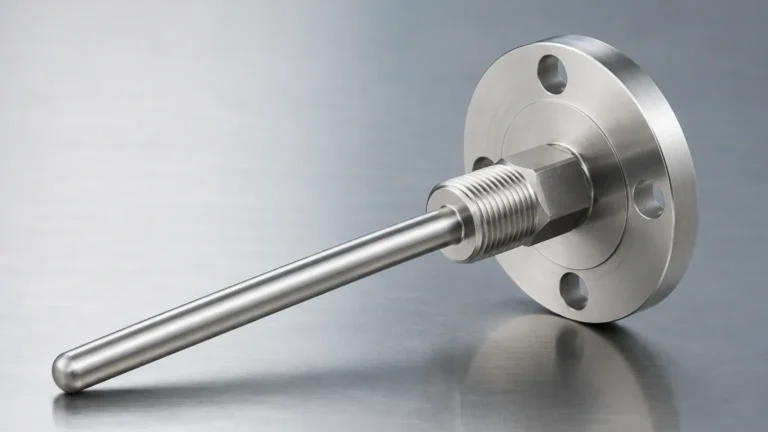
This principle relies on the relationship between the height of a liquid column and the pressure it exerts at the base. A submersible pressure transmitter measures the "head" pressure of the sewage. Since the density of water is relatively constant (approximately 1,000 kg/m³), the pressure increases linearly with depth. For sewage, which may have a higher density due to solids content, calibration must account for the specific gravity of the medium to maintain accuracy.
Electromagnetic Induction
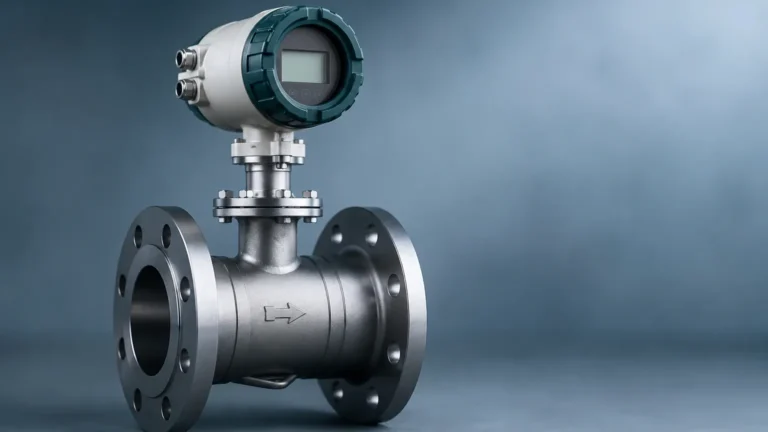
While primarily used for flow measurement in closed pipes, electromagnetic induction is used in magnetic flow meters. It operates based on Faraday’s Law, where a conductive liquid (like sewage) moving through a magnetic field generates a voltage proportional to its velocity. For level measurement in open channels, this is often paired with a level sensor to calculate the total volumetric flow.
Key Technologies for Sewage Level Monitoring
Industrial applications utilize several distinct types of sewage meters, each with specific strengths and limitations depending on the environment (e.g., a wet well versus a primary clarifier).
1. Radar Level Meters
Radar level meters use high-frequency microwave pulses (typically in the 26 GHz or 80 GHz range). Radar is often considered the gold standard for sewage measurement because microwaves are unaffected by air temperature, pressure, or the presence of steam and foam.
* Advantages: Extremely high accuracy (up to ±2 mm), non-contact, and capable of penetrating heavy vapor or foam that might baffle an ultrasonic sensor.
* Best Use Case: Chemical storage tanks, high-temperature digesters, and outdoor basins where wind and sun can create temperature gradients.
2. Ultrasonic Level Sensors
Ultrasonic sensors use sound waves (20 kHz to 200 kHz). These are the most common sewage meters due to their balance of cost and performance. However, because sound speed changes with air temperature, these sensors require integrated temperature compensation.
* Advantages: Cost-effective, easy to install, and no moving parts.
* Limitations: Can be affected by heavy foam (which absorbs sound) and heavy steam or dust.
3. Hydrostatic Level Transmitters
These are contact-based sensors submerged at the bottom of a tank or well. They are often used in deep lift stations where mounting a non-contact sensor at the top is impractical.
* Advantages: Simple to install in deep wells, unaffected by surface foam or turbulence.
* Limitations: Susceptible to "ragging" (debris wrapping around the sensor) and requires periodic cleaning in high-solids environments.
Selection Criteria and Comparison Table
Choosing the right sewage meter requires an evaluation of the specific process conditions. The following table provides a comparison of the three primary technologies used in wastewater applications.
| Feature | Radar Level Meter | Ultrasonic Sensor | Hydrostatic Transmitter |
| :— | :— | :— | :— |
| Measurement Type | Non-contact (Microwave) | Non-contact (Sound) | Contact (Pressure) |
| Accuracy | Very High (±2mm to ±5mm) | High (±0.25% of range) | Moderate (±0.5% of range) |
| Effect of Foam | Minimal | High (Signal absorption) | None |
| Effect of Steam/Vapor | None | Significant | None |
| Maintenance Need | Very Low | Low | Moderate (Cleaning required) |
| Typical Range | Up to 30m – 70m | Up to 15m – 20m | Up to 100m+ |
| Relative Cost | Higher | Medium | Lower |
When evaluating these options, procurement teams should consult a professional manufacturer. For a comprehensive overview of available instrumentation, engineers can visit the Main Page to review product options and application support.
Installation Best Practices for Reliable Data
The reliability of a sewage meter is often determined more by its installation than by the technology itself. Wastewater environments are turbulent and physically demanding.
Avoiding the "Dead Zone"
All ToF sensors (radar and ultrasonic) have a "dead zone" or "blocking distance" directly beneath the sensor where measurements cannot be taken. For example, if an ultrasonic sensor has a 0.3m dead zone, it must be mounted at least 0.3m above the highest possible liquid level. Failure to account for this will result in false readings or "lock-ups" during high-level events.
Beam Angle and Obstructions
Sensors emit signals in a cone shape. Any physical obstruction within this cone—such as ladders, pipes, or pump supports—will create a false reflection.
* Radar: Features a narrower beam angle (especially 80 GHz models), making it easier to install in cramped wet wells.
* Ultrasonic: Has a wider beam; if obstructions are unavoidable, "false echo suppression" software must be used to tell the sensor to ignore those specific reflections.
Turbulence and Stilling Wells
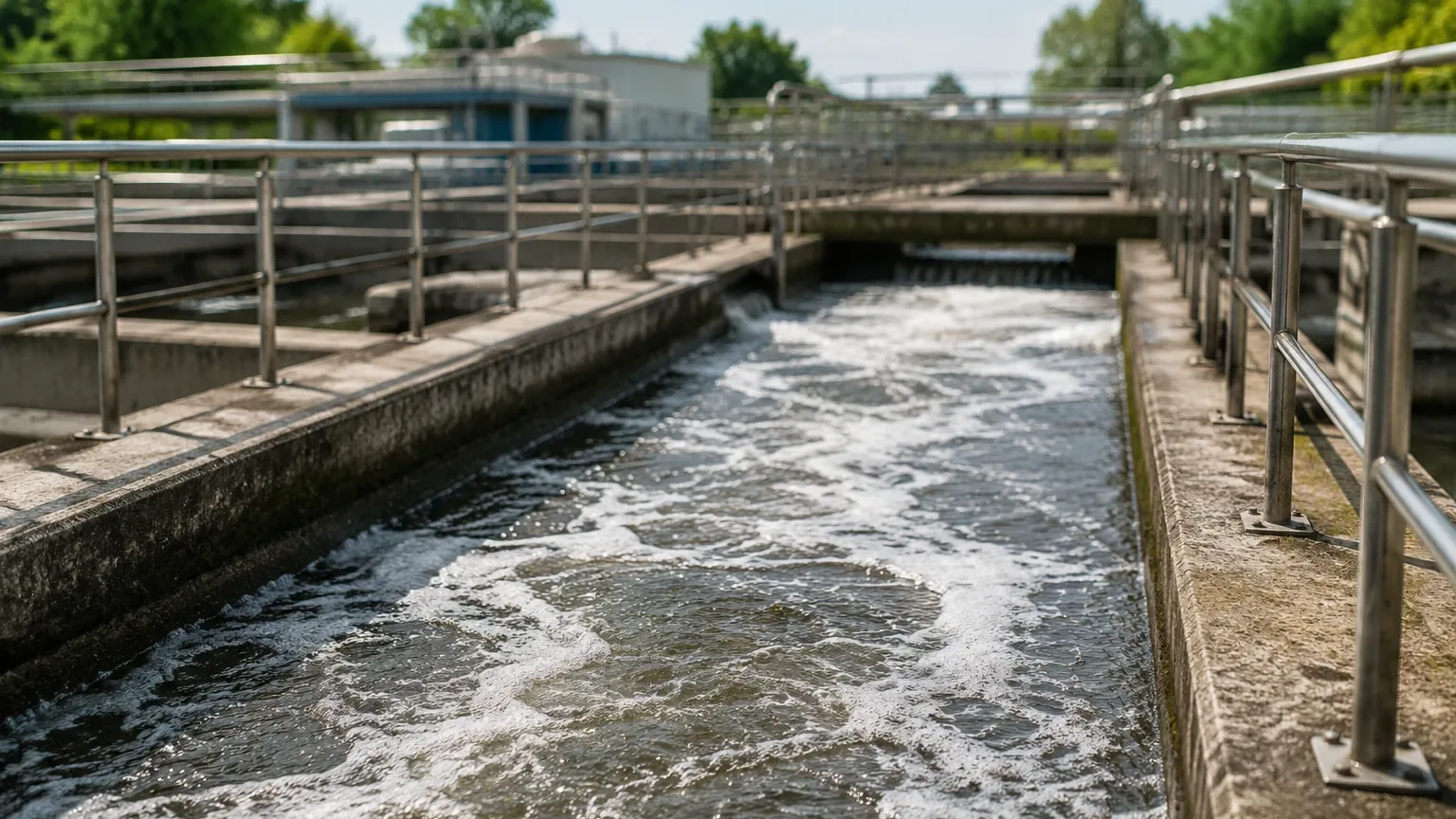
In influent channels or near pump discharges, the surface of the sewage is often turbulent. This turbulence can scatter the signal of a non-contact meter. In these cases, a stilling well (a vertical pipe with a vent hole) can be installed. The sensor measures the level inside the pipe, where the surface remains calm and representative of the overall tank level.
Mounting Orientation
The sensor must be mounted perfectly perpendicular to the liquid surface. Even a few degrees of tilt can cause the signal to reflect away from the sensor rather than back to it, leading to a loss of signal (echo loss).
Addressing Common Challenges in Wastewater Environments
1. Build-up and Maintenance
Sewage is "sticky." Fats, oils, and grease (FOG) can accumulate on any surface. While non-contact meters avoid direct immersion, they can still suffer from condensation or splash-back. Many modern radar meters feature PTFE-encapsulated antennas that resist buildup. For hydrostatic sensors, a "flush diaphragm" design is recommended to prevent solids from clogging the pressure sensing element.
2. Corrosive Gases
Hydrogen sulfide (H2S) is common in sewage systems and is highly corrosive to copper and standard steel. Sewage meters must be constructed from corrosion-resistant materials. Look for sensors with IP68 ratings and housings made of PVDF, 316L stainless steel, or reinforced plastics.
3. Power and Connectivity
In remote lift stations, power may be limited. Loop-powered (2-wire) 4-20mA transmitters are the industry standard, allowing the device to draw power from the same wires used for signal transmission. For IoT-enabled plants, RS485 Modbus or Hart protocols allow for remote diagnostics, which is critical for identifying a failing sensor before an overflow occurs.
Frequently Asked Questions (FAQ)
Q: Can I use an ultrasonic sewage meter in a tank with heavy foam?
A: It is not recommended. Foam acts as an acoustic insulator, absorbing the sound waves and preventing them from returning to the sensor. In foamy applications, a high-frequency radar meter or a hydrostatic pressure transmitter is a much more reliable choice.
Q: How often should a submersible sewage meter be calibrated?
A: In standard water, these sensors are very stable. However, in sewage, density can change, and debris can coat the sensor. We recommend a visual inspection every 3 months and a calibration check every 6 to 12 months, depending on the solids concentration.
Q: What is the benefit of an 80 GHz radar over a 26 GHz radar for sewage?
A: The 80 GHz radar has a much narrower beam angle and higher resolution. This allows it to be used in very small wet wells or tanks with many internal obstructions without picking up interference from the walls or pipes.
Q: Do sewage meters work in freezing conditions?
A: Yes, but with caveats. For ultrasonic meters, ice buildup on the sensor face will block the signal. Radar is less affected by ice on the surface of the liquid but can still be blocked by heavy frost on the antenna. In extreme cold, heated enclosures or specialized coatings are used.
Conclusion
Selecting a sewage meter requires balancing the harsh realities of wastewater chemistry with the need for precision. While ultrasonic sensors remain a popular and cost-effective choice for many standard applications, the declining cost of radar technology has made it the preferred option for critical infrastructure where foam, vapor, and narrow spaces are factors. Hydrostatic transmitters remain indispensable for deep-well applications where surface access is limited.
By following proper installation guidelines—specifically managing dead zones and beam angles—and choosing materials resistant to H2S corrosion, operators can ensure their sewage meters provide years of reliable service. For specific technical data and to explore the full range of industrial level measurement solutions, professionals should consult the Main Page of an established manufacturer like Welk to find the right fit for their specific industrial automation or water treatment needs.