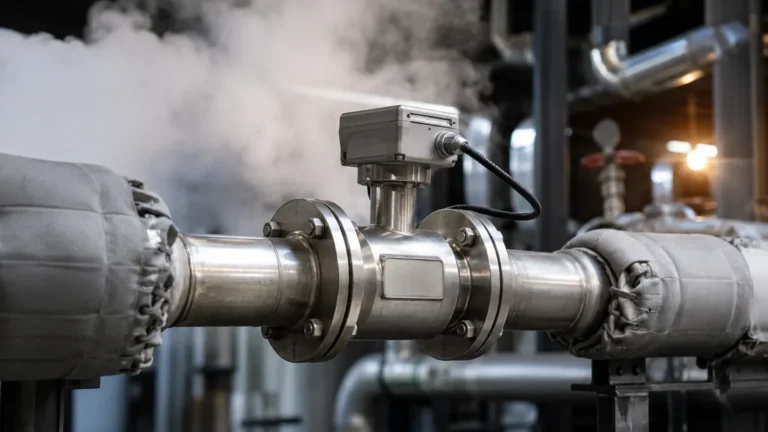
Slop Tankı
Slop Tankı
In the complex landscape of industrial fluid management and maritime operations, the slop tankı (slop tank) serves as a critical component for environmental compliance and process efficiency. Whether situated on a large-scale oil tanker or within a land-based petrochemical refinery, these tanks are designed to collect and store oily water mixtures, tank washings, and chemical residues that cannot be directly discharged. Managing these tanks effectively requires precise level measurement, which is often complicated by the heterogeneous nature of the stored liquids.
Accurate monitoring of a slop tankı is essential not only for preventing overfills but also for managing the separation process between oil and water. Because these tanks often contain a mixture of hydrocarbons, water, and various chemical additives, the instrumentation must be robust enough to handle varying densities, temperatures, and corrosive environments. This guide explores the engineering principles, selection criteria, and installation best practices for level measurement in slop tank applications.
Understanding the Role of the Slop Tank in Industrial Processes
A slop tankı is primarily used as a buffer and separation vessel. In maritime contexts, it collects the residue from tank cleaning operations (slops). In land-based industrial automation, it functions similarly, gathering waste fluids from various process stages. The contents are typically allowed to settle, enabling the separation of oil from water based on gravity. The "cleaner" water is then drawn from the bottom for treatment, while the concentrated oil or chemical residue is reclaimed or disposed of properly.
From a measurement perspective, the slop tankı presents several unique challenges:
1. Multi-phase Layers: The presence of an oil-water interface, and sometimes a layer of emulsion or "rag," makes simple level detection difficult.
2. Varying Dielectric Constants: Non-contact sensors must account for the different reflective properties of oil and water.
3. Vapor and Condensation: Hydrocarbon vapors and steam (if heating coils are used) can interfere with certain measurement technologies.
4. Physical Obstructions: Many slop tanks are equipped with internal heating coils, ladders, or agitators that can create false echoes for radar or ultrasonic sensors.
Key Measurement Principles for Slop Tank Level Monitoring
Before selecting an instrument, it is vital to understand the physics behind the most common measurement technologies used in slop tankı applications.
Radar Level Measurement (ToF)
Radar level meters utilize Time of Flight (ToF) technology. They emit high-frequency electromagnetic pulses (typically in the GHz range) that travel at the speed of light. When these pulses hit the surface of the liquid, they are reflected back to the sensor. The distance is calculated based on the time interval between transmission and reception.
* Non-Contact Radar: This is often preferred for slop tanks because it does not touch the corrosive or sticky medium. Modern Frequency Modulated Continuous Wave (FMCW) radar provides high precision even in the presence of vapors.
* Guided Wave Radar (GWR): This technology uses a physical probe (rod or cable) to guide the microwave pulse. GWR is particularly effective for detecting the interface between oil and water, as a portion of the signal reflects off the upper oil layer while the remainder continues to the water layer.
Ultrasonic Level Sensors
Ultrasonic sensors emit high-frequency sound waves. Like radar, they use the ToF principle but rely on sound rather than electromagnetic waves. While cost-effective, ultrasonic sensors are sensitive to the gas composition above the liquid and can be significantly affected by heavy foam or high-pressure vapors common in a slop tankı.
Hydrostatic Pressure Measurement
This principle relies on the relationship between the height of a liquid column and the pressure it exerts at the base. A pressure transmitter installed at the bottom of the tank measures this force. To convert pressure to a level reading, the density of the fluid must be known. In a slop tankı, where densities change as oil and water separate, hydrostatic measurement often requires dual-sensor configurations or frequent recalibration to maintain accuracy.
Magnetic Level Gauges
Magnetic gauges utilize a float containing a permanent magnet that moves with the liquid level inside a bypass chamber. This float interacts with an external visual indicator or a transmitter. This is a mechanical yet highly reliable method for local indication, though it is susceptible to errors if heavy sludge or wax buildup restricts float movement.
Comparative Analysis of Level Measurement Technologies
Selecting the right instrument for a slop tankı requires balancing performance requirements against environmental constraints. The following table provides a practical comparison for engineering selection.
| Technology | Accuracy | Suitability for Foam | Interface Detection | Maintenance Needs | Cost Profile |
| :— | :— | :— | :— | :— | :— |
| Non-Contact Radar | High (±2mm) | Moderate | No (Surface only) | Low | High |
| Guided Wave Radar | High (±3mm) | Excellent | Yes | Moderate | Moderate |
| Ultrasonic | Moderate | Poor | No | Low | Low |
| Hydrostatic | Moderate | Good | No | Moderate | Low |
| Magnetic Gauge | High | Excellent | Yes (Specific floats) | Moderate | Moderate |
For comprehensive technical specifications and to Review product options and application support, consulting with a specialized manufacturer is recommended to ensure the chosen device meets the specific chemical compatibility requirements of the slop tank contents.
Engineering Considerations for Slop Tank Instrumentation
When designing or retrofitting a slop tankı, engineers must consider the physical environment and the behavior of the medium.
Dealing with Internal Obstructions
Slop tanks often contain heating coils to keep heavy oils fluid. These coils can interfere with radar signals. When installing a non-contact radar, the beam angle must be calculated to ensure it avoids these obstructions. In cases where the tank is crowded, a Guided Wave Radar or a stilling well (a vertical pipe that shields the sensor from turbulence and obstructions) is often the best solution.
Temperature and Pressure Extremes
While most slop tanks operate at atmospheric pressure, temperature fluctuations can be significant. If steam heating is used, the temperature near the top of the tank can rise quickly. Level sensors must be rated for these temperatures, and electronics should be housed in thermally isolated compartments if necessary.
Material Compatibility
The "slop" can be a cocktail of aggressive chemicals. Wetted parts, such as radar probes, ultrasonic transducers, or hydrostatic diaphragms, should be constructed from corrosion-resistant materials like 316L stainless steel, Hastelloy, or PTFE-coated alloys. For the external housing, high-grade plastics or aluminum with epoxy coating are standard for protecting against saline maritime air or industrial fumes.

Installation Best Practices and Limitations
Successful level monitoring in a slop tankı depends as much on installation as it does on the technology itself.
1. Nozzle Height and Diameter: For non-contact radar, the nozzle should be as short as possible to prevent signal interference from the nozzle walls. If a long nozzle is unavoidable, a sensor with a narrower beam angle should be selected.
2. Dead Zones (Blocking Distance): Every sensor has a "dead zone" directly beneath the transducer where measurement is impossible. Ensure the sensor is mounted high enough that the maximum liquid level never enters this zone.
3. Positioning: Avoid mounting sensors directly above the tank inlet. The turbulence and aeration caused by incoming fluid will result in erratic readings and potential damage to the instrument.
4. Venting: Ensure the tank is properly vented. A vacuum or overpressure condition can affect the diaphragm of a hydrostatic transmitter or the speed of sound for an ultrasonic sensor.
Limitations to Consider
* Foam: Heavy, thick foam can absorb ultrasonic and radar signals, leading to a "loss of echo." In these instances, Guided Wave Radar is the superior choice as the probe penetrates the foam to reach the liquid.
* Coating and Buildup: If the slop contains wax or heavy crude, material may build up on the sensor. While radar can often "see through" thin coatings, significant buildup will eventually degrade performance.
Frequently Asked Questions (FAQ)
Q: Can a single sensor measure both the total level and the oil-water interface in a slop tankı?
A: Yes, Guided Wave Radar (GWR) is specifically designed for this. It can detect the top of the oil layer and the interface where the water begins, provided the upper layer has a lower dielectric constant than the lower layer.
Q: How often should slop tank level meters be calibrated?
A: For hydrostatic sensors, calibration should be checked annually or whenever the fluid density significantly changes. Radar and ultrasonic sensors are generally "drift-free," but a functional test every 6 to 12 months is recommended to ensure no buildup has occurred on the antenna or probe.
Q: Are wireless level transmitters suitable for slop tanks?
A: Wireless transmitters are increasingly common in large tank farms where cabling costs are prohibitive. They are suitable as long as the update interval is frequent enough for the process requirements and the signal is not blocked by heavy steel structures.
Q: What is the impact of agitation on level measurement?
A: Agitation creates surface ripples and turbulence. Radar sensors with advanced signal processing (software filtering) can usually ignore these fluctuations. However, for extreme turbulence, a stilling well is the most reliable way to provide a calm surface for measurement.
Conclusion
Effective management of a slop tankı requires a deep understanding of both the fluid dynamics within the tank and the technical limitations of level measurement hardware. By prioritizing technologies like radar for their accuracy and low maintenance, and by adhering to strict installation guidelines, industrial operators can ensure environmental compliance and optimize their separation processes. For those seeking specific hardware solutions, the Main Page of professional instrumentation providers offers a starting point for selecting the appropriate radar, ultrasonic, or hydrostatic tools tailored to demanding industrial environments.