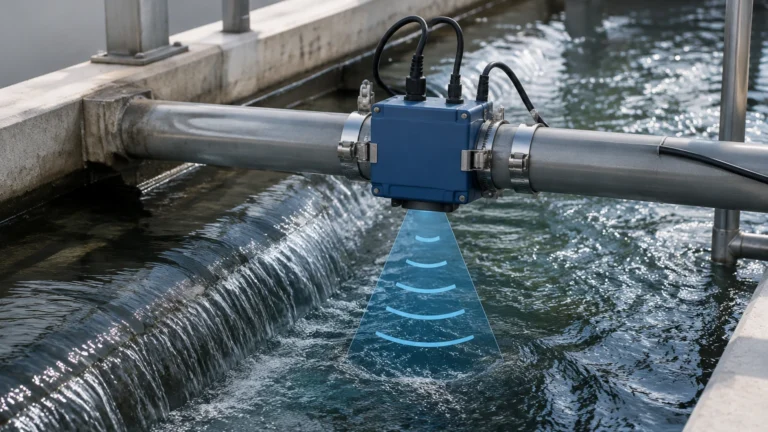
Smart Systems for Remote Monitoring and Operation
Smart Systems for Remote Monitoring and Operation
In the modern industrial landscape, the transition from localized manual data collection to centralized, automated oversight has become a necessity. Smart systems for remote monitoring and operation represent the convergence of precision sensing hardware and advanced communication protocols. For process engineers and facility managers, implementing these systems is no longer just about convenience; it is about ensuring safety, optimizing resource allocation, and maintaining continuous uptime in environments ranging from municipal water treatment to complex chemical processing.
As a professional manufacturer of industrial level measurement instruments, Welk provides the hardware foundation—radar level meters, ultrasonic sensors, and hydrostatic transmitters—that feeds these intelligent networks. This guide explores the technical principles, selection criteria, and practical implementation of remote monitoring systems in the context of level measurement.
Fundamental Measurement Principles
Before a system can be considered "smart," it must rely on accurate and reliable raw data. The choice of measurement technology determines the quality of the signal sent to remote monitoring platforms. Understanding these principles is the first step in designing a robust remote operation strategy.
Radar Level Measurement (80GHz and 26GHz)
Radar level meters utilize Frequency Modulated Continuous Wave (FMCW) or pulse technology. The sensor emits a high-frequency electromagnetic wave that travels at the speed of light, reflects off the medium's surface, and returns to the antenna.
* 80GHz Technology: Offers a narrower beam angle (as small as 3°), which is critical for remote monitoring in narrow tanks or vessels with internal obstructions like agitators. The high frequency provides millimeter-level accuracy, ensuring that the data transmitted to a remote dashboard is highly precise.
* 26GHz Technology: A versatile standard for many industrial liquids and solids, offering a balance between cost and performance for large-scale deployments.
Ultrasonic Level Sensing
Ultrasonic sensors operate on the Time-of-Flight (ToF) principle. The transducer emits an ultrasonic pulse that bounces off the surface of the target. By measuring the time interval between emission and reception, the system calculates the distance. These are ideal for non-contact measurement in open channels or atmospheric tanks. However, they require careful calibration for temperature fluctuations, as the speed of sound varies with air density.
Hydrostatic Level Transmission
Hydrostatic sensors measure the pressure exerted by a liquid column at a specific depth. This pressure is directly proportional to the height of the liquid and its density ($P = \rho gh$). For remote monitoring of deep wells, reservoirs, or vented tanks, hydrostatic transmitters provide a stable, submerged solution that is less affected by surface foam or turbulence than non-contact methods.
Magnetic Level Gauges and Switches
Magnetic gauges utilize a float containing a permanent magnet that moves with the liquid level. While traditionally used for local visual indication, modern versions are equipped with reed-chain transmitters or magnetostrictive sensors to convert the float position into a 4-20mA or digital signal for remote transmission.
Architecture of Smart Systems for Remote Monitoring and Operation
A comprehensive remote system consists of three primary layers: the Sensing Layer, the Transmission Layer, and the Application Layer.
1. The Sensing Layer: This involves the physical installation of instruments like the Welk radar or ultrasonic sensors. These devices must support digital communication protocols such as Modbus RTU (RS485) or HART to provide more than just a simple level reading (e.g., diagnostic data, signal strength).
2. The Transmission Layer: This is the bridge between the field and the office. Common technologies include:
* NB-IoT/4G/5G: Cellular-based transmission for sites without existing network infrastructure.
* LoRaWAN: Low-power, long-range wireless communication ideal for battery-powered sensors in remote areas.
* Ethernet/Wi-Fi: Standard for indoor factory automation.
3. The Application Layer: This includes the Cloud platform or SCADA system where data is visualized. Smart systems at this level can perform trend analysis, trigger automated alarms via SMS or email, and even control pumps or valves remotely to maintain set levels.
Selection Guide for Remote Monitoring Hardware
Choosing the right instrument for a remote system requires balancing environmental conditions with the required communication capabilities. The following table provides a high-level comparison for typical applications.
| Application Type | Recommended Technology | Key Advantage for Remote Use | Communication Protocol |
| :— | :— | :— | :— |
| Chemical Storage | 80GHz Radar | Non-contact, corrosion-resistant | HART / 4-20mA |
| Wastewater Sumps | Ultrasonic Sensor | Cost-effective for open areas | Modbus RTU |
| Deep Well/Borehole | Hydrostatic Transmitter | Easy installation in narrow pipes | 4-20mA / SDI-12 |
| High-Pressure Steam | Guided Wave Radar | Unaffected by steam/turbulence | HART |
| Remote Oil Tanks | Radar (Battery Powered) | Low power consumption | NB-IoT / LoRaWAN |
When evaluating hardware, it is essential to Review product options and application support to ensure the selected sensor is compatible with the intended gateway or RTU (Remote Terminal Unit).
Critical Installation Considerations
The success of smart systems for remote monitoring and operation depends heavily on the physical installation of the sensors. Remote sites often lack on-site technicians, making "install and forget" reliability paramount.
1. Power Management
In remote locations without grid power, sensors must be integrated with solar panels and battery banks. Selecting low-power instruments (e.g., loop-powered 2-wire transmitters) is critical to extend battery life and reduce maintenance cycles.
2. Signal Integrity and Interference
For radar and ultrasonic sensors, the "blind zone" (the area immediately below the sensor where measurement is impossible) must be accounted for in the tank design. Furthermore, the beam angle must be clear of ladders, pipes, or inflow streams to prevent false echoes that could lead to erroneous remote data.
3. Environmental Protection
Instruments located outdoors must have an appropriate Ingress Protection (IP) rating. IP67 is standard, but IP68 is required for sensors that may be submerged (like hydrostatic transmitters). In corrosive environments, PVDF or PTFE-coated sensors are necessary to prevent hardware failure.
4. Lightning and Surge Protection
Remote systems are often vulnerable to atmospheric discharges. Installing surge protectors on the signal lines and ensuring proper grounding of the instrument housing can prevent costly damage to both the sensor and the transmission gateway.

Operational Limitations and Risk Management
While smart systems offer significant advantages, engineers must recognize and mitigate certain risks:
* Latency: Cellular or satellite-based remote systems may have a delay in data transmission. This makes them suitable for monitoring and trend analysis, but potentially dangerous for high-speed safety-critical shutdowns, which should always have a hard-wired local backup (such as a level switch).
* Connectivity Gaps: In deep valleys or heavily shielded industrial structures, wireless signals may drop. Implementing "Store and Forward" logic in the gateway—where data is cached locally and uploaded once the connection is restored—is a vital safeguard.
* Cybersecurity: Any system connected to the internet is a potential target. Using encrypted protocols (e.g., MQTT with TLS) and private APNs for cellular data can help secure the operational data.
* Calibration Drift: Over time, all sensors experience some drift. Smart systems should include a scheduled "verification" protocol where remote diagnostic data is checked against manual measurements to ensure ongoing accuracy.
Frequently Asked Questions
Q: Can I upgrade my existing manual level gauges to a remote system?
A: Yes. Many traditional gauges, such as magnetic level indicators, can be retrofitted with reed-chain transmitters or magnetostrictive probes. These add-on components convert the visual reading into an electronic signal suitable for remote monitoring without needing to break the process seal.
Q: How far can the signal travel in a remote system?
A: This depends on the transmission layer. Hard-wired RS485 (Modbus) can reach up to 1,200 meters. LoRaWAN can reach up to 15 kilometers in line-of-sight conditions. Cellular systems (4G/5G) have virtually unlimited range, provided there is network coverage at the site.
Q: What is the maintenance requirement for remote radar sensors?
A: Radar sensors are generally low-maintenance because they have no moving parts and do not contact the medium. The primary maintenance involves checking the antenna for heavy buildup or condensation if the system does not have an integrated air purge or specialized lens antenna.
Q: Is it possible to monitor multiple tanks with a single smart system?
A: Absolutely. Most industrial gateways can aggregate data from multiple sensors (via Modbus daisy-chaining or multi-channel analog inputs) and transmit all the data through a single cellular or Ethernet link to a centralized dashboard.
Conclusion
Implementing smart systems for remote monitoring and operation allows industrial operators to move from reactive to proactive management. By combining the precision of Welk’s level measurement hardware with modern connectivity, businesses can achieve real-time visibility into their most critical assets. Whether it is preventing tank overfills in a chemical plant or managing water distribution across a city, the integration of reliable sensors and smart data transmission is the key to operational excellence. For detailed technical specifications and to explore the full range of compatible instruments, professionals should visit the Main Page to find the ideal solution for their specific application needs.
Download Smart Systems for Remote Monitoring and Operation as a PDF