Sodium Hydroxide in Universal Indicator
Sodium Hydroxide in Universal Indicator
In industrial chemical processing and water treatment, understanding the behavior of alkaline solutions is fundamental to both laboratory analysis and large-scale process control. Sodium hydroxide (NaOH), commonly known as caustic soda, is one of the most prevalent strong bases used across various sectors. When monitoring the concentration or presence of this substance in a solution, the interaction of sodium hydroxide in universal indicator serves as a primary qualitative visual benchmark. However, for industrial-scale operations, visual indicators must be supplemented by robust automated systems to ensure safety, efficiency, and accuracy.
This article examines the chemical principles of sodium hydroxide in universal indicator, its industrial significance, and the technical requirements for measuring the levels of caustic solutions in storage and process tanks.
Chemical Principles: Sodium Hydroxide and Universal Indicator
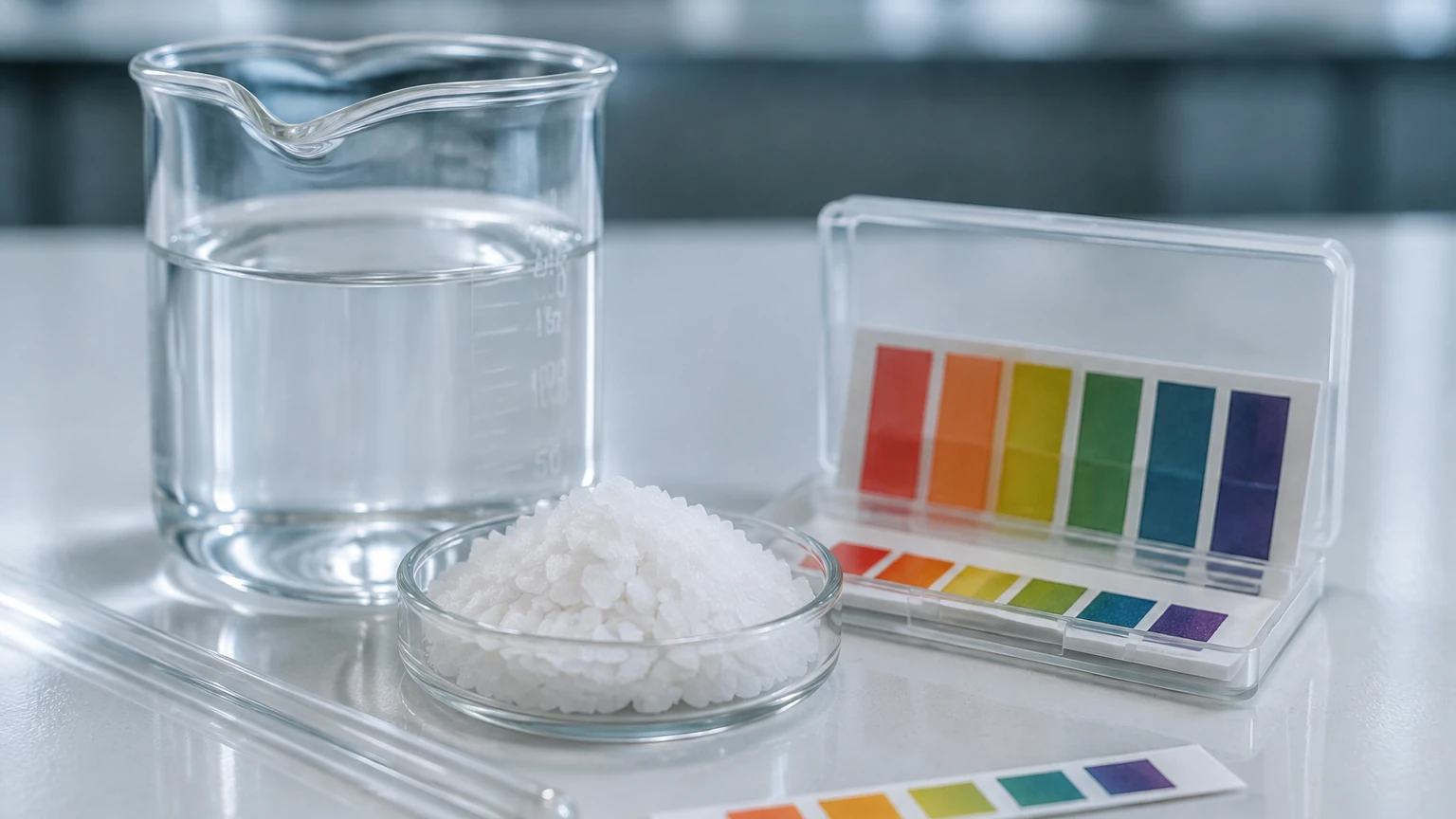
To understand how sodium hydroxide in universal indicator behaves, one must first look at the components of the indicator itself. Universal indicator is not a single chemical but a mixture of several pH-sensitive dyes, typically including thymol blue, methyl red, bromothymol blue, and phenolphthalein. This mixture is designed to provide a continuous color spectrum across the pH scale from 0 to 14.
The pH Response
Sodium hydroxide is a strong base that dissociates completely in aqueous solutions, releasing a high concentration of hydroxide ions (OH⁻). This results in a very high pH value, typically ranging from 12 to 14 depending on the molarity.
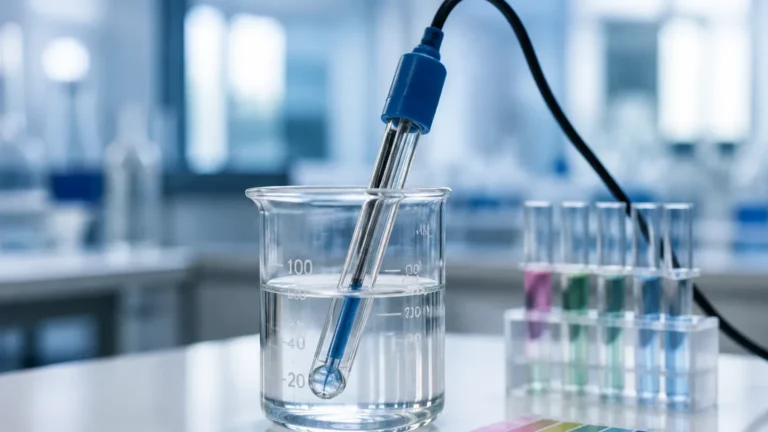
1. Low Concentration: At lower alkaline concentrations (pH 8-10), the universal indicator transitions from green to blue.
2. High Concentration: As the concentration of sodium hydroxide increases, the pH rises above 12. At this stage, the universal indicator turns a deep violet or purple. This color indicates a high concentration of hydroxide ions, signaling a strongly basic environment.
Practical Laboratory Application
In a B2B laboratory or quality control setting, adding sodium hydroxide in universal indicator allows technicians to visually confirm the alkalinity of a process stream. While this provides an immediate visual cue, industrial processes require more precise, quantitative data. Level measurement and concentration monitoring are critical because sodium hydroxide is highly corrosive and can pose significant risks to both equipment and personnel if not managed correctly.
Industrial Applications of Sodium Hydroxide
Sodium hydroxide is a versatile chemical used in numerous industrial applications where level measurement is critical for inventory management and process safety:
* Water Treatment: Used for pH adjustment and the regeneration of ion exchange resins.
* Chemical Manufacturing: A key reactant in the production of soaps, detergents, and various organic chemicals.
* Pulp and Paper: Essential in the Kraft process for breaking down wood fibers.
* Food and Beverage: Utilized in Clean-in-Place (CIP) systems to sanitize equipment and dissolve organic fats.
In these environments, knowing the exact volume of caustic soda in a tank is as important as knowing its concentration. Selecting the right instrumentation requires an understanding of the physical properties of the liquid, such as its density, dielectric constant, and corrosivity.
Principles of Level Measurement for Caustic Solutions
Before selecting a specific instrument for sodium hydroxide storage, it is essential to understand the measurement principles involved. Because sodium hydroxide can be highly concentrated (often stored as a 50% solution), the sensor materials must be chemically compatible.
1. Radar Level Measurement (Non-Contact)
Radar technology uses the Time of Flight (ToF) principle. The sensor emits high-frequency microwave pulses that travel to the surface of the liquid and reflect back. The time taken for the signal to return is directly proportional to the distance to the liquid surface.
* Advantage for NaOH: Since it is non-contact, the sensor is not exposed to the corrosive liquid. Radar is unaffected by vapors or temperature fluctuations common in caustic storage.
* Dielectric Constant: Sodium hydroxide solutions have a relatively high dielectric constant, making them excellent reflectors for radar signals.
2. Ultrasonic Level Sensors
Ultrasonic sensors work similarly to radar but use sound waves instead of microwaves. The sensor measures the time it takes for an ultrasonic pulse to bounce off the liquid surface.
* Considerations: Ultrasonic sensors are cost-effective but can be affected by heavy vapors or foam on the surface of the sodium hydroxide. In tanks where NaOH is diluted or mixed, causing agitation and foam, ultrasonic signals may scatter.
3. Hydrostatic Level Transmitters
This principle measures the pressure exerted by the liquid column at the bottom of the tank. The pressure is proportional to the height of the liquid and its density ($P = \rho gh$).
* Density Sensitivity: Since the density of sodium hydroxide changes significantly with concentration and temperature (e.g., 50% NaOH is much denser than water), the transmitter must be calibrated to the specific gravity of the solution to ensure accuracy.
4. Magnetic Level Gauges
Magnetic gauges utilize a float containing a magnet that moves with the liquid level inside a bypass chamber. This magnet flips external flags or interacts with a reed switch or magnetostrictive transmitter.
* Visual Confirmation: Much like the visual cue provided by sodium hydroxide in universal indicator, magnetic gauges provide a clear visual indication of the level for operators on the plant floor.
Selection Guide for Sodium Hydroxide Level Instruments
When choosing a solution from a professional manufacturer, engineers should refer to the following selection criteria based on the specific application of the caustic solution.
| Feature | Radar (80GHz) | Ultrasonic | Hydrostatic | Magnetic Gauge |
| :— | :— | :— | :— | :— |
| Accuracy | ±1 mm | ±0.25% of range | ±0.1% to 0.5% | ±5 mm |
| Corrosion Resistance | Excellent (PTFE Lens) | Good (PVDF/PTFE) | Requires Alloy C/PTFE | Requires 316SS/PTFE Lining |
| Vapor Handling | Excellent | Poor to Fair | Excellent | Excellent |
| Maintenance | Very Low | Low | Moderate | Low |
| Cost | Higher | Moderate | Low to Moderate | Moderate |
For comprehensive technical specifications and to explore various sensor configurations, you may visit the Main Page of industrial instrumentation providers to compare models suitable for caustic environments.
Installation and Material Considerations
Sodium hydroxide is highly aggressive toward certain metals and polymers. Proper installation is vital to prevent leaks and instrument failure.
Material Compatibility
* Wetted Parts: For sensors in direct contact with NaOH, materials such as PTFE (Polytetrafluoroethylene), PVDF (Polyvinylidene fluoride), or high-grade stainless steel (316L) are recommended. Avoid aluminum, brass, or bronze, as sodium hydroxide will rapidly corrode these materials.
* Seals: EPDM or Kalrez seals are often preferred over standard Viton in high-concentration caustic applications.
Installation Best Practices
1. Nozzle Height: For radar and ultrasonic sensors, ensure the nozzle height does not create a "dead zone" where the sensor cannot measure the liquid when the tank is full.
2. Stilling Wells: If the tank has internal agitators or significant turbulence, using a stilling well can help stabilize the liquid surface for more accurate radar or ultrasonic readings.
3. Temperature Management: Sodium hydroxide solutions can crystallize if the temperature drops below a certain point (approximately 12°C to 15°C for a 50% solution). Level sensors should be installed in a way that allows for heat tracing or insulation of the tank and bypass chambers.
Limitations and Operational Risks
While modern instrumentation is highly reliable, there are specific limitations to consider when managing sodium hydroxide levels:
* Crystallization: As mentioned, NaOH can solidify in small-diameter pipes or on sensor faces. This can lead to "frozen" readings in hydrostatic or magnetic gauges. Regular inspection or the use of flush-diaphragm transmitters can mitigate this.
* Concentration Shifts: If the concentration of the sodium hydroxide varies significantly, hydrostatic sensors will require frequent recalibration or the use of a secondary pressure sensor to calculate real-time density.
* Safety Hazards: Any maintenance on level meters used for sodium hydroxide must be performed with full Personal Protective Equipment (PPE), as even small leaks can cause severe chemical burns.
Frequently Asked Questions (FAQ)
Q: Why does sodium hydroxide turn universal indicator purple?
A: Universal indicator contains a mix of dyes that change color based on the concentration of hydrogen ions. Sodium hydroxide, being a strong base, removes hydrogen ions (increasing pH), which triggers the color change of the specific dyes (like phenolphthalein and thymol blue) to a violet/purple hue.
Q: Can I use a standard stainless steel level sensor for 50% caustic soda?
A: While 316L stainless steel has moderate resistance, at higher temperatures and concentrations, sodium hydroxide can cause stress corrosion cracking. For long-term reliability, PTFE-coated sensors or specialized alloys are often preferred.
Q: How does temperature affect level measurement in NaOH tanks?
A: Temperature affects the density of the liquid. If you are using a hydrostatic pressure sensor, a temperature increase will cause the liquid to expand and its density to decrease, which could lead to an underestimation of the actual volume if not compensated.
Q: Is non-contact radar better than ultrasonic for caustic soda?
A: Generally, yes. Radar is not affected by the vapors that often hover above concentrated sodium hydroxide solutions, whereas those vapors can change the speed of sound and affect ultrasonic accuracy.
Conclusion
Monitoring sodium hydroxide in universal indicator provides a simple yet effective way to verify alkalinity in a laboratory setting. However, in the B2B industrial landscape, the focus shifts to precise, automated level measurement to ensure process continuity and safety. By understanding the chemical nature of NaOH and the physical principles of radar, ultrasonic, and hydrostatic measurement, engineers can select the most appropriate instrumentation for their specific needs. For those seeking reliable, accurate, and cost-effective level measurement solutions, reviewing the latest technological options on the Main Page is a recommended next step in optimizing chemical storage and handling systems.