Sodium Hypochlorite Storage Tank
Sodium Hypochlorite Storage Tank
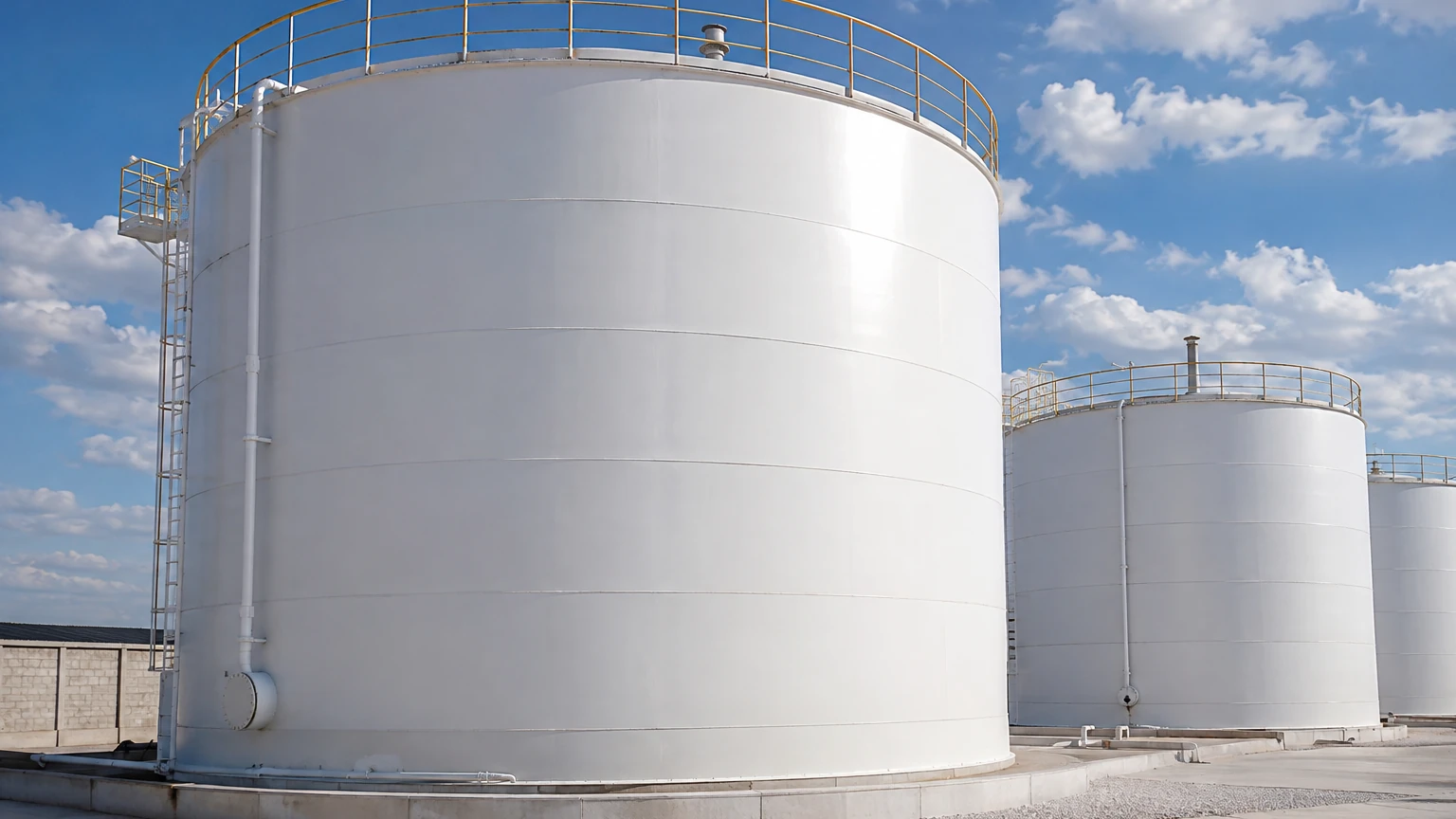
Sodium hypochlorite (NaOCl), commonly known as liquid bleach, is a fundamental chemical used across various industries, including municipal water treatment, wastewater management, textile bleaching, and cooling tower maintenance. While it is highly effective as a disinfectant and oxidizing agent, it presents significant challenges regarding storage and monitoring. A sodium hypochlorite storage tank must be engineered to withstand the chemical's corrosive nature, its tendency to decompose, and its propensity for off-gassing.
For process engineers and plant managers, selecting the right storage vessel is only half the battle; implementing a reliable level measurement system is equally critical to ensure operational safety and inventory accuracy. This guide explores the technical requirements for sodium hypochlorite storage, the principles of level measurement applicable to these systems, and the practical considerations for long-term reliability.
Understanding Sodium Hypochlorite Storage Requirements
Sodium hypochlorite is an inorganic chemical compound that is typically stored in concentrations ranging from 5% to 15%. It is characterized by a high pH (usually above 11) and is a strong oxidizer. Several factors make its storage complex:
1. Chemical Corrosivity: NaOCl is highly aggressive toward many metals, including stainless steel and aluminum. It can also degrade certain polymers over time through oxidation.
2. Decomposition: The chemical naturally decomposes into salt water and oxygen. This process is accelerated by heat, exposure to UV light, and the presence of metallic impurities (like iron or nickel).
3. Off-Gassing: As sodium hypochlorite decomposes, it releases oxygen gas. In a sealed environment, this can lead to pressure buildup or the formation of gas pockets in piping and instrumentation.
4. Crystallization: At higher concentrations or lower temperatures, sodium hypochlorite can form salt crystals, which may clog small orifices or interfere with moving parts in sensors.
Because of these characteristics, a sodium hypochlorite storage tank requires specific materials and specialized instrumentation to prevent leaks and ensure accurate process control.
Material Selection for Sodium Hypochlorite Storage Tanks
Selecting the appropriate tank material is the first step in ensuring a safe installation. Common materials include:
* High-Density Polyethylene (HDPE) and Cross-Linked Polyethylene (XLPE): These are the most common choices for smaller to mid-sized tanks. XLPE offers superior resistance to environmental stress cracking compared to HDPE, though it cannot be recycled. Both materials are generally resistant to the oxidative nature of NaOCl.
* Fiberglass Reinforced Plastic (FRP): For larger storage requirements, FRP tanks are preferred. However, they must be manufactured with specific resin liners (such as vinyl ester resins) designed for high-pH oxidizers. A "resin-rich" interior layer is essential to prevent the chemical from reaching the structural glass fibers.
* Titanium or Lined Steel: While rare due to cost, titanium is one of the few metals that can withstand sodium hypochlorite. Alternatively, carbon steel tanks lined with rubber or specialized polymers can be used, though the integrity of the liner must be monitored strictly.
Level Measurement Principles for Corrosive Liquids
To manage the inventory within a sodium hypochlorite storage tank, various level measurement technologies are employed. Understanding the underlying physics of these methods is essential for selecting the right instrument.
Ultrasonic Level Measurement (Non-Contact)
Ultrasonic sensors emit high-frequency sound pulses that travel through the air to the liquid surface and reflect back to the transducer. The sensor calculates the distance based on the time-of-flight and the speed of sound in air.
* Principle: $Distance = (Speed of Sound \times Time) / 2$.
* NaOCl Application: Since it is non-contact, the sensor is protected from the corrosive liquid. However, the speed of sound can be affected by the concentration of oxygen gas in the vapor space, which may lead to minor inaccuracies if the tank is not properly vented.
Radar Level Measurement (Non-Contact)
Radar sensors use high-frequency electromagnetic waves (microwaves) instead of sound. These waves reflect off the liquid surface due to the change in dielectric constant.
* Principle: Like ultrasonic, it uses time-of-flight, but electromagnetic waves travel at the speed of light and are unaffected by air temperature, pressure, or gas composition.
* NaOCl Application: 80 GHz high-frequency radar is often considered the gold standard for sodium hypochlorite. It can "see through" heavy vapors and foam, providing high precision without being affected by the off-gassing common in NaOCl tanks.
Hydrostatic Level Measurement (Contact)
This method measures the pressure exerted by the liquid column at the bottom of the tank.
* Principle: $Pressure (P) = Density (\rho) \times Gravity (g) \times Height (h)$.
* NaOCl Application: The sensor must be made of compatible materials, such as PVDF or ceramic diaphragms. A significant limitation here is that as sodium hypochlorite decomposes, its density changes. Since the sensor measures pressure, a change in density will result in a perceived level change even if the actual volume remains constant.
Magnetic Level Gauges (Visual and Signal)
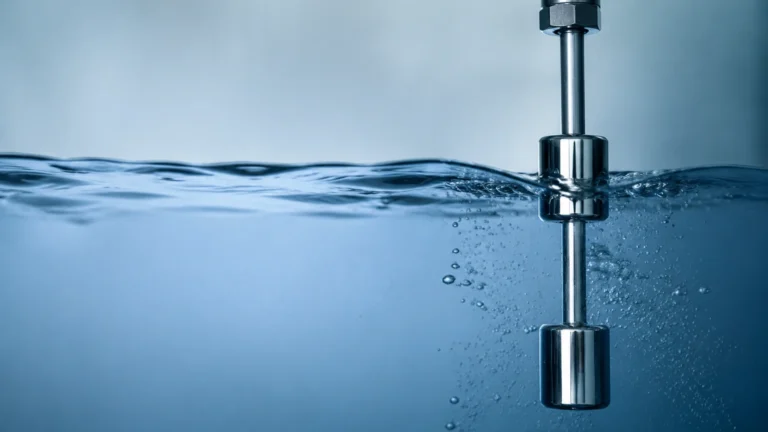
These consist of a bypass chamber mounted to the side of the tank containing a float with internal magnets. As the float rises and falls, it flips magnetic flags on the outside of the chamber and can move a transmitter for remote signaling.
* Principle: Buoyancy and magnetic coupling.
* NaOCl Application: The chamber and float must be constructed from PVC, CPVC, or PVDF. This provides a clear visual indication for operators while offering an electronic output for the control room.
Comparative Analysis of Level Measurement Technologies
When evaluating options for a sodium hypochlorite storage tank, engineers must weigh the pros and cons of each technology relative to the specific site conditions.
| Technology | Accuracy | Chemical Resistance | Impact of Off-Gassing | Maintenance Needs |
| :— | :— | :— | :— | :— |
| Ultrasonic | Moderate (±0.25%) | High (if PVDF) | High (can distort signal) | Low |
| 80GHz Radar | High (±2mm) | High (PTFE/PVDF) | Negligible | Very Low |
| Hydrostatic | Moderate (±0.5%) | Variable (needs ceramic) | None | Moderate (cleaning) |
| Magnetic Gauge | Moderate (±5mm) | High (if plastic) | None | Moderate (float scaling) |
For comprehensive technical specifications and to explore specific instrument models, engineers can visit the Main Page of professional instrumentation manufacturers like Welk to compare performance data.
Installation Best Practices for NaOCl Level Sensors
Correct installation is as important as technology selection. For a sodium hypochlorite storage tank, the following guidelines should be followed:
1. Venting: Ensure the tank is properly vented to the atmosphere or a scrubber system. This prevents the accumulation of oxygen gas, which can interfere with ultrasonic sensors and create pressure hazards.
2. Nozzle Placement: Level sensors should be installed away from the chemical inlet to avoid turbulence and false readings caused by the filling stream. For radar and ultrasonic sensors, ensure there are no internal obstructions (like ladders or pipes) in the signal path.
3. Material Compatibility: All wetted parts (transducers, diaphragms, floats, and seals) must be compatible with sodium hypochlorite. PTFE (Teflon), PVDF (Kynar), and EPDM are generally preferred. Avoid Viton (FKM) in high-concentration bleach applications, as it can degrade.
4. Stilling Wells: If the tank experiences significant agitation or surface foam, a stilling well (a vertical pipe that dampens surface movement) can be used for radar or ultrasonic sensors to provide a stable reading.
5. Secondary Containment: Always account for the level sensor's integration into the overfill prevention system. Most regulations require a secondary, independent high-level switch (such as a tuning fork or float switch) to prevent accidental spills into the containment dike.
Risk Mitigation and Maintenance in NaOCl Storage
Even with the best equipment, sodium hypochlorite storage requires ongoing vigilance. Over time, the chemical's decomposition can lead to several issues:
* Scaling and Crystallization: Salt deposits can build up on hydrostatic sensor diaphragms or inside magnetic gauge chambers. Periodic flushing with water or a mild acid solution may be necessary to maintain accuracy.
* Transducer Degradation: In non-contact sensors, the corrosive vapors can eventually permeate lower-quality plastics. Using sensors with solid PTFE or PVDF faces is a critical preventative measure.
* Calibration Drifts: For hydrostatic sensors, the density of the NaOCl should be checked periodically. If the concentration drops from 15% to 10% due to decomposition, the density change will cause a level error of approximately 2-3%.
Regular inspections of the tank's structural integrity are also vital. For FRP tanks, look for signs of "blooming" or fiber prominence on the interior. For polyethylene tanks, check for brittleness or discoloration caused by UV exposure if the tank is located outdoors.
Frequently Asked Questions (FAQs)
Q: Can I use a standard stainless steel level sensor in a sodium hypochlorite storage tank?
A: No. Sodium hypochlorite will rapidly corrode most grades of stainless steel, including 316SS. This leads to sensor failure and potential contamination of the chemical. Always use plastic (PVDF/PTFE) or ceramic wetted parts.
Q: How does temperature affect level measurement in NaOCl tanks?
A: Temperature affects the density of the liquid (impacting hydrostatic sensors) and the speed of sound (impacting ultrasonic sensors). Radar is generally the most stable technology across temperature fluctuations.
Q: Why is 80 GHz radar preferred over 26 GHz radar for these tanks?
A: 80 GHz radar has a much narrower beam angle and better signal-to-noise ratio. This allows it to be installed on smaller nozzles and provides better performance in the presence of vapors or internal tank obstructions.
Q: Is secondary containment level monitoring necessary?
A: Yes. Most environmental regulations require monitoring of the secondary containment area (the dike or outer tank) to detect leaks from the primary sodium hypochlorite storage tank. Hydrostatic or ultrasonic sensors are commonly used for this purpose.
Conclusion
Managing a sodium hypochlorite storage tank requires a balance between robust material selection and precise instrumentation. Because of the unique challenges of corrosivity and off-gassing, non-contact technologies like high-frequency radar often provide the most reliable long-term solution. However, depending on the tank geometry and budget, ultrasonic or plastic-lined magnetic gauges can also serve as effective tools.
By understanding the chemical properties of NaOCl and the physical principles of measurement, operators can ensure a safe, efficient, and compliant storage system. For further assistance in selecting the appropriate level measurement technology for your specific application, reviewing technical documentation and product options from a specialized manufacturer is recommended.