Sterilizable Ph Probe
Sterilizable Ph Probe
In industrial bioprocessing, pharmaceutical manufacturing, and food production, maintaining a precise pH level is critical to product yield and safety. Unlike standard laboratory sensors, a sterilizable pH probe must withstand rigorous cleaning and sterilization cycles without losing accuracy or structural integrity. These sensors are designed to endure Steam-in-Place (SIP) and Clean-in-Place (CIP) procedures, which subject the equipment to high temperatures, pressure fluctuations, and aggressive chemical agents.
Selecting the correct sterilizable pH probe requires a deep understanding of electrochemical measurement principles and the mechanical stresses of the process environment. This guide explores the technical requirements, selection criteria, and installation best practices for engineering teams managing sterile liquid processes.
Measurement Principles of pH Sensors
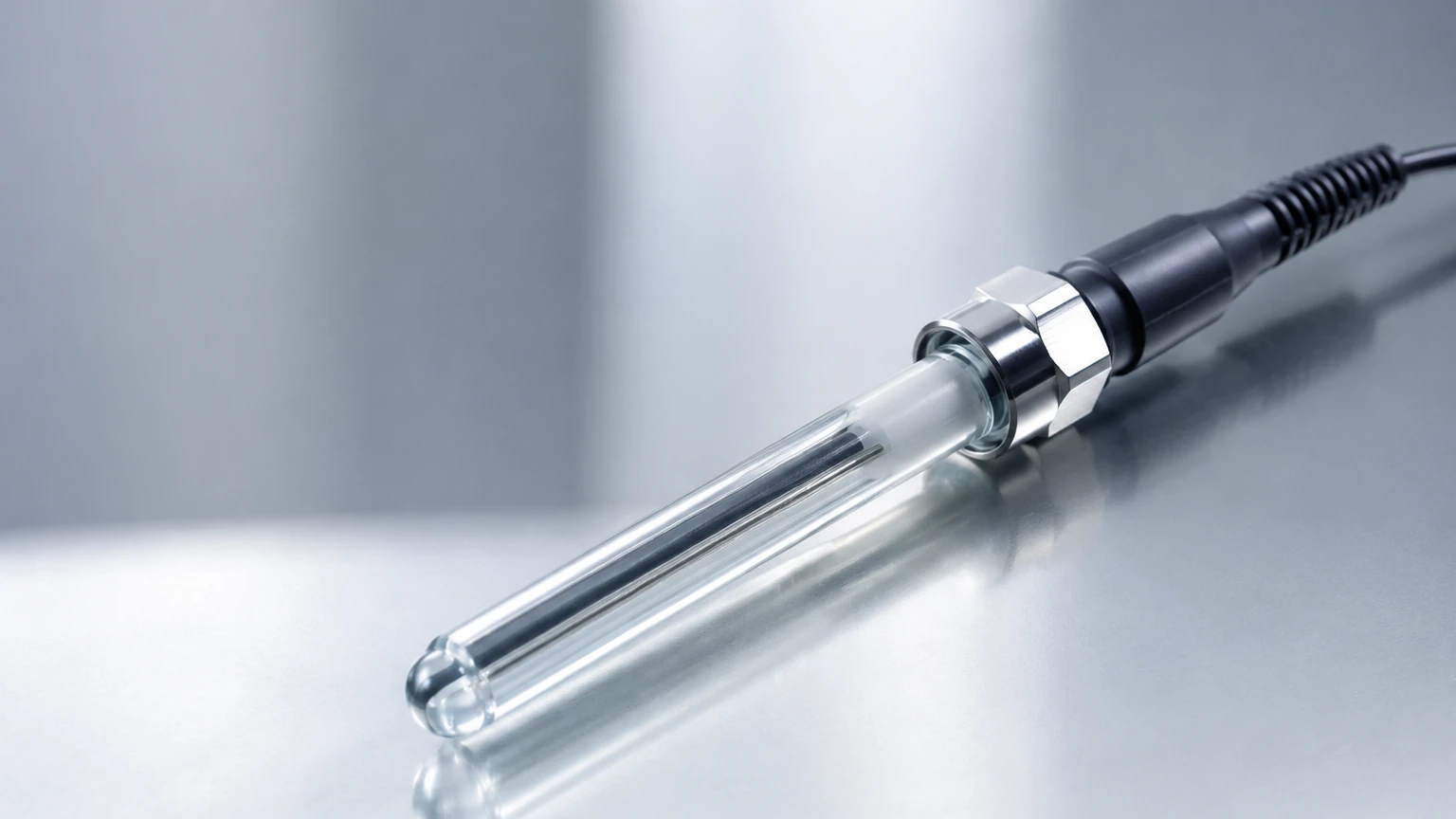
pH measurement is a potentiometric process based on the Nernst equation. A standard pH probe consists of two primary components: a pH-sensitive glass electrode and a reference electrode.
1. The Glass Electrode: The tip of the probe features a specialized glass membrane that develops an electrical potential when in contact with hydrogen ions in a liquid. This membrane is typically composed of a hydrated gel layer that facilitates ion exchange.
2. The Reference Electrode: To measure the potential of the glass electrode, a stable reference point is required. This is provided by the reference electrode, which is usually a silver/silver chloride (Ag/AgCl) system immersed in a concentrated potassium chloride (KCl) electrolyte.
3. The Potential Difference: The pH meter measures the millivolt (mV) difference between these two electrodes. As the hydrogen ion concentration changes, the voltage shifts, which the transmitter then converts into a pH value.
In a sterilizable pH probe, these components must be modified. Standard glass membranes can become brittle or lose sensitivity after repeated thermal cycling. Furthermore, the electrolyte inside the reference electrode can expand or boil during steam sterilization, potentially rupturing the sensor if not properly pressurized or designed with expansion chambers.
The Impact of SIP and CIP on Sensor Longevity
Sterilization and cleaning are the most demanding phases for any liquid analytical sensor.
Steam-in-Place (SIP)
SIP typically involves exposing the sensor to saturated steam at temperatures ranging from 121°C to 135°C (250°F to 275°F) for 20 to 60 minutes. During this time, the internal pressure of the probe increases. If the probe uses a liquid electrolyte, it must be pre-pressurized to prevent the electrolyte from boiling or the process fluid from entering the sensor through the junction (diaphragm).
Clean-in-Place (CIP)
CIP procedures use caustic (e.g., sodium hydroxide) and acidic (e.g., nitric acid) washes at elevated temperatures (up to 90°C / 194°F) to remove organic residues and scale. The glass membrane of a sterilizable pH probe must be chemically resistant to prevent "etching," which would lead to slow response times and significant measurement drift.
Key Evaluation Criteria for Selection
When evaluating a sterilizable pH probe for a specific B2B application, engineers should prioritize the following technical specifications:
1. Reference System and Electrolyte
* Liquid Electrolyte (Pressurizable): These probes are often used in high-protein or high-solids environments. They require an external housing that applies overpressure to ensure a constant outflow of electrolyte, preventing junction fouling.
* Gel Electrolyte: More common in standard biotech applications, gel-filled probes are maintenance-free and often feature a "silver ion trap" to prevent the junction from clogging with silver sulfides in protein-rich media.
* Solid Polymer: These sensors eliminate the need for a traditional ceramic junction, using an open aperture where the process medium comes into direct contact with a solid polymer electrolyte. This is highly resistant to fouling but may have different thermal expansion rates.
2. Glass Membrane Type
Different glass formulations are optimized for specific conditions. High-temperature glass is necessary for probes undergoing frequent SIP cycles to prevent the membrane from aging prematurely. For applications involving low temperatures or low conductivity, a low-impedance glass may be required.
3. Pressure and Temperature Ratings
Ensure the probe is rated for the maximum process pressure plus the sterilization pressure. A typical rating for a high-quality sterilizable probe is 6 bar (87 psi) at 130°C (266°F). For more demanding industrial automation setups, reviewing Main Page resources for integrated measurement solutions can help in selecting sensors that match the vessel's overall pressure rating.
Selection Table: Sterilizable pH Probe Technologies
| Feature | Liquid Electrolyte (Pressurized) | Gel Electrolyte (Sealed) | Solid Polymer (Open Junction) |
| :— | :— | :— | :— |
| Maintenance | High (requires refilling) | Low (disposable) | Low (disposable) |
| Fouling Resistance | Excellent (constant flow) | Moderate | High |
| SIP Suitability | Excellent | Good | Moderate to High |
| Pressure Stability | High (adjustable) | Fixed (internal) | High |
| Typical Application | Fermentation, Chemical synthesis | General Biopharma, Food/Bev | Wastewater, High-solids media |
Installation and Engineering Considerations
Proper installation is as important as the sensor choice itself. A sterilizable pH probe is a delicate instrument that requires specific mounting conditions to function accurately.
* Mounting Angle: pH probes must never be installed horizontally or upside down. They should be mounted at least 15° to 30° above the horizontal plane. This ensures that the air bubble inside the glass electrode stays at the top of the sensor, keeping the internal buffer in contact with the pH-sensitive glass tip.
* Housing and Retractors: In many industrial processes, the probe is installed in a stainless steel housing (e.g., 316L stainless steel). Retractable housings allow the sensor to be removed, cleaned, and calibrated without stopping the process or depressurizing the tank.
* Cable Management: Use high-impedance cables with proper shielding. Moisture in the connector is the leading cause of measurement failure in sterile environments. Many modern probes use digital inductive connectors (like Memosens technology) which eliminate metal-to-metal contact and are immune to moisture interference.
Integration with Level and Process Control
In a B2B manufacturing environment, pH monitoring does not exist in isolation. It is usually part of a wider process control loop that includes temperature and level measurement. For instance, in a bioreactor, the pH probe triggers the addition of acid or base via dosing pumps. However, this dosing must be coordinated with the liquid level in the vessel to ensure proper mixing and to prevent overflow.
Welk provides a range of level measurement instruments, such as ultrasonic and radar level meters, that work alongside analytical probes to maintain vessel stability. Accurate level data ensures that the pH probe remains submerged during the entire process cycle, preventing dry-out which can permanently damage the glass membrane. For comprehensive system design, engineers often consult the Main Page to find level transmitters that share compatible communication protocols (such as 4-20mA HART or RS485 Modbus) with their pH transmitters.
Common Risks and Limitations
Despite their robust design, sterilizable pH probes face several risks:
1. Thermal Hysteresis: After a sterilization cycle, the sensor needs time to reach thermal equilibrium. Measuring pH while the probe is still cooling will result in inaccurate readings due to the temperature-dependent nature of the Nernst potential.
2. Diaphragm Poisoning: Ions from the process (like sulfides or cyanides) can react with the silver in the reference system, creating precipitates that clog the junction. This leads to a sluggish response and "drifting" measurements.
3. Glass Dehydration: If a probe is left in a dry tank after a CIP cycle without being kept moist, the hydrated gel layer on the glass membrane will dry out. This requires a rehydration period (usually 24 hours in KCl solution) before the probe can be used again.
Frequently Asked Questions (FAQ)
Q: How many sterilization cycles can a pH probe typically withstand?
A: This varies by brand and model, but a high-quality sterilizable pH probe typically lasts between 20 and 50 SIP cycles before the glass impedance or reference potential drifts beyond acceptable calibration limits.
Q: Can I use a standard pH probe if I only perform CIP and not SIP?
A: It is not recommended. CIP chemicals are often highly alkaline (pH 13-14), which can strip the ions from standard glass membranes very quickly. Sterilizable probes are designed with chemically resistant glass specifically for these conditions.
Q: Why does my pH reading change after autoclaving?
A: The high heat of an autoclave speeds up the aging of the glass membrane and can cause small changes in the reference electrolyte's chemistry. You should always recalibrate the probe after every sterilization cycle once it has cooled to process temperature.
Confirmation Checklist for Engineers
Before purchasing or installing a sterilizable pH probe, confirm the following with your process data:
* Temperature Profile: Does the probe's maximum rating exceed your SIP temperature (e.g., 135°C)?
* Chemical Compatibility: Is the glass membrane and O-ring material (e.g., EPDM or FKM) compatible with your CIP chemicals?
* Physical Dimensions: Does the probe length (e.g., 120mm, 225mm, 325mm) match your housing and ensure the tip is deep enough into the flow path?
* Connection Type: Does the sensor head match your existing transmitter cables (e.g., S8, VP6, or digital inductive)?
By carefully matching the probe specifications to the mechanical and chemical rigors of the sterilization process, industrial operators can ensure long-term measurement stability and minimize downtime in critical production environments.