Stimline Digital
Stimline Digital
In the modern industrial landscape, the integration of physical hardware with advanced software ecosystems has become the cornerstone of operational efficiency. Digitalization initiatives, often categorized under the umbrella of "Stimline Digital" concepts in the oil and gas sector, focus on the seamless flow of data from the wellhead or storage tank to a centralized digital twin or monitoring platform. For engineers and project managers, understanding how level measurement instrumentation interfaces with these digital frameworks is essential for achieving real-time visibility and automated process control.
Level measurement is no longer just about a local display on a tank; it is about providing high-fidelity data strings that feed into complex algorithms. Whether managing drilling fluids, chemical injection skids, or large-scale tank farms, the choice of sensor technology determines the reliability of the entire digital architecture. This guide explores the principles of level measurement, their integration into digital workflows, and the technical criteria for selecting the right instruments for a connected industrial environment.
The Role of Level Measurement in Digital Ecosystems
Digital transformation in industrial processes relies on the "Internet of Things" (IoT) and edge computing. In the context of Stimline Digital operations, this involves the use of intelligent sensors that do more than just measure a distance. These sensors must provide diagnostic data, signal quality metrics, and high-speed communication capabilities.
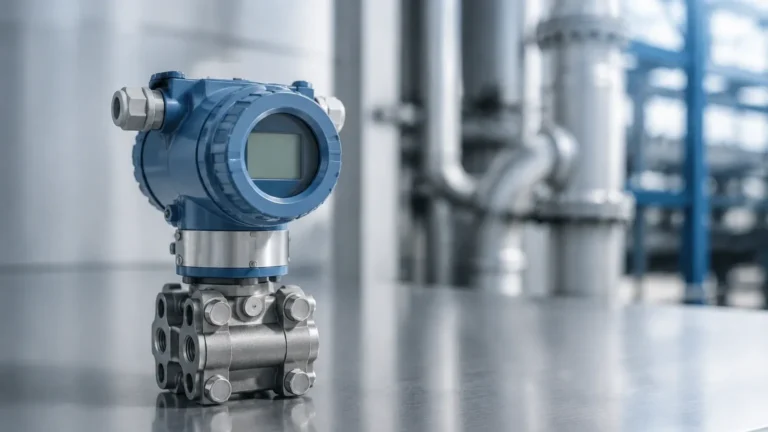
When a level meter is integrated into a digital platform, it serves as a primary data source for the digital twin—a virtual representation of the physical asset. If the level sensor provides inaccurate or latent data, the digital twin becomes desynchronized, leading to poor decision-making in automated workflows. Therefore, the hardware selected must be compatible with digital protocols such as HART, Modbus RS485, or Profibus, ensuring that the data is not only accurate but also rich in metadata.
Core Measurement Principles
Before selecting a device for a digitally integrated project, it is critical to understand the physics behind the measurement. Different environments—ranging from high-pressure separators to atmospheric water tanks—require specific sensing technologies.
Radar Level Measurement (FMCW)
Radar technology, particularly Frequency Modulated Continuous Wave (FMCW), is the gold standard for high-precision digital integration. These sensors emit a continuous microwave signal that increases in frequency over time. The signal reflects off the material surface and is received by the antenna. The frequency difference between the emitted and received signal is proportional to the distance.
* Advantages: Non-contact, unaffected by vacuum, pressure, or temperature fluctuations. High-frequency radar (e.g., 80GHz) offers a narrow beam angle, which is ideal for avoiding internal tank obstructions like agitators or heating coils.
* Digital Integration: Radar sensors often provide the most comprehensive diagnostic suites, allowing digital platforms to monitor signal-to-noise ratios and antenna buildup remotely.
Ultrasonic Level Sensors
Ultrasonic sensors operate on the Time-of-Flight (ToF) principle. The sensor emits an ultrasonic pulse that travels through the air, hits the liquid surface, and returns to the transducer. The time taken for this round trip is used to calculate the distance.
* Advantages: Cost-effective and easy to install for simple liquid applications.
* Limitations: Because sound requires a medium (air), changes in air temperature, humidity, or the presence of heavy vapors and foam can distort the measurement. In many Stimline Digital applications involving volatile chemicals, radar is often preferred over ultrasonic due to these environmental sensitivities.
Hydrostatic Level Transmitters
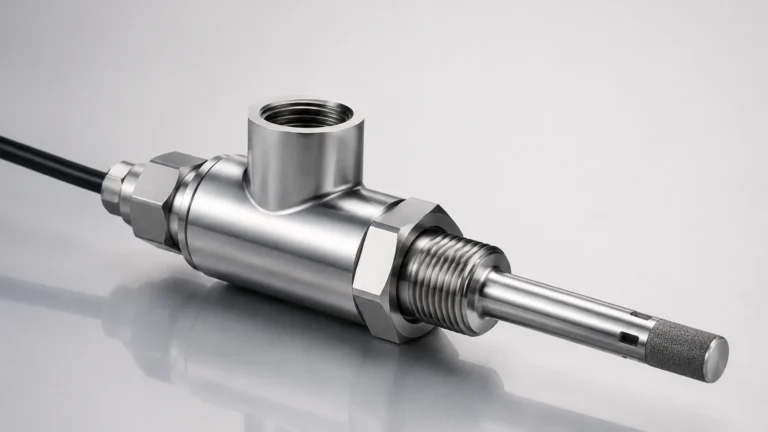
Hydrostatic sensors measure the pressure exerted by a liquid column. This pressure is directly proportional to the height of the liquid and its density ($P = \rho gh$).
* Advantages: Excellent for deep wells or tanks where top-down access is restricted. They are robust and provide a continuous measurement regardless of surface foam or turbulence.
* Digital Integration: Modern hydrostatic transmitters use high-precision diaphragms and can be calibrated digitally to account for changes in fluid density, a vital feature for accurate mass balance calculations in a digitalized facility.
Selection Criteria for Digitalized Operations
Choosing the right instrument requires a balance between technical specifications and the requirements of the digital infrastructure. The following table provides a comparison of common technologies used in integrated industrial projects.
| Feature | Radar (FMCW) | Ultrasonic | Hydrostatic | Magnetic Gauge |
| :— | :— | :— | :— | :— |
| Measurement Range | Up to 120m (394 ft) | Up to 30m (98 ft) | Up to 200m (656 ft) | Up to 6m (20 ft) |
| Accuracy | ±1mm to ±5mm | ±0.25% of range | ±0.1% to ±0.5% | ±5mm to ±10mm |
| Contact Type | Non-contact | Non-contact | Contact (Submerged) | Contact (Bypass) |
| Digital Protocol | HART, Modbus, Bluetooth | HART, Modbus | 4-20mA, HART | Optional Transmitter |
| Process Temp. | -40°C to +450°C | -40°C to +80°C | -20°C to +80°C | -196°C to +400°C |
| Ideal Application | Hydrocarbons, Acids | Water, Waste | Deep Wells, Sumps | High-Pressure Boilers |
For a comprehensive look at hardware options that support these digital requirements, engineers can refer to the Main Page for detailed product specifications and application support.
Installation Considerations for Data Integrity
In a digitalized environment, the "garbage in, garbage out" rule applies. If a sensor is installed incorrectly, the digital platform will process erroneous data, potentially triggering false alarms or incorrect automated responses.
1. Blocking Distance (Dead Band): Every top-down sensor (radar and ultrasonic) has a minimum distance it cannot measure near the sensor face. For ultrasonic sensors, this can be significant (e.g., 0.3m to 0.5m). Ensure the tank's maximum fill level does not enter this zone.
2. Beam Path Clearance: Digital systems rely on a clean signal. Ensure the radar or ultrasonic beam is not obstructed by ladders, pipes, or inflow streams. Even if a sensor has "false echo suppression" software, a clear path is always preferable for long-term reliability.
3. Atmospheric Venting: For hydrostatic sensors, the reference side of the pressure diaphragm must be vented to the atmosphere to compensate for changes in barometric pressure. In digital systems, if this vent is blocked, the level reading will drift as the weather changes.
4. Signal Grounding: In many industrial sites where Stimline Digital solutions are deployed, electrical noise from Variable Frequency Drives (VFDs) can interfere with low-voltage sensor signals. Proper shielding and grounding of signal cables are mandatory to prevent data jitter.

Technical Limitations and Risks
While digital integration offers immense benefits, there are inherent risks and limitations that must be addressed during the engineering phase.
* Latency: In high-speed automated operations, the update rate of the sensor is critical. Some low-power wireless sensors may only update every few minutes to save battery, which is insufficient for dynamic processes like well intervention or rapid tank filling.
* Media Dielectric Constant: Radar sensors depend on the dielectric constant ($ε_r$) of the material. Low dielectric fluids (like certain oils or liquefied gases) reflect less energy. If the digital system is not configured with the correct sensitivity settings for the specific fluid, the signal may be lost when the tank level drops.
* Cybersecurity: As sensors become more "connected" (e.g., Bluetooth-enabled configuration or direct-to-cloud IoT sensors), they become potential entry points for cyber threats. Ensuring that instruments have robust password protection and encrypted communication is now a standard requirement for digitalized projects.
Frequently Asked Questions
Q: Can I use an ultrasonic sensor for oil-water interface measurement?
No. Ultrasonic sensors reflect off the top surface. For interface measurement (detecting the boundary between two liquids), guided wave radar (GWR) or specialized magnetic level gauges with weighted floats are required. These provide the dual-level data points necessary for digital separation models.
Q: How does temperature affect digital level readings?
Temperature affects the speed of sound, which can cause ultrasonic sensors to be inaccurate if not temperature-compensated. Radar is generally unaffected by temperature. For hydrostatic sensors, temperature changes can alter the density of the fluid, requiring the digital control system to apply a correction factor based on a secondary temperature sensor.
Q: What is the benefit of using 80GHz radar in a digitalized facility?
80GHz radar has a much smaller antenna and a narrower beam (often as small as 3 degrees) compared to older 26GHz models. This allows for easier installation in crowded tank tops and provides a much stronger signal return, which reduces the data processing load on the digital backend and improves overall system accuracy.
Q: Is it possible to retrofit old analog sensors into a Stimline Digital framework?
Yes, by using signal converters or HART multiplexers. However, retrofitting often limits the amount of diagnostic data available. For a true digital twin experience, replacing legacy 4-20mA sensors with native digital instruments is recommended.
Conclusion
The transition toward Stimline Digital methodologies requires a shift in how we perceive level measurement hardware. Instruments are no longer isolated components; they are the sensory organs of a larger digital organism. By selecting the appropriate measurement principle—whether it be the precision of FMCW radar, the robustness of hydrostatic transmitters, or the simplicity of ultrasonic sensors—and ensuring rigorous installation standards, operators can build a foundation of reliable data. For those seeking to optimize their industrial level measurement strategy, reviewing the latest technological advancements on the Main Page is a vital step toward achieving a fully integrated and automated future.