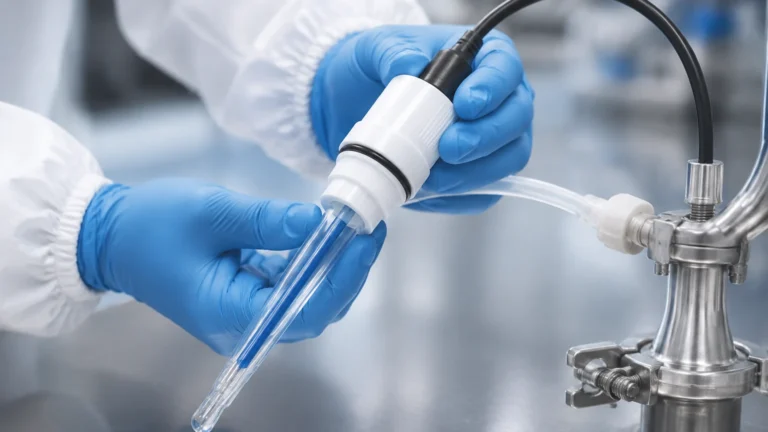
Suspended Solids Meter
Suspended Solids Meter
In industrial process control and environmental monitoring, the measurement of Total Suspended Solids (TSS) is a critical parameter for ensuring water quality, process efficiency, and regulatory compliance. A suspended solids meter is an analytical instrument designed to quantify the concentration of insoluble particles within a liquid medium. Unlike turbidity, which measures the clarity of a liquid, a suspended solids meter provides a direct or correlated mass-per-volume measurement, typically expressed in milligrams per liter (mg/L) or grams per liter (g/L).
For engineers and plant managers, selecting the correct instrumentation requires a deep understanding of the physical properties of the process media and the optical or acoustic principles used to detect particles. This guide explores the technical foundations, selection criteria, and practical application of suspended solids meters within the broader context of industrial automation and level control.
Measurement Principles
Suspended solids meters operate on several distinct physical principles. The choice of technology depends heavily on the expected concentration range, particle size distribution, and the optical properties of the fluid.
1. Optical Scattering (Nephelometry)
This is the most common method for low to medium concentrations. The sensor emits a light beam (often infrared to minimize interference from ambient light and color) into the liquid. When the light hits a particle, it scatters. A detector placed at a specific angle—typically 90 degrees (nephelometric) or 135 degrees (backscatter)—measures the intensity of the scattered light. The intensity is proportional to the number of particles in the path.
* 90° Scattering: Highly sensitive to low concentrations (0–1,000 mg/L).
* Backscattering: Preferred for high concentrations (up to 100 g/L) where multiple scattering events occur, and light cannot penetrate deeply into the medium.
2. Light Attenuation (Absorption)
In this method, the sensor measures the loss of light intensity as it passes through a fixed path length of the liquid. As the concentration of suspended solids increases, more light is absorbed or blocked. This principle is governed by the Beer-Lambert Law and is generally used for medium to high concentration ranges where the liquid is too opaque for 90-degree scattering to be effective.
3. Ultrasonic Attenuation
For extremely dense slurries or applications where optical sensors fail due to rapid fouling or high opacity, ultrasonic technology is employed. An ultrasonic suspended solids meter sends a high-frequency sound wave through the medium. The attenuation (loss of energy) of the sound wave is measured. This method is less sensitive to the color of the particles but is highly sensitive to entrained air or bubbles.
4. Microwave Phase Shift
In specialized industrial applications, such as pulp and paper or heavy mining slurries, microwave sensors measure the phase shift and attenuation of microwave signals. This technology is virtually unaffected by color, brightness, or flow velocity, making it ideal for high-consistency measurements (up to 50% solids by weight).
Comparison of Technologies
The following table provides a general comparison of the primary measurement technologies used in industrial suspended solids meters.
| Technology | Typical Range | Best For | Limitations |
| :— | :— | :— | :— |
| 90° Scattering | 0–1,000 mg/L | Potable water, effluent monitoring | Saturated at high concentrations |
| Backscattering | 0–100 g/L | Activated sludge, industrial process water | Sensitive to particle size changes |
| Absorption | 100–20,000 mg/L | Industrial wastewater, thickener underflow | Requires frequent cleaning of lenses |
| Ultrasonic | 0.5%–15% solids | Mining slurries, primary sludge | High sensitivity to bubbles/aeration |
| Microwave | 0%–50% solids | Pulp & paper, heavy chemical processing | High capital cost |
Selection Criteria for Industrial Applications
When evaluating a suspended solids meter for a specific project, engineers must look beyond the basic measurement range. The following factors are decisive for long-term reliability:
Particle Characteristics
The shape, size, and color of the suspended solids significantly impact optical sensors. For example, dark-colored particles absorb more light, which might lead to an overestimation of concentration in an absorption-based meter but an underestimation in a scattering-based meter. If the particle size distribution changes frequently, the meter may require recalibration to maintain accuracy.
Media Composition
The chemical compatibility of the sensor body and the optical windows is paramount. In corrosive chemical environments, sensors should be constructed from materials like 316L stainless steel, Titanium, or specialized plastics like PVC or PEEK. For high-temperature applications, ensure the electronics are rated for the process thermal load.
Maintenance Requirements
Fouling is the most common cause of failure for suspended solids meters. Biofilm growth, mineral scaling, or oil coating on the sensor window will result in measurement drift. Selecting a sensor with an integrated cleaning system—such as a mechanical wiper, ultrasonic transducer cleaner, or high-pressure water/air jet—is essential for reducing manual intervention.
Installation Considerations
Proper installation is as important as the technology itself. A poorly placed sensor will provide data that is not representative of the process.
1. Flow Velocity: The liquid must be moving fast enough to keep solids in suspension (typically >0.5 m/s) but slow enough to avoid excessive turbulence or cavitation.
2. Air Bubbles: Optical and ultrasonic sensors can mistake air bubbles for solid particles. Sensors should be installed in sections of the pipe where the pressure is sufficient to keep gases in solution, or in open channels where bubbles can escape to the surface. Avoid installing sensors directly after pumps or drop-pipes.
3. Mounting Angle: In horizontal pipes, sensors should be mounted on the side (3 o'clock or 9 o'clock position). Mounting on the top can lead to interference from air pockets, while mounting on the bottom can lead to the sensor being buried by settled sediment.
4. Representative Sampling: Ensure the sensor is placed in a well-mixed zone. If the sensor is in a large tank, it should be positioned away from the walls and at a depth where the concentration is characteristic of the total volume.
Limitations and Common Risks
While modern suspended solids meters are highly advanced, they are not "plug-and-play" devices. Users should be aware of the following risks:
* Calibration Drift: Unlike level meters, which often have absolute references, TSS meters are usually calibrated against a laboratory gravimetric analysis. If the nature of the solids changes (e.g., a change in the chemical flocculant used), the correlation between light scatter and mass may shift.
* Stray Light: In open-channel installations, direct sunlight can interfere with optical sensors. Shrouds or covers are necessary to ensure the sensor only detects the light emitted by its internal source.
* Minimum Pipe Diameter: For absorption or microwave meters, a minimum path length is required. If the pipe is too narrow, the signal-to-noise ratio may be too low for accurate measurement.
Integration with Level Measurement Systems
In many industrial water treatment and chemical processes, suspended solids measurement is used in tandem with level measurement. For instance, in a sedimentation tank, a radar level meter or ultrasonic level sensor monitors the total liquid height, while a suspended solids meter (or a sludge blanket level meter) determines the interface between the clarified water and the settled solids.
Welk provides a comprehensive range of industrial level measurement instruments that complement analytical sensors. By integrating reliable level data with TSS concentrations, operators can automate sludge pumping, optimize chemical dosing, and prevent tank overflows. For those seeking to optimize their entire measurement loop, it is useful to Review product options and application support to ensure that both level and analytical instruments are compatible with the control architecture.
Frequently Asked Questions (FAQs)
Q: What is the difference between Turbidity and Total Suspended Solids (TSS)?
A: Turbidity is an optical property indicating how much light is scattered by a fluid; it is measured in NTU or FNU. TSS is a quantitative measure of the mass of solids per volume of water (mg/L). While they are related, the relationship is not linear and depends on particle size and density.
Q: How often should a suspended solids meter be calibrated?
A: This depends on the application. In stable processes, quarterly calibration may suffice. In dynamic wastewater environments, monthly verification against a laboratory sample is recommended. Most meters allow for a "slope adjustment" to align the sensor reading with lab results.
Q: Can a suspended solids meter measure dissolved solids (TDS)?
A: No. Suspended solids meters only detect insoluble particles. Dissolved solids, such as salts and minerals, do not scatter light or attenuate sound in the same way and must be measured using conductivity or refractometry.
Q: Are there wireless options for TSS monitoring?
A: Yes, many modern transmitters support wireless protocols like WirelessHART or LoRaWAN, which are particularly useful for remote environmental monitoring or large-scale treatment plants where cabling costs are prohibitive.
Conclusion
A suspended solids meter is an indispensable tool for modern industrial process management. By understanding the underlying physics of scattering and absorption, and by adhering to strict installation and maintenance protocols, facilities can achieve high-precision monitoring of their liquid streams. Whether the goal is to protect downstream equipment, comply with environmental discharge permits, or optimize chemical usage, selecting the right sensor is the first step toward operational excellence. For more information on integrating these sensors with professional level measurement solutions, visit the Main Page of Welk's industrial instrumentation resource.