What Is a Coriolis Flow Meter
What Is a Coriolis Flow Meter
In the realm of industrial process control, precision is the primary driver of efficiency and safety. While level measurement instruments like radar and ultrasonic sensors provide critical data regarding the volume of material in a vessel, understanding the movement and mass of that material requires specialized flow technology. Among the most sophisticated tools available to modern engineers is the Coriolis flow meter. This article provides a technical overview of what is a coriolis flow meter, how it operates, and how to select and install it within a professional industrial environment.
The Measurement Principle of Coriolis Flow Meters
To understand what is a coriolis flow meter, one must first understand the physics of the Coriolis effect. In an industrial meter, this effect is harnessed by inducing vibration in a tube or set of tubes through which the process fluid flows.
The Coriolis Effect in a Closed System
When a fluid of mass *m* moves through a vibrating tube with an angular velocity, it experiences an inertial force known as the Coriolis force. This force acts perpendicular to both the direction of the fluid's motion and the axis of vibration.
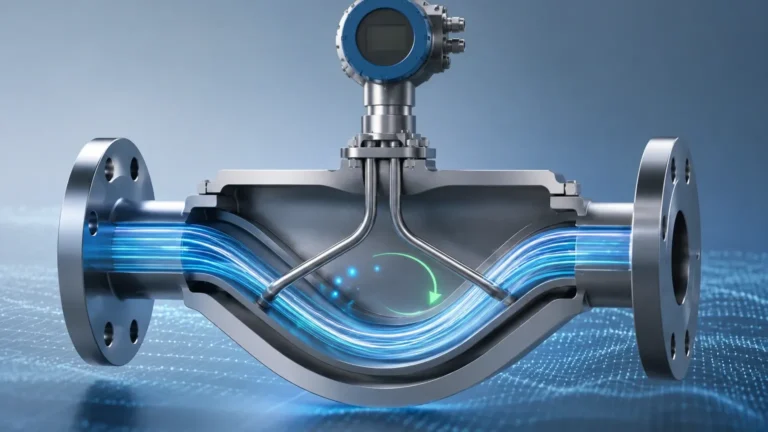
In a typical dual-tube Coriolis meter, an electromagnetic drive coil causes the tubes to oscillate in opposition to one another, similar to a tuning fork. When there is no flow, the tubes vibrate in phase. However, as fluid enters the meter and moves through the inlet side of the oscillating tube, it resists the upward or downward motion of the tube, pushing against it. As the fluid exits on the outlet side, it resists being slowed down, pushing in the opposite direction.
Phase Shift and Mass Flow
This resistance causes a "twist" in the tubes. This mechanical distortion results in a phase shift between the inlet and outlet sides of the tube. Highly sensitive pick-off coils (sensors) located at the inlet and outlet measure the time delay between these oscillations. This time delay (Delta-T) is directly proportional to the mass flow rate. Because mass is an intrinsic property that does not change with temperature or pressure, Coriolis meters provide an exceptionally accurate measurement of the actual quantity of matter passing through the system.
Density and Temperature Measurement
Beyond mass flow, these instruments are multivariable. The frequency at which the tubes oscillate depends on the total mass of the tubes and the fluid inside them. Since the volume of the tubes is fixed, the oscillation frequency can be used to calculate the fluid's density in real-time. Additionally, an internal Resistance Temperature Detector (RTD) monitors the tube temperature to compensate for changes in tube elasticity, providing a third data point: temperature.
Key Components and Design Variations
When evaluating what is a coriolis flow meter for a specific project, engineers must choose between several physical configurations. Each design has specific advantages depending on the fluid properties and installation space.
1. Tube Geometry:
* U-Shaped Tubes: These are the most common. The curved shape enhances the Coriolis effect, allowing for higher sensitivity and accuracy even at lower flow rates. However, they are bulkier and can trap fluids if not oriented correctly.
* Straight Tubes: These offer a lower pressure drop and are easier to clean, making them ideal for sanitary applications or fluids containing solids. They require more sophisticated electronics to detect the smaller phase shifts associated with straight-tube designs.
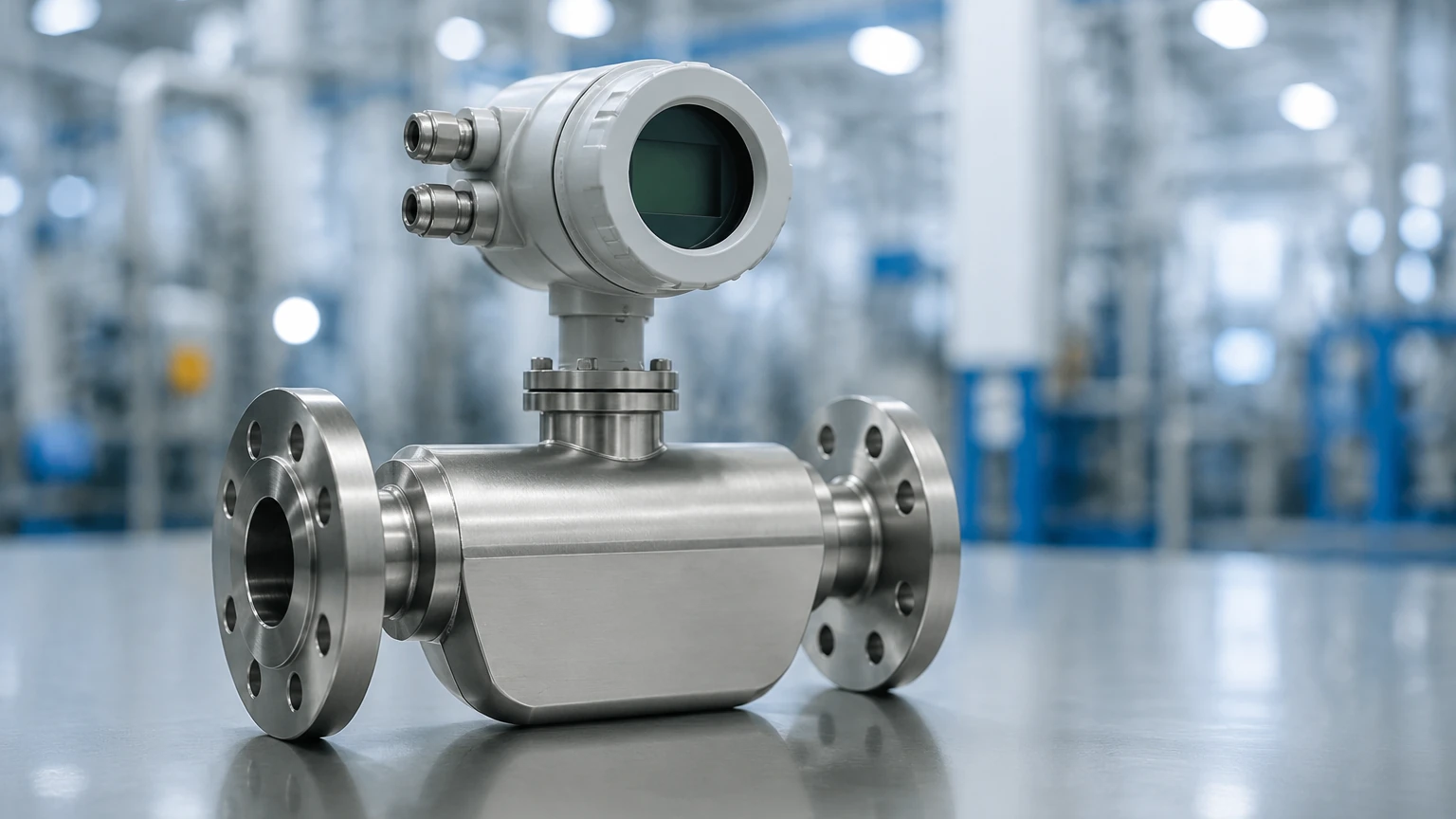
2. The Sensor Housing: This is the pressure-retaining part of the meter that protects the vibrating tubes from the external environment. In hazardous or high-pressure applications, the housing must be robust and often secondary-containment rated.
3. The Transmitter: This is the "brain" of the meter. It processes the raw signals from the pick-off coils, performs the complex calculations for mass and density, and provides outputs via 4-20mA, HART, Modbus, or Profibus. For more information on how these systems integrate with broader process monitoring, you can visit the Main Page of industrial measurement resources.
Selection Criteria for Industrial Applications
Choosing a Coriolis meter requires a detailed analysis of the process fluid and the goals of the measurement. Unlike volumetric meters (such as magnetic or vortex meters), Coriolis meters are often selected for their ability to handle complex fluids.
Comparison Table: Coriolis vs. Other Technologies
| Feature | Coriolis Flow Meter | Magnetic Flow Meter | Ultrasonic (Transit Time) |
| :— | :— | :— | :— |
| Primary Measurement | Mass Flow | Volumetric Flow | Volumetric Flow |
| Fluid Conductivity | Not Required | Required (>5 μS/cm) | Not Required |
| Accuracy | 0.1% to 0.05% | 0.5% to 0.25% | 1.0% to 0.5% |
| Density Output | Yes | No | No |
| Pressure Drop | Moderate to High | Negligible | Negligible |
| Initial Cost | High | Low to Moderate | Moderate |
Critical Selection Factors
* Mass Flow Range: Ensure the expected flow rates fall within the meter's optimal accuracy band (typically between 10% and 100% of the nominal flow rate).
* Material Compatibility: The wetted parts (tubes) must be compatible with the process fluid. Common materials include 316L Stainless Steel, Hastelloy C-22, and Tantalum for highly corrosive acids.
* Pressure Rating: Coriolis tubes are thinner than standard piping to allow for vibration. Verify that the meter can handle the maximum process pressure, including potential surges.
* Viscosity: While Coriolis meters are excellent for high-viscosity fluids (like resins or syrups), high viscosity increases the pressure drop across the meter.
Installation Best Practices
To maintain the high accuracy inherent in a Coriolis meter, proper installation is mandatory. Because the meter relies on internal vibrations, external factors can introduce noise into the signal.
Orientation
The correct orientation depends on the phase of the fluid:
* Liquid Service: The tubes should ideally point downward (in a "U" configuration) or be installed in a vertical pipe with upward flow. This prevents gas bubbles from becoming trapped in the tubes, which would disrupt the vibration frequency.
* Gas Service: The tubes should point upward to prevent liquids or condensates from collecting in the bottom of the tubes.
* Slurry Service: Vertical installation with upward flow is preferred to prevent solids from settling.
Mechanical Support and Isolation
Coriolis meters must be supported by the adjacent piping, not the meter housing itself. However, because the meter operates on vibration, it is sensitive to external mechanical noise.
* Vibration Isolation: Avoid installing the meter near heavy pumps or vibrating machinery. If vibration is present, use flexible connectors or specialized dampening mounts.
* Stress-Free Mounting: Ensure the piping is aligned correctly. Forcing a meter into a gap that is too small or misaligned creates mechanical stress on the tubes, leading to "zero-shift" errors.
Upstream and Downstream Piping
One of the greatest advantages of the Coriolis meter is that, unlike most other flow technologies, it generally does not require long straight runs of pipe upstream or downstream. It is relatively immune to flow profile distortions like swirls or turbulence.
Limitations and Common Challenges
While highly versatile, Coriolis meters are not a universal solution for every application. Engineers should be aware of the following limitations:
1. Entrained Air and Two-Phase Flow: Small amounts of gas in a liquid (or liquid in a gas) can cause the tubes to vibrate erratically. This often results in a "slug flow" condition where the meter may temporarily lose its measurement signal or show a significant drop in accuracy.
2. Pressure Drop: Because the fluid is often split into two narrower tubes or forced through a U-bend, the pressure drop across a Coriolis meter is higher than that of a full-bore magnetic or ultrasonic meter. This must be accounted for in pump sizing.
3. Size and Weight: Coriolis meters for large pipe sizes (above 200 mm or 8 inches) become extremely heavy and expensive. In these cases, volumetric meters or level-based inventory calculations may be more cost-effective.
4. Zero Stability: Over time, or after significant temperature shifts, the "zero point" of the meter may drift. Periodic zero-calibration (performed with a full pipe and zero flow) is necessary to maintain peak accuracy.
Frequently Asked Questions (FAQs)
Q: Can a Coriolis meter measure steam?
A: Generally, no. While they can measure gases, the high velocity and low density of steam make it difficult for standard Coriolis meters to provide accurate mass flow data. Specialized vortex meters are usually preferred for steam applications.
Q: How often does a Coriolis meter need calibration?
A: In stable applications, Coriolis meters are known for excellent long-term stability. Many industrial users perform a zero-check annually and a full wet calibration every 2 to 5 years, depending on the criticality of the process and regulatory requirements.
Q: Does the viscosity of the fluid affect the accuracy?
A: The mass flow measurement itself is largely independent of viscosity. However, very high viscosity increases the pressure drop and may require a larger meter size to maintain flow rates, which can impact the sensitivity of the measurement.
Q: Is a Coriolis meter better than a level sensor for inventory?
A: They serve different purposes. A level sensor tells you how much space the material occupies in a tank (volume), while a Coriolis meter tells you exactly how much material has entered or left the tank (mass). In industries where density changes with temperature (like oil and gas), mass measurement via Coriolis is often more accurate for financial transactions (custody transfer).
Conclusion
Understanding what is a coriolis flow meter is essential for any engineer tasked with high-precision process control. By measuring mass, density, and temperature simultaneously, these instruments provide a level of insight that volumetric meters cannot match. While the initial investment is higher, the reduction in fluid waste, improved product consistency, and lack of requirement for straight pipe runs often lead to a lower total cost of ownership. For professionals looking to integrate these flow solutions with reliable level measurement systems, exploring the technical documentation and product ranges available on the Main Page is a recommended next step in system design.