Tailings Monitoring
Tailings Monitoring
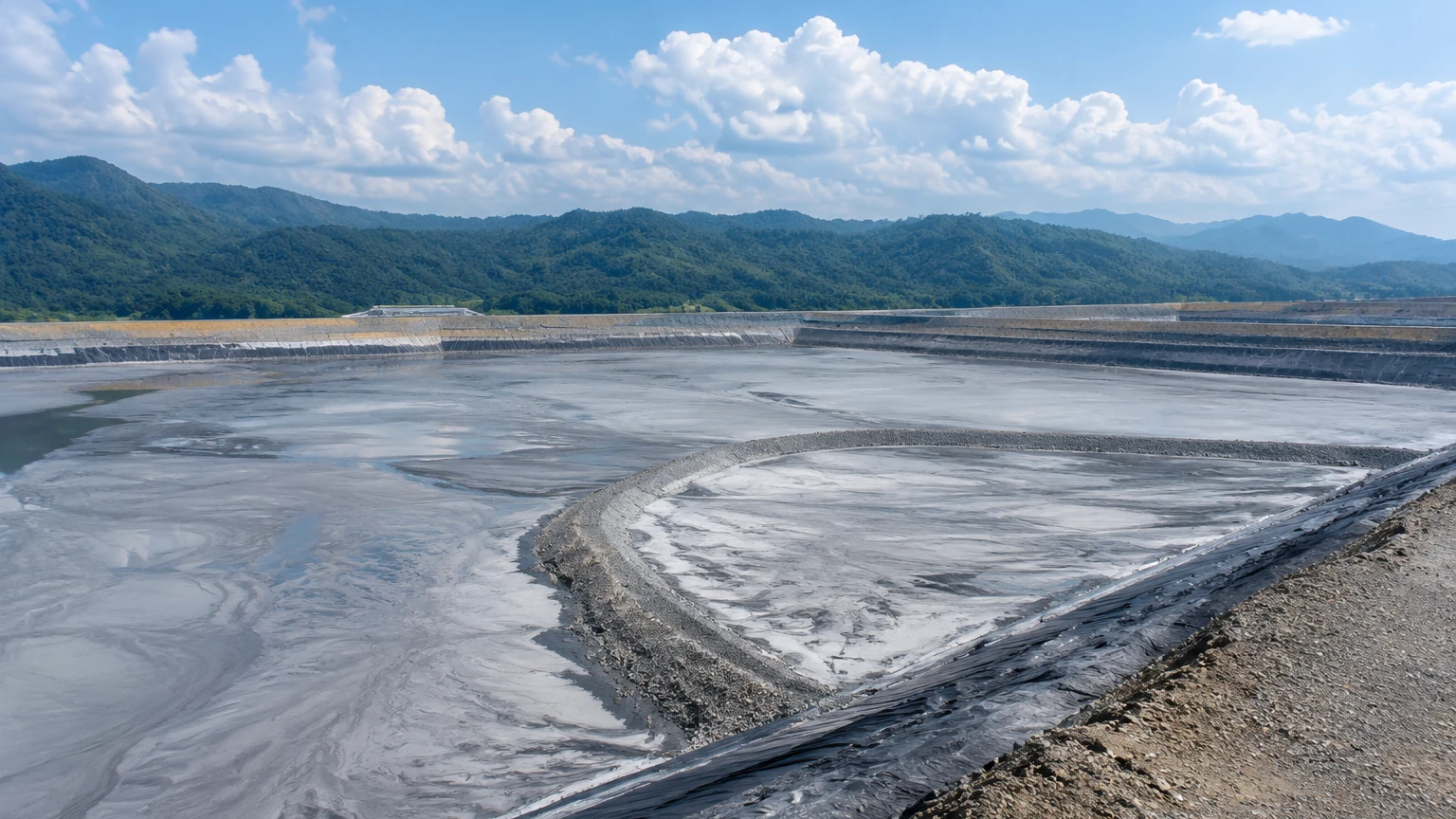
Tailings monitoring is a critical aspect of modern mining and industrial waste management. Tailings—the materials left over after the process of separating the valuable fraction from the uneconomic fraction of an ore—are typically stored in large impoundments or dams. Because these materials often contain water and chemicals used in processing, the structural integrity of the storage facility and the precise management of fluid levels are paramount for environmental safety and regulatory compliance. Effective tailings monitoring requires a combination of geotechnical sensors and advanced level measurement instrumentation to ensure that pond levels remain within safe operational limits.
In industrial automation and mining engineering, level measurement provides the data necessary to prevent overtopping, manage water reclaim cycles, and monitor the settling of solids. This guide explores the technical principles of level measurement technologies used in tailings applications, offering practical selection criteria and installation guidance for engineering professionals.
Understanding Tailings Monitoring and Its Critical Role
The primary objective of tailings monitoring is the mitigation of risk. A failure in a tailings storage facility (TSF) can lead to catastrophic environmental damage and significant financial liability. Level measurement instruments serve as the "eyes" of the monitoring system, providing real-time data on the height of the slurry or the supernatant water layer.
Monitoring systems typically focus on three areas:
1. Pond Level Control: Ensuring the water level does not reach the crest of the dam.
2. Freeboard Management: Maintaining the required distance between the liquid surface and the top of the containment structure.
3. Process Efficiency: Monitoring the volume of water available for recycling back to the processing plant.
For engineers and site managers, selecting the correct instrumentation involves understanding the physical properties of the tailings—such as density, viscosity, and the presence of foam—as well as the environmental conditions of the site, including wind, temperature fluctuations, and dust.
Core Principles of Level Measurement in Tailings Applications
To implement a robust tailings monitoring strategy, it is essential to understand the measurement principles of the instruments involved. Welk provides a range of technologies, each suited to specific environmental challenges.
Radar Level Measurement (FMCW and Pulse)
Radar level meters are the preferred choice for large-scale tailings monitoring due to their non-contact nature and high accuracy. They operate by emitting high-frequency electromagnetic waves (typically in the 26GHz or 80GHz range) toward the surface of the tailings.
* Principle: The instrument measures the "Time of Flight" (ToF) required for the signal to travel to the surface and reflect back. In Frequency Modulated Continuous Wave (FMCW) radar, the device emits a continuous signal with a constantly changing frequency. The difference in frequency between the emitted and received signal is proportional to the distance.
* Advantages: Radar signals are unaffected by air temperature, pressure, wind, or vacuum. They can penetrate heavy dust and are relatively immune to the effects of steam or fluctuating vapors over the pond surface.
Ultrasonic Level Measurement
Ultrasonic sensors are a cost-effective solution for shorter-range tailings monitoring, such as in small reclaim tanks or sumps.
* Principle: The sensor emits an ultrasonic sound pulse that reflects off the target surface. The distance is calculated based on the speed of sound in air ($d = v \cdot t / 2$).
* Advantages: Non-contact and easy to install. However, because the speed of sound is affected by air temperature, these sensors require integrated temperature compensation.
Hydrostatic Level Measurement
Hydrostatic transmitters are contact-based sensors that measure the pressure exerted by a liquid column.
* Principle: Based on Pascal’s Law, the pressure ($P$) at the bottom of a liquid column is equal to the height ($h$) multiplied by the density ($\rho$) and gravity ($g$).
* Advantages: Ideal for deep wells or tanks where surface conditions (like heavy foam) make non-contact measurement difficult. In tailings, these are often used in clear water reclaim areas.
Comparative Analysis of Measurement Technologies
Choosing between radar, ultrasonic, and hydrostatic technologies requires a comparison of their performance in the harsh environments typical of mining sites.
| Feature | Radar Level Meter | Ultrasonic Sensor | Hydrostatic Transmitter |
| :— | :— | :— | :— |
| Measurement Type | Non-contact (Microwave) | Non-contact (Sound) | Contact (Pressure) |
| Max Range | Up to 120 meters | Up to 30 meters | Up to 200 meters (cable) |
| Accuracy | ±2mm to ±5mm | ±0.25% of range | ±0.2% to ±0.5% of range |
| Dust/Vapor Resistance | Excellent | Moderate | N/A (Submerged) |
| Foam Sensitivity | Low | High | None |
| Maintenance | Very Low | Low | Moderate (cleaning required) |
For comprehensive technical data and to view specific product models, you may visit the Main Page of our product catalog.
Selecting the Right Instrument for Tailings Monitoring
When evaluating instruments for tailings monitoring, engineers must consider several application-specific factors:
1. Surface Conditions
Tailings ponds often have complex surfaces. If the tailings are thick and prone to crusting, radar is highly effective. If the surface is covered in thick foam (often a result of flotation chemicals), radar is still preferred over ultrasonic, as sound waves are easily absorbed by foam, whereas microwaves can often penetrate or reflect off the liquid interface beneath.
2. Environmental Factors
In outdoor tailings dams, wind can deflect ultrasonic signals, and rapid temperature changes can create measurement errors if the sensor's compensation is too slow. Radar is inherently immune to these atmospheric changes, making it the standard for safety-critical tailings monitoring.
3. Range and Beam Angle
Large dams require long-range measurement. Modern 80GHz radar meters offer narrow beam angles (as small as 3 degrees), which allows them to be mounted on narrow platforms or near dam walls without interference from structural reflections.
4. Media Density
Hydrostatic sensors rely on a constant density to provide an accurate level reading. In tailings monitoring, the density of the slurry can vary significantly as solids settle. If density is not constant, a non-contact method like radar is required to ensure height accuracy.
Practical Selection Table for Industrial Tailings
| Application | Recommended Technology | Why? |
| :— | :— | :— |
| Main Tailings Dam | 80GHz Radar | Long range, unaffected by wind/dust, high precision. |
| Reclaim Water Tank | Ultrasonic or Radar | Cost-effective for clean water at moderate ranges. |
| Thickener Underflow | Radar or Hydrostatic | High solids content; radar avoids contact with abrasive slurry. |
| Sump/Drainage Pit | Ultrasonic or Level Switch | Small footprint, simple installation for pump control. |
| Deep Borehole/Well | Hydrostatic Transmitter | Measures head pressure in narrow, deep vertical pipes. |
Installation and Maintenance Considerations
Proper installation is as important as selecting the right technology. For tailings monitoring, follow these engineering guidelines:
* Avoid the Blind Zone: Every non-contact sensor has a "dead band" or blind zone near the face of the transducer. Ensure the highest possible level of the tailings does not enter this zone.
* Mounting Position: Sensors should be mounted perpendicular to the liquid surface. For radar, ensure there are no structural beams, pipes, or ladders within the signal's beam path. Use a stilling well if the surface is extremely turbulent.
* Sun Shielding: While the electronics are designed for industrial temperatures, direct solar radiation can cause the internal temperature of the housing to exceed rated limits. Using a sunshade is a low-cost way to extend the life of the instrument.
* Grounding and Surge Protection: Tailings dams are often in open areas prone to lightning strikes. Ensure all instruments are properly grounded and utilize surge protection modules to prevent damage to the 4-20mA or RS485 communication loops.
Limitations and Environmental Challenges
While advanced instrumentation has made tailings monitoring more reliable, certain limitations remain:
* Heavy Build-up: In some slurry applications, material can splash and dry on the sensor face. While radar can often "see through" thin layers of build-up, heavy accumulation will eventually attenuate the signal. Regular inspection or the use of a purging system (compressed air) may be necessary.
* Extreme Distances: For dams exceeding 120 meters in depth, hydrostatic sensors or specialized long-range radar units are required. Standard industrial sensors may not have the signal strength for such distances.
* Signal Absorption: Very low dielectric constant (εr) materials reflect radar signals poorly. While most tailings have high water content (and thus high εr), dry tailings or specific mineral concentrates may require high-sensitivity radar settings.
Frequently Asked Questions (FAQs)
Q: How does dust affect tailings monitoring sensors?
A: Dust is common in mining. Ultrasonic sensors can be affected if the dust is thick enough to attenuate the sound wave. Radar level meters are virtually unaffected by dust because the microwave wavelength is much larger than the dust particles.
Q: Can I use a level switch for tailings monitoring?
A: Level switches (like tuning forks or rotary paddles) are excellent for point-level detection—such as high-level alarms. However, they do not provide the continuous data needed for trend analysis and volume calculation. They are best used as a redundant safety backup to a continuous radar or ultrasonic transmitter.
Q: Is 80GHz radar better than 26GHz for tailings?
A: Generally, yes. 80GHz radar has a narrower beam, which means it is easier to install without hitting obstructions and provides better focus on the target surface, leading to higher accuracy in complex environments.
Q: How often should tailings monitoring sensors be calibrated?
A: For non-contact sensors like radar, the factory calibration is usually stable for years. However, a "field check" or verification against a manual tape measure should be performed annually or according to local safety regulations.
Conclusion
Effective tailings monitoring is a multi-faceted challenge that requires reliable, accurate, and durable instrumentation. By understanding the measurement principles of radar, ultrasonic, and hydrostatic technologies, engineers can select the most appropriate solution for their specific site conditions. Whether the priority is long-range accuracy in a primary dam or simple pump control in a reclaim sump, Welk offers the specialized level measurement tools necessary to maintain safety and efficiency. For further technical assistance or to review our full product range, please visit our Main Page.