Tailings Water Management
Tailings Water Management
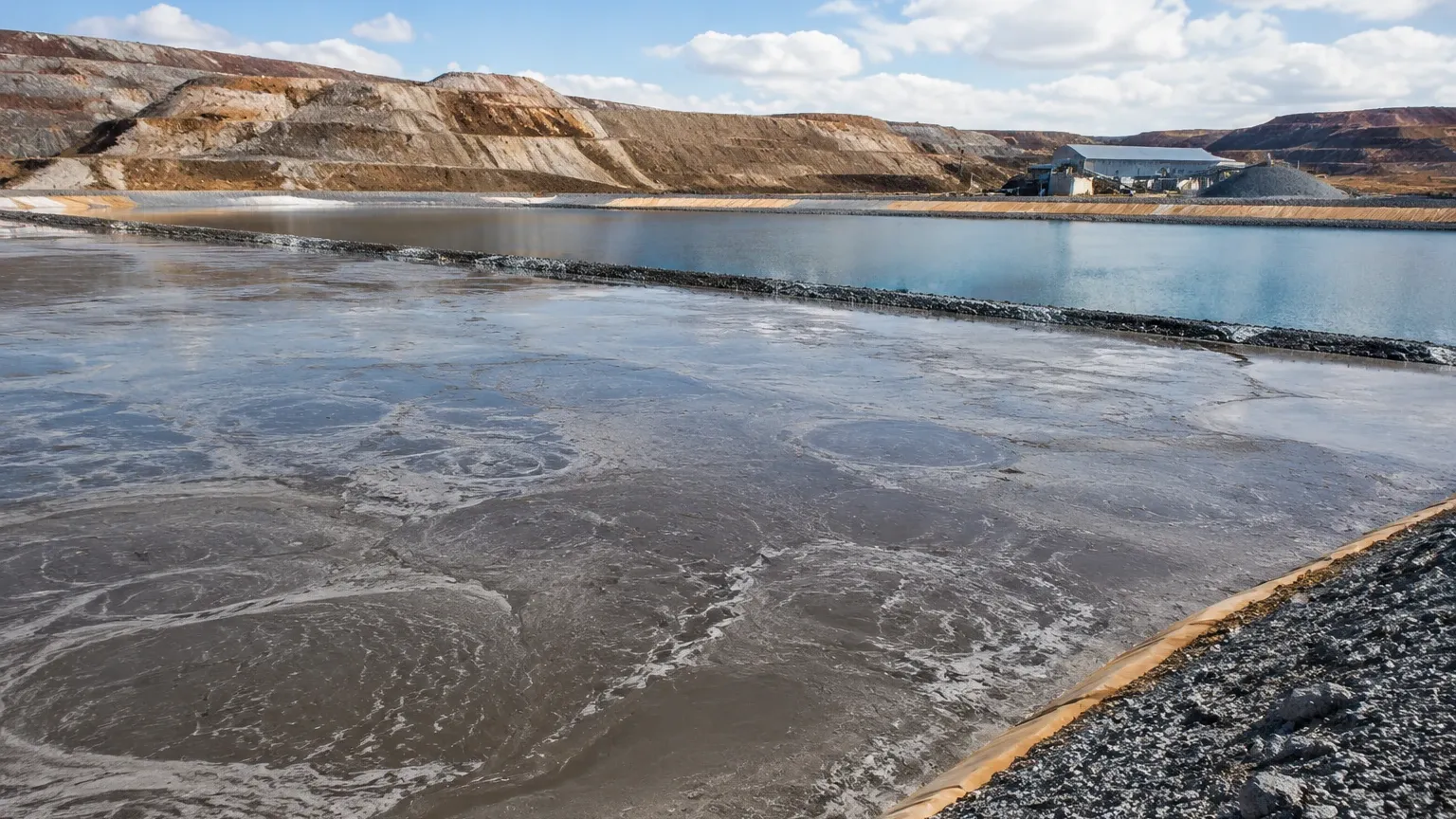
Tailings water management is a critical component of modern mining and mineral processing operations. Tailings, the byproduct of separating valuable minerals from ore, typically consist of a slurry of fine-grained solids and process water. Managing this water effectively is essential not only for environmental compliance and safety but also for the economic viability of the mine through water recycling and reagent recovery.
In the context of a Tailings Storage Facility (TSF), precise monitoring of water levels, slurry density, and pond volume is mandatory. Failure to maintain accurate oversight can lead to catastrophic dam failures, environmental contamination, or operational downtime. As a professional manufacturer, Welk provides a range of industrial level measurement instruments designed to withstand the harsh conditions inherent in tailings water management. To explore the full range of available instrumentation, engineers can visit the Main Page for detailed technical specifications.
The Importance of Tailings Water Management
Effective tailings water management serves several primary functions. First, it ensures the structural integrity of the tailings dam by monitoring the phreatic surface and the distance between the water level and the dam crest (freeboard). Second, it facilitates the reclamation of process water, which is often a scarce resource in arid mining regions. Third, it allows for the controlled discharge or treatment of excess water in compliance with local environmental regulations.
Instrumentation used in these environments must be robust. Tailings water often contains high concentrations of suspended solids, residual processing chemicals, and varying pH levels. Furthermore, the physical environment of a TSF is often characterized by extreme temperatures, high winds, and significant dust, all of which can interfere with sensitive measurement equipment.
Core Measurement Principles for Tailings Water
Before selecting a specific instrument, it is necessary to understand the physics behind the various measurement technologies. In tailings water management, three primary principles are commonly employed: radar, ultrasonic, and hydrostatic pressure.
Radar Level Measurement (Non-Contact)
Radar level meters operate on the principle of Time Domain Reflectometry (TDR) or Frequency Modulated Continuous Wave (FMCW). High-frequency microwave pulses (typically in the 26 GHz or 80 GHz range) are emitted from the antenna, reflect off the surface of the tailings or water, and return to the sensor.
* FMCW Radar: This technology transmits a continuous signal with a constantly changing frequency. The difference between the transmitted and received frequency is proportional to the distance. 80 GHz radar is particularly effective for tailings because its narrow beam angle avoids internal tank structures or uneven dam walls.
* Advantages: Radar is unaffected by air temperature, pressure, or dust. It is a non-contact method, meaning the sensor does not corrode or suffer from material buildup.
Ultrasonic Level Measurement
Ultrasonic sensors emit high-frequency sound waves that reflect off the liquid surface. The instrument measures the time of flight to calculate the distance.
* Principle: The speed of sound in air is approximately 343 meters per second (1,125 ft/s) at 20°C (68°F). The sensor compensates for temperature changes using an integrated thermistor.
* Advantages: It is a cost-effective solution for short to medium-range measurements in open channels or sumps where the environment is relatively stable.
* Limitations: Ultrasonic waves can be scattered by heavy foam or absorbed by dense dust. Significant temperature gradients between the sensor and the water surface can also introduce errors.
Hydrostatic Pressure Transmitters
Hydrostatic measurement relies on the principle that the pressure at the bottom of a liquid column is proportional to the height of the liquid and its density ($P = \rho \cdot g \cdot h$).
* Principle: A pressure sensor (often a ceramic or stainless steel diaphragm) is submerged at a fixed depth. It measures the head pressure exerted by the water column above it.
* Advantages: This method is highly reliable for deep wells or sumps and is unaffected by surface foam or turbulence.
* Limitations: Because the measurement depends on density ($\rho$), any change in the solids concentration of the tailings water will affect the accuracy of the level reading unless compensated for.
Selection Criteria for Tailings Water Level Instruments
Choosing the correct instrument requires an evaluation of the specific application site. The following table provides a comparison of technologies based on typical tailings water management requirements.
| Feature | 80 GHz Radar | Ultrasonic | Hydrostatic | Magnetic Gauge |
| :— | :— | :— | :— | :— |
| Measurement Range | Up to 120m | Up to 30m | Up to 200m | Up to 6m |
| Accuracy | ±1mm to ±2mm | ±0.25% of range | ±0.1% to ±0.5% | ±5mm to ±10mm |
| Media Contact | Non-contact | Non-contact | Submerged | Contact (Bypass) |
| Foam Resistance | Excellent | Poor | Excellent | Good |
| Dust Resistance | Excellent | Moderate | Excellent | N/A |
| Cost | Higher | Lower | Moderate | Moderate |
| Maintenance | Very Low | Low | Moderate | Moderate |
When managing tailings water, the primary choice is often between radar and hydrostatic sensors. Radar is preferred for surface pond monitoring due to its high accuracy and lack of maintenance, while hydrostatic sensors are frequently used in pump sumps and boreholes.
Installation Guidelines for Accurate Monitoring
Proper installation is as critical as instrument selection. In tailings water management, the following considerations should be prioritized:
1. Beam Clearance: For radar and ultrasonic sensors, the signal "cone" must be kept clear of obstructions such as ladders, pipes, or the dam wall. An 80 GHz radar with a 3-degree beam angle requires significantly less clearance than a 26 GHz radar or an ultrasonic sensor.
2. Stilling Wells: In applications where the water surface is highly turbulent or covered in thick foam, a stilling well (a vertical pipe) can be used to provide a calm surface for the sensor to measure. This is particularly useful for ultrasonic and radar units.
3. Submersible Cable Protection: For hydrostatic transmitters, the cable contains a vent tube to compensate for atmospheric pressure changes. This tube must be kept clear of moisture and debris. In mining environments, armored cables are recommended to prevent damage from wildlife or mechanical stress.
4. Mounting Position: Sensors should be mounted away from the inflow point to avoid measuring the turbulence of the incoming slurry. For TSF ponds, sensors are often mounted on floating platforms or cantilevered arms extending over the water.
Operational Challenges and Limitations
While modern instrumentation is highly advanced, tailings water management presents unique challenges that can impact performance:
* Scaling and Buildup: In chemical-heavy mineral processing (e.g., gold cyanidation), minerals can precipitate out of the water and form scales on submerged sensors. Non-contact radar is the standard solution to mitigate this risk.
* Varying Dielectric Constants: Radar sensors rely on the dielectric constant (εr) of the material to reflect the signal. While water has a high dielectric constant (~80), the presence of high solids or floating organic matter can change the reflective properties of the surface.
* Atmospheric Interference: In very deep pits or silos, heavy fog or steam can attenuate ultrasonic signals. Radar waves, however, pass through these vapors with negligible loss.
* Lightning and Surges: TSFs are often located in open, elevated areas prone to lightning strikes. Instruments should be equipped with surge protection and properly grounded to prevent electronic failure.
Frequently Asked Questions (FAQ)
Q: How often should level sensors in tailings water be calibrated?
A: Non-contact radar sensors generally do not require recalibration once commissioned, as they have no moving parts and do not drift significantly. However, hydrostatic sensors should be checked annually, as diaphragm fatigue or density changes in the tailings can affect the zero-point.
Q: Can one sensor measure both the water level and the sediment level?
A: Standard level meters measure the top surface. To measure the interface between clear water and settled solids (the sludge blanket), specialized sonar or interface radar systems are required. These utilize different signal processing algorithms to detect the change in density.
Q: What is the benefit of using 80 GHz radar over 26 GHz radar?
A: The 80 GHz radar uses a much higher frequency, which results in a shorter wavelength and a narrower beam. This allows the sensor to focus more energy on the target, providing better signal-to-noise ratios and the ability to measure through narrow openings or near-wall obstructions.
Q: Are wireless level sensors suitable for tailings ponds?
A: Yes, wireless transmission (such as LoRaWAN or cellular) is increasingly common in tailings water management because it eliminates the high cost of running kilometers of cabling around a large TSF. Welk offers integrated solutions that support various communication protocols.
Conclusion
Effective tailings water management is a multi-faceted engineering challenge that requires reliable data to ensure safety and efficiency. By understanding the principles of radar, ultrasonic, and hydrostatic measurement, mining professionals can select the most appropriate technology for their specific environmental conditions. For those seeking technical support or specific product recommendations for mining applications, please Review product options and application support to find the ideal solution for your project requirements. Proper instrumentation is not just an operational necessity; it is a fundamental pillar of responsible and sustainable mining practices.