Temperature Sensor High Temperatures
Temperature Sensor High Temperatures
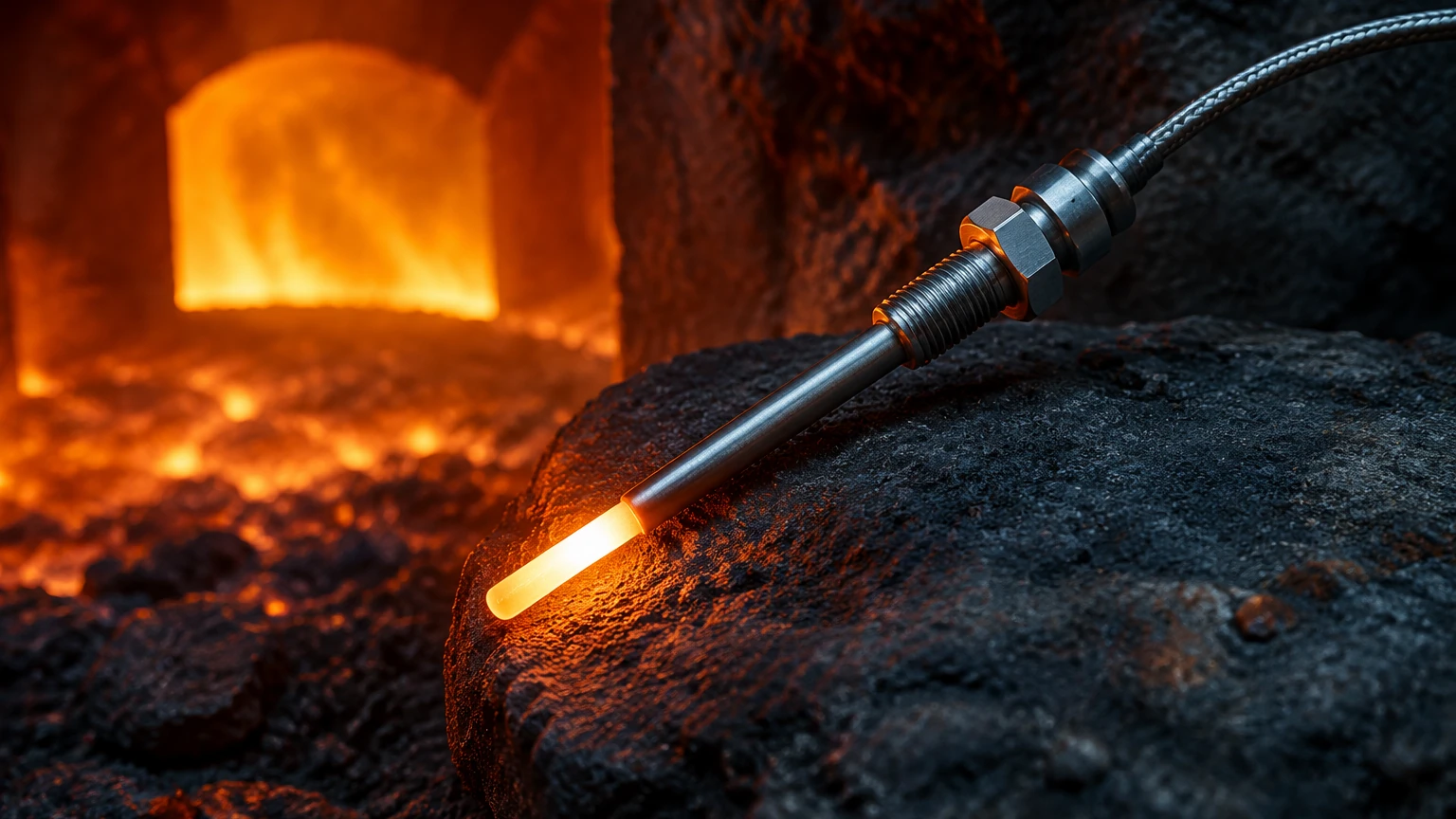
In industrial process control, the accurate monitoring of thermal energy is a fundamental requirement for safety, efficiency, and product quality. When dealing with a temperature sensor, high temperatures present a unique set of engineering challenges that differ significantly from standard ambient or low-temperature monitoring. High-temperature environments—typically defined in industrial contexts as those exceeding 200°C and reaching as high as 1800°C—require specialized materials, specific measurement principles, and robust mechanical protection to ensure long-term reliability.
This guide explores the technical landscape of high-temperature sensing, the physical principles that govern these instruments, and how they integrate into broader industrial systems, such as the level measurement solutions found on the Main Page.
Measurement Principles for High-Temperature Environments
To select the correct instrument, it is essential to understand the underlying physics of how heat is converted into a measurable electrical signal. In high-temperature applications, three primary technologies dominate the market: Resistance Temperature Detectors (RTDs), Thermocouples, and Infrared Pyrometers.
Resistance Temperature Detectors (RTDs)
RTDs operate on the principle that the electrical resistance of a metal increases as its temperature rises. This relationship is highly predictable and linear. The most common material used is platinum, leading to the industry-standard Pt100 and Pt1000 sensors.
In high-temperature scenarios, RTDs are prized for their exceptional accuracy and stability. However, they are generally limited to a maximum operating range of approximately 600°C to 850°C. Beyond these points, the platinum wire can become contaminated, and the ceramic insulation used to support the wire may begin to degrade, leading to a loss of insulation resistance and significant measurement errors.
Thermocouples
Thermocouples function based on the Seebeck Effect. When two dissimilar metal wires are joined at one end (the sensing junction) and exposed to a temperature gradient, a small voltage (millivolts) is generated at the other end (the reference junction). This voltage is proportional to the temperature difference between the two junctions.
Thermocouples are the primary choice for extreme heat because they are rugged, simple, and can cover a vast range. For example, Type K (Chromel/Alumel) is common up to 1260°C, while noble metal thermocouples like Type S or Type R (Platinum/Rhodium) can operate accurately up to 1600°C. Type B thermocouples can even reach 1800°C in specialized furnace applications.
Infrared (IR) Pyrometers
Unlike RTDs and thermocouples, pyrometers are non-contact sensors. They measure the thermal radiation emitted by an object to determine its temperature. This is critical when the process temperature exceeds the melting point of contact sensor sheaths or when the medium is highly corrosive or moving. The primary challenge with IR sensors is "emissivity"—the ability of a surface to emit thermal energy—which varies by material and surface finish.
Selection Criteria for High-Temperature Sensors
Choosing a temperature sensor for high temperatures involves more than just checking the maximum range. Engineers must evaluate the chemical, mechanical, and electrical environment of the application.
1. Temperature Range: Identify the normal operating temperature and the maximum possible excursion temperature. Sensors should ideally operate within the middle 60% of their rated range for maximum longevity.
2. Atmospheric Conditions: Is the environment oxidizing, reducing, or inert? For instance, Type K thermocouples suffer from "green rot" (preferential oxidation of chromium) in reducing atmospheres at high temperatures, whereas Type N is more resistant to this phenomenon.
3. Response Time: If the process involves rapid thermal cycling, a sensor with a smaller mass or a thin-film construction may be required, though these are often less durable than wire-wound alternatives.
4. Accuracy Requirements: RTDs offer the highest precision (Class AA or Class A), while thermocouples have wider tolerances (Standard or Special Limits of Error).
5. Vibration and Shock: High-temperature environments often involve heavy machinery. In these cases, mineral-insulated (MI) cables are used to protect the internal sensor elements from mechanical failure.
Practical Selection Table
| Sensor Type | Max Temperature (Approx.) | Accuracy | Best Environment | Primary Limitation |
| :— | :— | :— | :— | :— |
| RTD (Pt100) | 600°C – 850°C | Very High | Stable, clean processes | Fragile, lower temp limit |
| Type K Thermocouple | 1260°C | Moderate | Oxidizing | Drift at high heat |
| Type N Thermocouple | 1260°C | Moderate | High-temp oxidation | Higher cost than Type K |
| Type S/R (Noble) | 1600°C | High | High-heat research/glass | Very expensive, fragile |
| Infrared Pyrometer | 3000°C+ | Variable | Non-contact/molten metal | Emissivity errors |
Installation Considerations and Protection
In high-temperature applications, the installation method is as important as the sensor itself. Without proper protection, even the highest-quality sensor will fail prematurely.
Thermowells and Protection Tubes
A thermowell is a pressure-tight receptacle that protects the sensor from the process media. At high temperatures, the material of the thermowell is critical. Common materials include:
* 316 Stainless Steel: Good up to 870°C in low-pressure applications.
* Inconel 600: Excellent for high-temperature oxidation and corrosion resistance up to 1150°C.
* Ceramic (Alumina/Mullite): Used for noble metal thermocouples in furnaces where metal sheaths would melt or contaminate the sensor.
Thermal Expansion
Metals expand significantly at high temperatures. An installation must account for the linear expansion of the probe and the thermowell to prevent mechanical binding or stress on the sensor head. Extension necks (lagging) are often used to move the transmitter electronics away from the hot process wall, ensuring the ambient temperature at the electronics remains within specified limits (usually <85°C).
Wiring and Cold Junction Compensation
For thermocouples, the extension wire must match the thermocouple type to maintain accuracy. Furthermore, because thermocouples measure a temperature *difference*, the temperature at the connection point (the cold junction) must be known and compensated for. In high-heat areas, heat soak can travel up the wires, potentially skewing the cold junction compensation if the transmitter is mounted too close to the heat source.
High Temperature Impact on Level Measurement
In many industrial tanks and reactors, temperature and level measurement are intrinsically linked. High temperatures can affect the performance of level instruments in several ways:
* Radar Level Meters: While radar is non-contact and generally unaffected by air temperature, extreme heat can change the dielectric constant of certain vapors or cause physical expansion of the tank, affecting the zero-point calibration. High-temperature radar units often utilize cooling fins or wave-guide extensions to protect the sensitive microwave electronics. For specialized radar solutions designed for these environments, you can review product options and application support on the Main Page.
* Hydrostatic Pressure: High temperatures change the density of the liquid. Since hydrostatic level transmitters measure the weight of the liquid column, a change in density will result in a level error unless temperature compensation is applied using a secondary temperature sensor.
* Ultrasonic Sensors: These are highly sensitive to temperature because the speed of sound changes with air density. In high-temperature applications, ultrasonic sensors are rarely used above 80°C to 100°C due to the high risk of signal attenuation and compensation errors.
Limitations and Common Risks
Operating at the edge of a sensor's thermal limit introduces several risks:
1. Sensor Drift: Continuous exposure to high heat causes metallurgical changes in thermocouple wires, leading to a gradual shift in the voltage-to-temperature curve. Regular calibration is mandatory.
2. Insulation Breakdown: At very high temperatures, standard insulation materials like fiberglass or Teflon melt. Ceramic insulators can become slightly conductive at extreme heats, creating "shunting" errors in the signal.
3. Thermal Shock: Rapidly moving a sensor from room temperature into a 1000°C furnace can crack ceramic protection tubes or damage RTD elements.
4. Contamination: At high temperatures, metal ions from a protective sheath can migrate into the sensor wire (especially in noble metal thermocouples), poisoning the junction and causing permanent failure.
Frequently Asked Questions (FAQs)
Q: Why can't I use a standard Pt100 RTD for a 1000°C furnace?
A: Standard Pt100 sensors use internal lead wires and ceramic supports that cannot withstand 1000°C. The platinum wire itself may survive, but the structural integrity of the sensor and its insulation will fail, leading to short circuits or open loops.
Q: How often should high-temperature thermocouples be calibrated?
A: This depends on the process. In stable environments, every 6 to 12 months may suffice. However, in processes with frequent cycling or temperatures near the sensor's limit, monthly checks may be necessary to detect drift.
Q: What is the benefit of a "lagging" or extension neck on a thermowell?
A: The extension neck provides a thermal buffer. It allows for insulation (lagging) to be wrapped around the pipe or tank while keeping the sensor's connection head and electronics in a cooler ambient zone, preventing electronic component failure.
Q: Can high temperatures affect the accuracy of a radar level meter?
A: Yes, indirectly. While the radar pulse itself is robust, extreme heat can cause the tank mounting flange to expand or the electronics to overheat. Utilizing a high-temperature adapter with cooling fins is a standard engineering practice to mitigate these risks. Comprehensive details on these configurations are available via the Main Page.
By understanding the physical limitations and the specific requirements of a temperature sensor, high temperatures can be managed effectively, ensuring that industrial processes remain safe and optimized even under the most demanding thermal conditions.