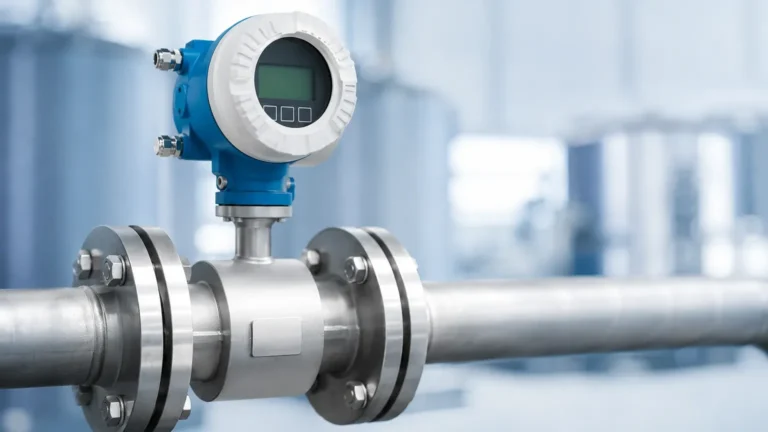
Total Chlorine Analyzer
Total Chlorine Analyzer
In industrial water treatment and process automation, monitoring disinfectant levels is a critical requirement for safety, regulatory compliance, and operational efficiency. A total chlorine analyzer serves as the primary instrument for measuring the sum of free chlorine and combined chlorine (chloramines) in a solution. Unlike simple manual testing, these automated systems provide continuous or high-frequency data, enabling precise control over chemical dosing and ensuring that discharge levels remain within environmental limits.
For process engineers and plant managers, selecting the right total chlorine analyzer requires a technical understanding of measurement chemistry, hydraulic requirements, and the integration of these sensors with broader plant monitoring systems, such as those found on the Main Page of industrial instrumentation providers.
Measurement Principles of Total Chlorine
To effectively implement a total chlorine analyzer, one must first understand the two primary measurement methodologies used in modern industry: DPD Colorimetric and Amperometric sensing.
DPD Colorimetric Method
The DPD (N,N-diethyl-p-phenylenediamine) method is widely considered the gold standard for accuracy and is often the basis for regulatory reporting. The principle involves adding a specific reagent to a water sample. When chlorine is present, it reacts with the DPD indicator to produce a magenta-colored compound. The intensity of this color is directly proportional to the concentration of chlorine.
Inside the analyzer, a light source (typically an LED) passes through the colored sample to a photodetector. By measuring the absorbance of light at a specific wavelength (usually around 510 nm to 565 nm), the device calculates the total chlorine concentration in milligrams per liter (mg/L). This method is highly reliable because it is less sensitive to changes in sample pH or temperature compared to electrochemical sensors.
Amperometric Method
Amperometric analyzers are electrochemical systems that measure the current generated by the reduction of chlorine at a sensing electrode (the cathode). There are two main types: membrane-covered and reagent-less (bare electrode) sensors.
In a membrane-covered amperometric sensor, chlorine molecules diffuse across a semi-permeable membrane into an electrolyte-filled chamber. A constant potential is applied between the cathode and an anode. The resulting current is proportional to the chlorine concentration. This method provides real-time, continuous data without the need for frequent reagent replacement, making it ideal for high-speed control loops.
Practical Selection Table for Industrial Applications
Choosing between technologies depends on the specific needs of the facility, including maintenance capabilities and the stability of the water matrix.
| Feature | DPD Colorimetric | Amperometric (Membrane) | Amperometric (Reagent-less) |
| :— | :— | :— | :— |
| Measurement Type | Batch (Periodic) | Continuous (Real-time) | Continuous (Real-time) |
| Reagents Required | Yes (Indicator & Buffer) | No | No |
| Maintenance Frequency | Monthly (Reagent refill) | Bi-monthly (Membrane/Electrolyte) | Periodic (Electrode cleaning) |
| Response Time | 2–5 minutes | < 60 seconds | < 30 seconds |
| Interference Risk | Low (Color/Turbidity) | High (Flow/Pressure) | High (pH/Conductivity) |
| Typical Range | 0–5 mg/L or 0–10 mg/L | 0–2 mg/L up to 0–20 mg/L | 0–5 mg/L |
| Regulatory Status | High (EPA Accepted) | Moderate | Moderate |
Key Evaluation Criteria for Industrial Projects
When specifying a total chlorine analyzer for a project, several technical factors must be confirmed to ensure long-term reliability.
1. Water Matrix and Interferences
The presence of manganese, iron, or high levels of turbidity can interfere with colorimetric readings. Conversely, amperometric sensors are highly sensitive to changes in flow rate and pH. If the process pH fluctuates significantly (e.g., between 6.0 and 9.0), a pH-compensated amperometric sensor or a colorimetric system is necessary to maintain accuracy.
2. Maintenance and Total Cost of Ownership (TCO)
While DPD analyzers are highly accurate, they require a steady supply of reagents and generate a small waste stream. Amperometric sensors have lower consumable costs but require technical expertise to replace membranes and replenish electrolyte solutions. Engineers should evaluate the availability of on-site staff to perform these routine tasks.
3. Integration with Chemical Dosing
A total chlorine analyzer is rarely a standalone unit. It typically provides a 4-20mA or Modbus signal to a PLC (Programmable Logic Controller) that manages dosing pumps. For a complete chemical management solution, it is vital to monitor the levels of the chemical storage tanks. Utilizing advanced radar or ultrasonic level sensors, such as those detailed on the Main Page, ensures that the dosing system never runs dry, which would otherwise lead to dangerous under-chlorination.
Installation Considerations and Best Practices
Proper installation is often the difference between a successful measurement and constant troubleshooting. The following guidelines should be followed for industrial setups:
* Sample Point Location: The sample should be taken from a point of high turbulence to ensure it is representative of the process, but far enough downstream from the chlorine injection point to allow for complete mixing.
* Constant Flow and Pressure: Amperometric sensors require a constant flow across the membrane (typically 30–60 L/h). Using a flow cell with an integrated pressure regulator or a constant-head overflow tank is recommended to prevent measurement drift caused by hydraulic fluctuations.
* Drainage Management: DPD analyzers produce a reagent-tinted waste stream. This must be routed to a proper drain and cannot be returned to the process water if the water is intended for potable use.
* Environmental Protection: While many industrial analyzers are rated NEMA 4X or IP65, they should still be shielded from direct sunlight and extreme temperature swings (0°C to 50°C) to prevent reagent degradation and electronic failure.

Limitations and Common Risks
Despite their sophistication, total chlorine analyzers have inherent limitations that must be managed:
* Biofouling: In wastewater or cooling water applications, biological growth can coat the sensor membrane or the optical windows of a colorimetric cell. Regular cleaning or the use of automated cleaning cycles (such as acid wash or air purge) is essential.
* Air Bubbles: For both optical and electrochemical sensors, air bubbles in the sample line can cause erratic readings. Installing a de-bubbler or air trap before the analyzer is a common engineering solution.
* Zero-Point Drift: Over time, sensors may drift. Regular "zero" and "span" calibrations using a verified portable DPD photometer are necessary to maintain data integrity.
Synergy Between Chlorine Analysis and Level Measurement
In a B2B industrial context, the total chlorine analyzer is one component of a larger fluid management ecosystem. For example, in a cooling tower application, the analyzer monitors the efficacy of the biocide. However, the system's reliability depends on the availability of the sodium hypochlorite or chloramine precursors stored in bulk tanks.
Reliable level measurement instruments, including hydrostatic transmitters and non-contact radar, provide the necessary data to automate chemical procurement and prevent process downtime. For engineers designing these integrated systems, reviewing the range of level measurement technologies on the Main Page is a logical step in ensuring comprehensive process control.
Frequently Asked Questions (FAQ)
Q: What is the difference between free chlorine and total chlorine?
A: Free chlorine refers to the concentration of hypochlorous acid (HOCl) and hypochlorite ions (OCl-). Total chlorine is the sum of free chlorine and combined chlorine (chloramines), which are formed when chlorine reacts with nitrogen-based compounds in the water.
Q: How often should a total chlorine analyzer be calibrated?
A: For most industrial applications, a weekly check against a handheld DPD photometer is recommended. A full calibration should be performed monthly or whenever the sensor membrane or reagents are replaced.
Q: Can a total chlorine analyzer measure in seawater?
A: Yes, but specific considerations are required. In seawater, chlorine reacts with bromide to form bromine compounds. Many analyzers will detect these as "chlorine equivalents," but the sensor materials must be compatible with high-salinity environments to prevent corrosion.
Q: Is pH compensation necessary for all chlorine sensors?
A: It is necessary for amperometric sensors because the ratio of HOCl to OCl- changes with pH, and these sensors are typically more sensitive to HOCl. Colorimetric (DPD) analyzers use a buffer reagent to fix the pH of the sample, so they do not require external pH compensation.
Conclusion
The implementation of a total chlorine analyzer is a fundamental requirement for modern industrial water treatment. Whether utilizing the high precision of the DPD colorimetric method or the rapid response of amperometric sensing, understanding the specific needs of the application—such as flow stability, pH variance, and maintenance capacity—is essential. By integrating these analyzers with robust level measurement solutions for chemical storage, facilities can achieve a high degree of automation and safety. For further technical specifications on the instruments that support these processes, professionals are encouraged to review the product options and application support available on the Main Page.