Transport Pt900 Portable Ultrasonic Liquid Flow Meter
Transport Pt900 Portable Ultrasonic Liquid Flow Meter
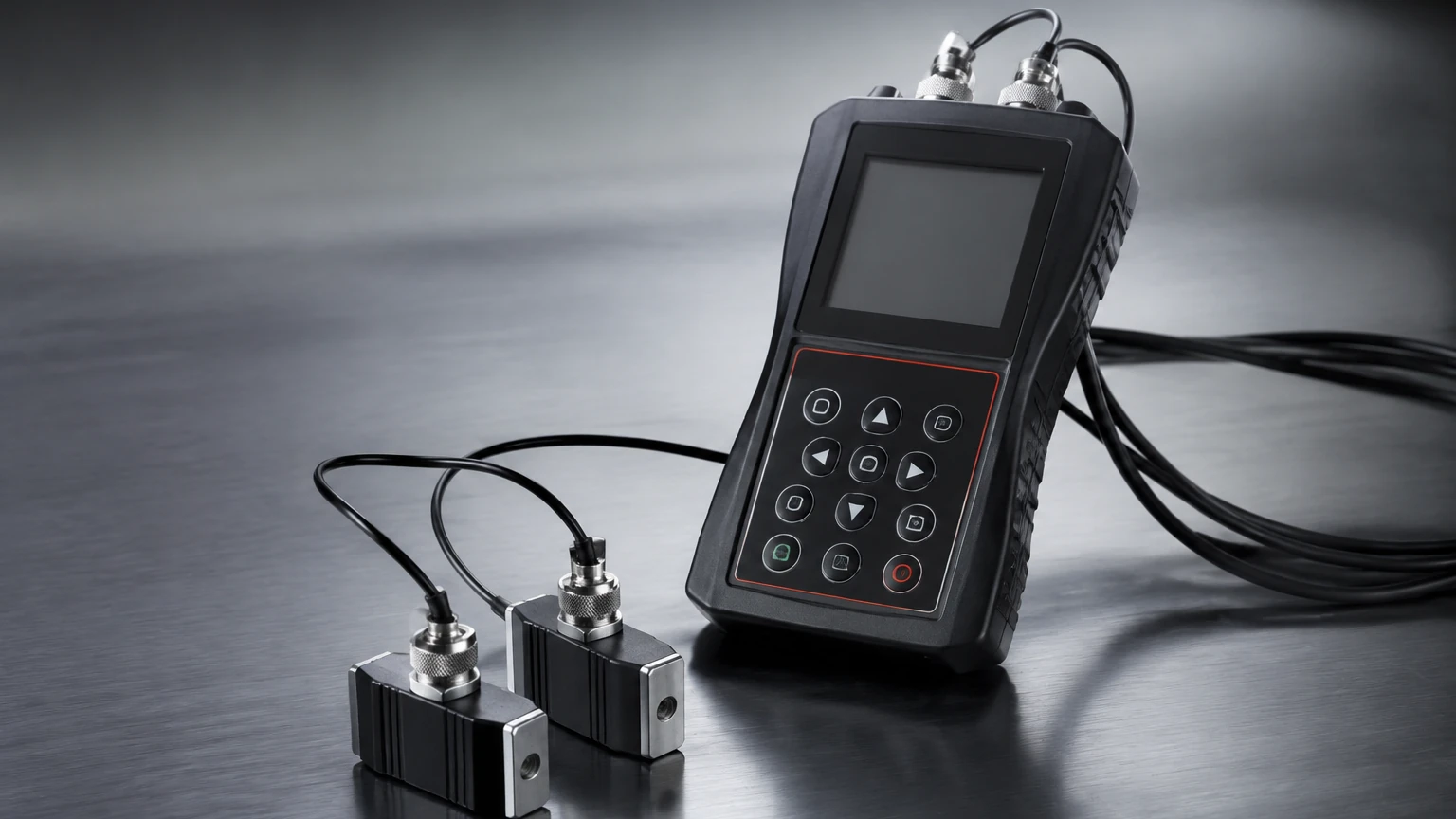
In the field of industrial process control, the ability to measure liquid flow accurately without interrupting operations is a significant operational advantage. The transport pt900 portable ultrasonic liquid flow meter represents a modern evolution in clamp-on flow measurement technology. Designed for versatility and ease of use, this instrument allows engineers and technicians to conduct spot-checks, verify permanent meters, and perform temporary flow monitoring across a wide range of pipe sizes and materials.
For professionals managing complex systems, integrating flow data with accurate level measurement is essential for comprehensive mass balance and inventory control. While portable flow meters provide mobile diagnostics, permanent installations often rely on the robust technologies found on the Main Page of industrial measurement catalogs, such as radar and ultrasonic level sensors. Understanding the technical foundations of the PT900 is the first step in optimizing liquid process management.
Measurement Principles of Portable Ultrasonic Flow Meters
The transport pt900 portable ultrasonic liquid flow meter utilizes the transit-time measurement principle. This method is highly effective for clean liquids or liquids containing a small amount of entrained solids or gas bubbles.
The Transit-Time Method
Transit-time ultrasonic flow meters use two transducers that function as both ultrasonic transmitters and receivers. These transducers are clamped onto the outside of a pipe at a specific distance from each other. The meter sends a pulse of ultrasonic energy from the upstream transducer to the downstream transducer and then reverses the process, sending a pulse from the downstream transducer to the upstream transducer.
When the liquid is flowing, the sound pulse traveling in the direction of the flow (downstream) moves faster than the pulse traveling against the flow (upstream). The flow meter measures this time difference ($Δt$) with extreme precision. The time difference is directly proportional to the velocity of the liquid. By combining this velocity data with the cross-sectional area of the pipe (calculated from the user-inputted pipe diameter and wall thickness), the device determines the volumetric flow rate.
Acoustic Path Configurations
Depending on the pipe size and liquid properties, the transducers can be arranged in different paths:
- V-Mount: The signal bounces off the opposite pipe wall once. This is the standard for most medium-sized pipes (50 mm to 300 mm).
- Z-Mount: The signal travels directly across the pipe to the opposite side. This is typically used for large pipes (over 300 mm) or where the liquid is highly attenuative.
- W-Mount: The signal bounces three times. This is used for very small pipes (12.5 mm to 50 mm) to increase the transit time and improve resolution.
Key Features and Capabilities of the PT900
The PT900 is the successor to the widely used PT878, bringing several technological advancements to the field. Its design philosophy focuses on reducing the time required to set up a measurement point while maintaining high accuracy.
1. App-Based Interface: Unlike older models with built-in monochrome screens and complex keypads, the PT900 uses a wireless interface. It connects via Bluetooth to a tablet or smartphone (Android or iOS), allowing the user to configure the meter and view real-time data through a dedicated app.
2. Wireless Transmitter: The flow transmitter itself can be mounted near the transducers, while the operator monitors the data from a safe distance or a more comfortable environment, such as a vehicle or a control room nearby.
3. Clamping Fixtures: The system includes redesigned clamping fixtures that ensure precise alignment of the transducers, which is critical for signal strength and measurement accuracy.
4. Data Logging: The internal memory can store millions of data points, which can be downloaded via USB or shared directly through the mobile application for immediate reporting.
Technical Specifications and Selection Criteria
Selecting the right configuration for a transport pt900 portable ultrasonic liquid flow meter depends on the specific application parameters. The following table provides a general overview of the technical boundaries for this instrument.
| Parameter | Specification Range |
| :— | :— |
| Pipe Sizes | 12.5 mm to 7.5 meters (0.5 in to 300 in) |
| Pipe Materials | Most metals and plastics (Carbon steel, Stainless steel, PVC, PE, Cast iron) |
| Flow Velocity Range | 0.03 m/s to 12.2 m/s (0.1 ft/s to 40 ft/s) |
| Accuracy | ±1% of reading (typical) for pipes > 50 mm |
| Repeatability | ±0.2% of reading |
| Fluid Temperature | -40°C to 200°C (-40°F to 392°F) depending on transducer type |
| Battery Life | 10 to 12 hours of continuous operation |
| Enclosure Rating | IP65 (Transmitter); IP68 (Transducers available) |
When evaluating a portable flow meter, engineers must confirm that the transducer frequency matches the pipe size and material. Low-frequency transducers are better for large pipes or pipes with liners, while high-frequency transducers provide better resolution for small pipes.
Installation Considerations and Best Practices
Even the most advanced ultrasonic flow meter will provide inaccurate data if the installation is flawed. For the transport pt900 portable ultrasonic liquid flow meter, several physical factors must be addressed during setup.
Straight Pipe Requirements
To ensure a fully developed and stable flow profile, the transducers should be installed on a straight section of pipe. The general rule of thumb is:
- Upstream: At least 10 pipe diameters (10D) of straight pipe after any elbows, valves, or pumps.
- Downstream: At least 5 pipe diameters (5D) of straight pipe before the next fitting.
If these conditions cannot be met, the meter's accuracy may decrease, although the PT900's diagnostic software can often help identify and compensate for some flow profile disturbances.
Pipe Surface Preparation
Since the ultrasonic signal must pass through the pipe wall, the contact surface must be clean. Rust, loose paint, or scale should be removed using a wire brush or grinder. A couplant gel is then applied between the transducer face and the pipe to eliminate air gaps, which would otherwise block the ultrasonic signal.
Transducer Spacing
The PT900 app calculates the exact spacing required between the transducers based on the pipe parameters (OD, wall thickness, material) and the fluid type. Using the provided track or chain mount, the user must set this distance precisely to the millimeter to ensure the receiving transducer is positioned exactly where the reflected signal will emerge.
Limitations and Common Application Risks
While the transport pt900 portable ultrasonic liquid flow meter is a powerful tool, it is not a "one-size-fits-all" solution. Understanding its limitations prevents costly measurement errors.
* Entrained Air and Solids: Transit-time meters require a relatively clear path for the sound waves. If the liquid contains more than 1% to 2% gas bubbles or solid particles by volume, the signal may be scattered or absorbed, leading to a "signal loss" error.
* Pipe Linings: If a pipe has a liner (such as mortar or rubber) that has become delaminated, an air gap can form between the liner and the pipe wall. This air gap acts as a total barrier to ultrasonic waves.
* Extreme Temperatures: Standard transducers have specific temperature limits. For high-temperature steam condensate or cryogenic liquids, specialized high-temperature transducers and couplants are required.
* Non-Full Pipes: Ultrasonic flow meters assume the pipe is 100% full. If the pipe is only partially full, the meter will calculate the flow based on the full cross-sectional area, leading to a significant overestimation of the flow rate.
Comparison with Level Measurement Technologies
In many industrial B2B environments, flow measurement and level measurement are used in tandem. For example, in a water treatment facility, a portable flow meter might be used to verify the discharge rate of a pump, while a radar level meter from a provider like Welk monitors the height of the water in the storage tank.
While flow meters measure the *rate* of movement, level meters measure the *volume* or *inventory* status. Comparing the data from a transport pt900 with the level changes in a tank (draw-down testing) is a common method for field-calibrating flow instruments. For more information on permanent level monitoring solutions that complement portable flow audits, users can consult the Main Page for detailed technical specifications on radar and hydrostatic sensors.
Frequently Asked Questions (FAQs)
Q: Can the PT900 measure flow in both directions?
A: Yes, the transit-time principle inherently supports bi-directional flow measurement. The meter will indicate the direction of flow and can provide separate totals for forward and reverse flow.
Q: How often does the PT900 need to be calibrated?
A: For most industrial auditing purposes, an annual factory calibration is recommended to ensure the electronics and transducers are performing within the specified tolerance.
Q: Does the pipe material affect the measurement?
A: Yes. The speed of sound through the pipe wall varies by material (e.g., sound travels faster through steel than through plastic). The user must select the correct material in the PT900 interface so the device can accurately calculate the refraction angles of the ultrasonic beam.
Q: Can it measure hazardous liquids?
A: Because the transducers are clamped to the outside of the pipe, they never come into contact with the fluid. This makes the PT900 ideal for measuring corrosive, toxic, or high-purity liquids without risk of contamination or sensor degradation.
Conclusion
The transport pt900 portable ultrasonic liquid flow meter is a vital diagnostic tool for modern industrial environments. By leveraging transit-time technology and wireless connectivity, it provides a non-invasive, accurate, and efficient means of measuring liquid flow. However, successful application depends on rigorous adherence to installation best practices, such as proper pipe preparation and ensuring adequate straight-run distances. When used in conjunction with reliable level measurement systems, the PT900 allows for a holistic understanding of fluid dynamics and inventory management within any facility.
Download Transport Pt900 Portable Ultrasonic Liquid Flow Meter as a PDF