Ultrasonic Level Sensors
Ultrasonic Level Sensors
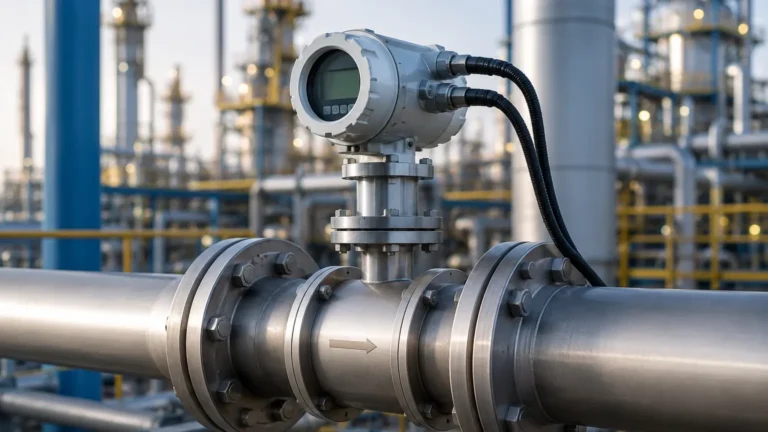
In the landscape of industrial automation and process control, the ability to accurately monitor fluid and solid levels is fundamental to operational efficiency and safety. Among the various technologies available, ultrasonic level sensors have emerged as a primary choice for non-contact measurement. As a professional manufacturer, Welk provides advanced industrial level measurement instruments designed to meet the rigorous demands of water treatment, chemical processing, and oil and gas industries. This guide provides a technical overview of ultrasonic technology, selection criteria, and practical installation strategies for engineering professionals.
Understanding the Measurement Principle
Ultrasonic level sensors operate on the "Time-of-Flight" (ToF) principle. The device consists of a transducer that functions as both a transmitter and a receiver. The measurement process follows a specific sequence of physical events:
1. Emission: The sensor's piezoelectric transducer converts electrical energy into mechanical energy, emitting a burst of high-frequency ultrasonic sound waves (typically ranging from 20 kHz to 200 kHz).
2. Propagation: These sound waves travel through the air or gas medium toward the target material.
3. Reflection: Upon reaching the surface of the liquid or solid, the sound waves are reflected back toward the sensor as an echo.
4. Detection: The transducer receives the reflected echo and converts the mechanical vibrations back into an electrical signal.
5. Calculation: The internal microprocessor calculates the distance based on the time elapsed between emission and reception.
The fundamental formula used is:
D = (c × t) / 2
Where:
* D is the distance from the sensor to the material surface.
* c is the speed of sound in the medium (approximately 343 m/s in air at 20°C).
* t is the total transit time for the pulse to travel to the surface and back.
Since the sensor is mounted at a known height (the reference point), the actual level of the material is determined by subtracting the measured distance (D) from the total height of the vessel.
The Role of Temperature Compensation
The speed of sound is not constant; it varies significantly with the temperature of the medium through which it travels. In air, the speed increases by approximately 0.6 meters per second for every degree Celsius increase. To maintain high accuracy, industrial ultrasonic level sensors from Welk include integrated temperature sensors. These components allow the device to automatically adjust the distance calculation based on real-time environmental conditions, ensuring precision across fluctuating process temperatures.
Key Components and Design Variations
Ultrasonic instruments are generally categorized into two physical configurations: integrated and split-type.
* Integrated (Compact) Sensors: The transducer and the signal processing electronics are housed within a single unit. These are ideal for standard applications where space is at a premium and the environment is not excessively harsh for electronics.
* Split-Type Sensors: The transducer is separated from the transmitter/display unit, connected by a cable. This configuration is preferred when the measurement point is difficult to access or when the electronics need to be protected from extreme heat or hazardous conditions at the tank top.
Advantages of Non-Contact Measurement
Choosing ultrasonic level sensors offers several distinct advantages over contact-based methods like hydrostatic transmitters or float switches:
* Zero Contamination: Because the sensor never touches the medium, there is no risk of contaminating high-purity liquids or corroding the sensor elements.
* Low Maintenance: The absence of moving parts reduces mechanical wear and the need for frequent cleaning or recalibration.
* Versatility: These sensors can measure a wide variety of materials, including corrosive chemicals, wastewater, and certain bulk solids, provided the surface is reflective enough for sound waves.
* Cost-Effectiveness: Compared to sophisticated radar level meters, ultrasonic solutions often provide a more economical balance of performance and price for standard atmospheric applications.
Practical Selection Criteria
Selecting the correct sensor requires a thorough analysis of the application environment. Engineers should evaluate the following parameters before procurement:
1. Measurement Range: Sensors are rated for specific minimum and maximum distances. Ensure the sensor can cover the full height of the tank while accounting for the "dead zone."
2. Chemical Compatibility: The transducer face (wetted part) must be resistant to any vapors present in the tank. Common materials include PVDF, PTFE, or UPVC.
3. Process Pressure and Temperature: Ultrasonic sensors are typically limited to near-atmospheric pressure. High pressure increases the density of the gas, while vacuum prevents the transmission of sound waves entirely.
4. Output Requirements: Standard industrial outputs include 4-20mA analog signals, RS485 (Modbus), or digital switches for high/low level alarms.
Selection Table for Industrial Applications
| Feature | Standard Liquid Sensor | Long-Range Sensor | Chemical-Resistant Sensor |
| :— | :— | :— | :— |
| Measuring Range | 0.3m – 10m | 0.5m – 30m | 0.25m – 8m |
| Accuracy | ±0.25% of Full Scale | ±0.25% of Full Scale | ±0.5% of Full Scale |
| Beam Angle | 9° – 12° | 6° – 10° | 10° – 15° |
| Housing Material | ABS / Nylon | Cast Aluminum | PVDF / PTFE |
| Protection Class | IP65 / IP66 | IP67 | IP68 |
| Typical Application | Water storage, sumps | Deep wells, large silos | Acid tanks, plating baths |
Installation Considerations and Best Practices
The reliability of an ultrasonic level sensor is heavily dependent on its installation. Even the most advanced sensor will fail if placed incorrectly.
1. The Dead Zone (Blocking Distance)
The "dead zone" is a region immediately below the transducer face where the sensor cannot process an echo. This occurs because the transducer cannot switch from transmitting to receiving mode instantaneously. If the liquid level enters this zone, the sensor will report an error or an incorrect "full" reading. Always mount the sensor high enough so the maximum liquid level remains below the dead zone (typically 0.2m to 0.6m depending on the model).
2. Beam Angle and Obstructions
Ultrasonic waves spread in a conical shape. Any physical obstruction within this cone—such as ladders, pipes, or internal tank braces—will create a false echo.
* Rule of Thumb: Mount the sensor at least 0.5m away from the tank wall to prevent side-wall interference.
* Avoid Inlets: Never install the sensor directly above the filling inlet, as the falling liquid will disrupt the signal and cause erratic readings.
3. Surface Conditions
* Turbulence: Agitators or heavy inflow can cause surface turbulence. If the surface is too choppy, the sound waves may scatter. In these cases, a stilling well (a vertical pipe) can be used to provide a calm surface for measurement.
* Foam: Heavy, thick foam acts as an acoustic insulator, absorbing the ultrasonic pulse rather than reflecting it. If foam is a consistent factor, radar or hydrostatic sensors may be more appropriate.
4. Orientation
The transducer face must be perfectly perpendicular to the liquid surface. A tilt of even a few degrees can cause the reflected signal to bounce away from the receiver, resulting in a "Loss of Echo" (LOE) error.

Limitations and Environmental Factors
While highly effective, ultrasonic technology has specific physical boundaries that engineers must respect:
* Vacuum Conditions: Sound requires a medium (gas) to travel. Ultrasonic sensors will not function in a vacuum.
* High Dust Levels: In bulk solid applications, extreme dust can attenuate the signal. For these environments, high-power transducers or low-frequency sensors are required.
* Vapor and Gas Composition: If the gas space above the liquid is not air (e.g., heavy concentrations of CO2 or nitrogen), the speed of sound will change. If the gas mixture is consistent, the sensor can be calibrated for that specific medium; however, if the mixture varies, accuracy will suffer.
* Temperature Gradients: Significant temperature differences between the liquid surface and the sensor can create "thermoclines" that refract the sound waves.
Industry Applications
Welk’s ultrasonic level sensors are utilized across diverse sectors due to their reliability and ease of integration:
* Water and Wastewater: Monitoring levels in open channels, wet wells, lift stations, and chemical dosing tanks. They are particularly effective for flow measurement in flumes and weirs.
* Chemical Industry: Non-contact measurement of acids, alkalis, and solvents in storage tanks where contact sensors would quickly degrade.
* Food and Beverage: Monitoring ingredient tanks where hygiene is paramount and non-contact measurement prevents bacterial growth.
* Industrial Automation: Integrated into PLC/SCADA systems for automated inventory management and pump control.
Frequently Asked Questions (FAQs)
Q: Can ultrasonic level sensors measure solids?
A: Yes, but with caveats. Solids like grain, pellets, or powders often have an angle of repose that can deflect the signal. Additionally, the surface is usually less reflective than liquid. A sensor with a higher power output and a narrower beam is typically required for solids.
Q: How do I handle false echoes from internal tank structures?
A: Most modern ultrasonic sensors feature "False Echo Suppression" or "Echo Mapping." During commissioning, the sensor can be programmed to recognize and ignore static echoes from fixed obstructions like pipes or ladders.
Q: What is the maximum range for ultrasonic technology?
A: While some specialized sensors can reach up to 40 meters, the practical limit for most industrial applications is between 10 and 20 meters. Beyond this, signal attenuation becomes a significant factor, and radar technology is often preferred.
Q: Does wind affect the measurement in outdoor tanks?
A: Strong winds can displace the ultrasonic pulse, especially over long distances. For outdoor installations in windy areas, using a sunshade/windshield or a stilling well is recommended.
Conclusion
Ultrasonic level sensors represent a mature, reliable, and cost-effective solution for a wide range of industrial level measurement challenges. By understanding the underlying physics and adhering to strict installation guidelines, process engineers can ensure long-term accuracy and minimal maintenance. For detailed technical specifications, product datasheets, and application support, please visit our Main Page to explore our full range of instrumentation.
When selecting a sensor, always confirm the specific chemical properties of your media and the physical geometry of your vessel to ensure the chosen instrument aligns with your operational requirements. For complex applications involving high pressure, heavy foam, or vacuum, Welk also offers alternative technologies including radar and hydrostatic transmitters to ensure the right fit for every process environment.