Ultrasonic Oil Level Sensor
Ultrasonic Oil Level Sensor
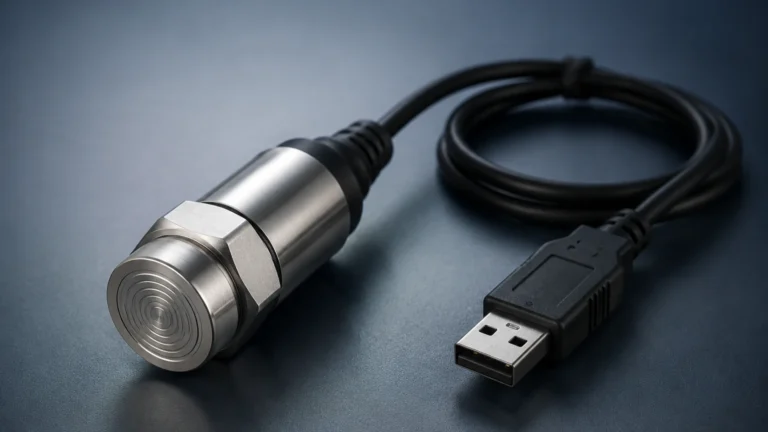
In industrial fluid management, the ability to monitor storage levels without physical contact is a significant advantage for operational safety and maintenance efficiency. An ultrasonic oil level sensor serves as a primary solution for non-contact measurement in tanks containing various grades of oil, lubricants, and fuels. These instruments utilize high-frequency sound waves to determine the distance between the sensor and the liquid surface, providing real-time data for inventory control and process automation.
As a professional manufacturer, Welk provides a range of level measurement instruments designed to meet the rigorous demands of the water treatment, chemical, and oil and gas sectors. Understanding the underlying physics and application constraints of ultrasonic technology is essential for engineers selecting the appropriate Main Page for their specific project requirements.
Measurement Principle of Ultrasonic Technology
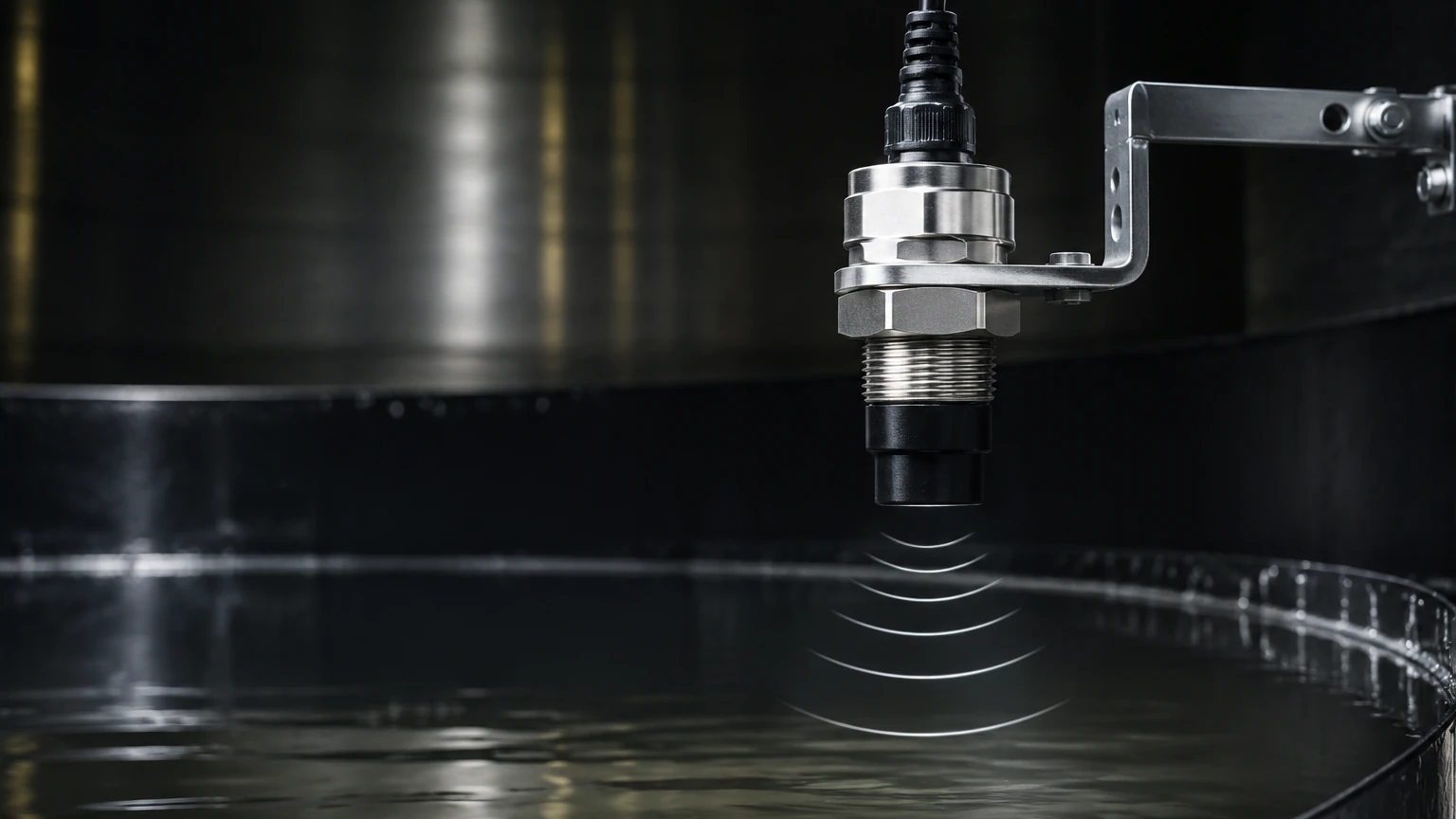
The operation of an ultrasonic oil level sensor is based on the "Time of Flight" (ToF) principle. The device contains a piezoelectric transducer that acts as both a transmitter and a receiver.
1. Emission: The transducer emits a burst of ultrasonic pulses (typically in the range of 20 kHz to 200 kHz) toward the surface of the oil.
2. Reflection: These sound waves travel through the air or vapor space in the tank, hit the surface of the liquid, and reflect back toward the sensor.
3. Detection: The sensor detects the returning echo and records the time interval between emission and reception.
4. Calculation: The internal microprocessor calculates the distance using the formula:
*Distance = (Speed of Sound × Time) / 2*
Since the height of the tank is a known constant, the sensor subtracts the measured distance from the total height to determine the actual oil level.
The Role of Temperature Compensation
The speed of sound is not constant; it varies based on the temperature of the medium through which it travels (usually air or oil vapor). In most industrial environments, temperature fluctuations are common. To maintain accuracy, a high-quality ultrasonic oil level sensor includes an integrated temperature probe. This allows the device to automatically adjust the speed-of-sound variable in its calculations, ensuring that a measurement taken at 10°C (50°F) is as accurate as one taken at 40°C (104°F).
Key Evaluation Criteria for Selection
Choosing the right ultrasonic oil level sensor requires a detailed analysis of the application environment. Engineers must look beyond basic price points to ensure long-term reliability.
1. Measurement Range and Dead Zone
Every ultrasonic sensor has a "blocking distance" or dead zone. This is the area immediately below the transducer where the sensor cannot accurately process returning echoes because it is still vibrating from the initial pulse emission. Typically, this zone ranges from 0.2m to 0.5m (0.66ft to 1.64ft). If the oil level rises into this zone, the sensor will provide an error or an incorrect reading.
2. Chemical Compatibility
While the sensor does not touch the liquid, it is exposed to the vapors rising from the oil. In chemical or fuel storage, these vapors can be corrosive. Selecting a sensor with a housing and transducer face made of PVDF (Polyvinylidene fluoride) or PTFE (Polytetrafluoroethylene) is often necessary to prevent degradation.
3. Output Signals and Integration
For industrial automation, the sensor must communicate with a PLC (Programmable Logic Controller) or SCADA system. Common options include:
* 4-20mA Analog: The standard for long-distance signal transmission with low noise interference.
* RS485/Modbus: Digital communication for multi-sensor networks and remote configuration.
* HART Protocol: Allows for digital communication over the analog loop for advanced diagnostics.
4. Pressure and Vacuum Constraints
Ultrasonic waves require a medium (gas) to travel. In high-pressure environments or deep vacuums, the density of the gas changes significantly, which can attenuate the signal or alter the speed of sound beyond the capabilities of standard compensation algorithms. Most ultrasonic sensors are rated for near-atmospheric pressure.
Practical Selection Table
| Feature | Standard Oil Storage | Chemical/Corrosive Oil | Remote/Mobile Tanks |
| :— | :— | :— | :— |
| Housing Material | ABS or Aluminum | PVDF / PTFE | Compact Plastic |
| Range | Up to 15m (49ft) | Up to 10m (33ft) | Up to 4m (13ft) |
| Accuracy | ±0.25% to 0.5% | ±0.25% | ±0.5% |
| Output | 4-20mA / Relay | Modbus RTU | Low-power Digital / Wireless |
| Protection | IP65 / IP66 | IP67 / IP68 | IP66 |
| Typical Use | Lubricant bulk tanks | Acidic oil byproducts | Diesel fuel monitoring |
Installation Considerations
Proper installation is the most critical factor in the performance of an ultrasonic oil level sensor. Even the most advanced instrument will fail if the physical mounting is flawed.
Beam Angle and Obstructions
The ultrasonic pulse spreads out in a cone shape, known as the beam angle (usually between 5° and 12°). It is vital to ensure that no internal tank structures—such as ladders, heating coils, or agitators—intersect this beam. If the pulse hits an obstruction, it will create a "false echo," leading the sensor to report an incorrect level.
Mounting Orientation
The sensor must be mounted perfectly perpendicular to the liquid surface. If the sensor is tilted, the sound waves will reflect off the surface at an angle and may not return to the transducer, resulting in a "Loss of Echo" (LOE) error.
Avoiding the Fill Stream
Never install a sensor directly above the tank's inlet. The turbulence and splashing caused by incoming oil will scatter the ultrasonic signal and create significant noise, making stable measurement impossible.
Nozzle Height and Diameter
If the sensor is mounted on a standpipe or nozzle, the diameter of the pipe must be large enough to accommodate the beam spread, and the interior of the pipe must be smooth. Welded seams or burrs inside a mounting nozzle can create interference.
Limitations and Environmental Factors
While highly versatile, an ultrasonic oil level sensor is not a universal solution. Certain conditions can impede its effectiveness:
* Heavy Foam: If the oil produces a thick layer of foam during filling or agitation, the foam acts as an acoustic absorber. Instead of reflecting the signal, the foam absorbs it, causing the sensor to lose the surface signal.
* Heavy Vapor/Dust: While moderate vapor is compensated for, extremely dense vapors (common in heated heavy crude) can change the medium's density so rapidly that accuracy is compromised.
* Turbulence: Violent surface agitation can scatter the signal. In these cases, a stilling well (a vertical pipe that stabilizes the liquid surface) may be required to provide a clear target for the sensor.
Maintenance and Troubleshooting
One of the primary benefits of ultrasonic technology is the low maintenance requirement due to the lack of moving parts. However, occasional checks are recommended:
1. Transducer Cleaning: In some applications, oil mist can condense on the transducer face. Over time, this may harden or attract dust. Wiping the face with a soft cloth and a compatible solvent ensures the signal remains strong.
2. Signal Strength Monitoring: Most modern sensors provide a signal strength or "Echo Confidence" metric. Monitoring this via the display or software can help identify potential issues before they cause a total signal loss.
3. Cable Integrity: Ensure that cable glands are tight and that there is no moisture ingress in the terminal housing, especially in outdoor installations.
Frequently Asked Questions (FAQ)
Q: Can I use an ultrasonic sensor for high-temperature oil?
A: Standard sensors are typically rated up to 60°C or 80°C (140°F to 176°F). For higher temperatures, the sensor electronics may need to be remote-mounted, or a different technology like radar may be more appropriate.
Q: How does the dielectric constant of the oil affect the measurement?
A: Unlike radar or capacitive sensors, ultrasonic sensors are unaffected by the dielectric constant. They rely on the physical surface of the liquid to reflect sound, making them excellent for oils with low dielectric properties.
Q: What is the maximum distance an ultrasonic sensor can measure?
A: While some industrial models can reach up to 30m (98ft), most standard ultrasonic oil level sensors are optimized for ranges between 5m and 15m (16ft to 49ft) to maintain high resolution and signal strength.
Q: Is it possible to measure oil level in a pressurized tank?
A: Ultrasonic sensors generally perform best at atmospheric pressure. If the tank pressure exceeds 0.3 MPa (approx. 3 bar or 43 psi), the change in gas density can significantly impact the accuracy and signal propagation.
Conclusion
The ultrasonic oil level sensor remains a cornerstone of industrial level measurement due to its non-contact nature, ease of installation, and cost-effectiveness. By understanding the importance of the dead zone, beam angle, and environmental factors like foam and vapor, engineers can successfully implement these sensors in a wide variety of oil-related applications. For complex environments or specialized requirements, consulting with a manufacturer like Welk ensures that the selected instrument is tailored to the specific operational parameters of the project.