Coreolis Meter
Coreolis Meter
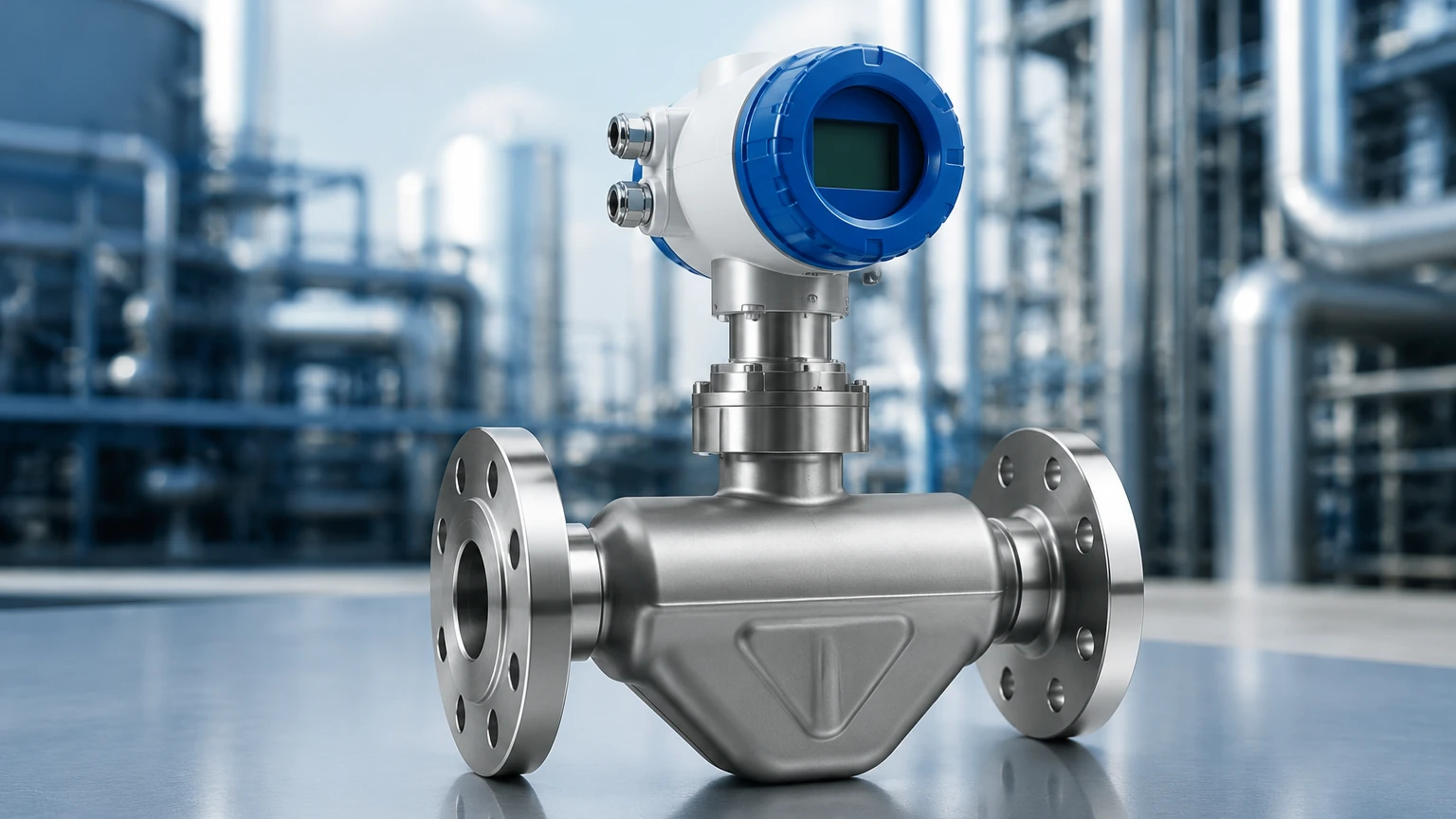
In the realm of industrial process control, the coreolis meter stands as one of the most versatile and accurate instruments for measuring fluid flow. Unlike volumetric flowmeters that measure the space a fluid occupies, a Coriolis meter measures mass flow directly. This distinction is critical in industries such as chemical processing, oil and gas, and wastewater treatment, where changes in temperature and pressure can significantly alter a fluid's volume but not its mass. For engineers managing complex systems, understanding the synergy between mass flow measurement and level measurement is essential for achieving precise inventory control and process efficiency.
Understanding the Coriolis Measurement Principle
The operation of a coreolis meter is based on the principles of fluid mechanics, specifically the Coriolis effect. The Coriolis effect is an inertial force that acts on objects in motion within a frame of reference that rotates. In a flowmeter application, this effect is harnessed by inducing a vibration in the measuring tubes through which the fluid flows.
The Mechanics of Vibration
Inside the meter, one or two measuring tubes are vibrated by an electromagnetic drive coil, typically at their resonant frequency. When there is no flow, the tubes vibrate uniformly, and the sine waves detected by sensors at the inlet and outlet are in phase.
The Coriolis Force and Phase Shift
As fluid begins to move through the vibrating tubes, the Coriolis force is generated. This force acts in opposition to the vibration: it resists the upward motion of the tube at the inlet and enhances it at the outlet (or vice-versa depending on the cycle). This causes the measuring tube to twist slightly.
Electromagnetic sensors (pick-offs) located at the inlet and outlet sections of the tube detect this twisting motion. The resulting time difference between the signals at the inlet and outlet is known as the "phase shift." This phase shift is directly proportional to the mass flow rate. Because mass is a fundamental property that does not change with fluid density or viscosity, the coreolis meter provides an exceptionally stable measurement across varying process conditions.
Density and Temperature Measurement
In addition to mass flow, these meters are capable of measuring fluid density and temperature. The resonant frequency at which the tubes vibrate depends on the total mass of the tubes and the fluid inside them. By monitoring changes in this frequency, the meter can calculate the fluid's density. An integrated Resistance Temperature Detector (RTD) monitors the tube temperature to compensate for changes in tube stiffness, providing a third data point for the process controller.
Key Evaluation Criteria for Coriolis Meters
Selecting the right coreolis meter requires a detailed analysis of the process environment. Because these instruments represent a significant capital investment compared to traditional volumetric meters, engineers must confirm several technical parameters before procurement.
1. Flow Rate Range (Turndown Ratio): Coriolis meters offer excellent turndown ratios, often exceeding 100:1. However, accuracy typically degrades at the very low end of the flow scale. It is vital to select a meter size where the nominal flow rate falls within the instrument's "sweet spot" for accuracy.
2. Pressure Drop: Because the fluid must pass through specific tube geometries (often curved), a pressure drop occurs across the meter. In gravity-fed systems or low-pressure lines, this drop must be calculated to ensure it does not impede the process.
3. Material Compatibility: The wetted parts—the tubes themselves—must be compatible with the process fluid. While 316L stainless steel is standard, highly corrosive chemicals may require Hastelloy, Tantalum, or Titanium alloys.
4. Accuracy Requirements: Most high-end Coriolis meters offer mass flow accuracy of ±0.1% or better. If the application only requires ±1.0% accuracy, a different technology might be more cost-effective, though the multi-variable data (density/temperature) of the Coriolis meter often justifies the cost.
5. Fluid State: While these meters are excellent for liquids and high-pressure gases, they struggle with fluids containing significant entrained air or "slug flow." If the gas content exceeds 5-10%, the damping effect on the tube vibration can lead to measurement errors.
Coriolis Meter vs. Level Measurement: A Comparative Approach
In many industrial tanks and silos, there is a functional overlap between flow measurement and level measurement. While a coreolis meter measures what goes in or out, instruments like radar level meters or ultrasonic sensors measure the current inventory.
| Feature | Coreolis Meter (Mass Flow) | Radar/Ultrasonic (Level) |
| :— | :— | :— |
| Primary Variable | Mass Flow Rate (kg/h) | Distance/Level (m) |
| Secondary Variables | Density, Temperature, Volume | Volume (via strapping table) |
| Installation | In-line (Process Piping) | Top-of-tank (Non-contact) |
| Accuracy | Extremely high (±0.1%) | High (±1mm to ±3mm) |
| Media Influence | Independent of density/viscosity | Affected by foam or heavy vapor |
| Maintenance | Low (no moving parts) | Very Low (non-contact) |
For comprehensive process control, engineers often use a Main Page to select level transmitters that complement flow data. For example, in a chemical blending tank, the Coriolis meter ensures the precise mass of each reactant is added, while a radar level meter provides a redundant safety check to prevent overfilling and to monitor the final inventory volume.
Practical Selection and Application Table
When choosing a coreolis meter, the tube shape is a primary design consideration. The following table outlines common configurations and their typical industrial applications.
| Tube Design | Advantages | Limitations | Best For |
| :— | :— | :— | :— |
| U-Shaped (Bent) | Highest sensitivity; better for low flow rates; lower stress on welds. | Larger physical footprint; can trap solids or air pockets. | High-precision chemical dosing; gas measurement. |
| Straight Tube | Self-draining; easy to clean (CIP/SIP); compact; low pressure drop. | Less sensitive to low flows; more susceptible to thermal expansion stress. | Food & Beverage; hygienic applications; high-viscosity fluids. |
| Dual Tube | Balanced vibration; higher signal-to-noise ratio. | More complex internal geometry; higher risk of clogging in slurries. | General industrial oil and gas; water treatment. |
| Single Tube | No flow splitter required; lowest risk of clogging. | More sensitive to external plant vibration. | Slurries; fluids with suspended solids. |
Installation Best Practices and Considerations
The accuracy of a coreolis meter is highly dependent on proper installation. Because the meter relies on detecting minute vibrations, external factors can easily interfere with the signal.
* Vibration Isolation: The meter should be installed away from heavy machinery, pumps, or vibrating pipes. If vibration is unavoidable, flexible couplings or specialized mounting brackets should be used to isolate the meter.
* Stress-Free Mounting: The piping must be properly aligned and supported so that it does not exert mechanical stress on the meter body. Stress on the meter can distort the measuring tubes and cause a "zero shift," leading to constant measurement errors.
* Orientation:
* Liquids: For liquid applications, the meter should ideally be installed in a vertical pipe with upward flow. This ensures the tubes remain full and prevents air bubbles from being trapped.
* Gases: For gas applications, the meter should be installed so that any condensed liquids can drain out, typically in a vertical pipe with downward flow or at the high point of a horizontal run.
* Zeroing the Meter: After installation and under full-pipe, zero-flow conditions, the meter must be "zeroed." This process tells the transmitter that the current phase shift (caused by installation stress or ambient conditions) represents zero flow. This should be performed at operating temperature and pressure for maximum accuracy.
Limitations and Common Operational Risks
Despite their advanced technology, coreolis meters are not a universal solution for every application. Engineers should be aware of the following risks:
1. Entrained Gas: As mentioned, bubbles in a liquid stream act as dampers. This can cause the meter to "stall" or report significantly higher mass flow than actually exists. Advanced digital signal processing (DSP) in modern meters can mitigate this, but it remains a challenge for two-phase flow.
2. Initial Cost: The price of a coreolis meter can be 3 to 5 times higher than an electromagnetic or vortex flowmeter. The ROI must be justified by the need for high accuracy or the value of the density/mass data.
3. Size Constraints: Coriolis meters are rarely available for pipe sizes larger than 300mm (12 inches). For very large diameter pipes, other technologies like ultrasonic transit-time or insertion meters are usually preferred.
4. Coating and Scaling: If the process fluid tends to coat the inside of the tubes (e.g., calcium buildup or heavy resins), the resonant frequency will change, leading to inaccurate density readings. Regular cleaning or the use of straight-tube designs can help.
Frequently Asked Questions (FAQs)
Q: Can a coreolis meter measure the flow of non-conductive liquids?
A: Yes. Unlike electromagnetic flowmeters, which require a minimum fluid conductivity, Coriolis meters are unaffected by the electrical properties of the fluid. They work perfectly with deionized water, hydrocarbons, and pure chemicals.
Q: Does the viscosity of the fluid affect the accuracy?
A: Generally, no. Coriolis meters are largely independent of viscosity. However, extremely high viscosity may increase the pressure drop across the meter, which needs to be accounted for in the system design.
Q: How often does a coreolis meter need to be recalibrated?
A: Because there are no moving parts to wear out, the calibration is very stable. Many industrial standards recommend a check every 2 to 5 years, but many meters remain within specification for over a decade if not subjected to corrosion or extreme mechanical stress.
Q: Is it possible to use a coreolis meter for custody transfer?
A: Yes, they are frequently used for custody transfer in the oil and gas industry. Due to their high accuracy and ability to measure mass directly (which is the basis for trade in many commodities), they are often certified by weights and measures authorities.
Conclusion
The coreolis meter remains the gold standard for mass flow measurement in modern industrial automation. By providing direct mass flow, density, and temperature in a single instrument, it simplifies process loops and enhances data reliability. When integrated with high-quality level measurement systems found on the Main Page, these instruments allow for unparalleled control over fluid processes. Whether you are managing a water treatment facility or a complex chemical reactor, the correct selection and installation of a Coriolis meter ensure that your mass balance remains accurate, your waste is minimized, and your process remains safe.