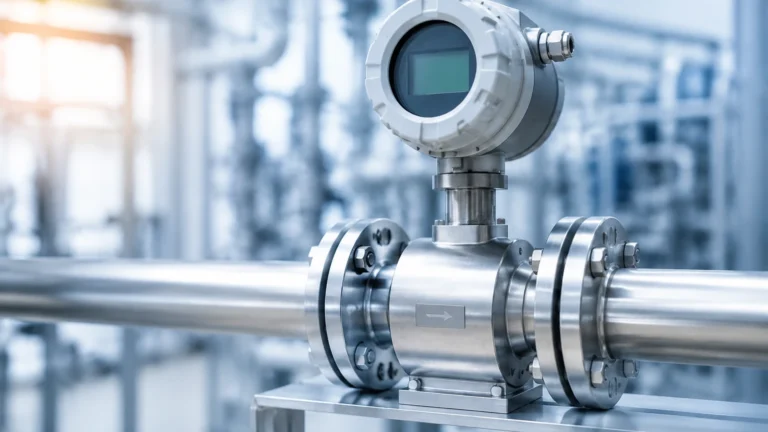
Ultrasonic Portable Flow Meter
Ultrasonic Portable Flow Meter
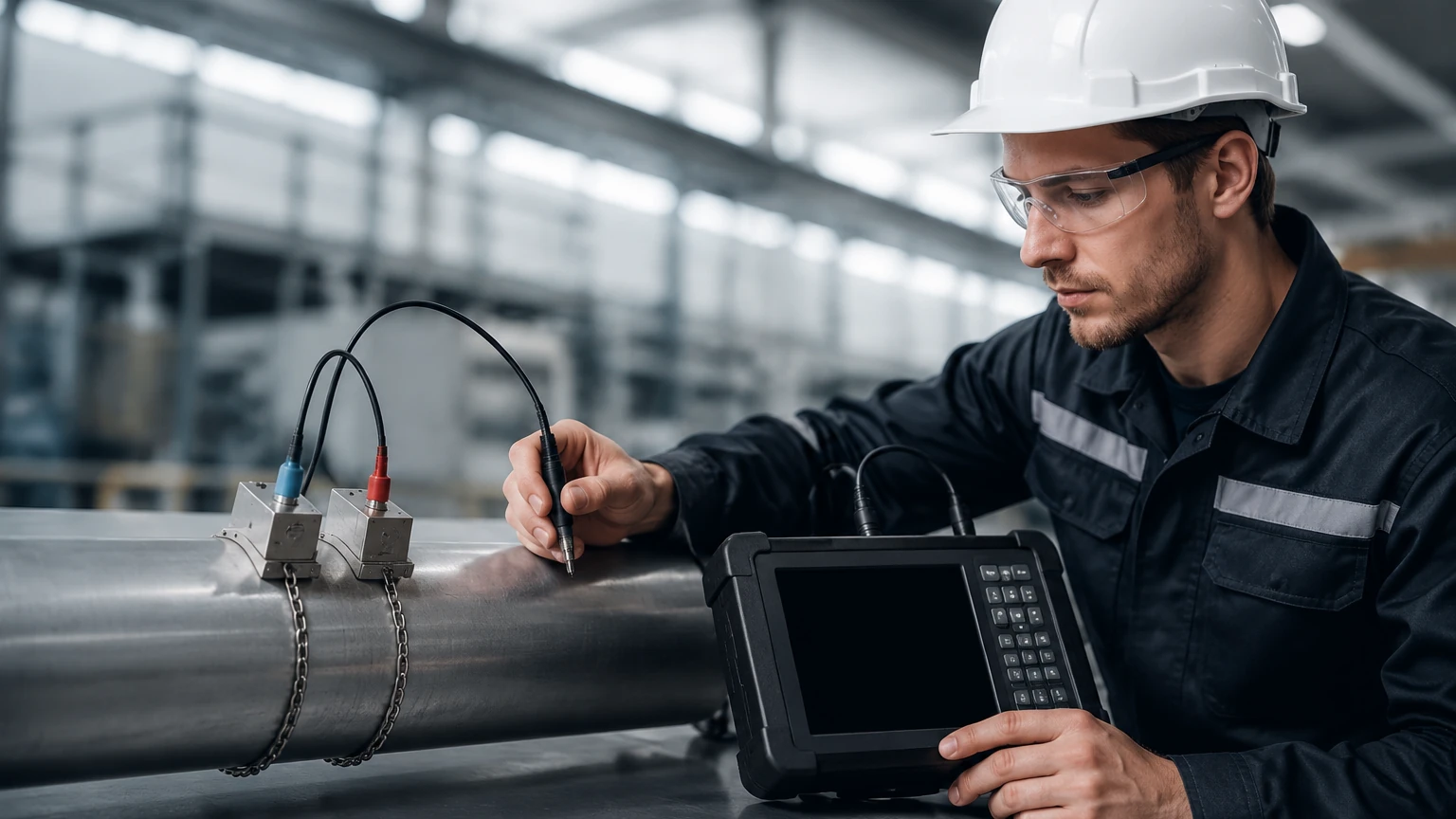
In the realm of industrial process control and maintenance, the ability to measure fluid velocity without interrupting operations is a significant advantage. The ultrasonic portable flow meter has emerged as an essential tool for engineers and technicians who require accurate, non-invasive flow data across various points in a facility. Unlike permanent inline meters, these portable devices utilize clamp-on transducers, allowing for rapid diagnostics, balancing, and verification of existing equipment.
As a professional manufacturer of industrial measurement instruments, Welk provides high-precision solutions that integrate seamlessly into complex automation environments. Whether you are managing water treatment facilities or chemical processing plants, understanding the underlying technology of these meters is the first step toward effective implementation. For a comprehensive overview of available instrumentation, you may visit our Main Page.
Understanding Ultrasonic Flow Measurement Principles
Ultrasonic flow measurement relies on the propagation of sound waves through a liquid medium. The fundamental principle involves transmitting high-frequency acoustic signals (typically in the megahertz range) across a pipe and measuring the effect of the fluid's motion on those signals. Because the sensors are clamped to the outside of the pipe, the measurement is entirely non-intrusive, meaning there is no pressure drop, no risk of leakage, and no need to shut down the process for installation.
There are two primary methods used in ultrasonic flow measurement: Transit-Time and Doppler Effect. Each has specific strengths depending on the characteristics of the fluid being measured.
Transit-Time Measurement
The transit-time method is the most common technology found in a modern ultrasonic portable flow meter. It works by sending two ultrasonic pulses diagonally across the pipe: one in the direction of the flow (downstream) and one against the flow (upstream).
When the fluid is moving, the pulse traveling with the flow reaches the receiving transducer faster than the pulse traveling against the flow. The meter calculates the time difference ($Δt$) between these two signals. This difference is directly proportional to the velocity of the liquid. Once the velocity is determined, and the internal cross-sectional area of the pipe is known (based on user-entered pipe diameter and wall thickness), the volumetric flow rate is calculated.
This method is highly accurate for clean liquids or liquids with very low concentrations of suspended solids or entrained gases. It is the preferred choice for water, oils, chemicals, and beverages.
Doppler Effect Measurement
The Doppler method operates on the principle of frequency shift. The meter transmits a continuous ultrasonic signal of a known frequency into the liquid. This signal reflects off "discontinuities" within the fluid, such as suspended particles or air bubbles.
Because these particles are moving at the same velocity as the fluid, the reflected signal returns to the transducer with a shifted frequency. The magnitude of this frequency shift is proportional to the flow velocity. While transit-time meters require relatively clean fluid, Doppler meters require a minimum concentration of particles (typically at least 100 parts per million of particles larger than 75 microns) to function correctly. This makes them ideal for slurries, wastewater, and aerated liquids.
Transit-Time vs. Doppler Technology
Choosing between these two technologies depends entirely on the fluid properties. Most high-end ultrasonic portable flow meters today are designed primarily as transit-time devices because of their higher precision in clean-water applications, but some advanced models offer hybrid capabilities.
| Feature | Transit-Time | Doppler |
| :— | :— | :— |
| Fluid Type | Clean liquids, low turbidity | Slurries, aerated liquids, sewage |
| Accuracy | High (typically ±0.5% to ±2%) | Moderate (typically ±2% to ±5%) |
| Particle Requirement | < 2% by volume | > 100 ppm (parts per million) |
| Pipe Sizes | 10 mm to 6000 mm | 25 mm to 6000 mm |
| Typical Applications | Potable water, cooling water, fuel oils | Mining slurries, paper pulp, wastewater |
Key Features of a Portable Ultrasonic Flow Meter
A professional-grade ultrasonic portable flow meter is defined by its versatility and ease of use in the field. When evaluating these instruments, several technical features are paramount:
1. Clamp-on Transducers: The ability to attach sensors to the exterior of the pipe using chains, straps, or magnetic mounts. This eliminates the need for pipe cutting or welding.
2. Data Logging: Integrated memory to store flow data over time. This is critical for identifying trends, leaks, or pump inefficiencies during a 24-hour audit.
3. Battery Autonomy: Since these are portable units, high-capacity internal batteries (often Lithium-ion) providing 10 to 15 hours of continuous operation are standard.
4. Signal Processing: Advanced Digital Signal Processing (DSP) allows the meter to filter out ambient noise and vibration, which is common in industrial pump rooms.
5. Multi-Path Support: Some high-end portable units support multiple pairs of transducers to average flow profiles across different planes of a large pipe, increasing accuracy in turbulent conditions.
Selection Criteria and Technical Specifications
To ensure the selected ultrasonic portable flow meter meets the requirements of your specific application, consider the following technical parameters:
Pipe Material and Size
Ultrasonic waves must be able to pass through the pipe wall. Most meters work well with carbon steel, stainless steel, cast iron, PVC, and PE. However, pipes with thick internal liners (like cement or rubber) or heavily corroded interiors can attenuate the signal. Ensure the meter supports the specific diameter range of your facility, which typically spans from DN15 (15 mm) to DN6000 (6000 mm).
Fluid Temperature and Pressure
While the sensors are external, the heat from the pipe is conducted to the transducers. Standard transducers usually handle up to 80°C (176°F), while high-temperature versions can withstand up to 150°C or even 250°C. Pressure is generally not a limiting factor for the meter itself since it is non-invasive, but it affects the fluid's acoustic properties.
Accuracy Requirements
For simple check-metering, an accuracy of ±2% may suffice. For energy audits or pump performance testing, you should look for instruments offering ±0.5% to ±1% accuracy. Note that accuracy is heavily dependent on proper installation and the presence of a fully developed flow profile.
Selection Table for Industrial Applications
| Application | Recommended Technology | Transducer Frequency | Key Requirement |
| :— | :— | :— | :— |
| HVAC Balancing | Transit-Time | 1 MHz | Compact size for tight spaces |
| Wastewater Audit | Doppler or Hybrid | 0.5 MHz | High signal penetration |
| Chemical Dosing | Transit-Time | 2 MHz | High frequency for small pipes |
| Oil Pipeline | Transit-Time | 0.5 MHz | Explosion-proof (ATEX) rating |
| Large Water Mains | Transit-Time | 0.5 MHz | Long battery life & rugged case |
Installation Guidelines for Accurate Measurement
The accuracy of an ultrasonic portable flow meter is only as good as its installation. Because the sensors are external, the user must ensure the acoustic path is optimized.
1. Straight Pipe Requirements
Turbulence is the enemy of ultrasonic measurement. To achieve a stable flow profile, the transducers should be installed on a straight section of pipe. The general rule is "10D Upstream and 5D Downstream." This means the sensors should be at least 10 pipe diameters away from any upstream disturbance (elbows, valves, pumps) and 5 pipe diameters away from any downstream disturbance.
2. Surface Preparation
The pipe surface where the transducers will be mounted must be clean. Remove any loose paint, rust, or scale. For optimal signal transmission, a coupling agent (ultrasonic gel or grease) must be applied between the transducer face and the pipe wall to eliminate any air gaps.
3. Mounting Methods (V, W, and Z)
Depending on the pipe size and liquid clarity, different mounting configurations are used:
* V-Method: The most common for pipes between 25 mm and 400 mm. The signal bounces off the opposite wall once. It provides a good balance between signal strength and accuracy.
* Z-Method: Used for large pipes (over 400 mm) or when the liquid is slightly turbid. The transducers are placed on opposite sides of the pipe, and the signal travels directly across. This has the shortest path and the strongest signal.
* W-Method: Used for very small pipes (under 50 mm). The signal bounces three times, increasing the transit time and improving resolution for low-flow velocities.
4. Parameter Entry
The user must accurately enter the following into the meter's transmitter:
* Outer diameter (mm)
* Wall thickness (mm)
* Pipe material (to determine the sound speed in the wall)
* Fluid type (to determine the sound speed in the liquid)
* Liner material and thickness (if applicable)
The meter will then calculate the exact distance (spacing) required between the two transducers.
Limitations and Common Challenges
While the ultrasonic portable flow meter is a powerful tool, it is not a universal solution for every scenario. Engineers should be aware of the following limitations:
* Acoustic Short-Circuiting: In some cases, the ultrasonic signal may travel through the pipe wall faster than through the liquid, leading to erroneous readings. This is more common in very small, thick-walled metal pipes.
* Entrained Air and Solids: Transit-time meters will fail if the liquid contains more than 2% bubbles or solids by volume, as these scatter the signal. If the signal strength drops below a certain threshold (often 60%), the reading becomes unreliable.
* Empty or Partially Full Pipes: Ultrasonic meters require the pipe to be completely full. If there is an air pocket at the top of the pipe, the signal will not pass through. Always install sensors on the side of the pipe (3 o'clock and 9 o'clock positions) rather than the top and bottom.
* Internal Scaling: Heavy calcium buildup or "tuberculation" inside old iron pipes can create an uneven surface that deflects the ultrasonic beam, making measurement impossible.
Frequently Asked Questions (FAQ)
Q: Can a portable ultrasonic flow meter measure gas flow?
A: Standard portable units are designed for liquids. Gas flow measurement requires much higher energy and specialized transducers due to the low density of gas and the high acoustic impedance mismatch between the pipe wall and the gas. Specific "Gas Ultrasonic Meters" exist but are distinct from standard liquid models.
Q: How often does the meter need calibration?
A: For most industrial diagnostic purposes, an annual factory calibration is recommended. However, users can perform field checks by comparing the portable meter against a known calibrated inline meter or using a master-metering technique.
Q: Does the pipe pressure affect the accuracy?
A: Generally, no. As long as the pressure is sufficient to keep the pipe full and prevent cavitation (which creates bubbles), the pressure itself does not change the sound speed in the liquid significantly enough to impact accuracy.
Q: Can I use the meter on lined pipes?
A: Yes, provided the liner is well-bonded to the pipe wall. If there is an air gap between the liner and the pipe, the ultrasonic signal will be blocked. You must enter the liner material and thickness into the meter's configuration.
Q: What is the minimum flow velocity required?
A: Most ultrasonic meters can detect velocities as low as 0.01 m/s, but accuracy typically stabilizes above 0.1 m/s. They are excellent for detecting low-flow leaks that mechanical meters might miss.
Conclusion
The ultrasonic portable flow meter is an indispensable asset for modern industrial maintenance and energy management. By offering a non-invasive, accurate, and highly flexible way to monitor fluid dynamics, it allows for data-driven decision-making without the costs associated with process downtime.
When selecting a meter, it is vital to match the technology (Transit-Time or Doppler) to your specific fluid characteristics and ensure rigorous adherence to installation best practices regarding straight pipe runs and transducer spacing. For professionals seeking reliable measurement instrumentation across level and flow applications, Welk continues to provide engineered solutions tailored to the rigors of the field. To explore our full range of industrial sensors, please refer to our Main Page.