Ultrasonic Sensor Water Level
Ultrasonic Sensor Water Level
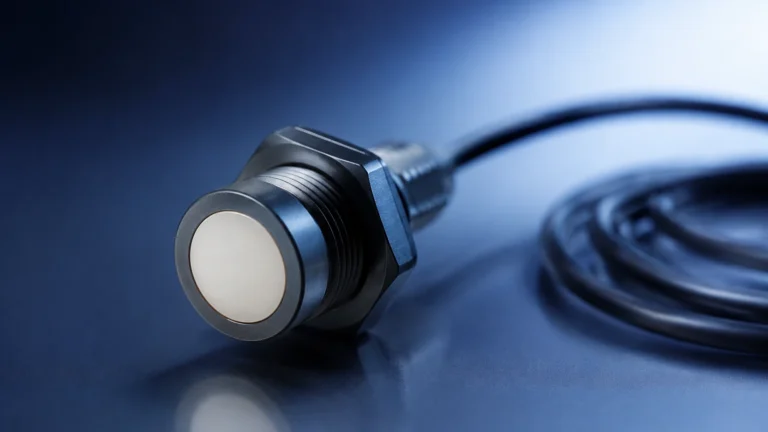
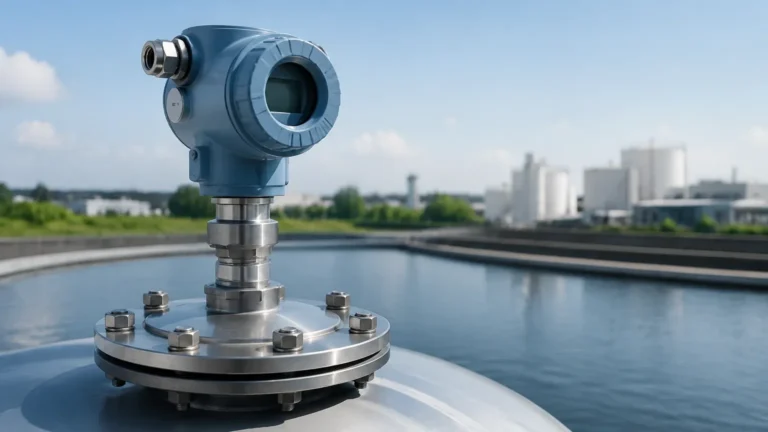
In modern industrial water management, the ability to monitor liquid levels accurately and without physical contact is a cornerstone of operational efficiency. The ultrasonic sensor water level measurement system has emerged as a primary solution for various sectors, including wastewater treatment, chemical processing, and municipal water supply. By utilizing high-frequency sound waves, these instruments provide a reliable means of monitoring reservoirs, open channels, and storage tanks without the risk of sensor fouling or corrosion associated with contact-based methods.
As a professional manufacturer, Welk specializes in delivering high-performance level measurement instruments designed to meet the rigorous demands of industrial automation. This guide provides a comprehensive technical overview of ultrasonic technology, selection criteria, and installation best practices for engineering professionals.
Measurement Principles of Ultrasonic Technology
Ultrasonic level measurement is based on the "Time of Flight" (ToF) principle. The sensor, typically mounted at the top of a tank or above a water surface, contains a transducer that emits a series of ultrasonic pulses. These sound waves travel through the air, strike the surface of the water, and reflect back to the sensor.
The Calculation Process
The electronics within the sensor measure the time interval between the emission of the pulse and the reception of the echo. Since the speed of sound in air is a known constant (approximately 344 meters per second at 20°C), the distance ($D$) between the sensor and the water surface can be calculated using the formula:
$$D = \frac{v \times t}{2}$$
Where:
* $v$ is the speed of sound in air.
* $t$ is the total time elapsed for the pulse to travel to the surface and back.
Once the distance to the water surface is determined, the instrument subtracts this value from the total height of the tank (the calibrated zero point) to provide the actual water level or volume.
Frequency and Range
Industrial ultrasonic sensors typically operate at frequencies ranging from 20 kHz to 200 kHz. Lower frequencies (e.g., 20–40 kHz) are capable of traveling longer distances—up to 30 or 40 meters—but require larger transducers. Higher frequencies (e.g., 80–200 kHz) offer better resolution and smaller "dead zones" but are limited to shorter ranges, typically under 10 meters. Welk offers a variety of configurations to balance these requirements based on specific site needs.
Technical Selection Criteria
Selecting the correct ultrasonic sensor water level device requires a detailed understanding of the application environment. Engineers must evaluate the chemical compatibility of the housing, the required measurement range, and the integration needs of the control system. For a wider range of industrial instrumentation, professionals can consult the Main Page for detailed product specifications.
Selection Table for Industrial Applications
| Feature | Standard Water Tank | Wastewater / Sump | Chemical Storage | Open Channel Flow |
| :— | :— | :— | :— | :— |
| Measurement Range | 0.25m to 10m | 0.5m to 15m | 0.25m to 8m | 0.1m to 5m |
| Housing Material | ABS / PVC | PVDF / Reinforced PP | PTFE / PVDF | UV-Resistant Plastic |
| Signal Output | 4-20mA / HART | 4-20mA / Modbus | 4-20mA | Pulse / Modbus |
| Accuracy | ±0.25% of range | ±0.5% of range | ±0.25% of range | ±1-2mm |
| Protection Class | IP65 | IP68 (Submersible) | IP67 / Explosion Proof | IP67 |
Key Evaluation Factors
1. Dead Zone (Blocking Distance): Every ultrasonic sensor has a "dead zone" directly beneath the transducer face where it cannot accurately process an echo. This is usually between 0.2m and 0.8m depending on the frequency. It is critical to mount the sensor high enough so the maximum water level never enters this zone.
2. Beam Angle: The ultrasonic pulse spreads as it travels, forming a cone (usually between 5° and 12°). Obstructions within this cone, such as ladders, pipes, or agitators, can cause false echoes.
3. Temperature Compensation: The speed of sound varies by approximately 0.6 m/s for every degree Celsius change in temperature. High-quality sensors include integrated temperature sensors to automatically adjust calculations.
Installation Guidelines for Optimal Performance
Proper installation is the most significant factor in ensuring the longevity and accuracy of an ultrasonic sensor water level system. Failure to follow geometric and environmental constraints often leads to signal loss or erratic readings.
Positioning and Mounting
* Vertical Alignment: The sensor must be mounted perfectly perpendicular to the water surface. A deviation of even a few degrees can cause the reflected signal to bounce away from the transducer, resulting in a "Lost Echo" error.
* Wall Distance: To avoid interference from wall reflections, the sensor should be placed at a distance from the tank wall equal to at least 1/10th of the total tank height.
* Avoid the Inflow: Never install the sensor directly above the point where water enters the tank. The turbulence, air bubbles, and splashing will scatter the ultrasonic signal and lead to inaccurate data.
Environmental Considerations
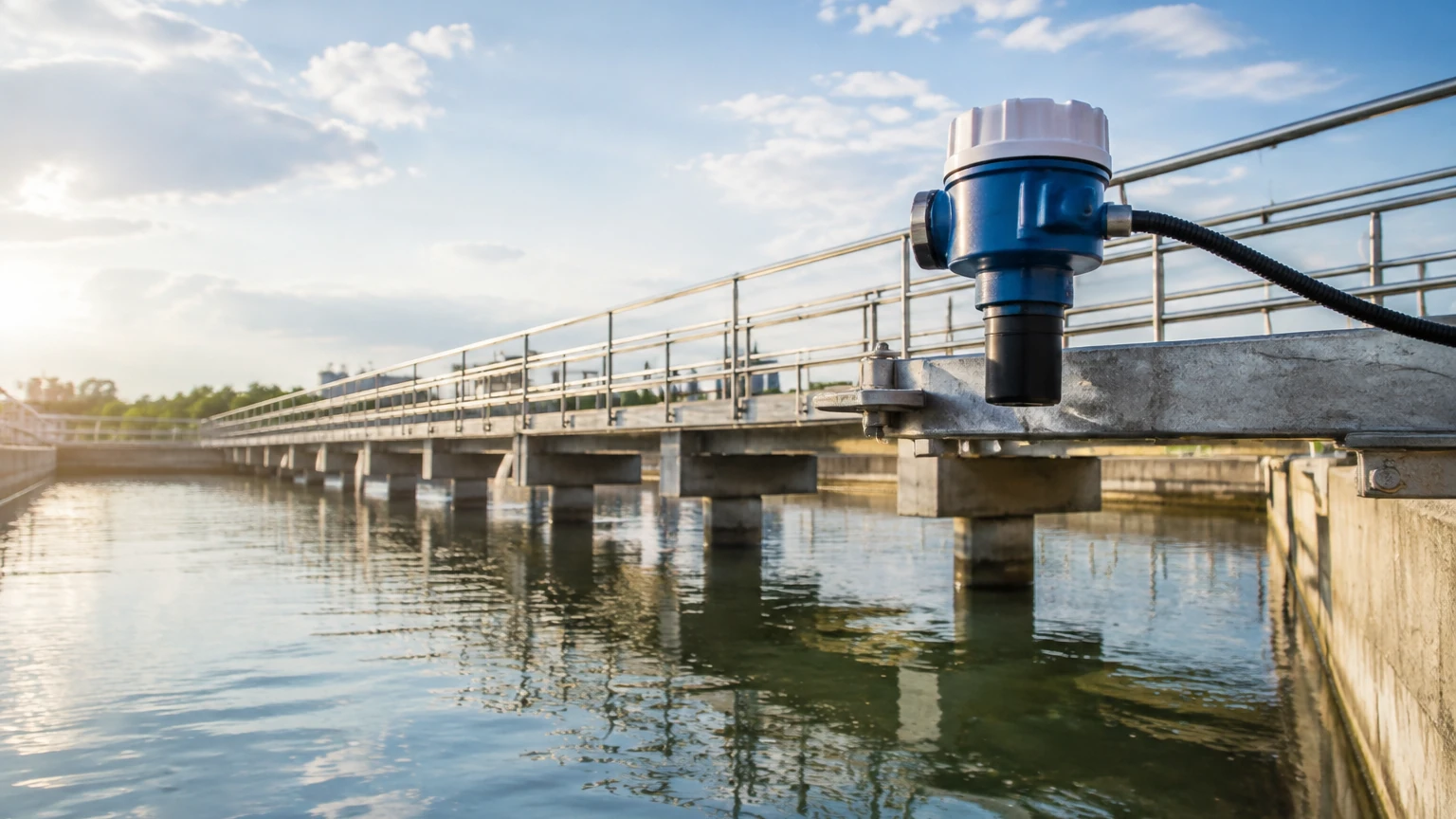
* Sun Shields: For outdoor installations, such as reservoir monitoring or open-channel flow, a sun shield is recommended. Direct sunlight can heat the sensor body to temperatures much higher than the ambient air, causing the internal temperature compensation to provide incorrect speed-of-sound adjustments.
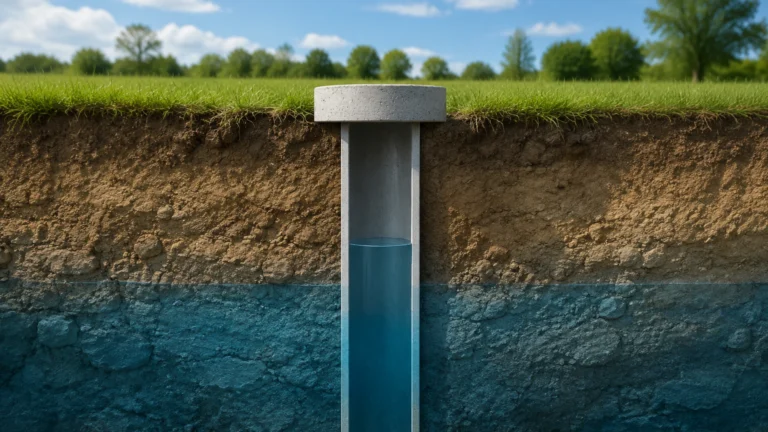
* Stilling Wells: In applications with heavy surface foam or extreme turbulence, installing the sensor inside a stilling well (a vertical pipe with vent holes) can provide a calm surface for the ultrasonic pulse to reflect from.
Limitations and Practical Constraints
While ultrasonic technology is versatile, it is not a "one-size-fits-all" solution. Understanding its factual boundaries prevents costly misapplications.
1. Vapor and Heavy Dust: High concentrations of steam, heavy vapors, or airborne dust can absorb or scatter the sound energy. In these environments, radar level meters are often a more reliable choice.
2. Vacuum Conditions: Sound requires a medium (air or gas) to travel. Therefore, ultrasonic sensors cannot function in a vacuum.
3. Surface Foam: Light, airy foam is an excellent sound absorber. If the water surface is covered in thick foam, the sensor may receive no echo at all. In such cases, hydrostatic transmitters or contact-based probes are preferred.
4. Pressure Extremes: Standard ultrasonic sensors are designed for atmospheric or near-atmospheric pressure. High-pressure environments change the density of the air, significantly affecting the speed of sound beyond the capabilities of standard compensation algorithms.
Industrial Applications and Case Studies
Wastewater Treatment Plants (WWTP)
In wastewater facilities, ultrasonic sensors are used in wet wells and pump stations. Because the sensor does not touch the liquid, it is unaffected by the greases, solids, and corrosive gases (like $H_2S$) common in sewage. Welk's IP68-rated sensors are frequently deployed here to ensure continuous operation even during potential flooding events.
Irrigation and Water Distribution
For remote monitoring of irrigation canals, low-power ultrasonic sensors integrated with cellular telemetry allow water managers to track levels in real-time. This data is vital for leak detection and ensuring equitable water distribution across agricultural regions.
Chemical Processing
In tanks containing acids or bases, ultrasonic sensors provide a safe measurement method. By selecting chemically resistant housing materials like PVDF or PTFE, the sensor remains protected from corrosive fumes while providing precise inventory data to the facility's PLC or SCADA system.
Frequently Asked Questions (FAQ)
Q: Can an ultrasonic sensor measure the level of solids?
A: Yes, but with limitations. Solids like grain or sand do not reflect sound as efficiently as liquids and often form conical piles that scatter the signal. A sensor with a higher power output and a narrower beam is usually required for solids.
Q: How do I handle a "Lost Echo" alarm?
A: First, check for physical obstructions or heavy foam. Second, verify that the sensor is perfectly level. If the water surface is very turbulent, you may need to increase the "damping" or "filtering" settings in the sensor software or install a stilling well.
Q: What is the typical lifespan of an ultrasonic water level sensor?
A: In standard water applications, a high-quality sensor from a manufacturer like Welk can last 7 to 10 years. The lack of moving parts and the non-contact nature of the technology significantly reduce wear and tear.
Q: Is calibration required frequently?
A: Generally, no. Once the sensor is calibrated to the tank dimensions (Empty and Full distances), it remains stable. Recalibration is only necessary if the sensor is moved or if the tank geometry is modified.
Conclusion
The ultrasonic sensor water level meter remains one of the most cost-effective and reliable tools for industrial liquid monitoring. By understanding the physics of sound propagation and adhering to strict installation standards, engineers can implement systems that provide years of maintenance-free service. Whether managing a municipal wastewater plant or a complex chemical process, selecting the right instrument involves balancing range, environment, and accuracy requirements. For further technical documentation and to explore a full range of measurement solutions, visit the Main Page to connect with application specialists.