Underground Mine Dewatering
Underground Mine Dewatering
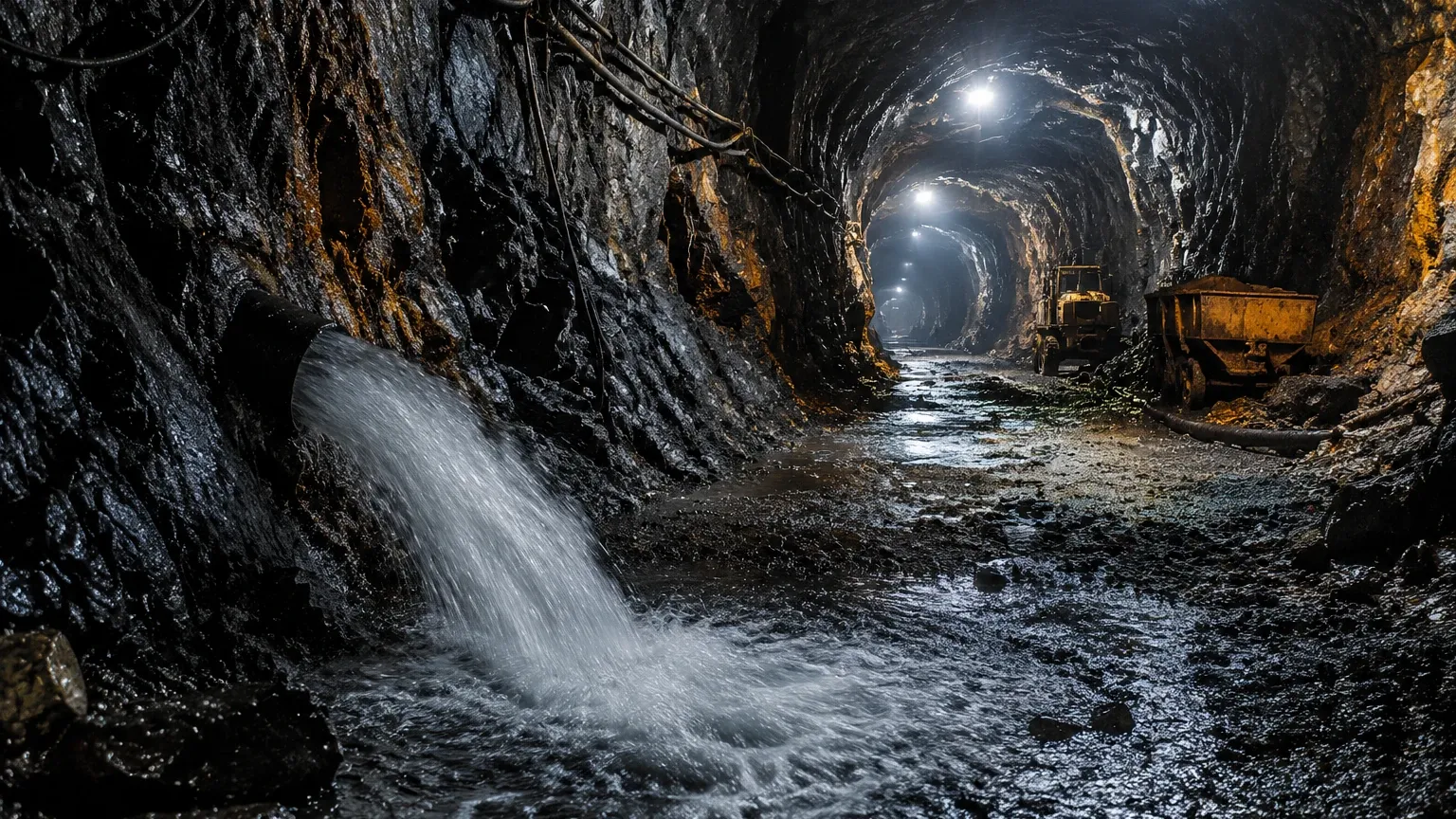
Underground mine dewatering is a critical engineering process required to manage groundwater inflow and ensure the safety and viability of mining operations. In deep-level mining, the intersection of water-bearing geological structures or the natural seepage from aquifers can lead to flooded galleries, compromised structural integrity, and significant risks to personnel and machinery. Effective dewatering involves the systematic collection, transport, and discharge of water from the underground environment to the surface.
To manage these complex hydraulic systems, precise level measurement is indispensable. Without accurate data on water levels in sumps, boreholes, and storage reservoirs, pump control systems cannot function efficiently, leading to either energy waste or catastrophic pump failure. This guide explores the technical principles of level measurement within the context of underground mine dewatering and provides a framework for selecting the appropriate instrumentation.
The Role of Precise Level Measurement in Mine Dewatering
In the harsh environment of an underground mine, dewatering systems must operate with high reliability. The primary objective is to maintain the water level within a specific range to prevent flooding while ensuring that pumps do not run dry. Dry running can cause cavitation and overheating, leading to expensive repairs and downtime.
Level sensors provide the primary input for Automated Pump Control (APC) systems. By monitoring the rate of level change, engineers can also calculate inflow rates, which is essential for predictive maintenance and long-term hydrological modeling. Furthermore, in many jurisdictions, the discharge of mine water is strictly regulated. Level measurement in surface settling ponds and treatment facilities ensures that the mine remains compliant with environmental discharge permits.
Core Measurement Principles for Mining Environments
Before selecting a specific instrument, it is vital to understand the underlying physical principles used to detect liquid levels. In underground mines, the choice of principle is often dictated by the water quality (e.g., acidity, suspended solids) and the physical constraints of the installation site.
Radar Level Measurement (Non-Contact)
Radar level meters operate on the Time-of-Flight (ToF) principle. The sensor emits high-frequency microwave pulses (typically in the 26GHz or 80GHz range) that travel at the speed of light. When these pulses hit the surface of the water, they are reflected back to the sensor. The device measures the time interval between transmission and reception to calculate the distance to the liquid surface.
* Advantages: Radar is unaffected by dust, humidity, or temperature fluctuations, making it ideal for deep shafts. Because it is non-contact, the sensor is not subject to corrosion from acidic mine water.
* Suitability: Excellent for large sumps and open storage areas where high accuracy (±2mm) is required.
Ultrasonic Level Measurement (Non-Contact)
Similar to radar, ultrasonic sensors use the ToF principle but utilize sound waves instead of microwaves. The sensor emits an ultrasonic pulse that reflects off the water surface. The time taken for the echo to return is proportional to the distance.
* Advantages: More cost-effective than radar for standard applications.
* Limitations: Sound velocity is affected by air temperature and density. In deep mines where air pressure and temperature can vary significantly, ultrasonic sensors require temperature compensation. They are also sensitive to heavy foam or steam on the water surface, which can absorb the acoustic signal.
Hydrostatic Level Measurement (Contact)
Hydrostatic transmitters measure the pressure exerted by the liquid column above the sensor. Based on the formula $P = \rho \cdot g \cdot h$ (where $P$ is pressure, $\rho$ is density, $g$ is gravity, and $h$ is height), the transmitter converts the pressure reading into a level measurement.
* Advantages: Simple to install in deep boreholes or narrow sumps. These sensors are submerged, meaning they are not affected by surface foam or overhead obstructions.
* Suitability: Ideal for deep well dewatering and monitoring narrow standpipes.
Magnetic Level Gauges and Switches
Magnetic level gauges utilize a float containing a magnet that moves with the liquid level inside a bypass chamber. This motion flips magnetic flags on the outside of the chamber or triggers reed switches for point-level detection.
* Suitability: Primarily used in chemical dosing tanks for water treatment or in hydraulic oil reservoirs for the dewatering pump stations themselves.
Application Scenarios in Underground Mine Dewatering
Different areas of a mine require different approaches to level monitoring. Understanding these scenarios helps in selecting the right tool from the Main Page of a technical catalog.
1. Main Pumping Stations (Sumps)
Main sumps are the central collection points for mine water. They are often large, turbulent, and contain high levels of suspended solids (silt and grit). For these applications, Radar Level Meters are preferred because they can be mounted high above the turbulent water, avoiding physical damage while providing continuous, accurate data.
2. Boreholes and Deep Wells
When dewatering involves lowering the water table around the mine via boreholes, Hydrostatic Level Transmitters are the industry standard. These sensors are designed with slim profiles to fit into narrow casings and are built with ruggedized cables that can support the weight of the sensor at depths exceeding 200 meters.
3. Acid Mine Drainage (AMD) Treatment
Water extracted from mines is often highly acidic. In treatment tanks where lime is added to neutralize the pH, the environment is corrosive and prone to scaling. Non-contact sensors like Ultrasonic or Radar are essential here to prevent the chemical destruction of the sensor elements.
Selection Criteria and Comparison Table
When evaluating instrumentation for underground mine dewatering, engineers should consider the following factors: accuracy, maintenance requirements, chemical compatibility, and installation environment.
| Technology | Contact Type | Accuracy | Best For | Main Limitation |
| :— | :— | :— | :— | :— |
| Radar (80GHz) | Non-contact | High (±2mm) | Large sumps, turbulent surfaces | Higher initial cost |
| Ultrasonic | Non-contact | Medium (±0.25%) | General storage, water treatment | Affected by steam/foam |
| Hydrostatic | Contact | High (±0.1%) | Deep boreholes, narrow pipes | Sensitive to density changes |
| Level Switch | Contact | N/A (Point) | Overfill protection, dry-run | Only detects specific points |
Installation Challenges and Best Practices
Installing sensitive electronic instruments in an underground mine presents unique challenges. Following best practices ensures longevity and data integrity.
1. Signal Interference: In narrow tunnels, radar and ultrasonic signals can reflect off the walls (false echoes). Modern sensors feature "false echo suppression" software, allowing the user to map out static obstructions like pipes or wall protrusions.
2. Cable Protection: For hydrostatic sensors, the vent tube in the cable (used to compensate for atmospheric pressure) must be kept clear. Using a desiccant cartridge at the termination point prevents moisture from entering the tube and causing sensor drift.
3. Mounting Stability: Mine environments are subject to vibration from blasting and heavy machinery. Sensors should be mounted on heavy-duty, vibration-dampened brackets. For sumps, mounting the sensor on a stilling well (a vertical pipe) can help eliminate surface turbulence and provide a cleaner signal.
4. Corrosion Resistance: In many mines, the atmosphere is as corrosive as the water. Ensure that sensor housings are rated at least IP68 and constructed from materials like 316L stainless steel or PVDF for chemical resistance.
Operational Limitations and Maintenance
While modern level meters are highly advanced, they are not "set and forget" devices. Underground mine dewatering systems require a structured maintenance program.
* Sedimentation: Hydrostatic sensors can become buried in silt if placed too low in a sump. Regular cleaning or repositioning is required to ensure the pressure diaphragm is not obstructed.
* Scaling: In mines with high mineral content, calcium or iron deposits can build up on ultrasonic transducers, dampening the signal. Periodic wiping of the sensor face is necessary.
* Power Supply: Underground power grids can be unstable. Using surge protectors and ensuring sensors are compatible with 24V DC loops with adequate shielding will prevent electronic failure due to voltage spikes.
Frequently Asked Questions (FAQs)
Q: Can radar level meters work in high-dust environments during underground construction?
A: Yes. High-frequency radar (80GHz) is particularly effective at penetrating dust and steam, which often scatter the lower-frequency signals of ultrasonic sensors.
Q: How do I measure the level if the water has a thick layer of foam?
A: Foam can be a challenge for non-contact sensors. If the foam is light, radar can often penetrate it. However, if the foam is thick and dense, a hydrostatic pressure transmitter is the better choice as it measures from the bottom up and is unaffected by surface conditions.
Q: What is the maximum depth for hydrostatic dewatering sensors?
A: Standard industrial hydrostatic sensors can measure up to 200 meters (approx. 20 bar), but specialized versions are available for even greater depths. It is crucial to specify the cable length and the pressure range accurately during procurement.
Q: Is it necessary to use explosion-proof sensors?
A: In coal mines or mines where methane gas may be present, all electrical equipment, including level sensors, must be certified as intrinsically safe (Ex ia) or explosion-proof (Ex d) according to local mining safety standards (such as ATEX or IECEx).
Conclusion
Effective underground mine dewatering relies on a combination of robust pumping hardware and precise instrumentation. By understanding the measurement principles of radar, ultrasonic, and hydrostatic technologies, mining engineers can design systems that are both safe and efficient. For those seeking reliable hardware, Welk offers a comprehensive range of industrial level measurement instruments tailored for the demanding conditions of the mining industry.
Before finalizing a dewatering project, always confirm the chemical composition of the water, the expected turbulence levels, and the physical dimensions of the installation site. For detailed product specifications and application support, engineers are encouraged to Review product options and application support to find the optimal solution for their specific mining environment.