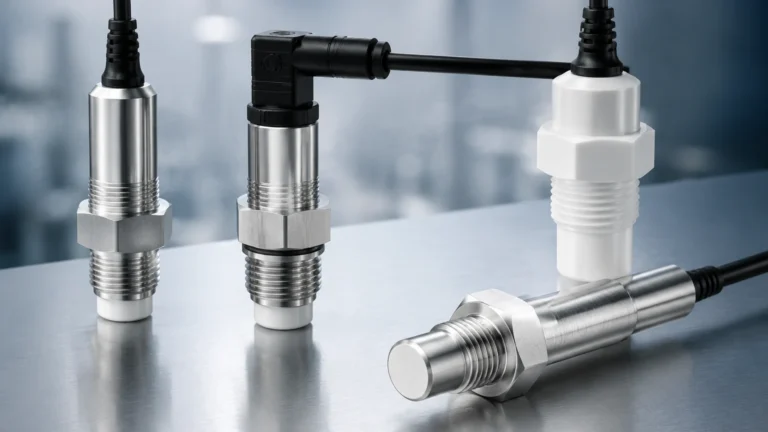
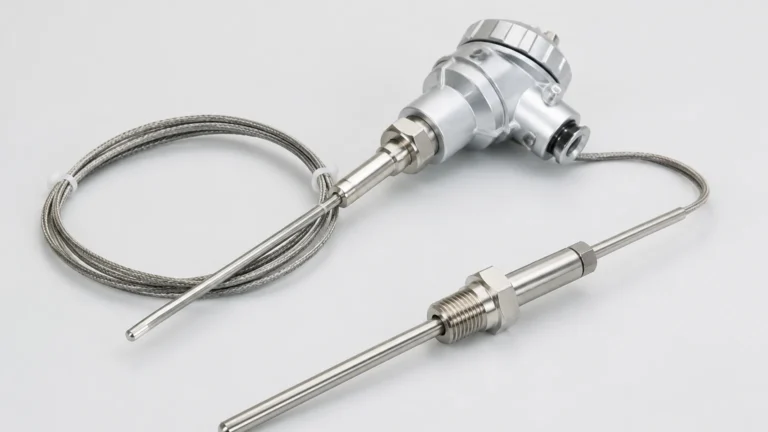
Vega C21
Vega C21
In the landscape of industrial automation and process control, the demand for non-contact level measurement has led to the development of highly specialized sensors designed for both efficiency and reliability. The Vega C21, part of the VEGAPULS series, is a compact 80 GHz radar sensor engineered primarily for simple applications in water management and various industrial processes. As a non-contact instrument, it utilizes Frequency Modulated Continuous Wave (FMCW) technology to provide precise distance measurements without physical interaction with the medium.
For process engineers and facility managers, understanding the technical nuances of the Vega C21—and how it compares to broader industrial solutions—is essential for optimizing liquid level monitoring. This guide examines the underlying principles of radar measurement, the specific capabilities of the Vega C21, and practical selection criteria for industrial environments.
Understanding Radar Level Measurement Principles
Before selecting a specific sensor like the Vega C21, it is necessary to understand the physics of radar level measurement. Radar sensors are divided into two main categories: Time of Flight (ToF) and Frequency Modulated Continuous Wave (FMCW). The Vega C21 utilizes the latter.
The FMCW Principle
In FMCW radar measurement, the sensor emits a continuous radar signal with a frequency that varies linearly over time (the sweep). This signal is reflected by the surface of the medium and received by the sensor's antenna. Because the frequency of the emitted signal is constantly changing, there is a frequency difference between the transmitted signal and the reflected signal received at any given moment.
This frequency difference is directly proportional to the time delay, which in turn is proportional to the distance between the sensor and the product surface. The internal electronics perform a Fast Fourier Transform (FFT) to convert this frequency difference into an accurate distance measurement.
The 80 GHz Advantage
The Vega C21 operates at a frequency of 80 GHz. In radar technology, higher frequencies allow for smaller antenna sizes while maintaining a narrow beam angle. A narrow beam angle is critical in industrial applications because it minimizes the risk of "false echoes" caused by internal tank obstructions such as pipes, ladders, or agitators. It also allows the sensor to be installed in narrow shafts or close to vessel walls without signal interference.
Key Features and Capabilities of the Vega C21
The Vega C21 is designed as a cost-effective, maintenance-free alternative to ultrasonic sensors and hydrostatic pressure transmitters in basic applications. Its primary focus is on the water and wastewater industry, though it finds utility in secondary industrial liquid storage.
Technical Specifications
* Measuring Range: Up to 15 meters (approx. 49 feet).
* Accuracy: ±2 mm.
* Beam Angle: Approximately 8°.
* Operating Temperature: -40°C to +80°C.
* Process Pressure: -1 to +3 bar (-100 to +300 kPa).
* Protection Rating: IP66/IP68 (3 bar), ensuring durability in submerged conditions or heavy rain.
Connectivity and Integration
The device typically offers a two-wire 4…20 mA output, but versions supporting digital protocols like SDI-12 or Modbus are often available for integration into IoT frameworks or environmental monitoring stations. The compact design and encapsulated cable connection make it suitable for outdoor use and harsh environments where moisture ingress is a concern.
Comparative Analysis: Radar vs. Alternative Technologies
When evaluating the Vega C21, engineers must decide if radar is the superior choice compared to ultrasonic or hydrostatic methods. While the Vega C21 provides the benefits of 80 GHz radar, other manufacturers, including Welk, offer a broad spectrum of industrial level measurement instruments that may be better suited for high-pressure or high-temperature chemical applications.
For a broader look at available technology, professionals can visit the Main Page to review various radar and ultrasonic options.
Technology Selection Table
| Feature | 80 GHz Radar (e.g., Vega C21) | Ultrasonic Sensors | Hydrostatic Transmitters |
| :— | :— | :— | :— |
| Measurement Method | Non-contact (Electromagnetic) | Non-contact (Sound waves) | Contact (Pressure) |
| Influence of Vapor/Steam | Negligible | Significant (Affects speed of sound) | None |
| Accuracy | High (±2 mm) | Moderate (±10 mm) | High (Depends on density) |
| Maintenance | Low (No moving parts) | Moderate (Transducer cleaning) | Moderate (Diaphragm fouling) |
| Ideal Application | Narrow tanks, outdoor basins | Open channels, clean liquids | Deep wells, pressurized tanks |
| Price Point | Mid-range | Low to Mid-range | Low to Mid-range |
Engineering Considerations for Installation
Proper installation is paramount to ensuring the accuracy of the Vega C21. Despite its narrow beam angle, certain physical laws must be respected to avoid measurement errors.
1. Beam Path Clearance
Even with an 8° beam angle, the "signal cone" expands as the distance increases. At a distance of 10 meters, the signal footprint is approximately 1.4 meters wide. Engineers must ensure that no structural elements (pumps, brackets, or inflow pipes) intersect this cone. If an obstruction is unavoidable, many modern sensors allow for a "false signal suppression" or "masking" during commissioning.
2. The Dead Zone (Blocking Distance)
Like all radar sensors, the Vega C21 has a small "dead zone" near the antenna tip (typically around 0 mm to 50 mm depending on configuration). Measurement is not possible within this zone. The sensor should be mounted high enough so that the maximum liquid level never enters this dead zone.
3. Mounting Orientation
The sensor should be mounted perpendicular to the liquid surface. If the sensor is tilted, the radar signal may reflect away from the antenna rather than back to it, leading to signal loss. In outdoor applications like rivers or open reservoirs, a sturdy mounting bracket is required to prevent wind-induced vibration or shifting.
4. Cable Protection
Since the Vega C21 often comes with an integrated, encapsulated cable, the cable itself acts as the primary seal. In industrial environments, this cable should be protected by a conduit to prevent mechanical damage or degradation from UV exposure and chemical fumes.

Limitations and Application Boundaries
While the Vega C21 is a versatile tool, it is not a universal solution for every process. Understanding its limitations prevents costly misapplications.
* Dielectric Constant (εr): Radar relies on the reflection of waves. Liquids with very low dielectric constants (such as certain oils or liquefied gases) reflect less energy. While 80 GHz technology is sensitive, extremely low εr fluids may require a guided wave radar or a larger antenna.
* Heavy Foam: Thick, dense foam can absorb radar signals or cause the sensor to detect the top of the foam rather than the liquid level. If consistent, heavy foam is present, ultrasonic or hydrostatic sensors might be evaluated as alternatives.
* Pressure and Temperature: The Vega C21 is rated for ambient pressures and moderate temperatures. It is not suitable for high-pressure reactor vessels or cryogenic storage. For those applications, heavy-duty industrial radar meters with stainless steel flanges and high-temperature gaskets are required.
* Solid Materials: While the Vega C21 can measure some solids, it is optimized for liquids. For bulk solids (silos of grain or cement), specialized solids radar sensors with higher power and different signal processing algorithms are recommended.
Frequently Asked Questions (FAQ)
Q: Can the Vega C21 be used in explosive atmospheres?
A: Yes, specific versions of the Vega C21 are available with ATEX, IECEx, and other hazardous area approvals. Always verify the specific Ex rating on the device label before installation in volatile environments.
Q: How does rain or snow affect the measurement?
A: Because the Vega C21 operates at 80 GHz, it is largely unaffected by atmospheric conditions like rain, fog, or snow. However, a protective weather cover is often recommended to prevent heavy buildup of ice or debris on the sensor face.
Q: Is software required for setup?
A: Most modern sensors in this class can be configured via Bluetooth using a smartphone or tablet app, or through a PC using a USB/HART modem. This allows for safe commissioning without needing to climb onto the tank or into a manhole.
Q: How does the Vega C21 handle turbulence?
A: The sensor uses digital filtering to average the level signal. While surface ripples are common in pumping stations, the software can be adjusted to provide a stable output even in turbulent conditions.
Conclusion
The Vega C21 is a robust entry-point into 80 GHz radar technology, offering a significant upgrade over traditional ultrasonic measurement in terms of reliability and accuracy. By utilizing the FMCW principle, it overcomes many of the environmental challenges that plague other non-contact methods. However, for complex industrial applications involving extreme pressures, aggressive chemicals, or complex vessel geometries, a broader range of instruments may be necessary.
When planning a facility-wide level measurement strategy, it is beneficial to consult with manufacturers who offer a diverse portfolio of technologies. For further technical data and to explore a wide range of radar, ultrasonic, and hydrostatic solutions, visit the Main Page for professional engineering support.