Vega Energy Partners
Vega Energy Partners
In the complex landscape of energy marketing and midstream logistics, companies like Vega Energy Partners operate at the intersection of supply, demand, and infrastructure. For such entities, the precise management of liquid assets—ranging from crude oil and refined products to liquefied gases—is not merely an operational requirement but a financial imperative. Accurate inventory management depends heavily on the deployment of robust level measurement technologies. This article examines the engineering principles and selection criteria for level instrumentation within the energy sector, providing a technical framework for partners and operators to optimize their storage and transport assets.
The Role of Precise Level Measurement in Energy Logistics
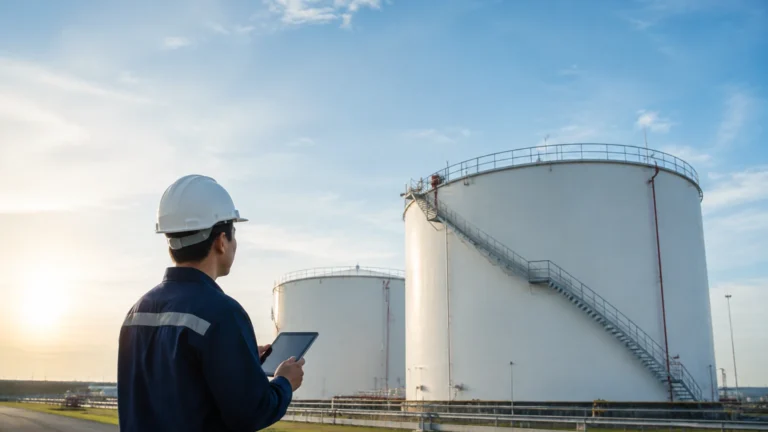
Energy logistics involves the movement and storage of vast quantities of fluids across diverse environments. For a firm involved in energy marketing, the "book-out" or physical delivery of product relies on the accuracy of tank gauging systems. Level measurement instruments serve as the primary data source for inventory reconciliation, leak detection, and overfill prevention.
In the context of midstream operations, level sensors must perform under challenging conditions, including high pressure, volatile organic compound (VOC) vapors, and varying ambient temperatures. The selection of a measurement technology determines the reliability of the data used for commercial transactions and safety protocols. Before selecting a specific instrument, it is essential to understand the underlying physics of the most common measurement principles used in the industry.
Core Measurement Principles for Energy Applications
Industrial level measurement is generally categorized into contact and non-contact methods. For energy partners managing volatile or corrosive substances, the choice of principle significantly impacts maintenance cycles and long-term accuracy.
Radar Level Measurement (ToF)
Radar technology, specifically non-contacting radar, is the gold standard for high-accuracy energy applications. It operates on the Time-of-Flight (ToF) principle. The sensor emits a high-frequency electromagnetic pulse (typically in the 26 GHz or 80 GHz range) that travels to the surface of the medium, reflects, and returns to the receiver.
* Principle: The distance is calculated using the formula $D = (c \times t) / 2$, where $c$ is the speed of light and $t$ is the measured time delay.
* Advantages: Since electromagnetic waves do not require a medium for propagation, radar is unaffected by vacuum, pressure, or temperature fluctuations. It is highly effective for hydrocarbons with low dielectric constants, provided the signal processing is sophisticated enough to handle weak reflections.
Ultrasonic Level Sensing
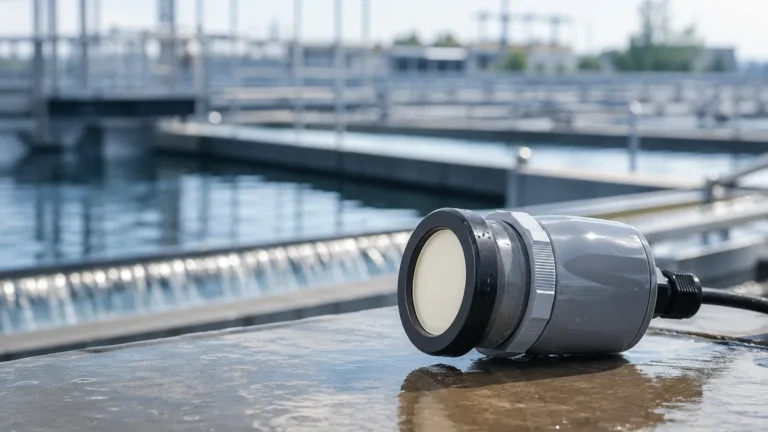
Ultrasonic sensors use sound waves instead of electromagnetic pulses. A transducer emits an ultrasonic pulse that reflects off the liquid surface.
* Principle: Similar to radar, it uses ToF, but the speed of sound is significantly slower and dependent on the medium (air/gas) through which it travels.
* Limitations: In energy applications, the presence of heavy vapors or significant temperature gradients can alter the speed of sound, leading to measurement errors unless active temperature compensation is utilized. Consequently, ultrasonic is often reserved for water treatment or stable chemical storage rather than volatile fuel tanks.
Hydrostatic Pressure Measurement
Hydrostatic transmitters measure the pressure exerted by a liquid column at the bottom of a tank.
* Principle: The pressure ($P$) is proportional to the height of the liquid ($h$), the density ($\rho$), and gravity ($g$), expressed as $P = \rho gh$.
* Application: This is a reliable method for vented tanks. However, in pressurized energy storage vessels, a differential pressure (DP) approach is required to subtract the headspace pressure from the total bottom pressure.
Magnetic Level Gauges
Magnetic gauges provide both local visual indication and remote electronic transmission. A float containing a permanent magnet moves with the liquid level inside a bypass chamber, flipping external flags and interacting with a magnetostrictive or reed-chain transmitter.
Selection Criteria for Energy Storage and Transport
When evaluating instrumentation for assets managed by energy partners, several technical factors must be weighed. The following table provides a comparison of technologies based on typical energy industry requirements.
| Feature | Radar (80 GHz) | Ultrasonic | Hydrostatic | Magnetic Gauge |
| :— | :— | :— | :— | :— |
| Accuracy | High (±1 mm) | Moderate (±0.25%) | Moderate (±0.1%) | Moderate |
| Media Type | All (Hydrocarbons, Acids) | Liquids/Solids | Clean Liquids | Clean Liquids |
| Pressure Range | Up to 160 bar | Up to 3 bar | Up to 400 bar | Up to 250 bar |
| Temperature | -40 to +450°C | -40 to +80°C | -40 to +120°C | -196 to +400°C |
| Vapor Impact | Negligible | Significant | None | None |
| Maintenance | Very Low | Low | Moderate | Moderate |
For comprehensive technical specifications and to Review product options and application support, engineers should consult detailed data sheets that align with specific site safety certifications (e.g., ATEX or IECEx for explosive atmospheres).
Installation Best Practices for Midstream Energy Facilities
Proper installation is critical to ensuring that the theoretical accuracy of a sensor is realized in the field. For energy partners overseeing large-scale tank farms, the following considerations are paramount:
1. Nozzle Configuration: For radar and ultrasonic sensors, the nozzle height and diameter must be optimized to prevent signal interference. A nozzle that is too long or narrow can create "ringing" or internal reflections that mask the true level signal.
2. Beam Angle and Obstructions: Every non-contact sensor has a beam angle. The "footprint" of the signal at the bottom of the tank must be calculated to ensure it does not hit heating coils, agitators, or structural ladders. 80 GHz radars offer narrower beam angles (often as low as 3 degrees), allowing for installation closer to tank walls.
3. Stilling Wells: In tanks with heavy turbulence or foam, installing the sensor inside a stilling well (a perforated pipe) can provide a calm surface for measurement. This is common in crude oil storage where surface agitation is frequent.
4. Environmental Shielding: While industrial sensors are rugged, extreme solar gain in desert environments can cause electronic drift. Using sunshades can extend the lifespan of the transmitter electronics.

Operational Challenges and Limitations
Despite advancements in technology, certain conditions remain challenging for level measurement in the energy sector:
* Low Dielectric Constants: Many refined petroleum products have a low dielectric constant ($ε_r < 2.0$). This means they reflect very little radar energy. High-sensitivity receivers and advanced algorithms are required to track these surfaces reliably.
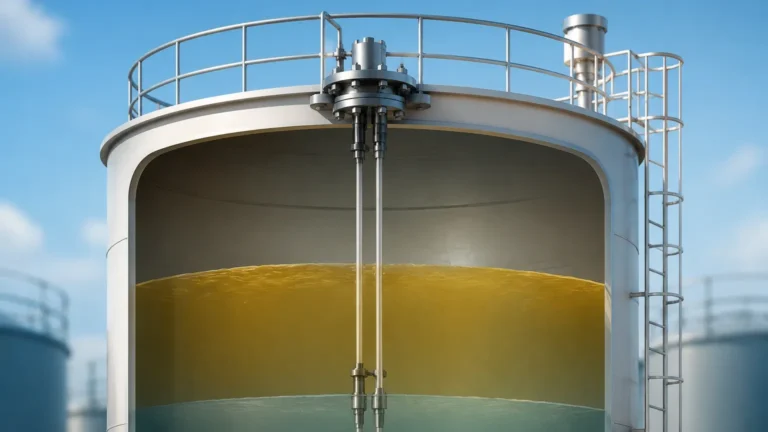
* Interface Measurement: In many energy applications, it is necessary to measure the interface between oil and water. Guided wave radar (GWR) is typically preferred here, as the signal can pass through the upper layer to reflect off the more conductive lower layer.
* Build-up and Coating: Heavy oils or bitumen can coat the sensor face. While some modern radars can "see through" thin coatings, significant build-up on an ultrasonic transducer will eventually cause a signal loss.
Frequently Asked Questions (FAQs)
Q: Can one sensor type be used for all energy products?
No. While 80 GHz radar is highly versatile, specific applications like cryogenic LNG storage or high-pressure steam drums may require specialized magnetic gauges or differential pressure transmitters due to extreme temperature or density variations.
Q: How often should level meters be calibrated in an energy marketing context?
For custody transfer applications, annual calibration or verification is standard. For internal inventory control, a verification every 2-3 years may suffice, depending on the stability of the instrument and regulatory requirements.
Q: What is the impact of foam on level measurement?
Foam can absorb ultrasonic signals entirely. Radar is more resilient but can still experience signal attenuation. In cases of thick, dense foam, a displacement-based or hydrostatic method may be more reliable.
Conclusion
For entities like Vega Energy Partners, the ability to accurately quantify and manage energy assets is the foundation of a successful value chain. By understanding the measurement principles of radar, ultrasonic, and hydrostatic systems, and by adhering to strict installation and selection protocols, operators can ensure high levels of safety and fiscal accuracy. As the energy industry moves toward greater automation, the integration of smart level sensors into digital twin and IoT frameworks will further enhance the efficiency of global energy logistics. For more information on selecting the appropriate hardware for these demanding environments, visit the Main Page of our technical resource center.