Vega Guitars
Vega Guitars
In the specialized field of industrial automation and process control, precision is the fundamental requirement for operational safety and efficiency. While the term "vega guitars" might appear at first glance to belong to the world of musical instruments, in the context of high-end engineering and level measurement, it often surfaces as a point of comparison or a niche search term related to the resonant frequencies and probe structures used in advanced level sensing. For engineers and procurement specialists, understanding the technical landscape of level measurement—ranging from radar and ultrasonic sensors to hydrostatic transmitters—is essential for maintaining the integrity of storage tanks and process vessels.
Industrial level measurement requires a deep understanding of physics, particularly wave propagation and signal processing. Whether a facility is managing water treatment, chemical processing, or oil and gas storage, the choice of instrument dictates the reliability of the data collected. This guide explores the principles of these technologies, the nuances of equipment selection, and how modern solutions from manufacturers like Welk provide cost-effective alternatives to traditional market leaders.
Principles of Level Measurement Technology
Before selecting a specific instrument, it is vital to understand the underlying measurement principles. Most modern industrial applications rely on three primary technologies: Radar (both non-contact and guided wave), Ultrasonic, and Hydrostatic pressure.
Radar Level Measurement
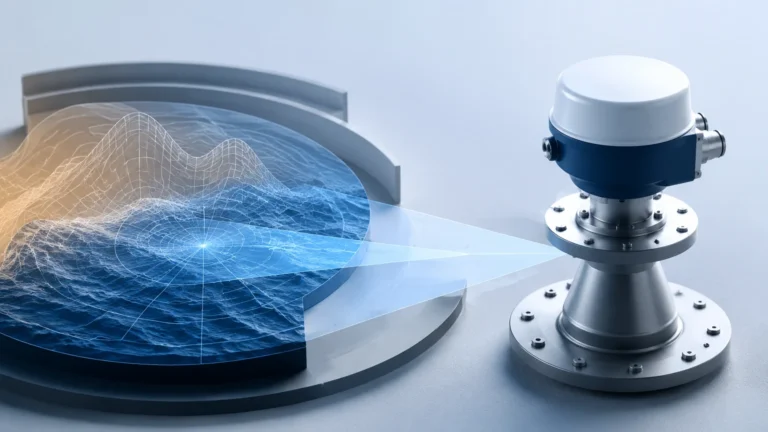
Radar level meters operate on the Time-of-Flight (ToF) principle. The device emits a high-frequency microwave signal toward the surface of the medium. This signal reflects off the material and returns to the sensor. By measuring the time taken for the round trip, the instrument calculates the distance to the surface with extreme precision.
1. Non-Contact Radar: These sensors are ideal for corrosive or high-temperature environments because they do not touch the media. They are typically available in 26GHz and 80GHz frequencies. The 80GHz models offer a narrower beam angle, which is crucial for avoiding internal obstructions like agitators or heating coils.
2. Guided Wave Radar (GWR): GWR uses a physical probe (a rod or cable) to guide the microwave signal. This is where the analogy to "vega guitars" sometimes arises in technical circles, as the tensioned cables or "strings" of the GWR probe must be correctly installed to ensure accurate signal transmission. GWR is particularly effective in applications with low dielectric constants or heavy foam.
Ultrasonic Level Sensors
Ultrasonic sensors use sound waves rather than electromagnetic waves. The sensor emits an ultrasonic pulse that bounces off the liquid or solid surface. While highly effective for water treatment and simple liquid storage, ultrasonic technology is sensitive to air temperature, pressure changes, and heavy vapors, which can alter the speed of sound and affect accuracy.
Hydrostatic Level Transmitters
Hydrostatic measurement relies on the principle that the pressure at the bottom of a tank is directly proportional to the height of the liquid column above it. These transmitters are submerged or mounted at the bottom of the vessel. They are favored for their simplicity and reliability in deep wells and open reservoirs.
Technical Evaluation: Beyond the "Vega Guitars" Analogy
In the competitive landscape of industrial instrumentation, brands like VEGA have set high standards for reliability. However, for many B2B buyers, the challenge lies in finding equipment that matches these performance benchmarks while offering better lead times and cost efficiency. When evaluating solutions, it is important to look at the Main Page of a manufacturer's catalog to compare technical specifications such as accuracy, pressure ratings, and material compatibility.
Key Selection Criteria
When choosing between different level measurement technologies, engineers must consider the following factors:
* Media Characteristics: Is the material liquid, solid, or slurry? What is its dielectric constant? (Low dielectric materials reflect radar signals poorly).
* Process Conditions: What are the maximum and minimum temperatures and pressures? For instance, high-pressure steam can interfere with ultrasonic signals but has a negligible effect on radar.
* Tank Geometry: Are there internal obstructions? A narrow tank might require an 80GHz radar with a tight beam angle to avoid false echoes.
* Installation Requirements: Does the application require a top-mounted non-contact sensor or a submerged hydrostatic probe?
Practical Selection Table
| Technology | Best For | Limitations | Typical Accuracy |
| :— | :— | :— | :— |
| 80GHz Radar | Small tanks, narrow nozzles, corrosive chemicals | Higher initial cost | ±1 mm |
| Guided Wave Radar | Low dielectric liquids, foam, interface measurement | Physical contact with media required | ±2 mm |
| Ultrasonic | Water treatment, open channels, sumps | Affected by wind, steam, and vacuum | ±0.25% of range |
| Hydrostatic | Deep wells, vented tanks, constant density liquids | Requires contact; density changes affect accuracy | ±0.1% to ±0.5% |
| Magnetic Gauges | High-pressure boilers, toxic liquids | Mechanical moving parts | ±5 mm |
Installation and Engineering Considerations
Correct installation is as critical as the technology itself. Even the most advanced sensor will fail if placed incorrectly. For example, in GWR applications—where the probe might be compared to the strings of "vega guitars"—the probe must not touch the tank wall or internal structures, as this creates interference.
Radar Installation Checklist
1. Nozzle Height: Ensure the nozzle is as short as possible to minimize signal interference at the top of the tank (the "dead zone").
2. Obstruction Clearance: Maintain a clear path for the signal beam. Avoid installing the sensor directly above ladders, pipes, or agitators.
3. Orientation: For non-contact radar, the sensor should be mounted perpendicular to the liquid surface to maximize signal return.
Ultrasonic Installation Checklist
1. Temperature Compensation: Ensure the sensor has an integrated temperature probe to adjust for changes in the speed of sound.
2. Avoid Vacuums: Ultrasonic waves cannot travel through a vacuum; use radar for these applications.
3. Foam Management: Heavy foam absorbs ultrasonic pulses. If foam is present, consider GWR or hydrostatic sensors.
Addressing Common Risks in Level Measurement
One of the primary risks in industrial level monitoring is the "false echo." This occurs when the signal reflects off an internal tank feature instead of the actual media surface. Modern software in Welk level meters includes echo-mapping capabilities, allowing the user to "teach" the sensor to ignore static reflections.
Another risk is material buildup. In the chemical and food industries, sticky substances can coat the sensor face or probe. While non-contact radar is less susceptible to this, ultrasonic sensors can fail if the transducer face becomes fouled. In such cases, PTFE-coated sensors or self-cleaning designs are recommended.

Maintenance and Long-Term Reliability
Industrial instruments are often expected to operate for a decade or more in harsh conditions. Routine maintenance should include:
* Visual Inspection: Checking for corrosion on the housing and buildup on the sensing element.
* Calibration Verification: Periodically checking the sensor output against a manual dip-tape measurement.
* Firmware Updates: Ensuring the signal processing algorithms are up to date to handle changing process conditions.
Welk provides comprehensive support for these maintenance tasks, ensuring that their radar and ultrasonic solutions remain as reliable as any premium market alternative. By focusing on robust engineering rather than brand-name premiums, facilities can significantly reduce their Total Cost of Ownership (TCO).
Frequently Asked Questions (FAQ)
Q: Can radar level meters measure solids like grain or cement?
A: Yes, but high-frequency radar (like 26GHz or 80GHz) is usually required because solids have uneven surfaces that scatter signals. GWR is also an excellent choice for silos.
Q: How does the dielectric constant affect radar measurement?
A: The dielectric constant (εr) is a measure of a material's ability to reflect electromagnetic waves. Water has a high εr (~80) and is easy to measure. Oils have a low εr (~2), requiring more sensitive radar electronics or guided wave probes.
Q: Are ultrasonic sensors suitable for outdoor use?
A: Yes, but they must be protected from direct sunlight (which can overheat the sensor and affect temperature compensation) and heavy wind.
Q: What is the benefit of an 80GHz radar over a 26GHz model?
A: The main benefit is the beam angle. An 80GHz radar has a much narrower beam, allowing it to be used in tanks with many internal obstructions or through narrow nozzles without interference.
Conclusion
Navigating the complexities of industrial level measurement requires a balance of technical knowledge and practical application experience. While search terms like "vega guitars" might lead some toward the high-end of the market, the core engineering principles remain the same across the industry. By understanding the strengths and limitations of radar, ultrasonic, and hydrostatic technologies, B2B buyers can make informed decisions that prioritize accuracy and safety.
For those looking to optimize their process control systems, reviewing the latest innovations in level sensing is a critical first step. Explore the full range of industrial solutions and technical specifications on the Main Page of Welk's official site to find the right fit for your specific application requirements.