Vega-lite News
Vega-lite News
In the rapidly evolving landscape of industrial automation, the demand for precise, compact, and maintenance-free level measurement has never been higher. Recent industry trends, often discussed in the context of vega-lite news, highlight a significant shift from traditional mechanical gauges toward high-frequency non-contact radar and advanced ultrasonic sensors. This transition is driven by the need for greater reliability in complex process environments, ranging from wastewater treatment to aggressive chemical storage.
For process engineers and procurement specialists, staying informed on these technological shifts is essential for optimizing plant efficiency. This guide explores the fundamental principles of modern level measurement, provides a comparative analysis of leading technologies, and offers practical selection criteria to ensure long-term operational success.
Understanding Level Measurement Principles
Before selecting a specific instrument, it is critical to understand the physics behind the measurement. Industrial level sensors generally fall into two categories: non-contact and contact-based measurement.
Radar Level Measurement (ToF)
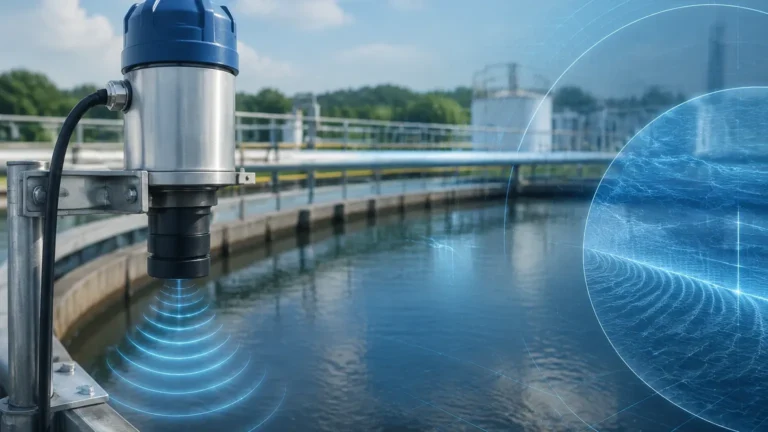
Radar level transmitters operate on the Time-of-Flight (ToF) principle. The sensor emits a high-frequency electromagnetic pulse (typically in the 26GHz or 80GHz range) toward the material surface. The pulse reflects off the medium and returns to the sensor antenna. Since electromagnetic waves travel at the speed of light, the distance ($D$) is calculated using the formula:
$$D = \frac{c \times t}{2}$$
Where $c$ is the speed of light and $t$ is the measured transit time. Modern 80GHz radar technology, a frequent topic in vega-lite news and industry updates, allows for a much narrower beam angle, which minimizes interference from tank internals such as agitators or ladders.
Ultrasonic Level Measurement
Ultrasonic sensors utilize sound waves rather than electromagnetic pulses. The transducer emits an ultrasonic pulse that travels through the air, reflects off the liquid or solid surface, and returns. The distance is calculated based on the speed of sound. While cost-effective, ultrasonic measurement is sensitive to temperature fluctuations and air density changes, requiring integrated temperature compensation to maintain accuracy.
Hydrostatic Level Measurement
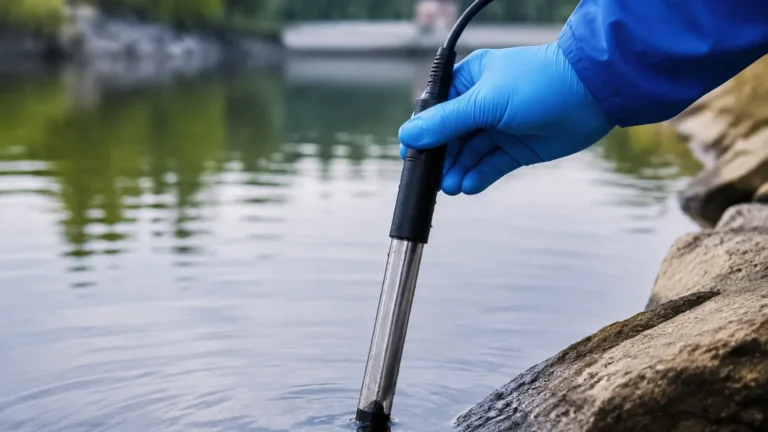
Hydrostatic transmitters measure the pressure exerted by a liquid column at a specific point. The pressure ($P$) is directly proportional to the height of the liquid ($h$) and its density ($\rho$):
$$P = \rho \cdot g \cdot h$$
This method is highly reliable for vented tanks and deep-well applications where surface turbulence or foam would interfere with radar or ultrasonic signals.
The Evolution of Compact Sensors: Vega-lite News Context
The term "vega-lite" in the industrial sector often refers to the movement toward miniaturized radar sensors that offer the performance of high-end industrial units in a smaller, more affordable package. Traditionally, radar sensors were bulky and required complex configuration. However, recent vega-lite news indicates that the industry is moving toward "plug-and-play" radar solutions. These sensors are designed for simple applications in water management and basic chemical processes, providing a bridge between low-cost ultrasonic sensors and high-spec process radars.
These compact sensors typically feature:
- Bluetooth Connectivity: Allowing for commissioning via smartphone or tablet.
- High Frequency (80GHz): Enabling smaller process connections (G1" or G1.5").
- Encapsulated Antennas: Protecting the electronics from corrosive vapors.
Technology Selection Criteria
Choosing the right instrument requires a thorough evaluation of the process conditions. The following table provides a comparison of the most common technologies used in modern industrial applications.
Selection Comparison Table
| Feature | 80GHz Radar | Ultrasonic | Hydrostatic | Magnetic Gauge |
| :— | :— | :— | :— | :— |
| Accuracy | ±2 mm | ±0.25% of range | ±0.1% to ±0.5% | ±5 mm to ±10 mm |
| Measurement Range | Up to 120 m | Up to 30 m | Up to 200 m (cable) | Up to 6 m |
| Process Temp. | -40°C to +200°C+ | -40°C to +80°C | -20°C to +100°C | -40°C to +400°C |
| Pressure Range | Vacuum to 160 bar | Atmospheric | Up to 40 bar | Up to 160 bar |
| Media Type | Liquids & Solids | Liquids & Slurries | Liquids | Liquids |
| Effect of Foam | Minimal | Significant | None | None |
| Relative Cost | High | Low to Medium | Medium | Medium to High |
Practical Installation Considerations
Even the most advanced sensor will fail if installed incorrectly. Following these guidelines ensures the highest signal quality and longevity of the equipment.
1. Beam Angle and Obstructions: For radar and ultrasonic sensors, the "signal beam" expands as it travels. Ensure the beam path is clear of heating coils, agitator blades, or inlet pipes. High-frequency 80GHz radars have a much tighter beam (often as narrow as 3°), making them easier to install in narrow vessels.
2. The Dead Zone (Blocking Distance): Every non-contact sensor has a minimum distance it cannot measure, known as the dead zone. For ultrasonic sensors, this can be 250 mm to 800 mm. For radar, it is often as low as 50 mm. Ensure the maximum fill level of the tank does not enter this zone.
3. Nozzle Dimensions: If mounting on a nozzle, the nozzle diameter and height must be considered. If the nozzle is too narrow or too long, it can cause "ringing" or parasitic reflections. For radar sensors, the antenna should ideally extend slightly beyond the bottom of the nozzle.
4. Hydrostatic Venting: For hydrostatic transmitters, the reference capillary in the cable must be kept clear of moisture and debris to ensure accurate atmospheric pressure compensation.

Limitations and Common Risks
While technology has advanced, certain limitations remain inherent to specific measurement methods:
- Vacuum Applications: Ultrasonic sensors cannot function in a vacuum because sound waves require a medium (air) to travel. Radar is the preferred choice here.
- Heavy Foam: Thick, dense foam can absorb ultrasonic and radar signals, leading to a "loss of echo." In these cases, a magnetic level gauge or a hydrostatic transmitter is often a more robust solution.
- Changing Density: Hydrostatic sensors calculate level based on density. If the liquid density changes (e.g., due to temperature shifts or mixing different chemicals), the level reading will drift unless compensated for.
- Dust and Build-up: In solid applications, heavy dust can attenuate high-frequency signals. Choosing a radar with a self-cleaning air purge system or a low-frequency radar may be necessary.
Frequently Asked Questions (FAQ)
Can I use a radar sensor for solids and liquids interchangeably?
Most modern 80GHz radar sensors are versatile enough to handle both. However, solids measurement often requires a sensor with a higher dynamic range to account for the irregular reflection surfaces of powders and granules.
Why is 80GHz radar becoming the industry standard?
Compared to older 26GHz models, 80GHz radar offers a narrower beam, better signal focusing, and smaller antenna sizes. This makes it easier to install in existing tanks with many internal obstructions.
How often do non-contact sensors require calibration?
Radar and ultrasonic sensors generally do not suffer from mechanical wear or drift. In many clean water or chemical applications, an annual verification check is sufficient, though regulated industries (like pharma or food) may require more frequent validation.
What is the advantage of using a magnetic level gauge?
Magnetic level gauges provide a highly visible local indication without the need for power. When paired with a reed chain transmitter, they offer both local and remote monitoring with high reliability in high-pressure/high-temperature steam applications.
Conclusion
Selecting the right level measurement technology is a balance between process requirements, accuracy needs, and budget constraints. As highlighted in recent vega-lite news, the trend toward high-frequency radar is making precision measurement more accessible across various industries. Whether you are managing a municipal water facility or a complex chemical refinery, understanding these principles is the first step toward a reliable automation strategy. For more detailed technical specifications and to explore our full range of industrial instrumentation, please visit our Main Page.
By focusing on the physical properties of the medium and the environmental conditions of the tank, engineers can select a solution that minimizes maintenance and maximizes uptime. Welk remains committed to providing the technical expertise and high-quality instruments needed to meet these challenges globally.