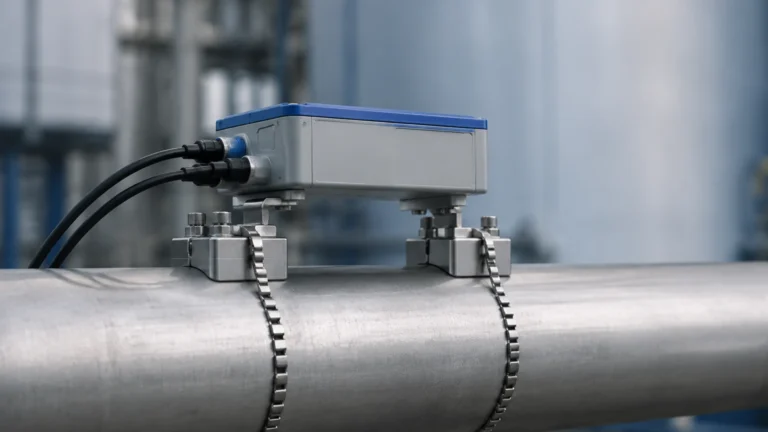
Vegavib 61
Vegavib 61
In the field of industrial automation and process control, point level detection in solids presents unique challenges compared to liquid level measurement. The Vegavib 61 is a specialized vibrating level switch designed specifically for the detection of granulated and coarse-grained bulk solids. Unlike traditional tuning fork sensors, this device utilizes a single-rod (monoprobe) design, which offers distinct advantages in specific material handling environments. This guide provides a technical overview of its operating principles, application suitability, and installation requirements for engineering professionals.
Measurement Principle of Vibrating Rod Sensors
The Vegavib 61 operates on the principle of frequency damping. At the heart of the instrument is a piezoelectric drive that excites the stainless-steel vibrating rod to its resonance frequency. When the rod is vibrating in free air, it maintains a specific amplitude and frequency.
As the bulk material in a silo or hopper rises and covers the rod, the mechanical vibration is damped. This change in vibration characteristics is detected by the integrated electronics, which then converts the physical damping into an electrical switching signal. Because the device uses a single rod rather than two tines (like a tuning fork), it is significantly less prone to "bridging"—a common failure mode where material becomes trapped between tines, causing a false high-level indication.
Once the material level drops and the rod is no longer covered, the piezoelectric drive resumes the vibration at the resonant frequency, and the switch returns to its original state. This principle is highly reliable because it does not depend on the electrical properties of the medium, such as dielectric constant or conductivity.
Technical Specifications and Selection Criteria
When selecting a point level switch for solids, engineers must evaluate the mechanical and thermal limits of the device. The Vegavib 61 is engineered for robustness, but its performance depends on matching the configuration to the process environment. For broader equipment comparisons and alternative sensing technologies, engineers often consult the Main Page of industrial instrumentation providers to ensure the selected technology aligns with the overall plant architecture.
Material and Thermal Limits
| Parameter | Specification (Standard) | Extended Range Options |
| :— | :— | :— |
| Process Temperature | -50 °C to +150 °C | Up to +250 °C with temperature adapter |
| Process Pressure | -1 to 16 bar (-100 to 1600 kPa) | High-pressure variants available |
| Bulk Density | ≥ 100 g/L | Specialized settings for lower densities |
| Wetted Materials | 316L Stainless Steel | Alloy coatings for abrasive media |
| Grit Size | Up to 10 mm (standard) | Larger sizes possible depending on density |
| Process Fitting | G1, 1 NPT | Flanged options (DIN/ANSI) |
Output Options
The electronics of the Vegavib 61 are modular, allowing for integration into various control systems:
* Relay (DPDT): Suitable for direct switching of pumps or alarms.
* Transistor (NPN/PNP): Ideal for PLC inputs and high-speed switching.
* Two-wire (Contactless): Designed for series connection with a load.
* NAMUR: For use in intrinsically safe circuits (Ex zones).
Application Suitability
The Vegavib 61 is primarily used in silos, hoppers, and bunkers containing dry, granulated solids. Its design makes it particularly effective in the following industries:
1. Plastics Industry: Monitoring levels of plastic pellets, granules, and regrind material. The smooth rod prevents the buildup of static-charged dust.
2. Food and Beverage: Used for grain, sugar, flour, and animal feed. The stainless-steel construction ensures compliance with hygiene standards.
3. Construction Materials: Detecting sand, cement, and small gravel. The robust rod can withstand the abrasive nature of these materials better than delicate membrane switches.
4. Chemical Processing: Handling chemical powders and granulated raw materials where chemical compatibility with 316L stainless steel is maintained.
Limitations
While highly versatile, the Vegavib 61 has limitations that must be considered during the design phase:
* Very Fine Powders: In extremely light, aerated powders (density < 20 g/L), the damping effect might be insufficient for a reliable switch. In these cases, a tuning fork design with a larger surface area might be preferable.
* Extreme Mechanical Loads: In very large silos with heavy materials (like large rocks or heavy ores), the lateral force of the material movement can bend or break the rod if it is not properly protected.
* Adhesive Materials: While better than tuning forks, extremely sticky or "cake-like" materials that build up a thick, permanent layer on the rod can eventually cause false switching.
Installation Guidelines and Best Practices
Correct physical placement is critical for the longevity and accuracy of the Vegavib 61. Failure to follow installation best practices often leads to premature mechanical failure or intermittent signals.
Orientation and Positioning
* Side Mounting: This is the most common installation for high or low-level alarms. The rod should be angled slightly downward (approx. 20 degrees) to allow material to slide off the rod as the level drops, preventing buildup.
* Top Mounting: For high-level detection from the silo roof. If the rod is long, it must be positioned away from the filling stream to avoid the direct impact of falling material.
* Avoid the Filling Stream: Never install the sensor directly in the path of the material inflow. The kinetic energy of falling solids can cause mechanical fatigue and damage the piezoelectric drive.
Mechanical Protection
In applications where heavy material flow or high lateral forces are expected, a protective shield should be installed above the rod. This is typically a V-shaped or U-shaped metal plate welded to the silo wall, which deflects the weight of the material column away from the sensor while still allowing the material to surround the rod for detection.
Electrical Connection
The housing of the Vegavib 61 is available in plastic, aluminum, or stainless steel. For outdoor installations or wash-down areas, ensure the cable glands are tightened and the housing cover is properly sealed to maintain the IP66/IP67 rating. It is recommended to use a screened cable for the electrical connection to prevent electromagnetic interference from nearby high-power equipment.

Comparison: Vibrating Rod vs. Rotary Paddle Switches
Historically, rotary paddle switches were the standard for solids level detection. However, the vibrating rod technology used in the Vegavib 61 offers several improvements:
* No Moving Parts: Rotary paddles rely on a motor and a rotating shaft. These mechanical components are subject to wear, seal failure, and jamming. The Vegavib 61 is entirely solid-state, leading to a much longer service life.
* Sensitivity: Vibrating rods can often detect lighter materials that might not provide enough resistance to stop a rotating paddle.
* Seal Integrity: Because there is no rotating shaft, there is no dynamic seal that can leak. This makes vibrating rods much safer for pressurized silos or applications involving hazardous dust.
Troubleshooting and Maintenance
The Vegavib 61 is designed to be maintenance-free under normal operating conditions. However, if switching errors occur, the following steps should be taken:
1. Check for Buildup: If the sensor indicates a "full" state when the silo is empty, inspect the rod for significant material buildup or "bridging" between the rod and the silo wall.
2. Verify Power Supply: Ensure the voltage at the terminals matches the specification on the type label. Vibrating sensors are sensitive to voltage drops.
3. Inspect for Mechanical Damage: In abrasive applications, the rod may wear down over several years. If the rod becomes significantly thinned or pitted, its resonant frequency will shift, potentially causing malfunction.
4. Electronic Test: Most versions include a signal lamp (LED) that indicates the switching status and the presence of power. A flashing LED often indicates a hardware fault or an internal electronics error.
For technical support regarding specific integration challenges or to explore a wider range of level control solutions, visiting the Main Page of a dedicated manufacturer can provide additional documentation and engineering resources.
Frequently Asked Questions (FAQ)
Q: Can the Vegavib 61 be used in explosive atmospheres?
A: Yes, there are specific versions available with ATEX, IECEx, and FM approvals for use in dust-explosion-hazard areas (Zone 20, 21, 22).
Q: Does the sensor require calibration for different materials?
A: No. One of the primary benefits of the vibrating rod principle is that it is "plug-and-play." It does not require adjustment for different density or moisture levels, provided the material density meets the minimum requirement (typically 100 g/L).
Q: What is the maximum length of the sensor?
A: The standard Vegavib 61 is a compact version. For applications requiring the sensor to reach deeper into a silo, variants like the Vegavib 63 (with an extension tube) can reach several meters.
Q: Can it be used for liquid level detection?
A: No. The vibration frequency and rod geometry are optimized for solids. For liquids, a tuning fork design (such as a vibrating level switch for liquids) is required, as the damping characteristics of liquids differ significantly from bulk solids.
Q: Is the device affected by silo vibrations?
A: The Vegavib 61 is designed to be insensitive to typical plant vibrations. The high frequency of the rod's vibration is distinct from the low-frequency mechanical vibrations of the silo or machinery, preventing false triggers.
By understanding these technical parameters and installation requirements, process engineers can effectively implement the Vegavib 61 to ensure reliable point level monitoring in a wide variety of bulk solid applications.