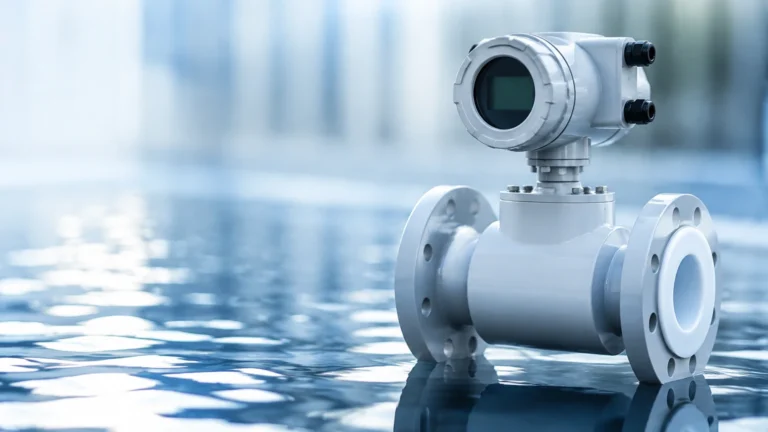
Vera Mag Meter
Vera Mag Meter
In the landscape of industrial process control, the Vera mag meter, or electromagnetic flow meter, represents a cornerstone technology for measuring the volumetric flow rate of conductive liquids. These instruments are prized for their lack of moving parts, minimal pressure drop, and high accuracy across a wide range of pipe diameters. For engineers and facility managers, understanding the operational principles and selection criteria of mag meters is essential for optimizing fluid transport and ensuring the integrity of automated systems.
While flow measurement focuses on the movement of media through a conduit, it is frequently integrated with level measurement technologies to provide a complete picture of inventory and process efficiency. Reliable data from a Vera mag meter, when combined with high-precision level sensors, allows for sophisticated mass balance calculations and leak detection in critical infrastructure.
The Fundamental Principle: Faraday’s Law of Induction
The operation of a Vera mag meter is based on Faraday’s Law of Electromagnetic Induction. This law states that a voltage is induced when a conductive medium moves through a magnetic field. In the context of a flow meter, the pipe section is equipped with electromagnetic coils that generate a constant magnetic field ($B$) perpendicular to the direction of flow.
As a conductive liquid flows through this field with a certain velocity ($v$), it acts as a moving conductor. This movement generates an electrical voltage ($E$) that is picked up by two electrodes mounted on opposite sides of the pipe wall. The relationship is expressed by the formula:
$$E = B \cdot v \cdot D$$
Where:
- E is the induced voltage.
- B is the magnetic field strength.
- v is the average velocity of the liquid.
- D is the distance between the electrodes (typically the internal diameter of the pipe).
Because the magnetic field strength and the pipe diameter are constant, the induced voltage is directly proportional to the flow velocity. The meter’s transmitter then converts this microvolt signal into a standard industrial output, such as a 4-20mA signal, pulse, or digital communication protocol (Modbus, HART, or Profibus).
Key Components and Material Selection
Selecting the right Vera mag meter requires careful consideration of the wetted materials to ensure compatibility with the process fluid. The two most critical components are the liner and the electrodes.
Liner Materials
Since the pipe wall of a mag meter is usually constructed from stainless steel or carbon steel, an insulating liner is required to prevent the induced voltage from short-circuiting through the pipe. Common materials include:
* PTFE (Teflon): Excellent for high temperatures and highly corrosive chemicals. It is widely used in the chemical and pharmaceutical industries.
* Hard Rubber / Neoprene: Preferred for water treatment and general industrial applications where abrasion resistance is required.
* Polyurethane: Highly resistant to abrasive slurries, making it ideal for mining and wastewater applications.
* PFA: Similar to PTFE but with better mechanical stability at higher temperatures and vacuum conditions.
Electrode Materials
The electrodes must be able to withstand the chemical properties of the fluid while maintaining electrical conductivity. Standard options include:
* Stainless Steel 316L: Suitable for water and mildly corrosive liquids.
* Hastelloy C: Used for more aggressive chemical environments.
* Tantalum: Highly resistant to strong acids.
* Platinum/Iridium: Reserved for the most extreme corrosive applications where other metals would fail.
Integrating Flow and Level Measurement
In many industrial applications, flow measurement does not exist in a vacuum. To manage a storage tank or a processing vessel effectively, engineers must monitor both the rate at which fluid enters/leaves the system and the current volume stored within the vessel. This is where the synergy between flow meters and level meters becomes apparent.
For instance, in a chemical dosing application, a Vera mag meter ensures the correct volume of reagent is being pumped, while a radar level meter or ultrasonic sensor monitors the remaining inventory in the supply tank. This dual-monitoring approach prevents dry-run conditions for pumps and ensures process consistency. For comprehensive information on level measurement technologies that complement flow systems, you can visit the Main Page to review product options and application support.
By synchronizing these two data points, SCADA systems can perform "real-time reconciliation," identifying discrepancies that might indicate a leak in the piping or a calibration drift in one of the instruments.
Installation Best Practices for Accuracy
The performance of a Vera mag meter is heavily dependent on its installation environment. To achieve the specified accuracy (typically ±0.5% or better), the following engineering guidelines should be followed:
1. Straight Pipe Runs
To ensure a stable and symmetrical flow profile, mag meters require a minimum length of straight pipe upstream and downstream of the sensor. A common standard is 5D (five times the pipe diameter) upstream and 2D downstream. If there are high-turbulence elements like partially open valves or multiple elbows, the upstream requirement may increase to 10D.
2. Pipe Orientation and Fill
The meter must always be completely full of liquid to measure accurately. For this reason, vertical installation with an upward flow direction is often preferred, as it ensures the pipe remains full and minimizes the risk of air bubbles being trapped at the electrodes. If horizontal installation is necessary, the electrodes should be positioned at the 3 o'clock and 9 o'clock positions to avoid interference from sediment at the bottom or air at the top.
3. Grounding
Because the induced voltage signals are in the millivolt range, electrical noise can easily interfere with the measurement. Proper grounding is critical. If the meter is installed in a plastic or lined pipe, grounding rings must be used to provide an electrical connection to the fluid, ensuring the fluid is at the same potential as the meter body.

Technical Selection Matrix
When specifying a meter, use the following table as a preliminary guide for matching process conditions to meter specifications:
| Feature | Requirement / Specification |
| :— | :— |
| Minimum Conductivity | Typically > 5 μS/cm (microsiemens per centimeter) |
| Flow Velocity Range | 0.3 m/s to 10 m/s (ideal range for accuracy) |
| Accuracy | ±0.5% of rate (standard); ±0.2% (high precision) |
| Pressure Rating | PN10, PN16, PN40, or ANSI 150/300 |
| Temperature Range | -20°C to +150°C (depending on liner material) |
| Protection Class | IP65 (standard), IP68 (for submersion) |
Limitations and Common Challenges
Despite their versatility, Vera mag meters have specific limitations that must be addressed during the design phase:
* Conductivity Requirement: Mag meters cannot measure non-conductive fluids like oils, deionized water (with very low conductivity), or gases. If the fluid conductivity drops below the threshold (usually 5 μS/cm), the signal will be lost.
* Vacuum Conditions: Some liners, particularly PTFE, can collapse or peel away from the pipe wall if the system experiences a vacuum. In such cases, PFA liners with mechanical reinforcement are recommended.
* Coating and Fouling: If the fluid contains fats, oils, or greases that can coat the electrodes, the meter may eventually fail to read. Self-cleaning electrodes or periodic maintenance cycles are necessary for these applications.
Frequently Asked Questions (FAQ)
Q: Can a Vera mag meter measure flow in both directions?
A: Yes, most modern electromagnetic flow meters are bi-directional. They can be configured to measure flow in both the forward and reverse directions, providing separate totals for each.
Q: How does the meter handle solids in the liquid?
A: Because there are no obstructions in the flow tube, mag meters are excellent for liquids with suspended solids or slurries. However, the liner and electrode materials must be chosen to resist the resulting abrasion.
Q: Is periodic recalibration necessary?
A: While mag meters are highly stable due to the lack of moving parts, annual or biennial calibration checks are recommended in regulated industries (like food and beverage or water billing) to ensure the magnetic field strength and electronics remain within spec.
Q: What happens if there is air in the pipe?
A: Air bubbles can cause the meter to over-read or provide erratic signals. If the pipe is not completely full, the meter cannot accurately calculate the volumetric flow rate, as it assumes the entire cross-sectional area of the pipe is occupied by liquid.
Conclusion
The Vera mag meter is a robust and reliable solution for industrial flow measurement, provided the fluid meets the minimum conductivity requirements. By understanding the interaction between the magnetic field and the conductive fluid, and by adhering to strict installation standards, engineers can achieve high-precision monitoring of their processes. When integrated with reliable level measurement instruments, these flow meters form the backbone of efficient, automated industrial fluid management. For those seeking to optimize their entire measurement loop, exploring the latest in radar and ultrasonic level technology is the logical next step in system design.