6 Magnetic Flow Meter
6 Magnetic Flow Meter
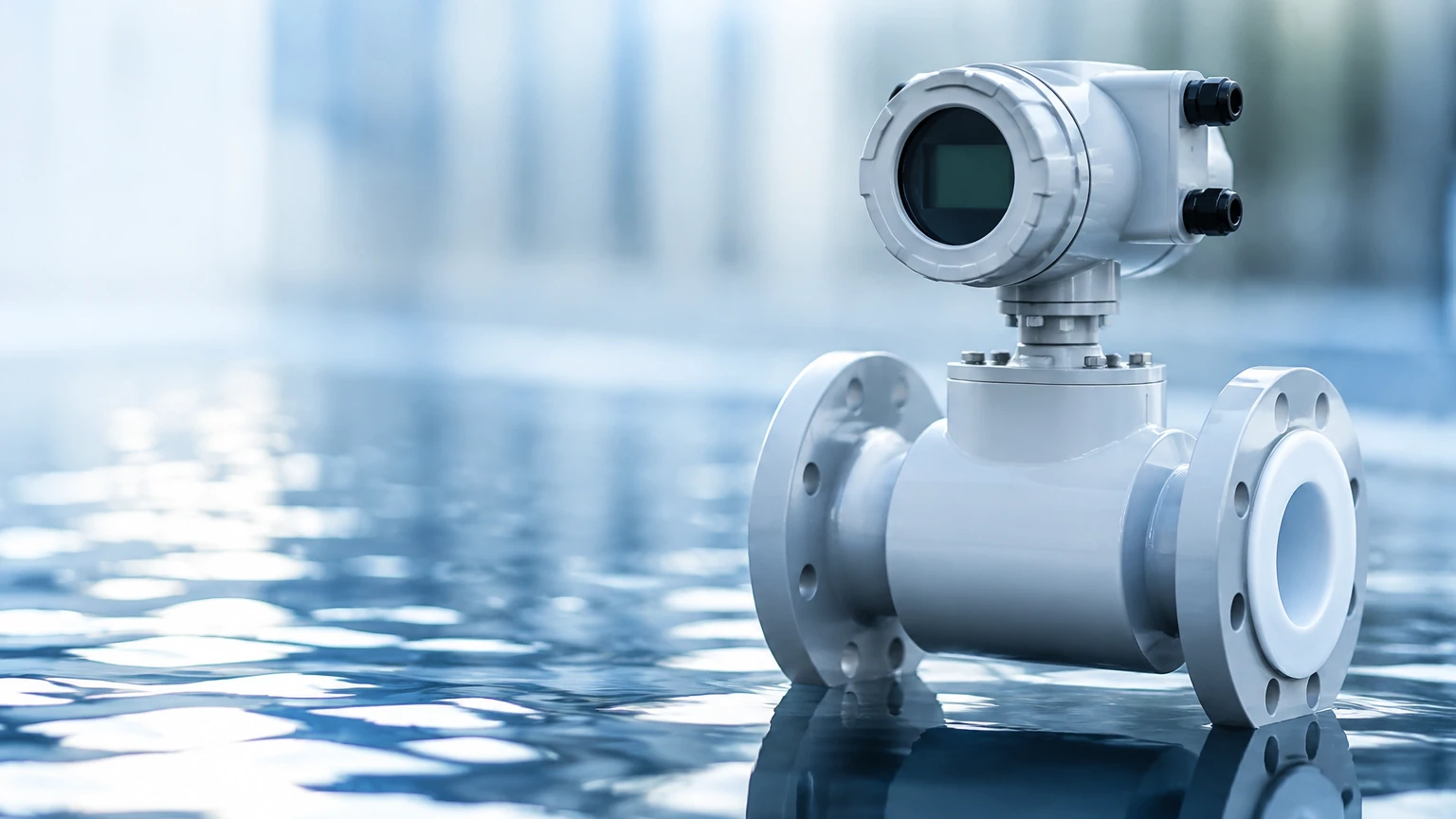
In industrial process control, the 6-inch (DN150) magnetic flow meter is a critical instrument for measuring the volumetric flow rate of conductive liquids. Often referred to as a "mag meter," this device is favored in sectors ranging from municipal water treatment to heavy chemical processing due to its unobstructed flow path and high degree of accuracy. Understanding the engineering principles, selection criteria, and installation requirements is essential for ensuring long-term reliability in any liquid handling system.
Understanding the Measurement Principle
The operation of a 6 magnetic flow meter is based on Faraday’s Law of Electromagnetic Induction. This principle states that a conductor moving through a magnetic field produces an electrical signal within the conductor, which is directly proportional to the velocity of the moving conductor.
In the context of a flow meter:
1. The Magnetic Field: Two electromagnetic coils located within the meter body generate a constant magnetic field ($B$) across the cross-section of the pipe.
2. The Conductor: The conductive liquid flowing through the pipe acts as the moving conductor. As the liquid moves through the magnetic field with a certain velocity ($v$),
3. Induced Voltage: An electromotive force or voltage ($E$) is generated. This voltage is picked up by two electrodes mounted on opposite sides of the pipe wall.
The mathematical relationship is expressed as:
E = kBDv
Where:
* E is the induced voltage.
* k is a constant coefficient.
* B is the magnetic field strength.
* D is the distance between the electrodes (which corresponds to the internal diameter of the 150 mm pipe).
* v is the average velocity of the liquid.
Since the magnetic field strength and the pipe diameter are fixed, the induced voltage is linearly proportional to the flow velocity. The converter then processes this voltage signal to calculate the volumetric flow rate. Because the measurement is independent of fluid density, viscosity, temperature, and pressure, the 6 magnetic flow meter is exceptionally versatile for complex industrial fluids.
Key Technical Specifications for DN150 (6-Inch) Meters
A 6-inch magnetic flow meter is typically designed to handle flow rates suitable for medium-scale industrial headers. When evaluating these units, engineers should focus on the following standard technical parameters:
| Parameter | Typical Specification (Metric/Imperial) |
| :— | :— |
| Nominal Diameter | DN150 (6 inches) |
| Flow Velocity Range | 0.3 m/s to 12 m/s (1 ft/s to 39 ft/s) |
| Accuracy | ±0.5% of reading (standard); ±0.2% (high precision) |
| Minimum Conductivity | > 5 μS/cm (standard); > 20 μS/cm for demineralized water |
| Pressure Rating | PN10, PN16, PN25, or PN40 (ANSI 150#, 300#) |
| Output Signals | 4-20mA, Pulse, RS485 (Modbus), HART, Profibus |
| Ambient Temperature | -20°C to +60°C (-4°F to 140°F) |
| Protection Class | IP65 (Standard) or IP68 (Submersible) |
Material Selection and Chemical Compatibility
The longevity of a 6 magnetic flow meter depends heavily on the compatibility of its wetted parts—the liner and the electrodes—with the process fluid. Since the meter body is usually made of carbon steel or stainless steel, the internal liner protects the housing and provides electrical insulation.
Lining Materials
* PTFE (Teflon): Highly resistant to strong acids and bases. Suitable for high temperatures up to 180°C. It is the standard choice for chemical processing.
* Hard Rubber / Neoprene: Excellent for water treatment and general-purpose applications. It offers good abrasion resistance for fluids containing small solids.
* Polyurethane: Best suited for abrasive slurries, such as those found in mining or wastewater with high grit content.
* PFA: Similar to PTFE but with better mechanical stability at high temperatures and vacuum conditions.
Electrode Materials
* Stainless Steel 316L: The standard for water and mildly corrosive liquids.
* Hastelloy C: Used for aggressive chemicals and seawater where 316L would pit or corrode.
* Titanium: Ideal for chloride-bearing fluids and specific bleaching agents.
* Tantalum: Reserved for the most aggressive acids, such as concentrated hydrochloric or sulfuric acid.
Engineering Considerations for Installation
To achieve the specified accuracy of a 6 magnetic flow meter, proper installation is paramount. Unlike mechanical meters, mag meters are sensitive to flow profile distortions caused by upstream piping components.
Straight Pipe Requirements
The general rule for a DN150 meter is to maintain a straight run of pipe at least 5 diameters (5D = 750 mm) upstream and 3 diameters (3D = 450 mm) downstream from the center of the meter. If high-disturbance elements like partially open valves or multiple elbows are present, the upstream requirement may increase to 10D.
Pipe Orientation and Filling
The meter must always be full of liquid. If the pipe is partially empty, the meter will provide erratic or maximum-scale readings.
* Vertical Installation: Flow should move upward to ensure the pipe remains full and to prevent air bubbles from collecting at the electrodes.
* Horizontal Installation: The electrodes should be positioned on the horizontal plane (3 o'clock and 9 o'clock positions). This prevents sediment from covering the bottom electrode and air bubbles from interfering with the top electrode.
Grounding
Since the induced voltage is often in the millivolt range, electrical noise can easily interfere with the signal. Proper grounding ensures that the liquid and the meter are at the same electrical potential. If the piping is non-conductive (e.g., PVC or lined pipe), grounding rings must be installed on both sides of the meter to provide a path to the fluid.
Comparison with Other Flow Technologies
When selecting a 6-inch meter, it is helpful to compare the 6 magnetic flow meter against other common technologies like ultrasonic or turbine meters.
1. Vs. Ultrasonic Meters: While ultrasonic meters can be "clamp-on" (non-invasive), they often struggle with fluids containing bubbles or high solids content. The mag meter is more robust in slurry applications.
2. Vs. Turbine Meters: Turbine meters have moving parts that wear over time and cause a pressure drop. The 6 magnetic flow meter has a completely unobstructed bore, resulting in zero additional pressure loss and reduced maintenance.
3. Vs. Vortex Meters: Vortex meters require higher flow velocities to function and are sensitive to vibration. Mag meters perform exceptionally well at very low flow velocities.
Common Applications in Industrial Automation
The 6-inch size is a "workhorse" diameter in many industries. Typical applications include:
* Wastewater Treatment: Measuring influent and effluent flows, as well as activated sludge return lines. The ability to handle solids without clogging is a primary advantage.
* Chemical Production: Precise dosing and transfer of acids, bases, and electrolytes. For more information on integrating these with tank systems, you can Review product options and application support on our Main Page.
* Pulp and Paper: Handling corrosive paper pulp and chemical recovery liquors.
* Food and Beverage: Measuring the flow of juices, milk, and cleaning-in-place (CIP) chemicals, provided the meter uses food-grade liners and sanitary fittings.
* Mining: Transporting ore slurries where abrasion resistance is critical.
Limitations and Maintenance Requirements
While highly reliable, the 6 magnetic flow meter is not a universal solution. It has specific limitations:
* Conductivity Requirement: It cannot measure non-conductive fluids such as oils, hydrocarbons, deionized water, or gases.
* Vacuum Conditions: Some liners (like PTFE) can collapse or peel away from the tube under high vacuum if not specifically designed for such service.
* Coating and Scaling: If the fluid tends to leave deposits (e.g., lime scaling or oily films), the electrodes may become insulated, leading to measurement failure. Periodic cleaning or the use of ultrasonic electrode cleaning modules may be required.
Maintenance Checklist
* Visual Inspection: Check for leaks at the flanges and moisture ingress in the transmitter housing.
* Zero-Point Verification: Periodically check the zero reading under a "full pipe, zero flow" condition.
* Electrode Cleaning: In coating-prone applications, inspect the electrodes for buildup.
* Grounding Continuity: Ensure grounding straps remain secure and free of corrosion.
Frequently Asked Questions (FAQ)
Q: Can a 6 magnetic flow meter measure flow in both directions?
A: Yes, most modern electromagnetic flow meters are bi-directional. They can be configured to provide separate totals for forward and reverse flow.
Q: What happens if the fluid contains air bubbles?
A: Air bubbles are measured as part of the liquid volume, which leads to a positive error (over-reading). If the air content is high enough, it can break the electrical circuit between the electrodes, causing the signal to drop out.
Q: How long does a 6 magnetic flow meter typically last?
A: With correct material selection and installation, a mag meter often has a service life exceeding 10 to 15 years, as there are no moving parts to wear out.
Q: Is it possible to change the liner if it gets damaged?
A: Generally, no. The liner is factory-bonded or molded into the flow tube. If the liner fails, the flow tube usually needs to be replaced, though the electronics (converter) can often be reused.
Q: Can I install a DN150 meter in a DN200 pipe?
A: Yes, using reducers. This is common if the flow velocity in the DN200 pipe is too low for accurate measurement. However, the straight pipe run requirements (5D/3D) must be calculated based on the meter size (DN150).
By carefully considering the fluid properties and installation environment, the 6 magnetic flow meter provides one of the most accurate and low-maintenance methods for liquid flow measurement in modern industry. For engineers looking to pair flow data with level monitoring, exploring a comprehensive range of instruments is the best path to system optimization.