Ready To.use Without Further Assembly
Ready To.use Without Further Assembly
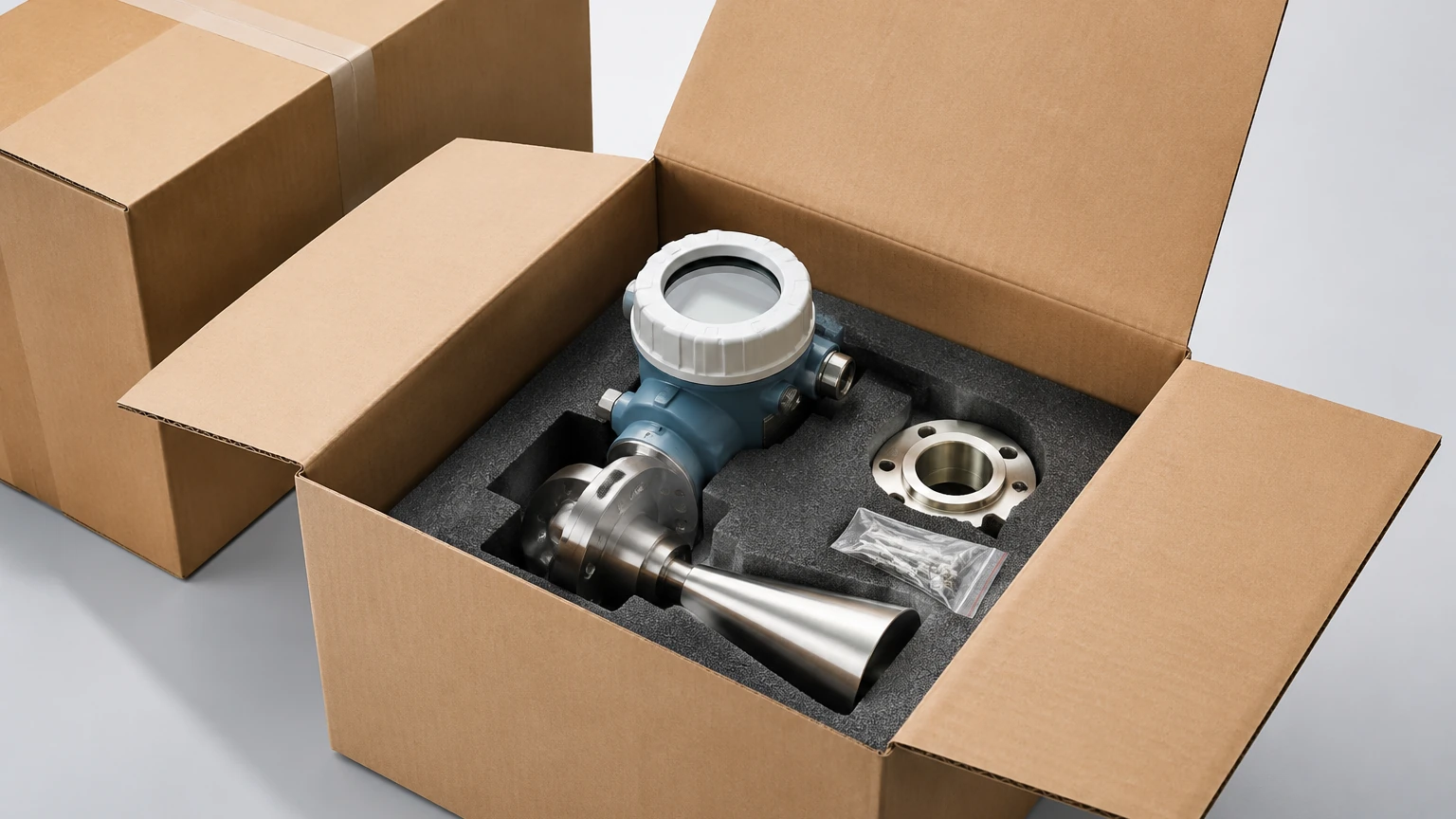
In the modern industrial landscape, efficiency is defined not only by the accuracy of a measurement but also by the speed of deployment. For process engineers and procurement managers, the phrase ready to.use without further assembly represents a significant reduction in labor costs, a decrease in human error during installation, and a faster path to operational uptime. When sourcing level measurement instruments, selecting units that arrive pre-configured and pre-assembled is a strategic choice that impacts the entire lifecycle of the plant.
Industrial level measurement involves complex physics—from electromagnetic wave propagation to hydrostatic pressure dynamics. Traditionally, these systems required extensive field assembly, including the coupling of sensors to transmitters, the calibration of electronics to specific vessel geometries, and the manual setting of zero and span points. However, advancements in digital signal processing and modular manufacturing by providers like Welk have shifted the paradigm toward integrated solutions.
Understanding Level Measurement Principles
Before selecting a device that is ready to.use without further assembly, it is essential to understand the underlying principles of the technologies available. Each method has specific mechanical and electronic requirements that dictate how "ready" it truly is upon delivery.
Radar Level Measurement (Non-Contact)
Radar level meters, particularly those operating at high frequencies like 80GHz, are the pinnacle of integrated design. These devices use the Time of Flight (ToF) principle or Frequency Modulated Continuous Wave (FMCW) technology. The instrument emits a high-frequency signal that reflects off the medium's surface. The time delay or frequency shift is measured to determine the distance.
Because modern radar units house the antenna, microwave oscillator, and signal processor within a single enclosure, they are often the most "ready to use" options. There are no moving parts to assemble and no probes to tension in the field, provided the flange or thread connection matches the vessel nozzle.
Ultrasonic Level Sensors
Ultrasonic sensors operate similarly to radar but use sound waves. A transducer emits an ultrasonic pulse that bounces off the liquid or solid surface. These are highly effective for water treatment and open-channel flow. Most ultrasonic units are designed as compact, single-body instruments. The integrated nature of the transducer and transmitter makes them ideal for rapid deployment in standard atmospheric conditions.
Hydrostatic Level Transmitters
Hydrostatic measurement relies on the principle that the pressure at a specific depth is proportional to the height of the liquid column above it ($P = \rho gh$). Submersible hydrostatic probes are frequently delivered as a complete assembly consisting of a stainless-steel sensor, a vented cable, and an integrated signal converter. For many water-based applications, these are truly ready to.use without further assembly, requiring only that the probe be lowered to the bottom of the tank or well.
Magnetic Level Gauges
Magnetic level gauges (MLGs) provide a visual indication through a float-and-flag system. While these are mechanical in nature, they can be equipped with reed-chain transmitters or magnetostrictive sensors. When ordered as a complete package, the bypass chamber, float, and transmitter are factory-aligned, ensuring the system is ready for immediate bolt-on installation.
The Advantages of Integrated, Ready-to-Use Systems
Choosing an instrument that is ready to.use without further assembly offers several technical and economic advantages for B2B operations:
1. Factory Calibration and Testing: When a unit is pre-assembled, it undergoes comprehensive testing at the manufacturer’s facility. This includes pressure testing of housings and electronic calibration against known standards. This eliminates the uncertainty of field-calibrated units.
2. Reduced Risk of Contamination: In industries like pharmaceuticals or food and beverage, opening an instrument housing in a field environment can introduce moisture or dust. Integrated units remain sealed, maintaining their IP67 or IP68 ratings from the factory to the tank.
3. Simplified Procurement: Purchasing a single part number that covers the sensor, transmitter, and mounting hardware simplifies the supply chain. It ensures that all components are compatible, avoiding the common issue of mismatched threads or incompatible signal outputs between different manufacturers' components.
4. Lower Labor Costs: Field technicians can focus on wiring and integration into the PLC/SCADA system rather than mechanical assembly. This is particularly critical in large-scale projects where hundreds of points must be commissioned in a short window.
Technical Selection Table
When evaluating which technology best fits the requirement of being ready to.use without further assembly, consider the following comparison based on standard industrial applications.
| Technology | Typical Application | Installation Complexity | Assembly Required | Maintenance Level |
| :— | :— | :— | :— | :— |
| 80GHz Radar | Chemicals, Solids, Corrosives | Low (Flange/Thread) | None | Very Low |
| Ultrasonic | Water, Wastewater | Low (Bracket/Thread) | None | Low |
| Hydrostatic | Deep Wells, Open Tanks | Medium (Cable Suspension) | None | Moderate |
| Magnetic Gauge | Boilers, Oil/Gas Tanks | High (Bypass Piping) | Minimal (Float Insertion) | Moderate |
| Level Switch | Overfill Protection | Low (Side/Top Mount) | None | Low |
Installation Considerations for Pre-Assembled Units
Even when an instrument is ready to.use without further assembly, successful deployment depends on following specific engineering guidelines. A "plug-and-play" experience is only possible if the site preparation matches the instrument's specifications.
Nozzle and Mounting Geometry
For radar and ultrasonic sensors, the mounting position is critical. The sensor must be placed away from the tank wall to avoid false reflections (parasitic echoes). For a standard DN80 (3-inch) or DN100 (4-inch) flange, ensure the nozzle height does not exceed the manufacturer's recommendations, as this can create a "dead zone" or signal interference near the top of the tank.
Wiring and Signal Integration
Most ready-to-use instruments utilize a 2-wire 4-20mA HART protocol. This allows for both power and data to be transmitted over a single twisted pair. When installing, use shielded cables to prevent electromagnetic interference (EMI) from high-power equipment like pumps or agitators. Many Welk instruments feature a dual-compartment housing, allowing the wiring to be connected without exposing the sensitive electronics to the environment.
Submersible Probe Anchoring
For hydrostatic transmitters, while the unit is pre-assembled, it must be secured if there is significant turbulence. Using a stilling well or a simple anchoring weight ensures the probe does not move, which could lead to fluctuating pressure readings and mechanical wear on the cable.
Limitations and Practical Boundaries
While the goal is to have a system that is ready to.use without further assembly, certain process conditions may require field modifications:
* Extreme Heights: For guided wave radar (GWR) in very tall silos (e.g., >30 meters), probes are often shipped coiled or in sections to prevent damage during transport. These require assembly and tensioning on-site.
* Custom Chemical Liners: In highly aggressive chemical environments, specialized PTFE or PFA liners might be installed separately to ensure a perfect seal with the vessel's unique flange facing.
* Remote Displays: If the process requires a display at eye level while the sensor is at the top of a 20-meter tank, a separate remote display unit will need to be wired and mounted, adding a step to the assembly process.
Frequently Asked Questions (FAQ)
Q: Does "ready to use" mean I don't need to calibrate the device?
A: Not necessarily. While the device is electronically calibrated at the factory, you must still input the specific "Tank Height" and "Zero Point" into the transmitter so it understands the relationship between the measured distance and the volume of your specific vessel. This is typically done via a handheld programmer or a laptop using HART software.
Q: Are these units compatible with existing PLC systems?
A: Yes. Most integrated level meters provide standard outputs such as 4-20mA, Modbus RS485, or Profibus. As long as the output protocol matches your control system, the unit is ready for integration.
Q: Can I use a pre-assembled radar for both liquids and solids?
A: Many high-frequency radar units are versatile enough for both. However, the firmware settings for "Liquid" vs. "Solid" (which account for different angle of repose and dielectric constants) should be confirmed before the unit is put into service.
Q: What happens if the pre-assembled cable on a hydrostatic sensor is too long?
A: It is recommended to coil the excess cable neatly in a junction box. Cutting the cable in the field is possible but requires careful resealing of the vent tube to prevent moisture from entering the sensor, which would void the "ready to use" integrity of the factory seal.
Conclusion
Selecting instrumentation that is ready to.use without further assembly is a hallmark of efficient project management. By choosing integrated solutions, engineers minimize the risks associated with field errors and maximize the reliability of their process data. Whether you are implementing high-precision radar for chemical storage or submersible transmitters for water management, the focus should remain on technical compatibility and ease of deployment.
For a comprehensive look at available technologies and to find the right instrument for your specific industrial application, visit the Main Page to explore our full range of level measurement solutions. Our team provides the technical support necessary to ensure your chosen device arrives ready to meet the demands of your facility with minimal setup time.