Wastewater Composite Samplers
Wastewater Composite Samplers
In industrial and municipal water management, obtaining a representative view of water quality is a complex challenge. Unlike a single "grab sample," which only provides a snapshot of a specific moment, wastewater composite samplers collect multiple samples over a defined period. This process creates a "composite" that reflects the average concentrations of pollutants, nutrients, and solids, providing the data necessary for regulatory compliance and process optimization.
For engineers and plant operators, selecting the right sampling technology requires an understanding of both the liquid's characteristics and the hydraulic conditions of the site. Effective sampling often relies on precise integration with level and flow measurement instruments, such as those found on the Main Page of industrial instrumentation providers, to ensure that the volume collected is truly representative of the total flow.
Measurement Principles of Composite Sampling
Wastewater composite samplers operate based on two primary logic modes: time-proportional and flow-proportional. Understanding these principles is the first step in designing a monitoring station.
Time-Proportional Sampling
This is the most straightforward method. The sampler is programmed to collect a fixed volume of liquid (e.g., 200 mL) at regular time intervals (e.g., every 30 minutes). While simple to implement, this method can be misleading if the flow rate of the wastewater fluctuates significantly. If a high-concentration pollutant discharge occurs during a period of low flow, a time-proportional sample will over-represent that pollutant in the final composite.
Flow-Proportional Sampling
To solve the inaccuracies of time-based sampling, flow-proportional sampling adjusts the sampling frequency or volume based on the actual volume of water passing through the channel. This requires an external input from a flow meter or a level transmitter. There are two common sub-methods:
1. Constant Volume, Variable Time (CVVT): The sampler collects a fixed volume every time a specific total volume of water (e.g., every 5,000 liters) passes the sensor.
2. Variable Volume, Constant Time (VVCT): Samples are taken at fixed time intervals, but the volume of each sample is proportional to the flow rate at that specific moment.
The Collection Mechanism
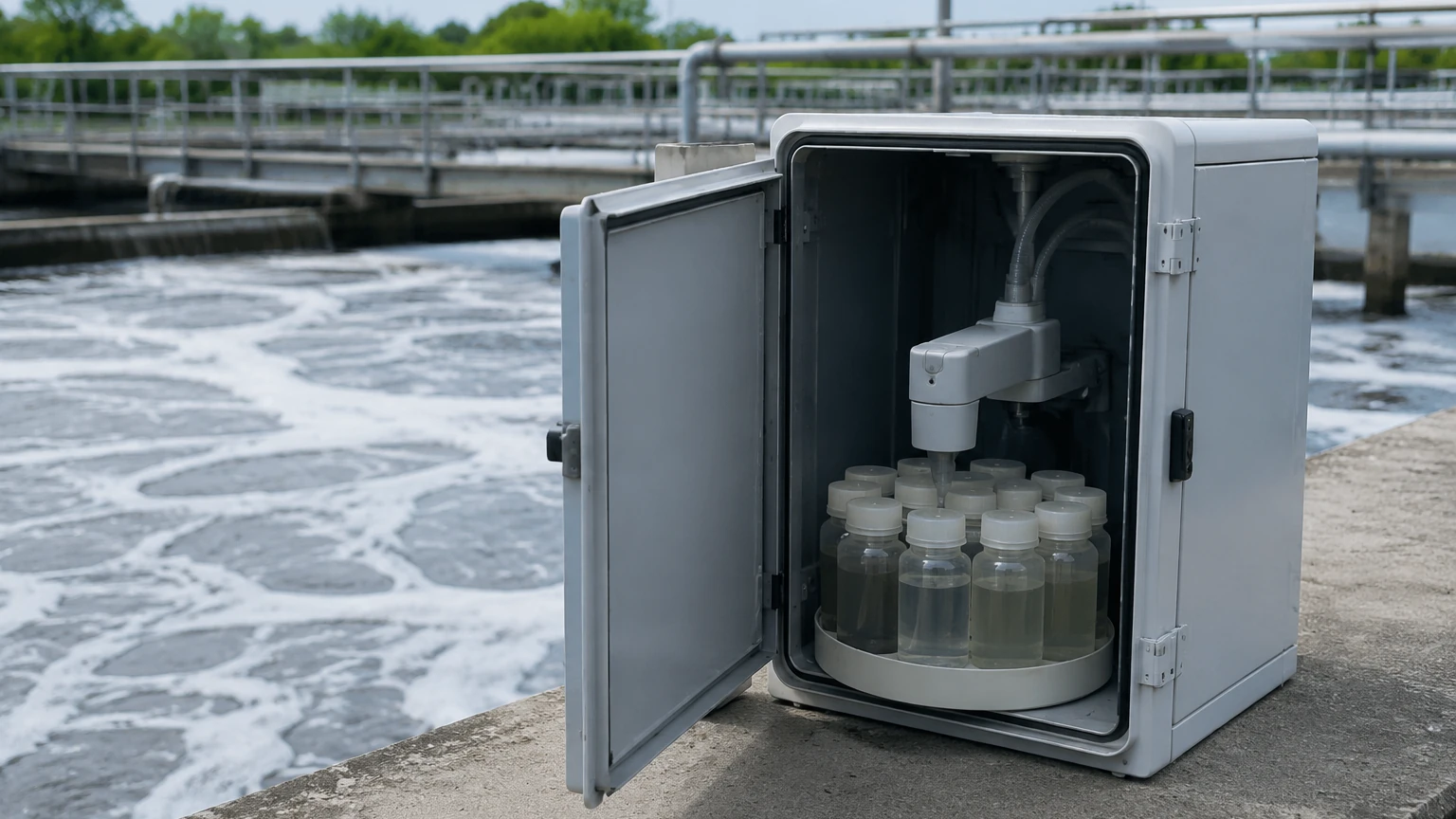
Most modern wastewater composite samplers utilize a peristaltic pump. This mechanism uses rotating rollers to compress a flexible tube, creating a vacuum that draws the liquid up the suction line. This design is preferred because the liquid never touches the pump's mechanical parts, preventing cross-contamination and making the system easier to clean. Before each sample is taken, the pump typically runs in reverse to "purge" the line of any residual liquid, ensuring the fresh sample is not diluted by old water.
The Role of Level and Flow Measurement
For flow-proportional sampling to be accurate, the sampler must receive precise data regarding the liquid's movement. In open-channel environments, such as flumes or weirs, this is achieved by measuring the "head" or level of the liquid.
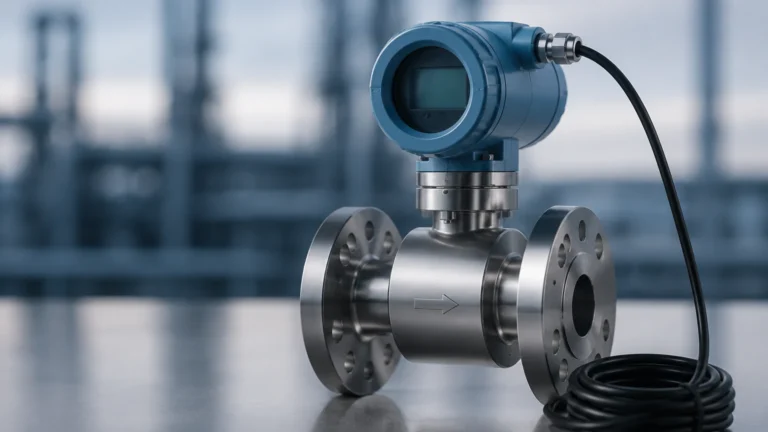
Instruments like ultrasonic level sensors or non-contact radar level meters are essential here. These devices measure the distance to the surface of the water and convert that level into a flow rate based on the known geometry of the channel. The level meter then sends a pulse or a 4-20mA signal to the wastewater composite sampler. Without high-accuracy level measurement—such as the solutions offered by Welk—the sampler cannot accurately calculate the required sampling intervals, leading to data that may fail to meet environmental permit requirements.
Types of Wastewater Composite Samplers
Samplers are generally categorized by their mobility and their ability to preserve samples through temperature control.
Stationary Samplers
These are permanent installations, usually housed in a rugged, weather-resistant enclosure. Most stationary units include integrated refrigeration systems. Maintaining a sample temperature between 0°C and 4°C (32°F to 39°F) is critical for biological oxygen demand (BOD) and chemical oxygen demand (COD) testing, as it slows biological activity that would otherwise change the sample's chemistry before it reaches the lab.
Portable Samplers
Portable units are designed for short-term studies, such as storm-water monitoring or industrial discharge assessments. They are battery-powered and lightweight. While they may not have active refrigeration, they are often insulated and can be filled with ice to maintain sample integrity for a limited duration.
Technical Selection Table
When evaluating wastewater composite samplers, the following technical parameters should be compared:
| Feature | Stationary Sampler | Portable Sampler |
| :— | :— | :— |
| Power Source | 110V/220V AC | 12V DC Battery / Solar |
| Cooling Method | Active Compressor Refrigeration | Passive Insulation / Ice |
| Suction Lift (Max) | Up to 8 meters (26 ft) | Up to 7 meters (23 ft) |
| Bottle Configuration | Single (Composite) or Multiple (Discrete) | Single or Multiple (up to 24) |
| Enclosure Material | Fiberglass, Stainless Steel, or LLDPE | Heavy-duty LLDPE Plastic |
| Communication | Modbus, 4-20mA, Pulse, RS485 | Pulse, USB Download |
Installation Considerations and Best Practices
Proper installation is just as important as the technology itself. Even the most advanced sampler will produce poor data if the intake is poorly positioned.
1. Intake Placement: The suction head (strainer) should be placed in a well-mixed area of the flow stream, typically at about 60% of the depth of the water. Avoid placing it too close to the bottom to prevent drawing in heavy sediments, and avoid the very surface to prevent capturing floating oils or debris.
2. Suction Line Slope: The tubing from the source to the sampler should have a continuous upward slope. Any "dips" or loops in the line will trap liquid, leading to cross-contamination between samples and potential freezing in cold climates.
3. Vertical Lift (Head): Every sampler has a maximum vertical suction lift, usually around 6 to 8 meters (20 to 26 feet). As the lift increases, the velocity of the liquid in the tube decreases. To ensure that suspended solids are properly captured, a minimum transport velocity of 0.6 m/s (2 ft/s) is generally recommended.
4. Power and Signal Integration: Ensure the sampler is located within reach of the signal cable from the level or flow meter. If using a radar level meter from a Main Page catalog, verify that the sampler’s controller is compatible with the meter's output (e.g., 1 pulse per 100 liters).
Limitations and Common Challenges
While wastewater composite samplers are robust, they are not without limitations:
* Solids Content: High concentrations of large solids or fibrous materials (like rags) can clog the intake strainer or the internal pump tubing. Regular inspection of the suction line is mandatory in municipal influent applications.
* Chemical Compatibility: The peristaltic tubing (often silicone or Tygon) must be compatible with the chemicals in the wastewater. In some chemical processing plants, specialized tubing materials are required to prevent degradation.
* Volatile Organic Compounds (VOCs): Peristaltic pumps create a vacuum, which can cause VOCs to "off-gas" from the liquid. If VOC analysis is the primary goal, specialized bladder pumps or discrete grab sampling may be necessary.
* Sample Degradation: If the refrigeration unit fails or the ice melts in a portable unit, the sample may become invalid for regulatory reporting. Remote monitoring of the internal temperature is a recommended upgrade for critical sites.
Maintenance Requirements
To ensure long-term reliability, a preventative maintenance schedule should be established:
* Tubing Replacement: The pump tube is a wear item. Depending on the frequency of sampling, it should be replaced every 6 to 12 months, or after a specific number of pump revolutions.
* Desiccant Management: Most sampler controllers use desiccants to keep moisture away from internal electronics. These should be checked and replaced when the color-change indicator signals saturation.
* Cleaning: The distributor arm and the sample bottles must be cleaned with phosphate-free detergent and rinsed thoroughly between sampling cycles to prevent carryover.
Frequently Asked Questions (FAQ)
Q: How do I choose between a single-bottle and a multi-bottle configuration?
A: Use a single large bottle (e.g., 10L or 20L) if you only need a single average reading for a 24-hour period. Use a multi-bottle configuration (e.g., 24 x 1L bottles) if you need to see how water quality changes hour-by-hour throughout the day.
Q: Can I use a composite sampler for pressurized pipes?
A: Standard peristaltic samplers are designed for atmospheric pressure (open channels). To sample from a pressurized pipe, you typically need a bypass line with a pressure-reducing valve or a specialized plunger-style sampler.
Q: What is the maximum distance the sampler can be from the water source?
A: While the vertical lift is limited to about 8 meters, the horizontal distance can be longer (up to 30 meters or 100 feet). However, longer horizontal runs increase the time required for the purge cycle and increase the risk of solids settling in the tube.
Q: How does the sampler know when to stop?
A: Most samplers have a liquid sensor (often an infrared or ultrasonic gap sensor) near the pump. This sensor detects when the liquid has reached the pump and also tells the controller if the bottle is full or if the suction line is dry.
By carefully integrating wastewater composite samplers with accurate level measurement technology, industrial facilities can ensure they remain in compliance with environmental regulations while gaining valuable insights into their process efficiency. For more information on the sensors that drive these systems, reviewing the technical specifications on the Main Page of a dedicated instrumentation provider is a recommended next step for engineering professionals.