Water Conservation Solutions
Water Conservation Solutions
In the current industrial landscape, water is no longer viewed as an inexhaustible resource but as a critical asset that requires precise management. Effective water conservation solutions rely heavily on the ability to monitor levels accurately across various stages of the water cycle—from raw water extraction and storage to treatment and distribution. Without precise data, facilities often suffer from overflows, undetected leaks, and inefficient pump operations, all of which contribute to significant water waste.
For engineers and plant managers, implementing robust water conservation solutions begins with selecting the right level measurement technology. By integrating advanced sensors into automation systems, industries can achieve a high degree of resource efficiency, ensuring that every liter of water is accounted for and utilized optimally. This guide explores the technical principles of level measurement and how they form the backbone of modern water management strategies.
Understanding Level Measurement Principles
Before selecting a device for water conservation, it is essential to understand the underlying physics of the most common measurement technologies. Each method has specific strengths depending on the environment, the nature of the liquid, and the physical constraints of the installation site.
Ultrasonic Level Measurement
Ultrasonic sensors operate on the "Time of Flight" (ToF) principle. The device emits a high-frequency sound pulse from a transducer located at the top of the vessel. This pulse travels through the air, hits the water surface, and reflects back to the sensor. By measuring the time interval between emission and reception, the sensor calculates the distance to the liquid surface.
* Advantages: Non-contact measurement, meaning the sensor is not corroded by the liquid. It is relatively cost-effective and easy to install in open channels or tanks.
* Limitations: Because sound requires a medium (air), changes in air temperature, humidity, or the presence of heavy foam can affect the speed of sound and lead to measurement errors. Most modern ultrasonic sensors include temperature compensation to mitigate this.
Radar (Microwave) Level Measurement
Radar level meters also use the Time of Flight principle but utilize electromagnetic waves instead of sound. These waves travel at the speed of light and are much less affected by environmental conditions such as vapor, dust, or temperature fluctuations. Radar can be categorized into Pulse Radar and Frequency Modulated Continuous Wave (FMCW) Radar.
* 26GHz Radar: Suitable for most standard industrial water tanks, providing a balance between cost and performance.
* 80GHz Radar: Offers a much narrower beam angle and higher precision. This is ideal for narrow tanks or vessels with internal obstructions like ladders or agitators, as the focused beam can bypass these obstacles without interference.
Hydrostatic Level Measurement
Hydrostatic transmitters measure the pressure exerted by the liquid column above the sensor. The principle is based on the formula: $P = \rho \cdot g \cdot h$, where $P$ is pressure, $\rho$ is the density of the liquid, $g$ is gravity, and $h$ is the height of the liquid.
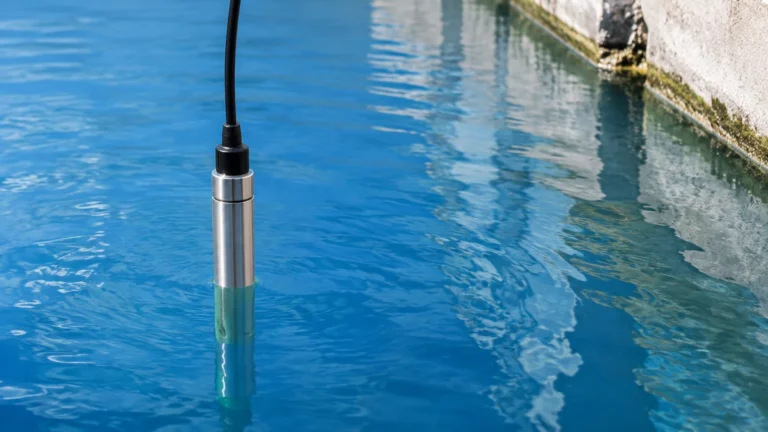
* Design: These sensors are typically submersible and placed at the bottom of a well, reservoir, or tank. They use a sensitive diaphragm to detect pressure changes, which are then converted into a 4-20mA or digital signal.
* Atmospheric Compensation: To ensure accuracy, the sensor must account for changes in atmospheric pressure. This is usually achieved through a small vent tube integrated into the sensor's cable.
Integrating Level Data into Water Conservation Solutions
Level measurement is the primary data source for several key water conservation solutions. By transforming raw level data into actionable insights, facilities can reduce their environmental footprint and operational costs.
1. Leak Detection in Reservoirs: By monitoring the level of a closed reservoir during periods of zero outflow (e.g., overnight), engineers can identify gradual level drops that indicate structural leaks or faulty valves.
2. Pump Optimization: In many water distribution systems, pumps consume the majority of energy. Level sensors allow for "smart pumping," where pumps are only activated when levels reach a specific set point, preventing unnecessary cycling and reducing the risk of dry-running.
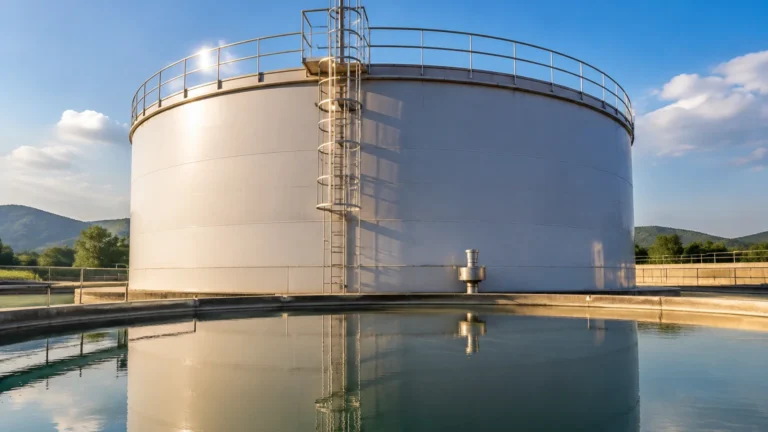
3. Stormwater Management: Accurate level monitoring in retention ponds ensures that there is always sufficient capacity to handle sudden rainfall, preventing overflows that can lead to local flooding and untreated runoff entering natural waterways.
4. Wastewater Recycling: In industrial water treatment, level sensors manage the flow between treatment stages. This ensures that recycled water is available for secondary processes (like cooling or irrigation), reducing the demand for fresh municipal water.
For a detailed look at the hardware required to support these initiatives, professionals can visit the Main Page to review specific product specifications and application support.
Practical Selection Table
Choosing the right instrument requires a comparison of technical specifications against the specific needs of the application. The following table provides a general guideline for selecting sensors for water conservation projects.
| Technology | Typical Range | Accuracy | Best Application | Environmental Sensitivity |
| :— | :— | :— | :— | :— |
| Ultrasonic | 0.3m – 15m | ±0.25% | Open channels, small tanks | High (affected by wind/vapor) |
| 80GHz Radar | 0.1m – 120m | ±1mm | Narrow tanks, high precision | Low (very stable) |
| Hydrostatic | 1m – 500m | ±0.1% – 0.5% | Deep wells, reservoirs | Moderate (requires venting) |
| Magnetic Gauge| 0.5m – 6m | ±5mm | Visual bypass monitoring | Low (mechanical/magnetic) |
Installation Considerations
Even the most advanced sensor will fail to provide accurate data if installed incorrectly. When implementing water conservation solutions, follow these engineering best practices:
* The Dead Zone (Blocking Distance): All non-contact sensors (ultrasonic and radar) have a "dead zone" directly beneath the transducer where measurement is impossible. Ensure the sensor is mounted high enough so that the maximum water level never enters this zone.
* Beam Angle and Obstructions: For radar and ultrasonic sensors, the signal spreads out in a cone. If this cone hits a tank wall or an internal pipe, it will create a false echo. Use 80GHz radar for narrow spaces to minimize the beam angle (often as low as 3°).
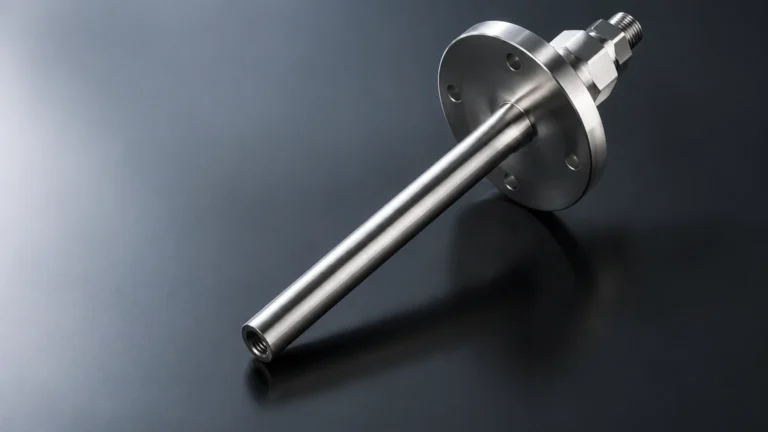
* Stilling Wells: In applications with significant turbulence or surface foam, installing the sensor inside a stilling well (a vertical pipe) can provide a calm surface for the sensor to measure, greatly increasing reliability.
* Mounting Position: Sensors should generally not be mounted in the center of a tank (to avoid multiple reflections) or too close to the fill inlet (to avoid interference from falling liquid).
Limitations and Application Risks
While level measurement is a powerful tool for water conservation, there are inherent risks and limitations that must be managed:
* Media Build-up: In wastewater applications, grease, solids, or biological growth can accumulate on the sensor face. This is particularly problematic for ultrasonic sensors. Regular maintenance or the use of non-contact radar with high signal strength is recommended.
* Signal Attenuation: Heavy steam or chemical vapors can attenuate (weaken) ultrasonic signals. In these environments, radar is the superior choice as microwaves penetrate vapor with negligible loss.
* Power Supply Stability: Industrial sensors typically require a stable 24V DC power supply. Voltage drops in long cable runs (especially for hydrostatic sensors in deep wells) can lead to signal drift or failure. Using shielded cables and proper grounding is essential to prevent electromagnetic interference (EMI).
Frequently Asked Questions (FAQs)
Q: How does level measurement directly contribute to water conservation?
A: It prevents overflows, enables precise leak detection through mass balance calculations, and ensures that water treatment processes operate at peak efficiency, maximizing the volume of water that can be reused.
Q: Can I use one sensor for all types of water?
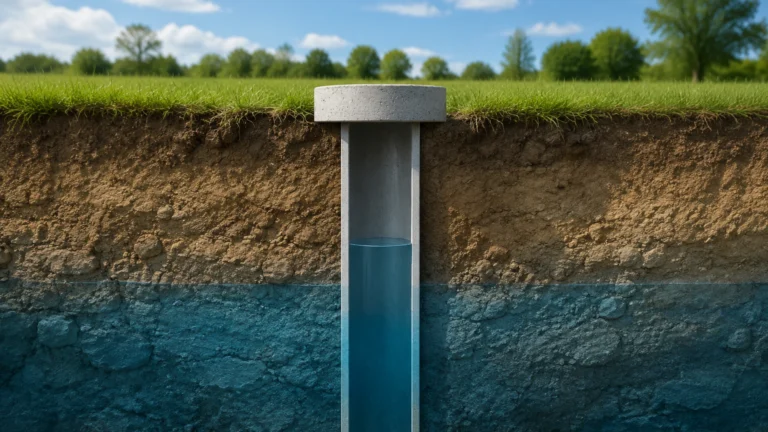
A: Not necessarily. While a radar sensor is highly versatile, a hydrostatic sensor might be better for a 100-meter (328 feet) deep borehole, and a simple ultrasonic sensor might be more cost-effective for a standard 3-meter (9.8 feet) rainwater harvesting tank.
Q: What is the maintenance requirement for these sensors?
A: Non-contact sensors like radar require very little maintenance since they do not touch the liquid. Hydrostatic sensors may need occasional cleaning of the diaphragm if the water contains high levels of sediment or biological growth.
Q: Is wireless transmission available for remote water sites?
A: Yes, many modern level transmitters can be integrated with LoRaWAN, NB-IoT, or cellular gateways to transmit data from remote reservoirs to a central SCADA system, which is a key component of large-scale water conservation solutions.
Conclusion
Implementing effective water conservation solutions is a technical challenge that requires a deep understanding of instrumentation. By selecting the appropriate measurement principle—whether it be the versatility of radar, the cost-effectiveness of ultrasonic, or the depth capability of hydrostatic sensors—industries can gain the visibility needed to eliminate waste. Accurate measurement is the first step toward a sustainable water future, providing the data necessary to optimize every drop used in industrial and municipal processes.